


montessorikiwi
Beginning Sounds Clip & Flip Cards | Montessori Science of Reading Phonemic Awareness
Beginning Sounds Clip & Flip Cards | Montessori Science of Reading Phonemic Awareness
Couldn't load pickup availability
Can your child hear that sun, sock and fish do not all begin with the same sound?
Before children can confidently connect sounds with written letters, they need to become aware of the individual sounds they hear in spoken words.
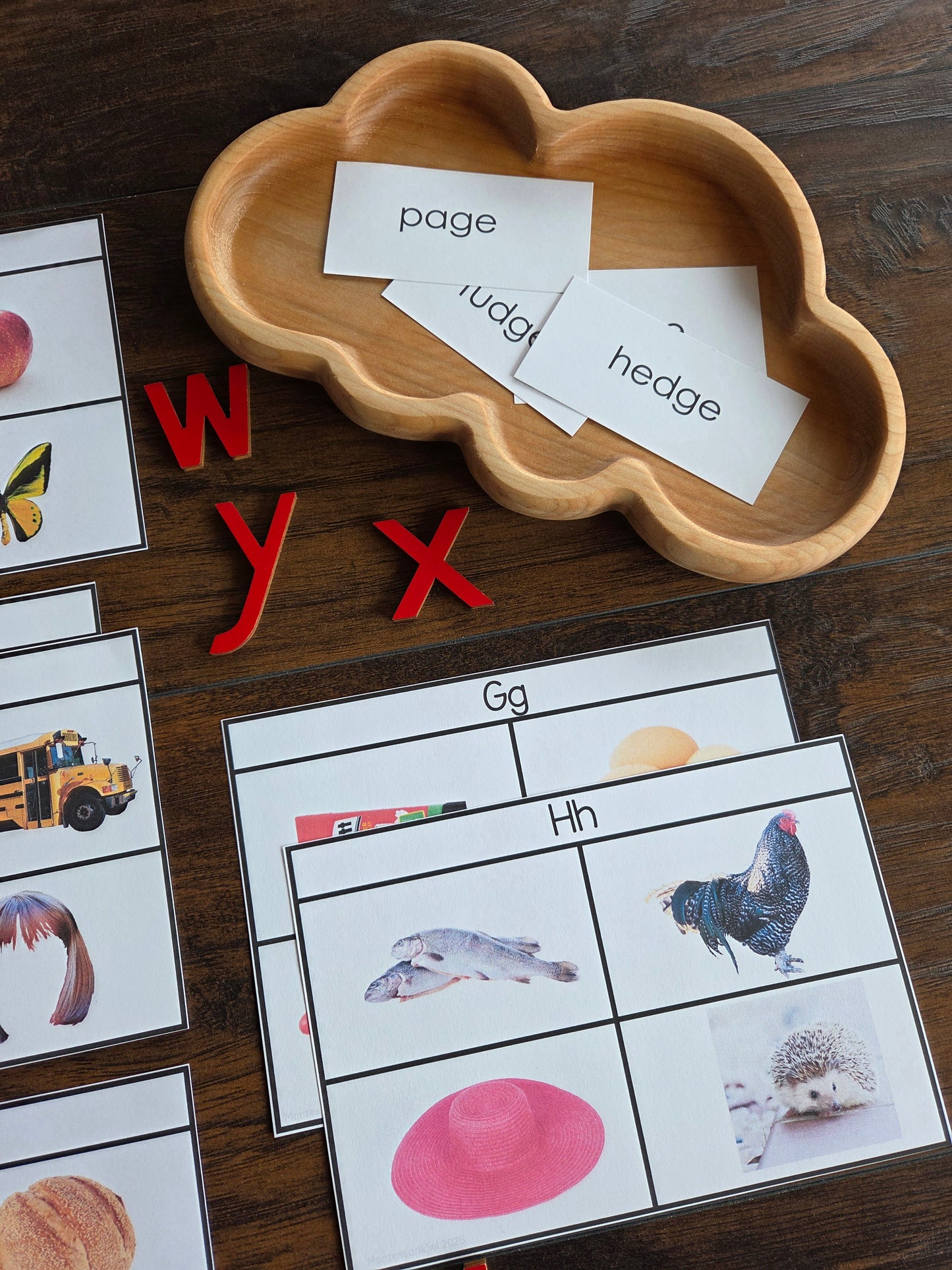
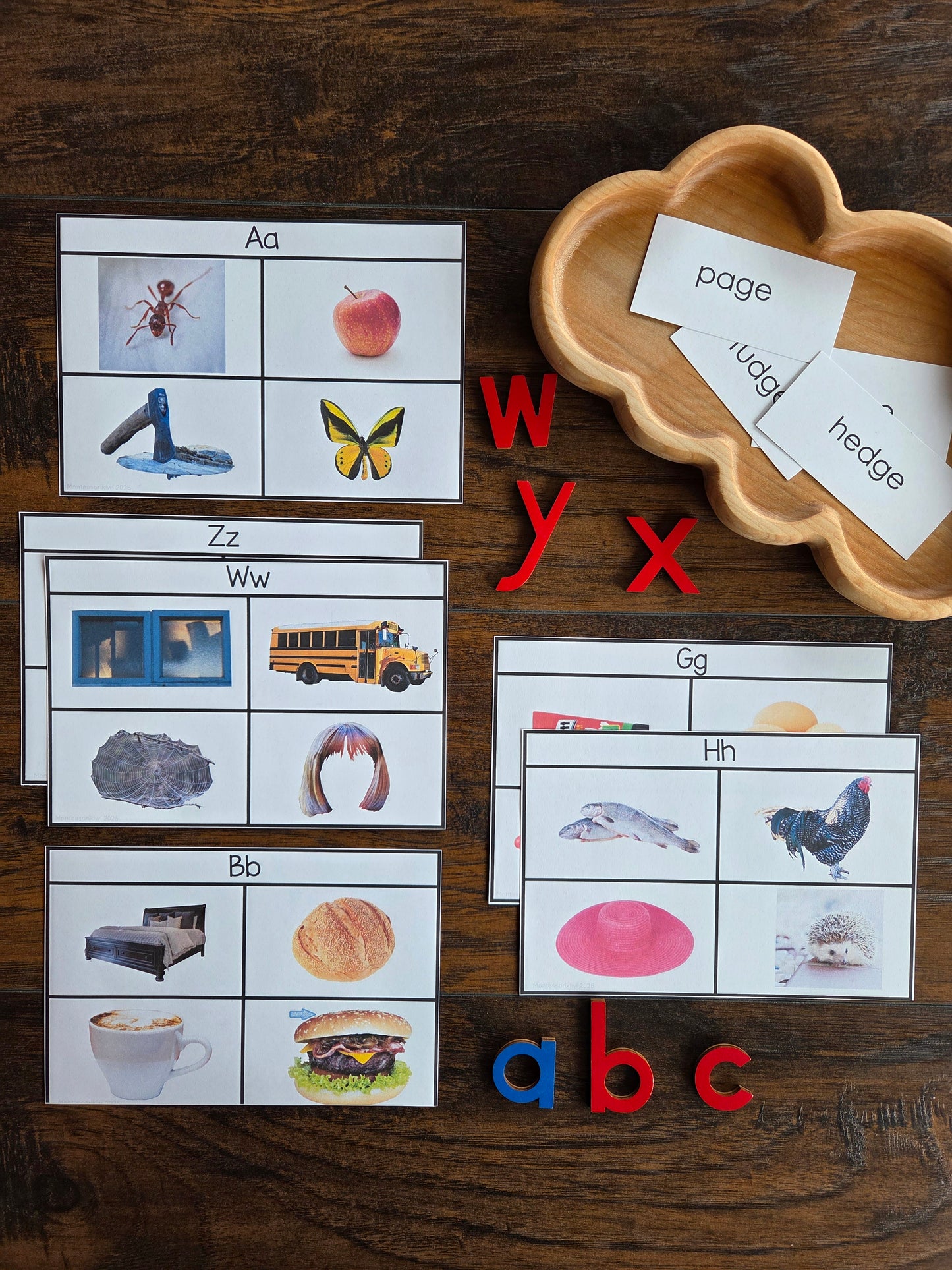
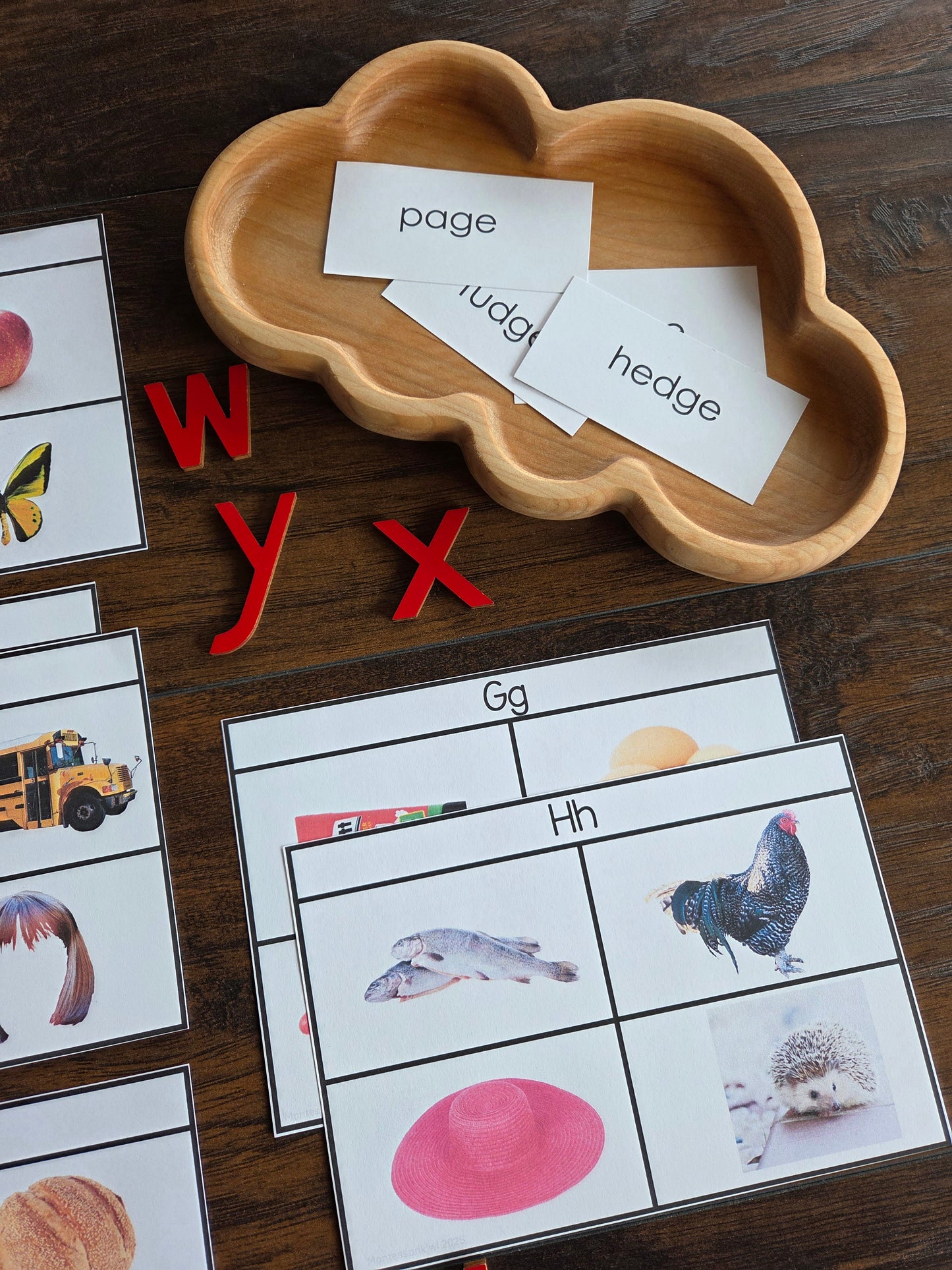
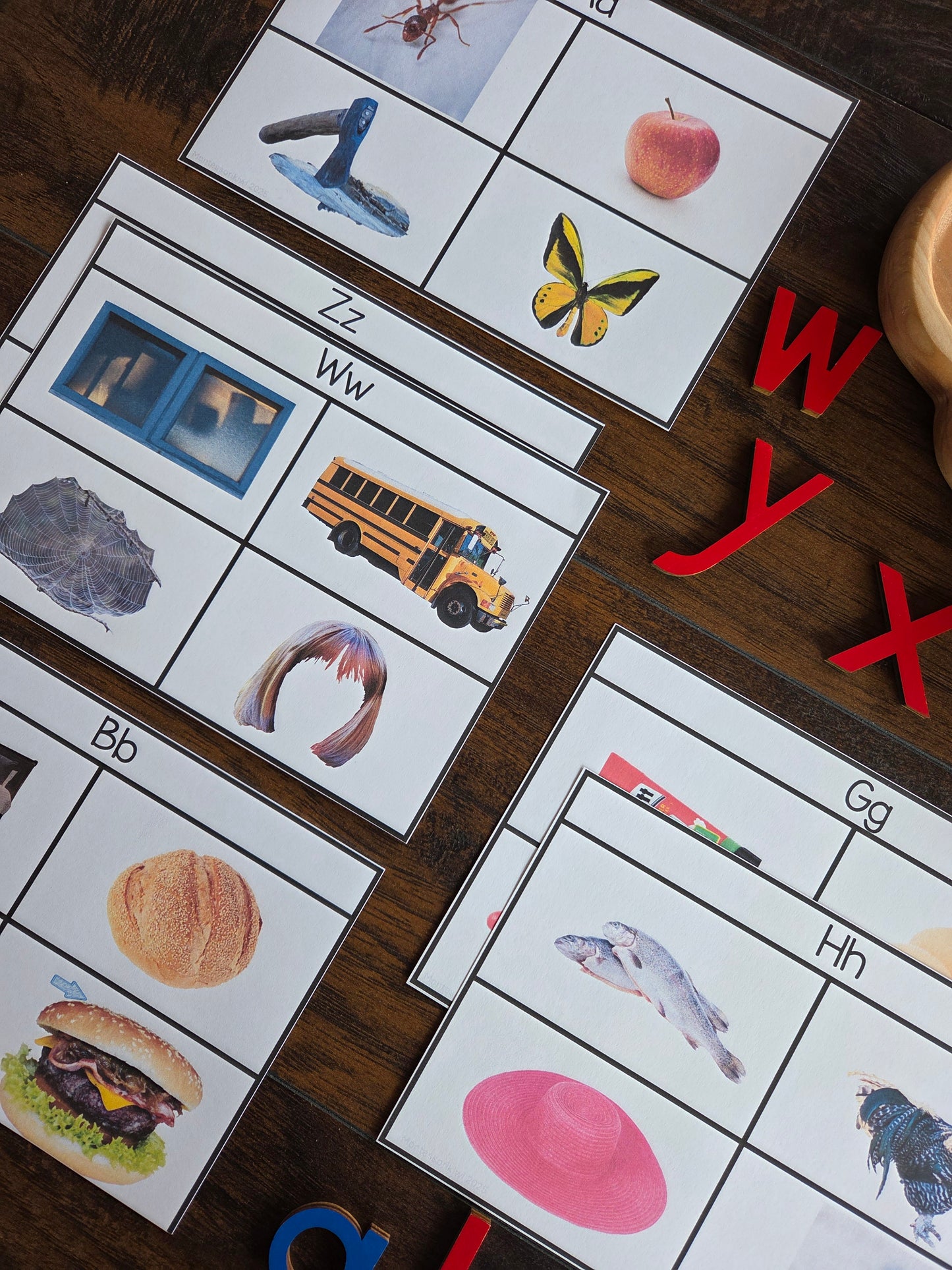
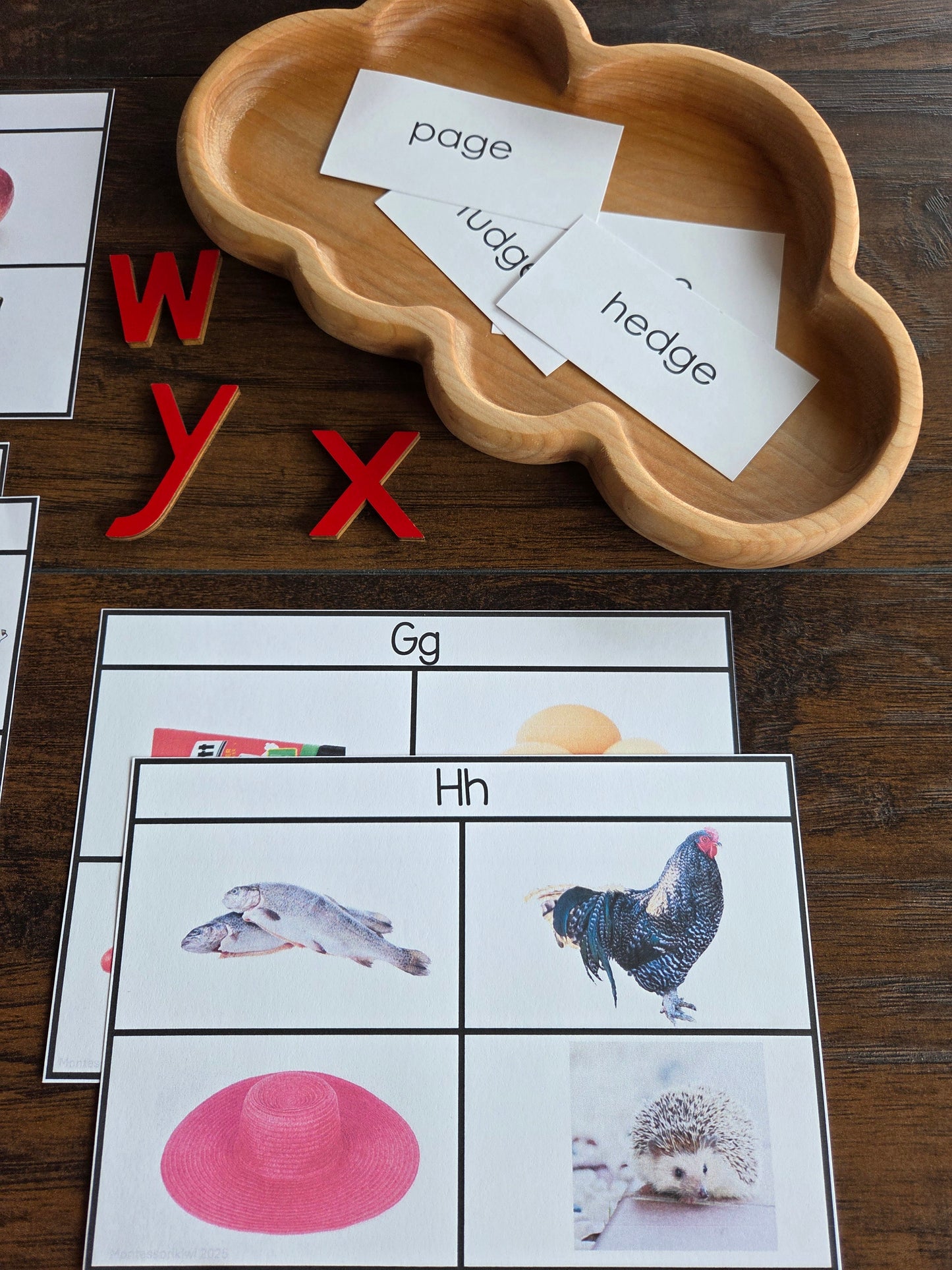
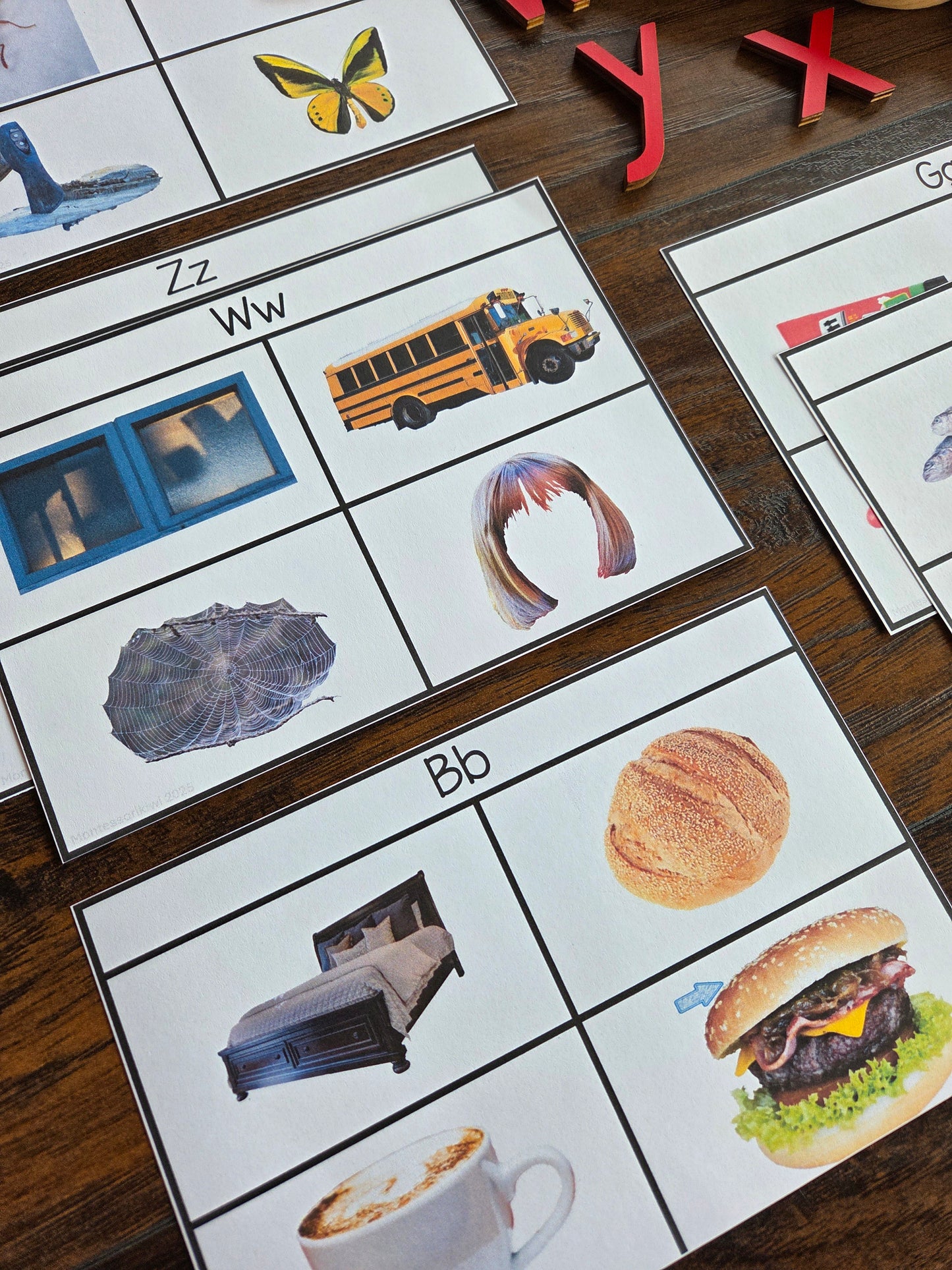
These hands-on Initial Sounds Odd One Out Clip Cards help children listen carefully to the beginning of words and identify which picture starts with a different sound.
Children look at the real-life photographs, say or listen to each word, compare the initial sounds and clip a peg onto the odd one out. They then flip the card over to check their answer independently.
This simple activity develops phonemic awareness, listening discrimination and beginning-sound awareness without requiring the child to read written words first.
Designed for Montessori classrooms, Science of Reading-aligned early literacy instruction, preschool, intervention and homeschool learning, these cards provide practical preparation for later phonics, decoding, spelling and writing.
🌿 At a Glance
✔ 24 double-sided initial-sound clip mats
✔ Covers almost every letter of the alphabet
✔ Children identify which picture begins with a different sound
✔ Uses real-life photographs
✔ Hands-on Clip & Flip format
✔ Self-correcting design for independent work
✔ Supports phonemic awareness and auditory discrimination
✔ Prepares children for later phonics, reading, spelling and writing
✔ Designed especially for early learners ages 3–6
✔ Ideal for Montessori shelf work, literacy centres, small groups and homeschool learning
📚 What's Included?
This printable early phonemic-awareness resource includes:
- 24 double-sided Clip & Flip mats
- Beginning-sound practice covering almost every letter of the alphabet
- Real-life photographs
- Three-picture odd-one-out comparisons
- A hands-on peg-clipping response format
- Self-correcting answers on the reverse
Children look at the photographs, say or hear each word, listen carefully to the beginning sound and decide which one is different.
They clip their answer and then flip the mat over to check independently.
Why Are Initial Sounds Important?
Before children can use phonics to read written words, they need to notice that spoken words are made up of individual sounds.
Being able to hear the first sound in a word helps prepare children to:
- Connect sounds with letters
- Sound out words
- Segment words for spelling
- Blend sounds during reading
- Write words more independently
This activity isolates one manageable task:
listen to the beginning of each word and decide which one sounds different.
Why Can Beginning Sounds Be Tricky?
A young child may know the name of an object but still not consciously notice the first sound in the word.
For example, they may easily name:
- sun
- sock
- fish
but need explicit practice to hear that:
- sun begins with /s/
- sock begins with /s/
- fish begins with /f/
This activity helps children slow down and attend specifically to the beginning phoneme.
From Listening to Comparing
The learning progression is simple and purposeful:
look at the pictures → say the words → listen to the beginning sounds → compare them → identify the odd one out → self-check.
This requires the child to do more than recognise one isolated sound.
They need to hold several words in mind, compare the beginning sounds and make a decision.
Why Use an Odd-One-Out Format?
Odd-one-out activities encourage comparison.
Instead of asking only:
What sound does this word begin with?
the child also asks:
Which two words begin in the same way, and which one is different?
This helps strengthen:
- Auditory discrimination
- Phoneme comparison
- Working memory
- Classification
- Reasoning
The task remains simple enough for young children while requiring active listening.
Why Use Real-Life Photographs?
Real photographs provide clear, concrete visual support for young learners.
The child can identify the object, say the word aloud and then focus attention on the sound.
This can be particularly helpful for children who benefit from:
- Concrete visual cues
- Realistic images
- Reduced abstraction
- Clear vocabulary support
The picture provides access to the word without requiring the child to read print first.
Why Keep the Activity Oral?
This activity focuses on phonemic awareness rather than written-letter recognition.
The child does not need to decode a printed word to complete the task.
That allows the learning to stay focused on spoken sounds:
hear the word → isolate the beginning sound → compare it with other words.
This is particularly useful for children who are not yet reading independently or who need extra listening practice before moving into more formal phonics work.
Hands-On Clip & Flip Learning
The peg-clipping format adds a tactile element to the activity.
Children:
- Look at the pictures.
- Say or listen to each word.
- Identify the different beginning sound.
- Clip a peg onto their answer.
- Flip the card to check independently.
This makes the task active and engaging while also supporting fine-motor development.
Why Self-Correction Matters
Each mat is designed so children can check their own answer.
This supports:
- Independence
- Persistence
- Self-monitoring
- Reduced dependence on adult correction
- Confidence with repeated practice
This fits naturally with Montessori practice, where a clear control of error helps children work increasingly independently.
From Phonemic Awareness to Phonics
This resource works particularly well before or alongside early phonics instruction.
A useful progression might be:
hear the beginning sound → compare sounds across words → connect the sound with a letter → blend sounds into words → begin reading and spelling.
The child is not being asked to read yet.
Instead, they are building the listening foundation that later phonics relies on.
What Skills Does This Resource Support?
Children will practise:
- Initial phoneme identification
- Phonemic awareness
- Auditory discrimination
- Beginning-sound awareness
- Listening skills
- Vocabulary
- Comparison and classification
- Working memory
- Fine-motor control
- Independent self-correction
Why This Matters Before Reading Begins
A child may know many letter names and still need support hearing individual sounds inside spoken words.
These are related but different skills.
This activity helps children develop awareness of the spoken sound first, so that when letters are introduced or revisited, they have a clearer sound structure to connect them to.
The progression is:
hear the word → notice its first sound → compare that sound with other words → prepare to connect sounds with letters.
Easy to Differentiate
You do not need to offer all 24 mats at once.
You can begin with:
- A small selection of clear contrasts
- Sounds the child already knows well
- A few mats on a Montessori shelf
- Teacher-led practice before independent work
As the child's listening skills develop, gradually introduce additional mats and more challenging sound contrasts.
How to Present the Activity
Begin with one mat.
Name each picture slowly and clearly.
You might say:
Sun. Sock. Fish.
Then repeat the beginning sounds:
/s/ sun. /s/ sock. /f/ fish.
Ask:
Which one begins with a different sound?
Once the child understands the task, invite them to complete additional cards independently.
🌿 Perfect For
- Montessori 3–6 language shelves
- Science of Reading-aligned early literacy
- Phonemic awareness lessons
- Beginning-sound practice
- Pre-reading activities
- Early childhood classrooms
- Literacy centres
- Small-group instruction
- Reading intervention
- Independent Montessori shelf work
- Homeschool phonics preparation
- Children who benefit from hands-on and visual learning
Help Children Hear the Sound Before Asking Them to Read the Letter
Strong early reading begins with spoken language.
These Clip & Flip mats help children slow down and pay attention to how words begin.
The learning progression is clear:
look at the picture → say the word → hear the first sound → compare it with the other words → choose the odd one out → self-check.
That makes this resource a practical foundation for later phonics, decoding, spelling and writing.
🔗 Related Resources
Continue building children's phonemic awareness and early decoding skills with these related Montessori literacy resources:
🌿 Rhyming Clip Cards
Help children hear shared ending sounds, identify rhyming pairs and develop broader phonological awareness.
Explore the Rhyming Clip Cards →
🌿 Short and Long Vowel Listening Sort
Help children listen closely to vowel sounds and decide whether each picture contains a short or long vowel.
Explore the Short & Long Vowel Listening Sort →
🌿 CVC Continuous Blending Picture Match
Support children as they move from hearing individual sounds to blending them smoothly into complete CVC words.
Explore the CVC Continuous Blending Cards →
🌿 CVC Word Sorting by Category
Give children further practice decoding simple CVC words, understanding meaning and sorting them into categories.
Explore the CVC Word Sorting Activity →
🌿 Modern Montessori Reading Collection
Explore hands-on resources for phonemic awareness, phonics, CVC and CCVC words, spelling patterns, sentence reading and comprehension.
Explore the Modern Montessori Reading Collection →
🌿 Modern Montessori Science of Reading Bundle
Explore a broader Montessori-aligned literacy sequence covering phonological awareness, phonics, decoding, spelling patterns, syllables, morphology, sentence reading and comprehension.
Created by Lisa, a Montessori-trained teacher, NZ registered teacher, school principal and former homeschooler. My resources are designed with real learners in mind—including neurodivergent children—and focus on practical, affordable, low-prep materials that support independence.
Share
-
Items are secured / Terms of Use
Our items are secured. They are not able to be altered. We secure our items because they are our intellectual property and because we use art from artists who require that we secure our files.
You may not:
-resell our items or use them for commercial gain
-claim these items as your own
-modify this resource
-share them with others by any means e.g. electronic or hard copy
-
All Items are instant downloads
You will not get a printed product in the mail.
-
All prices are in USD
Due to the international nature of our customers our prices are all in USD. If you wish to work out the conversion before you buy we recommend www.xe.com