montessorikiwi
Rhyming Clip Cards | Montessori Phonological Awareness & Science of Reading Activity
Rhyming Clip Cards | Montessori Phonological Awareness & Science of Reading Activity
Couldn't load pickup availability
Can your child hear when two words rhyme—or are they still guessing based on the pictures?
Rhyming can look like a simple early literacy skill, but it is doing important foundational work.
Before children can confidently read and spell, they need to notice and work with sounds inside spoken words. Rhyming helps children hear that words can share the same ending sound even when the beginning sound changes.
These hands-on rhyming clip cards give children focused practice hearing and identifying rhyme through a simple, self-correcting activity.
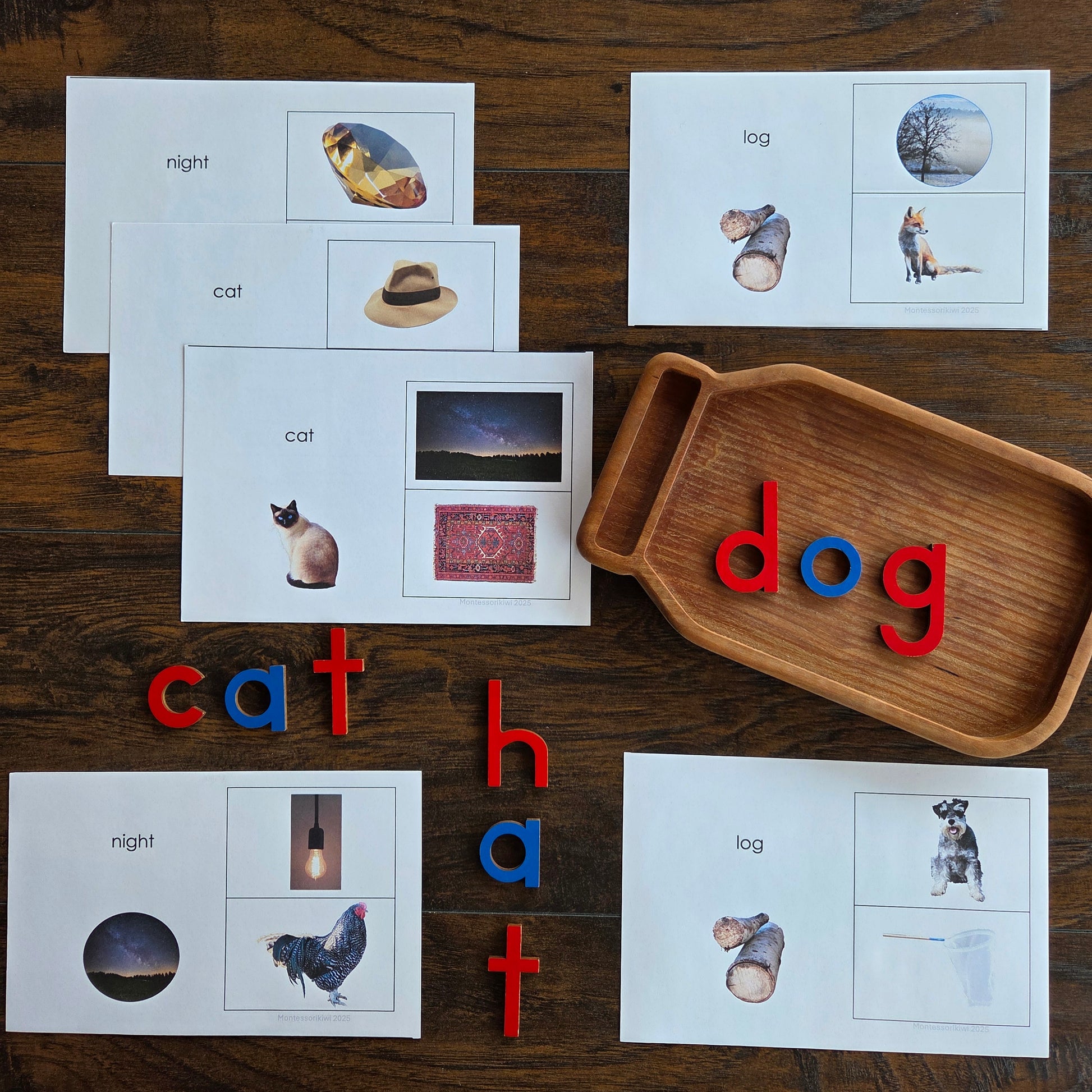
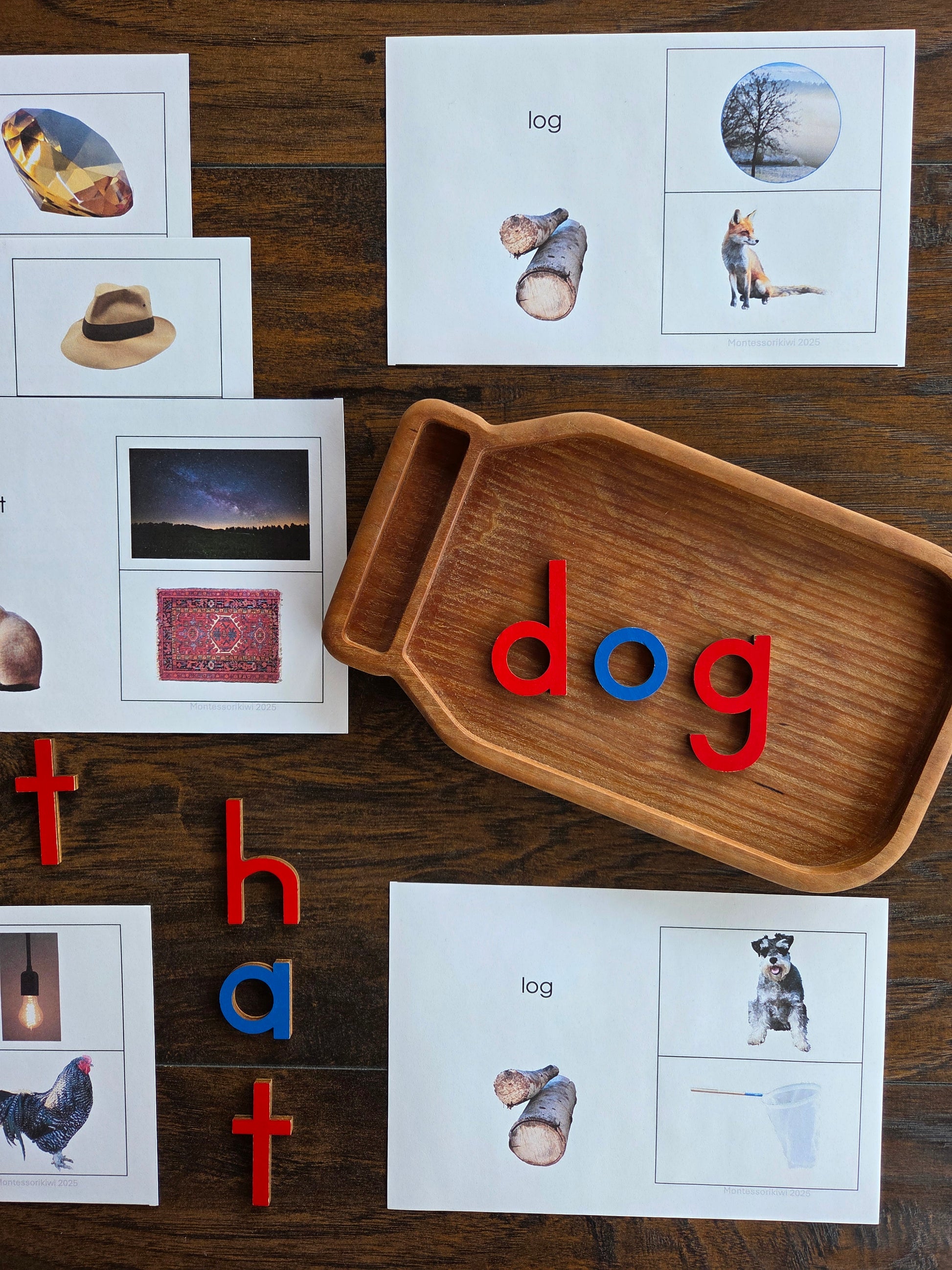
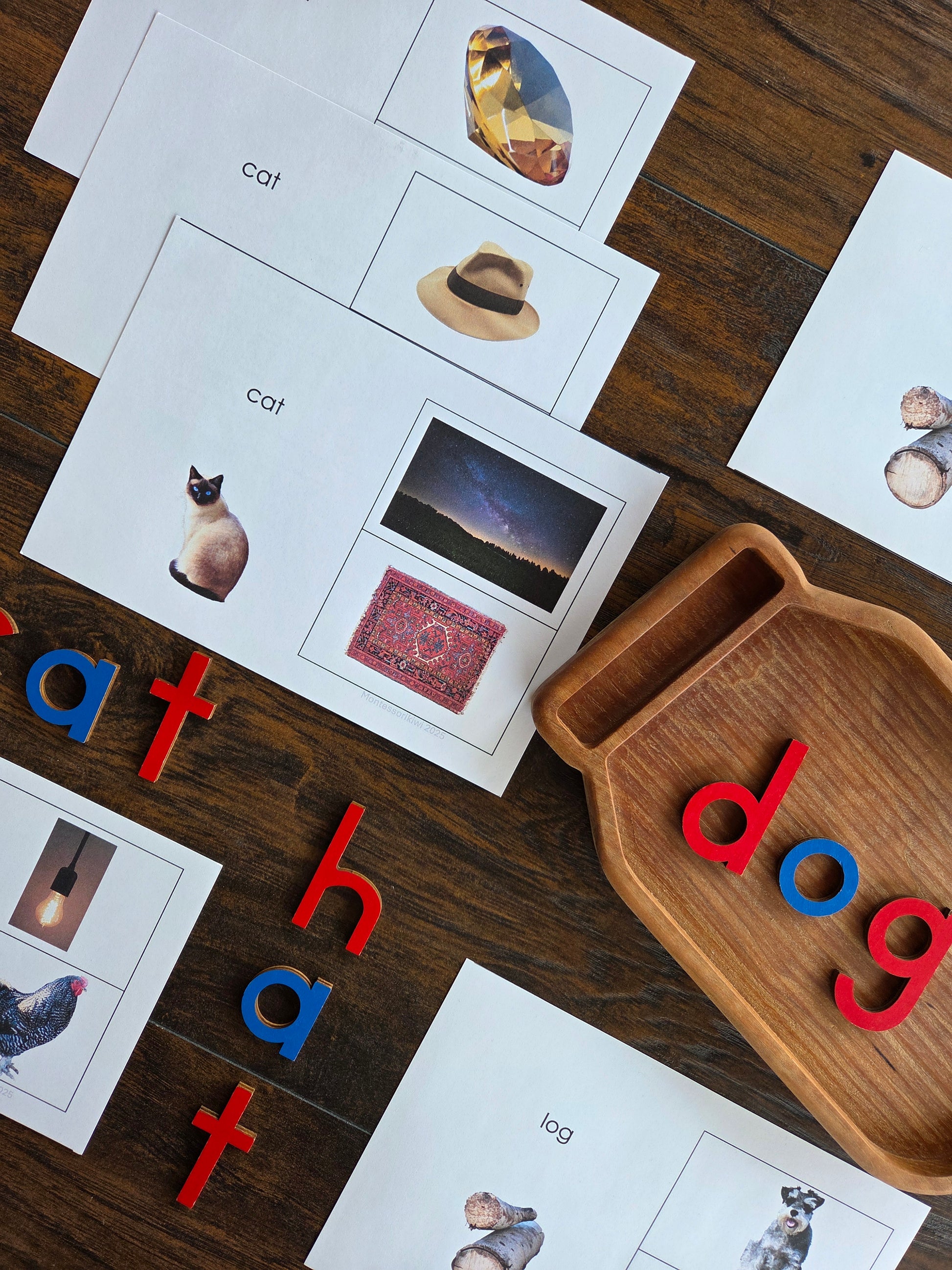
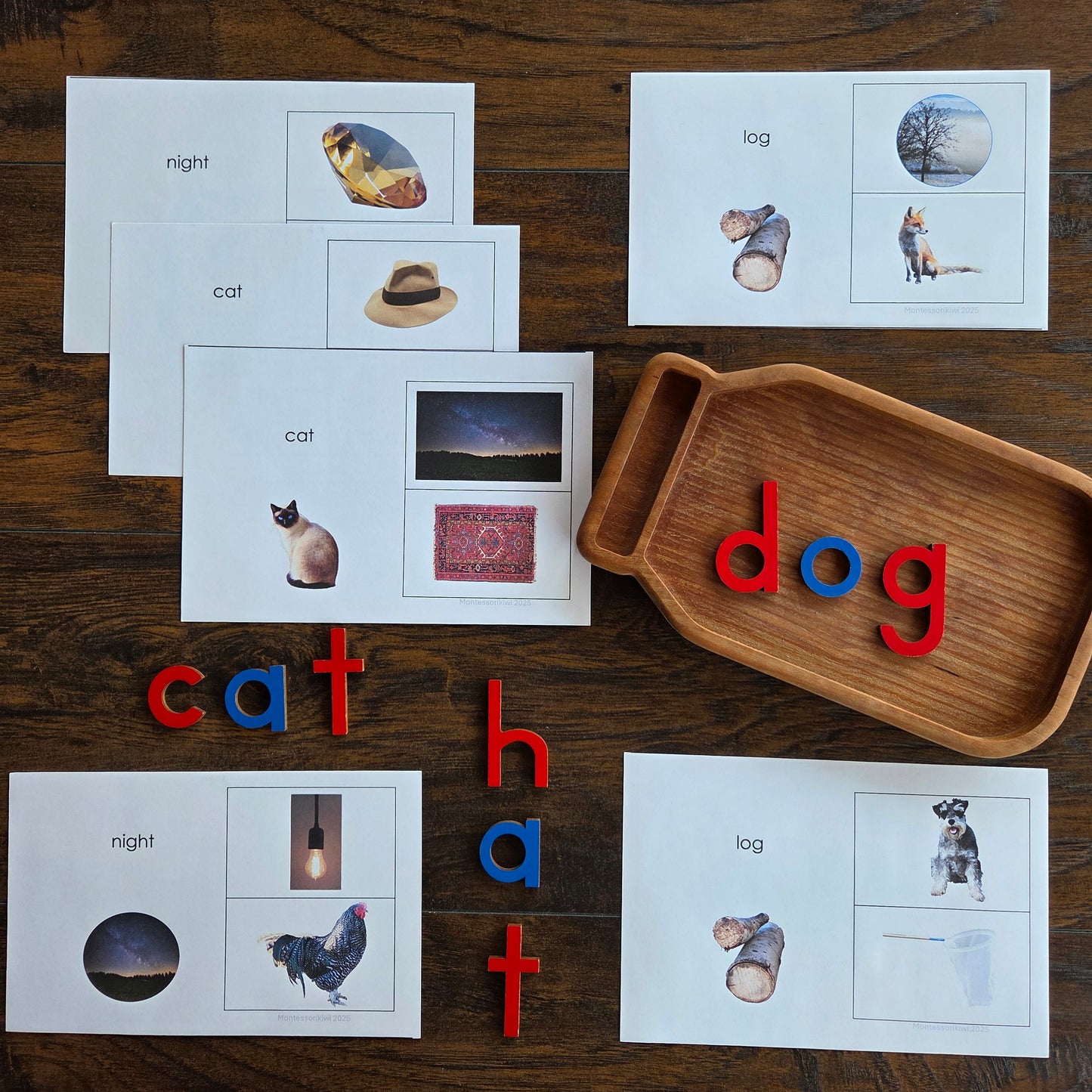
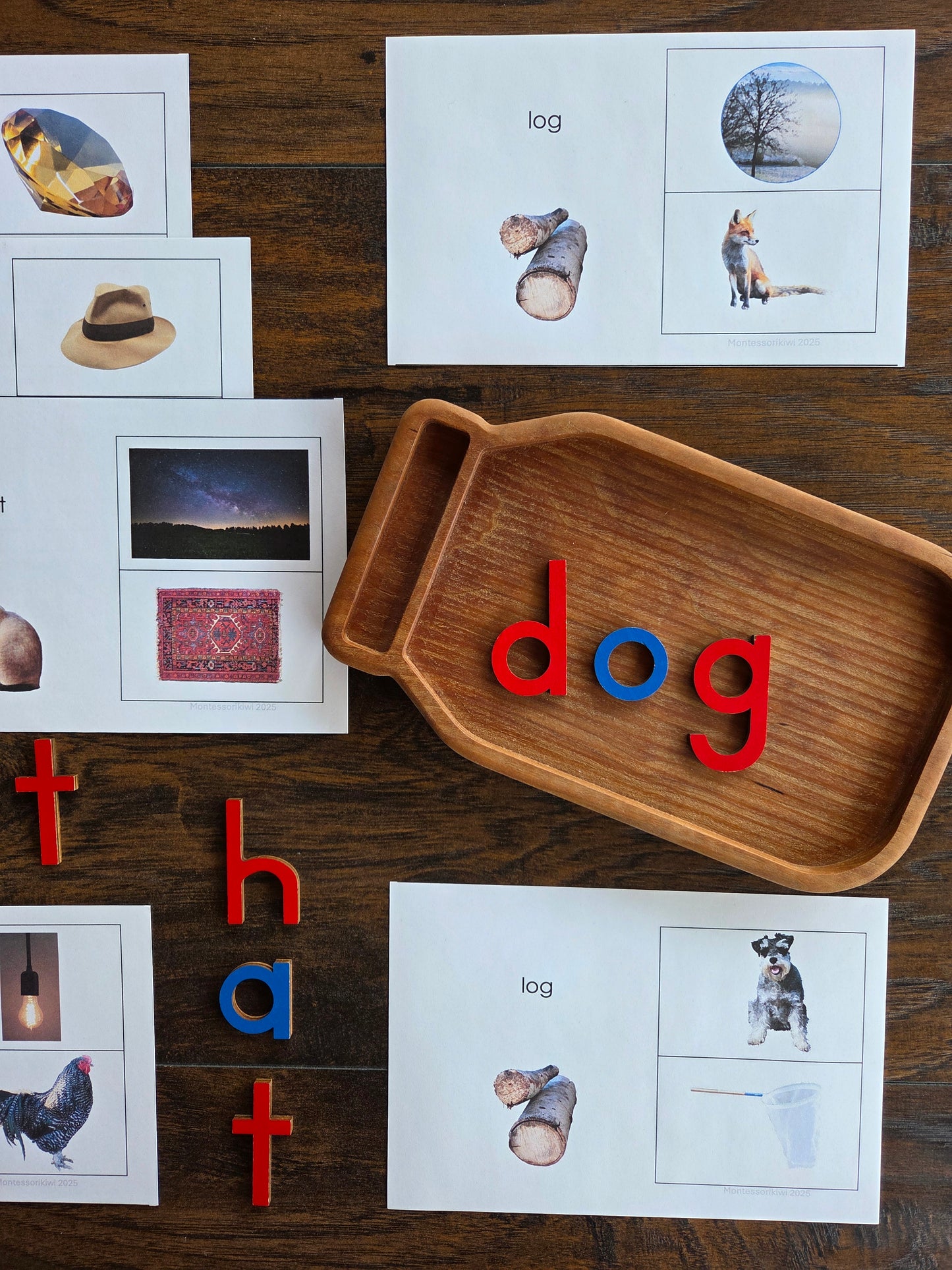
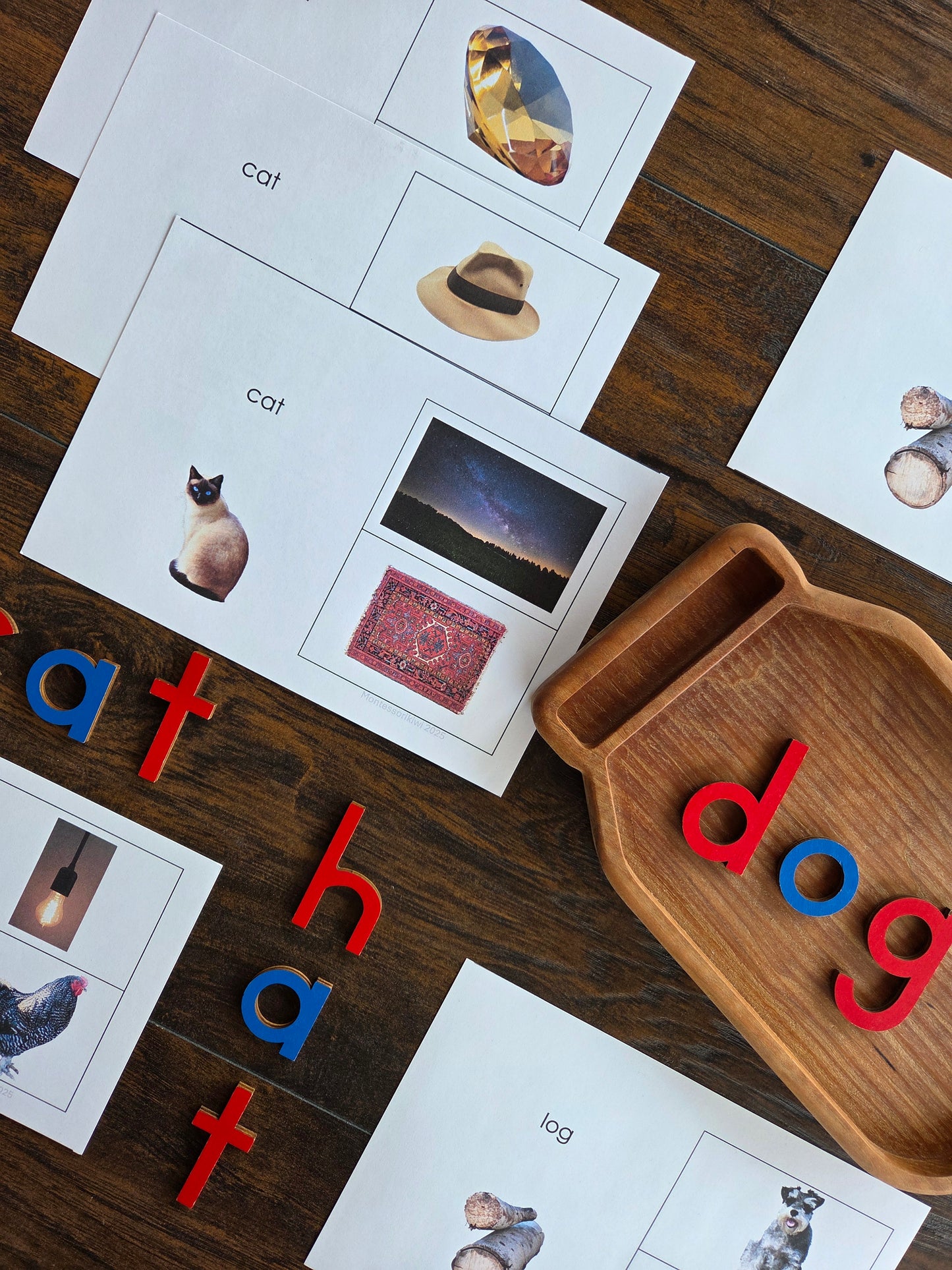
Children look at the starting picture and word, choose which picture rhymes, clip their answer with a peg and then flip the card over to check their work independently.
Designed for Montessori classrooms, phonological awareness lessons, Science of Reading-aligned literacy instruction, intervention and homeschool learning, these cards provide meaningful practice for children who need more than songs and nursery rhymes to confidently hear rhyme.
🌿 At a Glance
✔ Hands-on rhyming clip-and-flip cards
✔ Supports early phonological awareness
✔ Uses real picture prompts
✔ Self-correcting grey-circle answer system
✔ Includes full teaching notes
✔ 26-page printable PDF
✔ Low-prep format for independent or small-group use
✔ Ideal for Montessori shelves, literacy centres, intervention and homeschool learning
📚 What's Included?
This printable rhyming resource includes:
- Rhyming clip-and-flip cards
- Real picture prompts
- Self-correcting answer format
- Grey-circle self-check system
- Full teaching notes
- 26-page PDF
- Low-prep printable format
Children look at the starting picture and word, say it aloud, consider the two picture choices and clip the picture that rhymes.
They can then flip the card over to check their answer independently.
Rhyming Words Included
The cards include practice with words such as:
- cat
- night
- red
- lip
- log
- sun
- fox
- wet
- ten
- stone
- hive
- ring
- moon
- star
- chair
- bell
- kite
- train
Why Is Rhyming Important?
Some children seem to pick up rhyme naturally through songs, books and nursery rhymes.
Others do not.
A child may know the names of the pictures, enjoy listening to stories and still find it genuinely difficult to hear that cat and hat share the same ending sound.
That is why explicit rhyming practice can be valuable.
Rhyming helps children develop awareness that spoken words can be broken apart and compared by sound. It supports broader phonological awareness and helps prepare children for later work with:
- Word families
- Onset and rime
- Decoding
- Spelling patterns
- Phoneme manipulation
More Than a Cute Matching Activity
This is not simply a picture-matching game.
The child needs to:
- Say or hear the starting word
- Listen carefully to the ending sound
- Compare the two possible answers
- Choose the picture that rhymes
- Check the answer independently
The clip-and-flip format makes the activity concrete, visual and self-correcting.
Children are not simply waiting for an adult to tell them whether they are right. They make a choice, check their own answer and build independence.
Why Use Real Pictures?
Real picture prompts help children connect spoken language with meaning.
This can be especially useful for:
- Young learners
- Children developing oral language
- Multilingual learners
- Neurodivergent children
- Children who need extra support connecting vocabulary and sound
The clear visual support makes the task easier to access without taking away the need to listen carefully to the words.
How to Use the Cards
Print the pages double-sided, cut out the cards and give the child a peg or clip.
Before independent use, revise what a rhyming word is. I like to tell children to listen carefully to the end of the word because rhyming words have the same ending sound.
Model one card by:
- Saying the starting word aloud.
- Looking at the two picture choices.
- Saying the possible answers aloud.
- Choosing the picture that rhymes.
- Clipping the answer.
- Flipping the card over to check.
Once the child understands the process, the activity can be placed on the Montessori language shelf for independent work.
🌿 Perfect For
- Montessori language shelves
- Phonological awareness lessons
- Science of Reading-aligned early literacy
- Preschool and kindergarten literacy centres
- Small-group intervention
- Speech and language support
- Morning tubs
- Independent work
- Homeschool reading readiness
- Children who need extra practice hearing rhyme
A Note From My Classroom
In my own teaching, if a child is consistently finding rhyme difficult, I do not rush them into more print-heavy work.
I go back to oral language, songs, nursery rhymes, movement and listening games.
Rhyming is a foundation skill, and some children simply need more time and more explicit opportunities to hear the pattern before they can apply it confidently.
This resource gives children that extra practice in a calm, purposeful way. It fits naturally with Montessori practice because it is hands-on, self-correcting and can be used independently after a clear presentation.
🔗 Related Resources
Continue building strong early phonological awareness and reading readiness with these related resources:
🌿 Modern Montessori Reading Collection
Explore hands-on resources for phonological awareness, phonics, decoding, spelling patterns, sentence reading and comprehension.
Explore the Modern Montessori Reading Collection →
🌿 CVC Sentence Frames
Help children move from reading individual CVC words towards supported sentence reading and beginning writing.
Explore the CVC Sentence Frames →
🌿 Simple Reading Comprehension Task Cards
Support the next step from decoding individual words to reading complete sentences for meaning.
Explore the Reading Comprehension Cards →
🌿 Modern Montessori Science of Reading Bundle
Looking for a broader literacy sequence? Explore a large collection of Montessori-aligned resources covering early phonological awareness, CVC words, digraphs, silent e, spelling patterns, decoding and reading comprehension.
Created by Lisa, a Montessori-trained teacher, NZ registered teacher, school principal and former homeschooler. My resources are designed with real learners in mind—including neurodivergent children—and focus on practical, affordable, low-prep materials that support independence.
Share
-
Items are secured / Terms of Use
Our items are secured. They are not able to be altered. We secure our items because they are our intellectual property and because we use art from artists who require that we secure our files.
You may not:
-resell our items or use them for commercial gain
-claim these items as your own
-modify this resource
-share them with others by any means e.g. electronic or hard copy
-
All Items are instant downloads
You will not get a printed product in the mail.
-
All prices are in USD
Due to the international nature of our customers our prices are all in USD. If you wish to work out the conversion before you buy we recommend www.xe.com