


montessorikiwi
Short and Long Vowel Listening Sort | Montessori Science of Reading Phonics
Short and Long Vowel Listening Sort | Montessori Science of Reading Phonics
Couldn't load pickup availability
Can your child hear the difference between a short vowel and a long vowel—or do words such as tap and tape still sound confusing?
Before children can confidently read more complex vowel patterns, they need to be able to hear the difference between short and long vowel sounds.
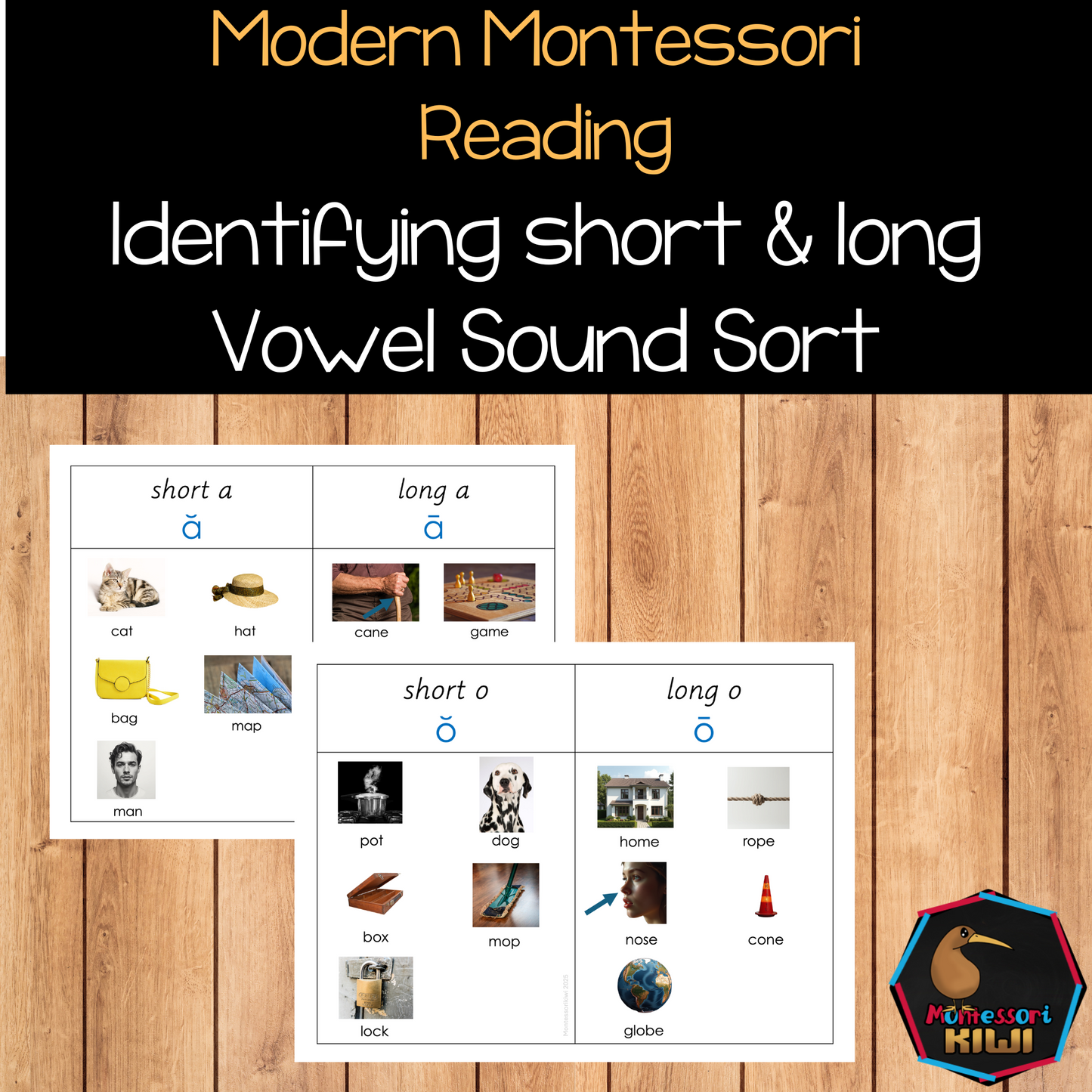
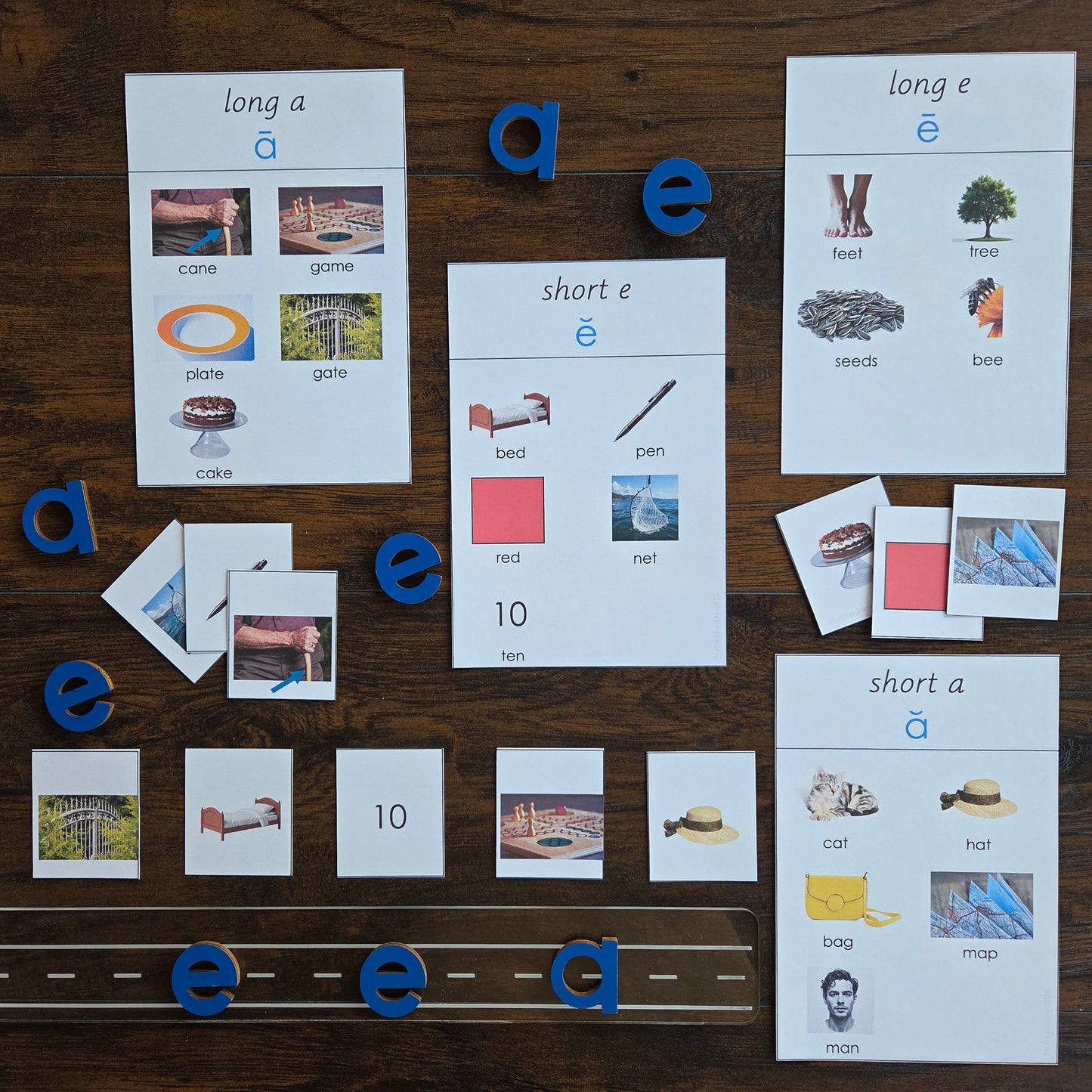
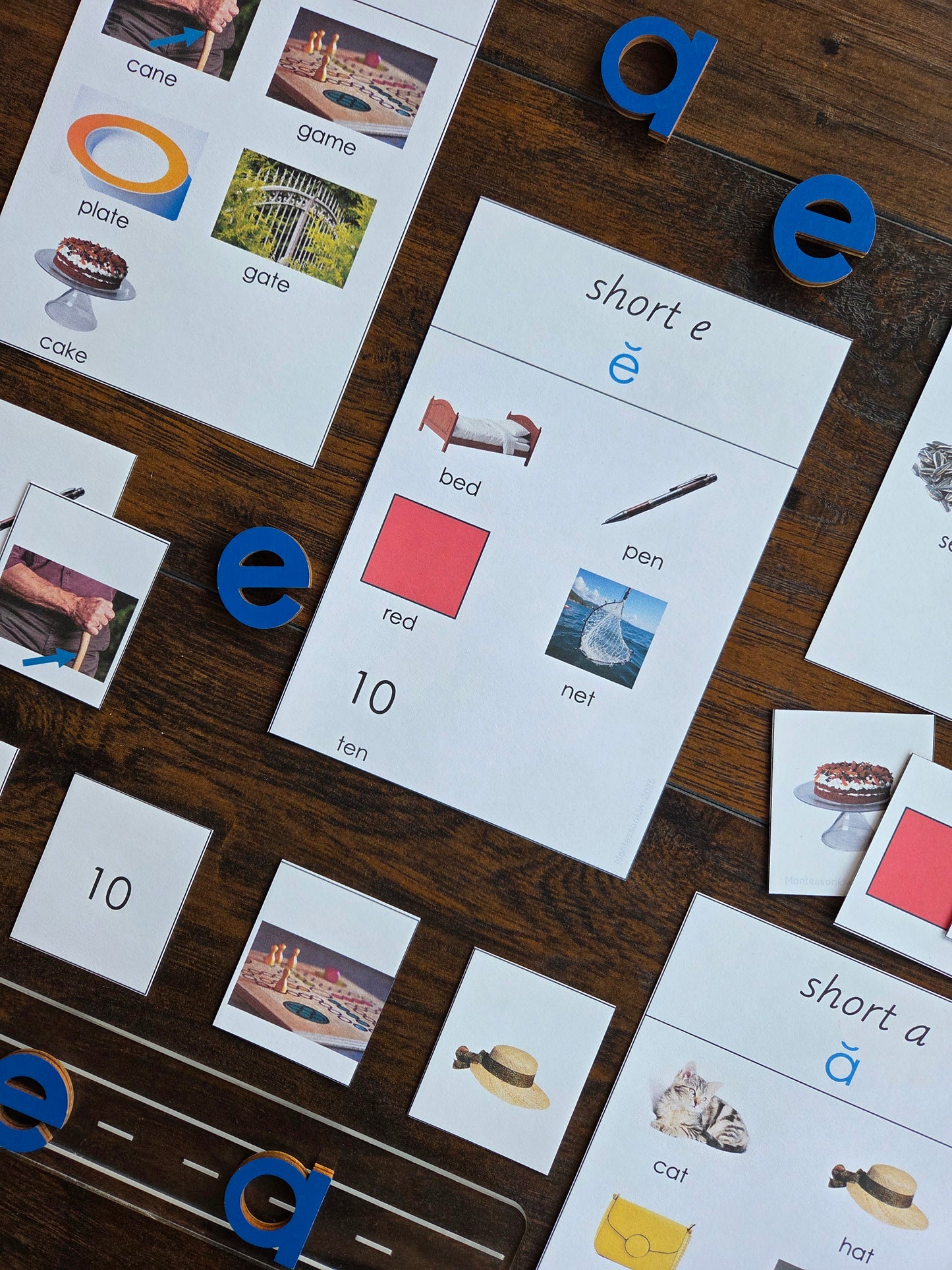
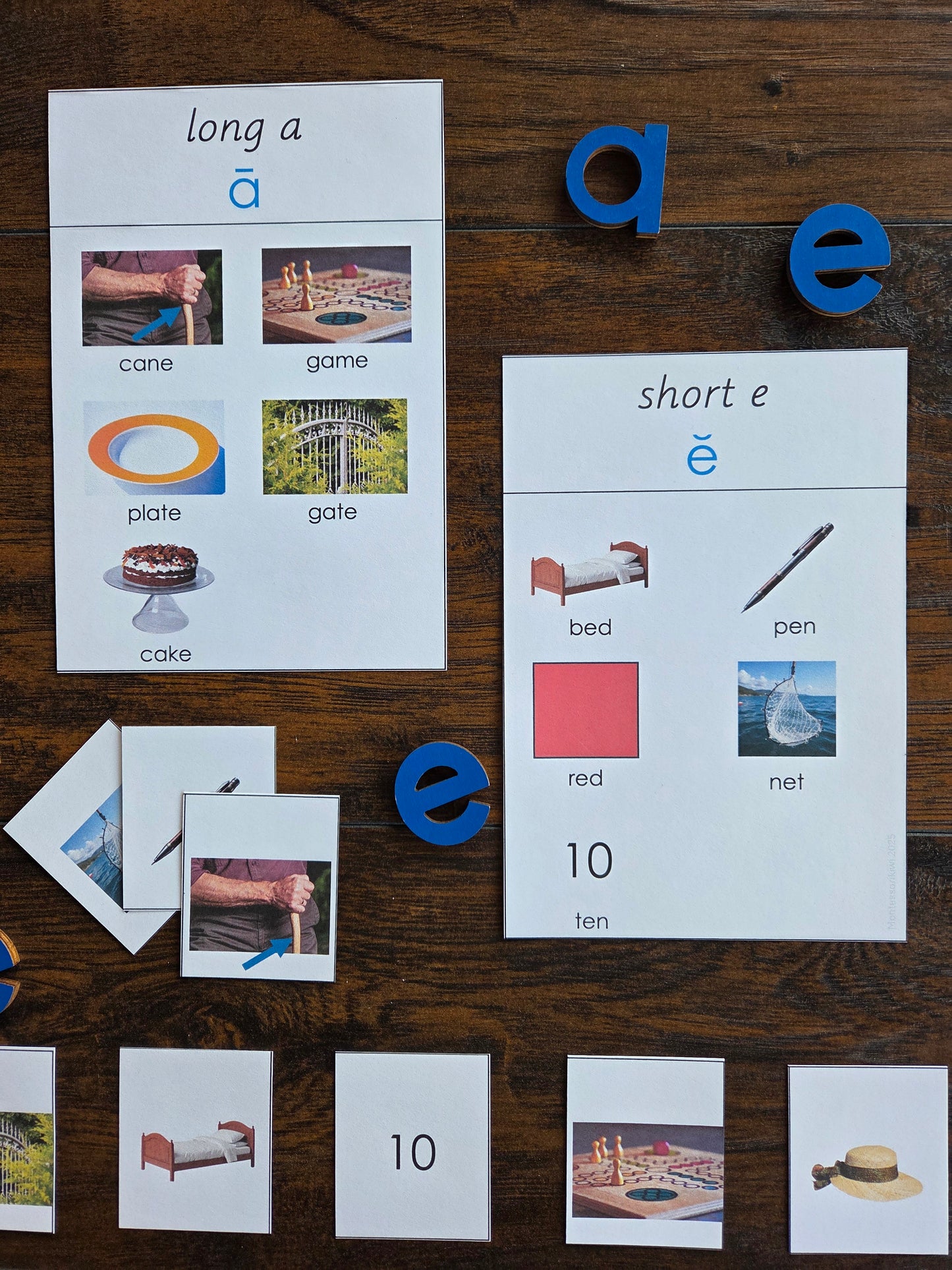
This hands-on Short and Long Vowel Listening Sort gives children focused practice listening to a word, identifying the vowel sound and deciding whether it belongs with the short or long vowel category.
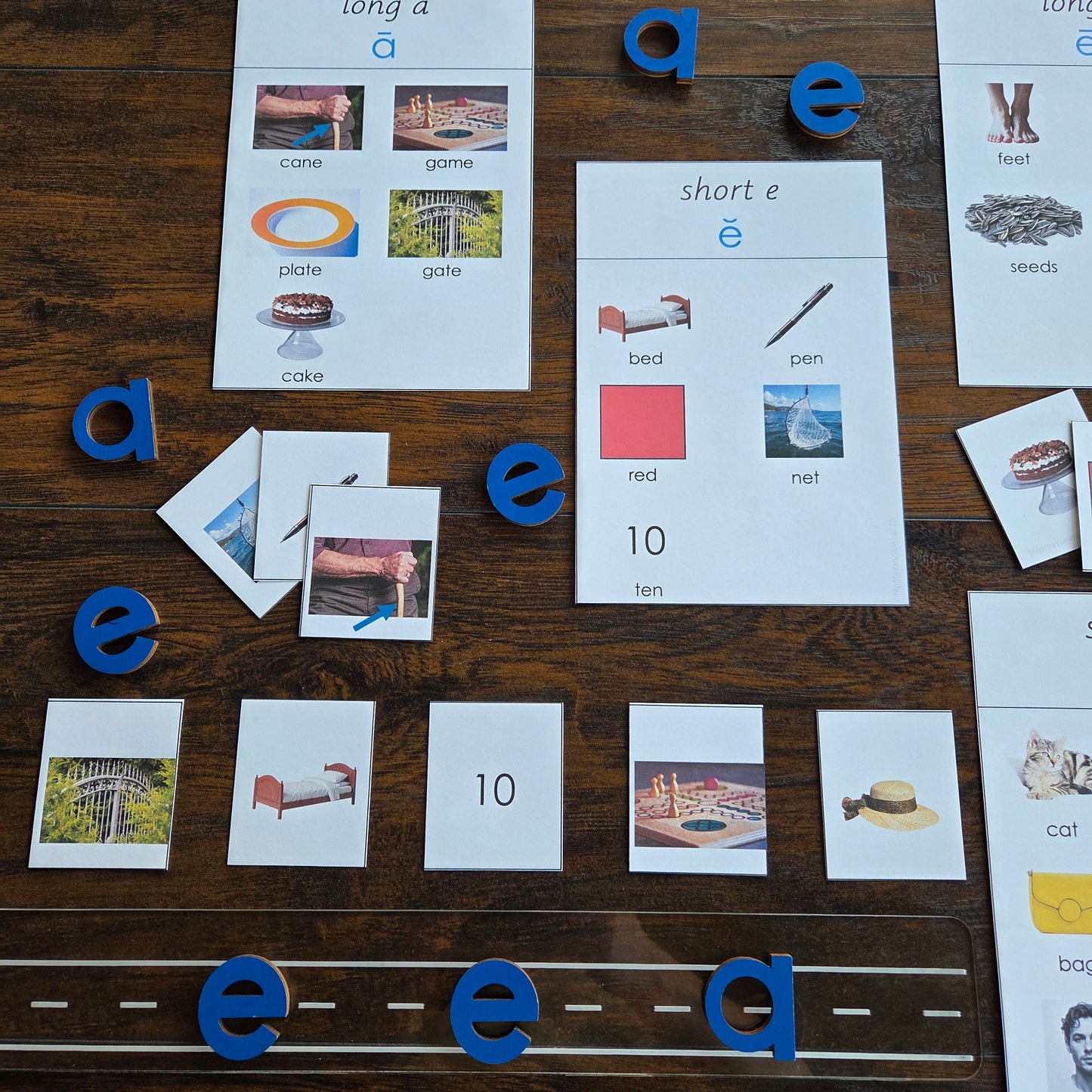
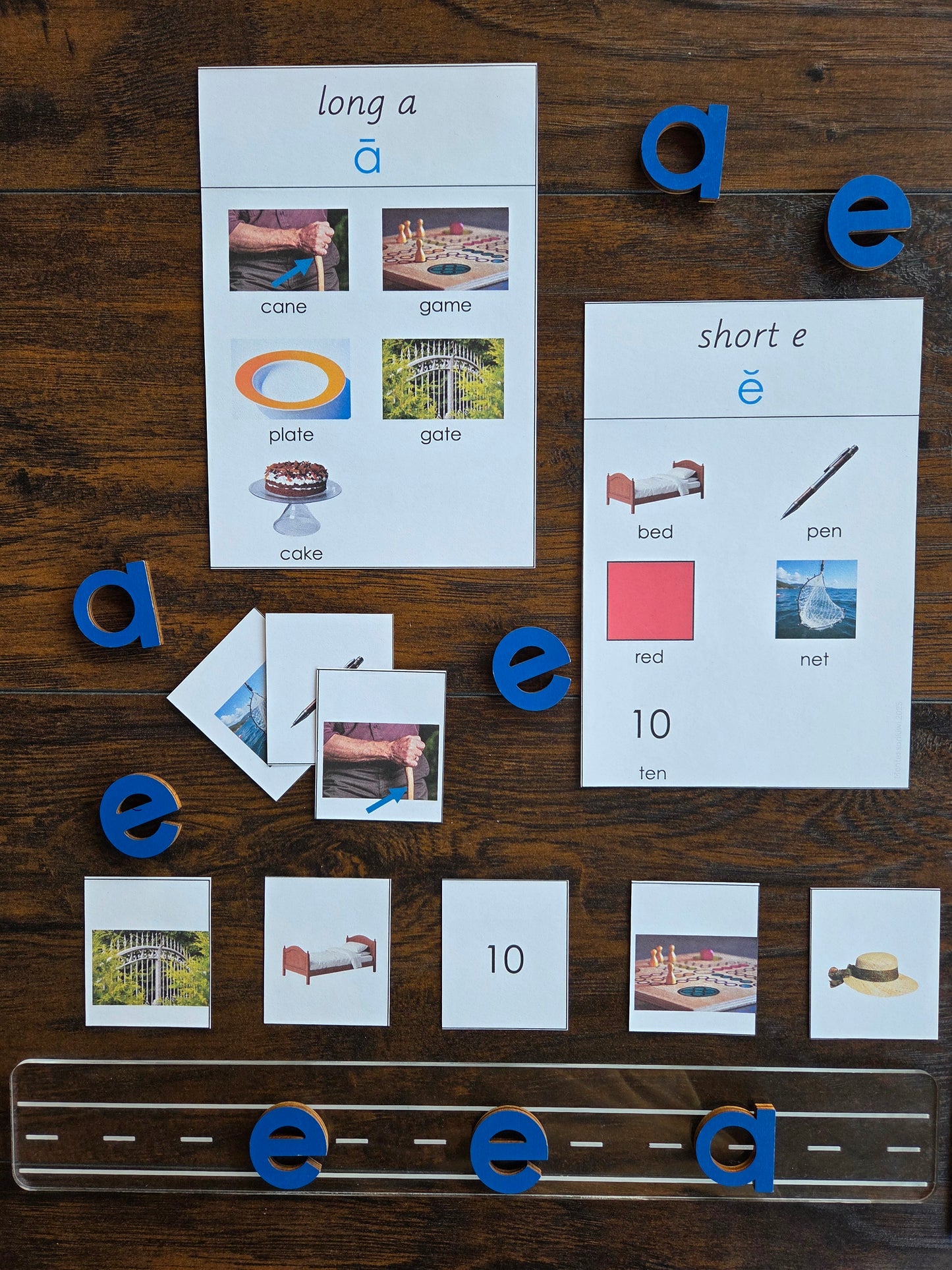
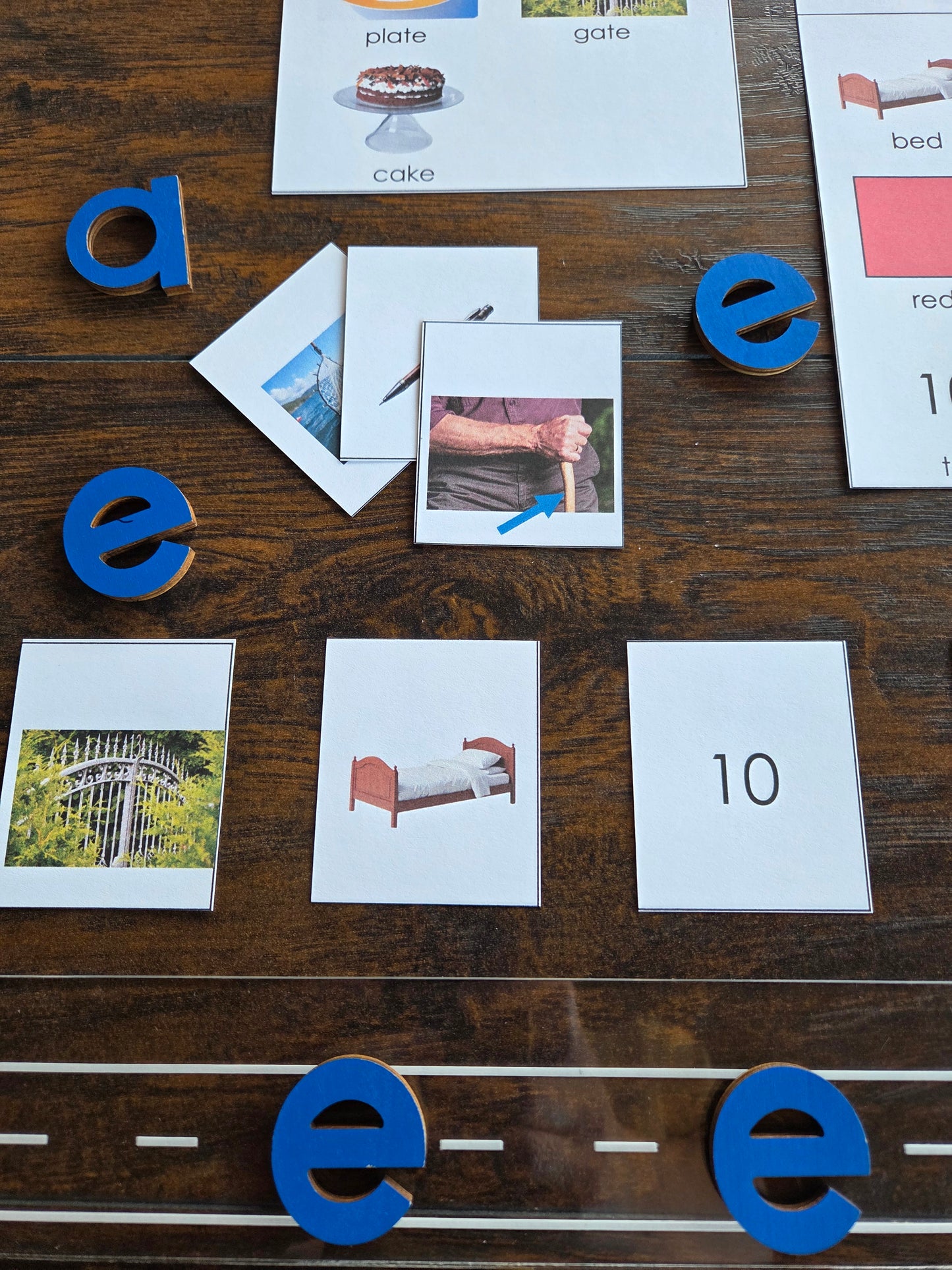
Children look at each picture, say or hear the word aloud and sort it according to the vowel sound they hear.
Instead of relying on print alone, the activity asks children to listen closely to spoken language and notice how the vowel changes.
Designed for Montessori classrooms, Science of Reading-aligned phonics instruction, phonemic awareness, structured literacy, intervention and homeschool learning, this resource provides an important bridge between hearing vowel sounds and recognising them later in written words.
🌿 At a Glance
✔ Hands-on short and long vowel listening sort
✔ Children sort pictures according to the vowel sound they hear
✔ Supports discrimination between short and long vowel sounds
✔ Picture-based format keeps the focus on listening rather than decoding
✔ Includes teaching notes
✔ Includes answer cards for self-correction
✔ Easily differentiated by using only some of the cards at one time
✔ Supports phonemic awareness, phonics and later vowel-pattern reading
✔ Ideal for Montessori shelf work, small groups, intervention and homeschool learning
📚 What's Included?
This printable vowel-sound resource includes:
- Picture sorting cards
- Short vowel sorting categories
- Long vowel sorting categories
- Teaching notes
- Answer cards for self-correction
Children look at each picture, say or listen to the word and decide whether the vowel sound is short or long.
The activity can be made easier by presenting only a smaller selection of cards at one time.
Why Hearing Short and Long Vowels Matters
A child may know the names of the vowels and still find it difficult to hear the difference between:
- tap and tape
- kit and kite
- hop and hope
That distinction matters because the vowel sound is often what changes the entire word.
Before children can confidently recognise spelling patterns such as silent e or vowel teams, they need opportunities to hear and compare the sounds themselves.
This activity keeps the focus on listening.
Why Use Pictures Instead of Written Words?
Because this is an aural sorting activity, the child does not need to decode the written word first.
That means the task focuses more directly on the sound.
The child needs to:
- Look at the picture
- Name or hear the word
- Listen carefully to the vowel
- Decide whether the sound is short or long
- Place the picture in the correct group
This can be particularly useful for children who need more phonemic-awareness practice before moving into more complex written vowel patterns.
From Hearing the Vowel to Reading the Pattern
This activity supports a clear developmental progression:
hear the word → isolate the vowel sound → decide whether it is short or long → sort the picture → self-check.
That listening foundation can support later work with:
- CVC words
- CVCe / silent e words
- Long vowel teams
- Spelling patterns
- Word analysis
Why Can Vowel Sounds Be Tricky?
Consonants are often easier for beginning readers to hear clearly.
Vowels can be more difficult because:
- They occur in the middle of words
- The sound may change depending on the spelling pattern
- Several vowel spellings can represent similar sounds
- Children may know the vowel name but not recognise the sound inside a word
Repeated listening practice helps children become more attentive to the vowel sound rather than simply guessing from the first or final consonant.
What Skills Does This Resource Support?
Children will practise:
- Short and long vowel discrimination
- Phonemic awareness
- Listening discrimination
- Identifying medial vowel sounds
- Oral language
- Preparation for CVC and CVCe reading
- Preparation for vowel-team study
- Sorting and classification
- Independent self-correction
Why Sort Short and Long Vowels Side by Side?
Contrasting two sound categories helps children notice the difference more clearly.
Rather than practising one vowel sound in isolation, children compare examples and ask:
- What vowel sound can I hear?
- Is it short or long?
- Does it sound more like the vowel in tap or tape?
This kind of contrastive practice can make subtle sound differences easier to notice.
Easy to Differentiate
Not every child needs the full set of cards at once.
For a child who is just beginning, you might offer:
- Only one vowel contrast
- A small number of pictures
- Just short vowels
- Just long vowels
- Two clearly different categories at a time
As confidence grows, you can gradually increase the number of cards and vowel contrasts.
This makes the activity particularly useful for mixed-age Montessori environments and intervention work.
How to Use the Activity
Begin by modelling a small number of examples.
You might say:
This is tap. Listen carefully to the middle sound: /ă/. That is a short vowel sound.
Then compare it with:
This is tape. Listen to the vowel: /ā/. That is a long vowel sound.
Invite the child to:
- Choose a picture.
- Name or listen to the word.
- Say the word slowly.
- Listen to the vowel sound.
- Sort the picture under short or long vowel.
- Use the answer cards to check independently.
🌿 Perfect For
- Montessori language shelves
- Science of Reading-aligned phonics instruction
- Phonemic awareness lessons
- Structured literacy
- Short and long vowel practice
- Small-group instruction
- Reading intervention
- Literacy centres
- Independent shelf work
- Homeschool phonics lessons
Help Children Hear the Difference Before Asking Them to Read It
Before children can confidently recognise long and short vowel spelling patterns, they need opportunities to hear the contrast.
This activity provides a simple progression:
listen to the word → isolate the vowel → decide whether it is short or long → sort the picture → self-check.
That makes it a useful foundation for later work with CVC words, silent e, vowel teams and more advanced spelling patterns.
🔗 Related Resources
Continue building children's understanding of vowel sounds and spelling patterns with these related Montessori literacy resources:
🌿 Silent E Word Matching Cards
Help children compare CVC and CVCe words and notice how a final e changes the vowel sound.
Explore the Silent E Word Matching Cards →
🌿 Silent E Phonics Booklets
Give children structured reading, writing and comprehension practice with a_e, i_e, o_e and u_e.
Explore the Silent E Phonics Booklets →
🌿 Vowel Team Matching Cards
Move into more advanced long-vowel spellings including ai/ay, ee/ea, ie and oa/oe.
Explore the Vowel Team Matching Cards →
🌿 CVC Continuous Blending Picture Match
Support beginning readers who know letter sounds but need help blending them smoothly into complete words.
Explore the CVC Continuous Blending Cards →
🌿 Modern Montessori Reading Collection
Explore hands-on resources for phonemic awareness, CVC words, silent e, vowel teams, spelling patterns, syllables, sentence reading and comprehension.
Explore the Modern Montessori Reading Collection →
🌿 Modern Montessori Science of Reading Bundle
Looking for a broader literacy sequence? Explore Montessori-aligned resources covering phonological awareness, CVC words, digraphs, silent e, vowel teams, spelling generalisations, syllables, morphology, decoding and comprehension.
Created by Lisa, a Montessori-trained teacher, NZ registered teacher, school principal and former homeschooler. My resources are designed with real learners in mind—including neurodivergent children—and focus on practical, affordable, low-prep materials that support independence.
Share
-
Items are secured / Terms of Use
Our items are secured. They are not able to be altered. We secure our items because they are our intellectual property and because we use art from artists who require that we secure our files.
You may not:
-resell our items or use them for commercial gain
-claim these items as your own
-modify this resource
-share them with others by any means e.g. electronic or hard copy
-
All Items are instant downloads
You will not get a printed product in the mail.
-
All prices are in USD
Due to the international nature of our customers our prices are all in USD. If you wish to work out the conversion before you buy we recommend www.xe.com