montessorikiwi
Story Sequencing & Listening Comprehension Cards | Montessori Pre-Reading Activity | Montessori Science of Reading
Story Sequencing & Listening Comprehension Cards | Montessori Pre-Reading Activity | Montessori Science of Reading
Couldn't load pickup availability
Can your child listen to a story—but struggle to remember what happened first, what came next or how the story ended?
Understanding a story begins long before children can read it independently.
Children need to be able to listen carefully, form mental pictures, remember events, recognise sequence and retell what happened in a logical order.
These hands-on Story Sequencing & Listening Comprehension Activities help children build those important pre-reading and comprehension skills through two complementary approaches.
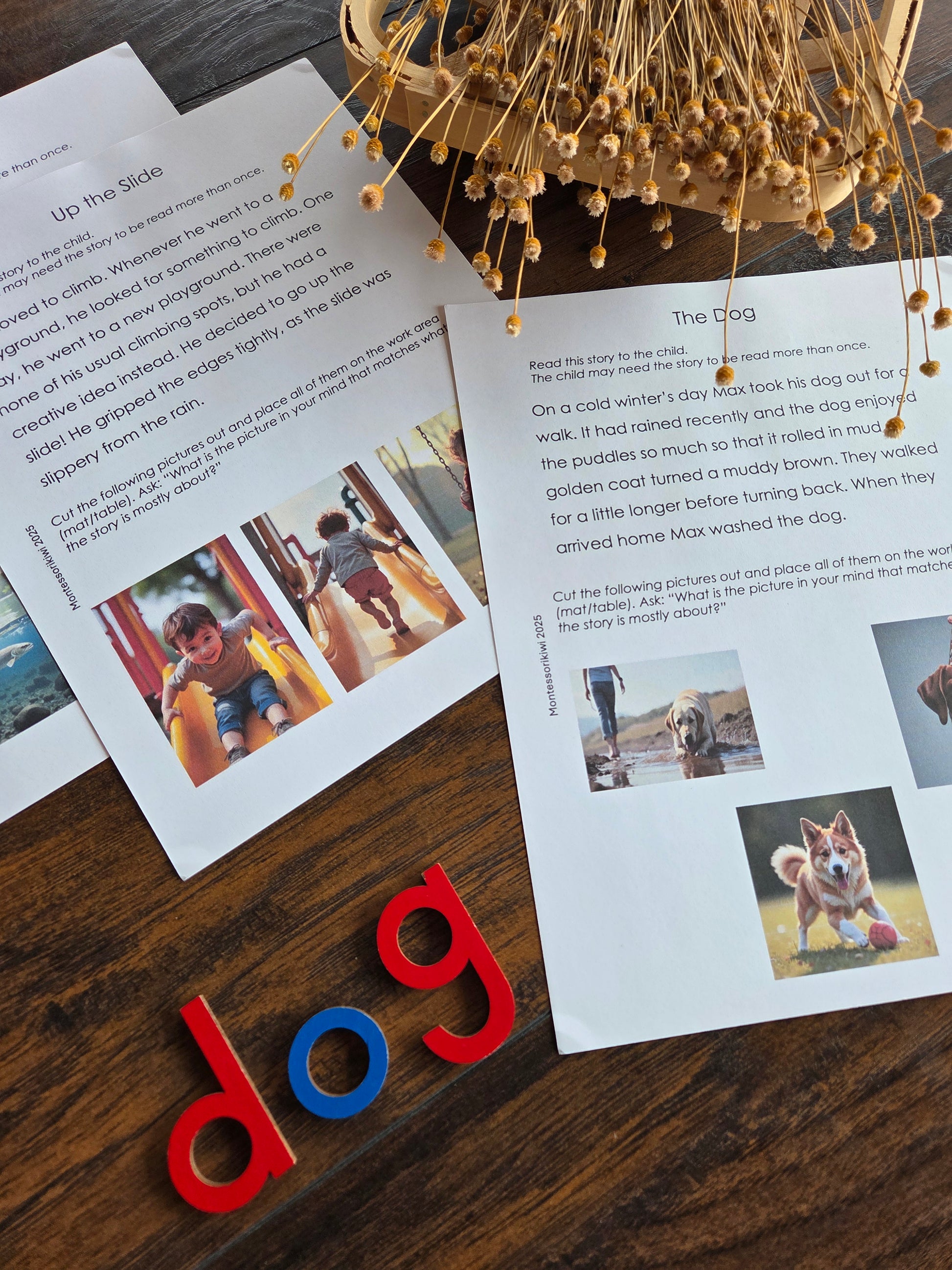
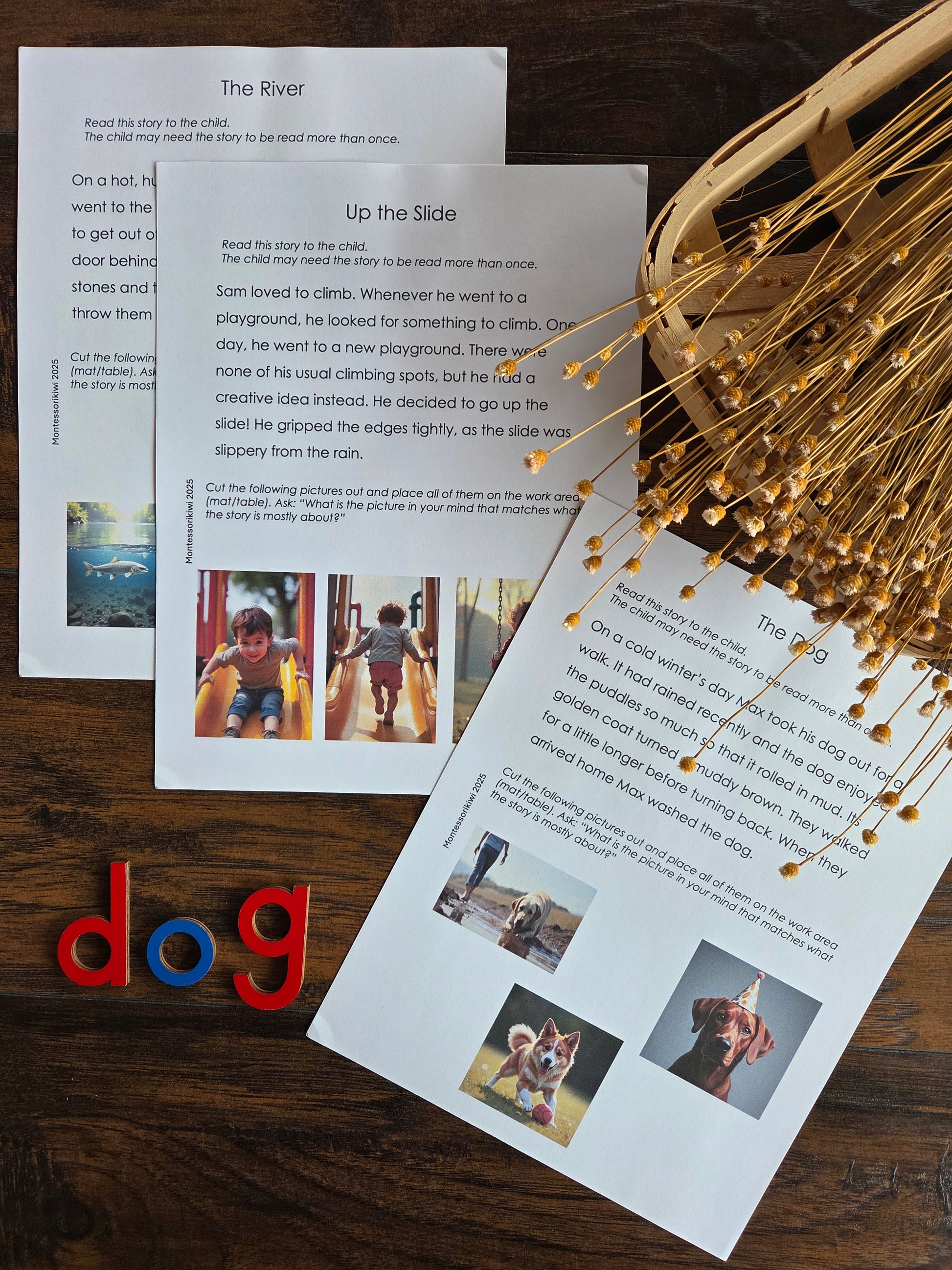
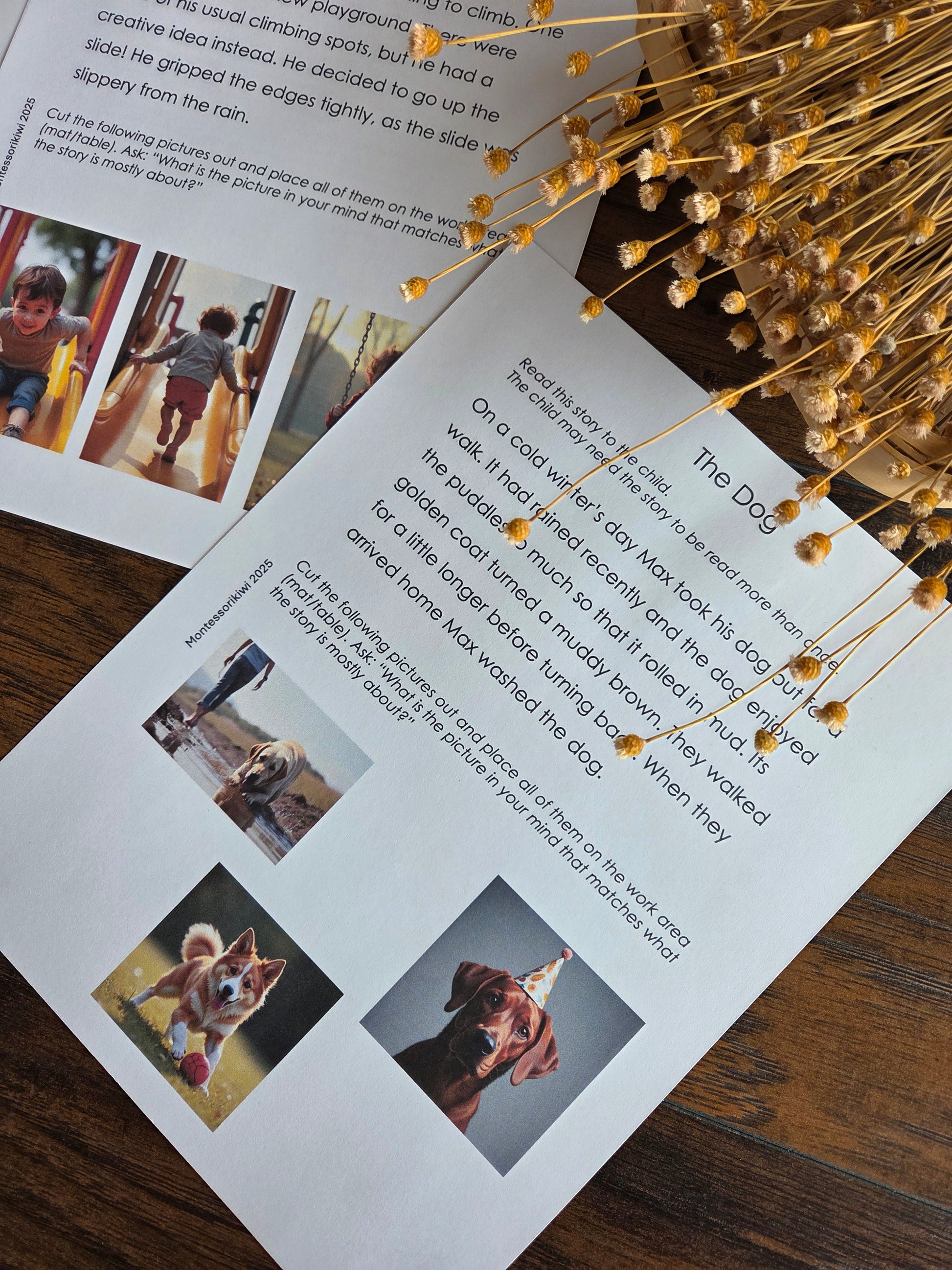
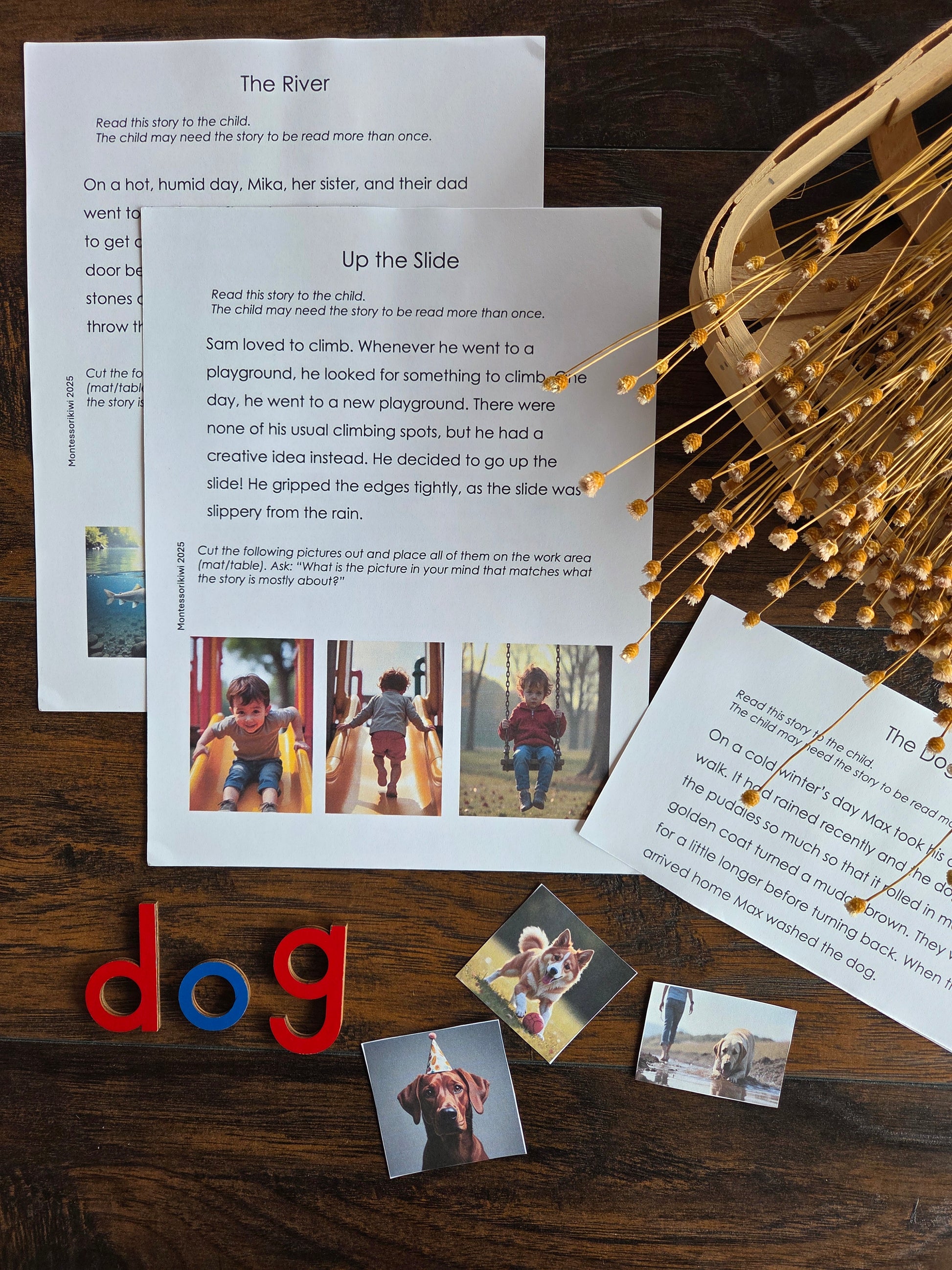
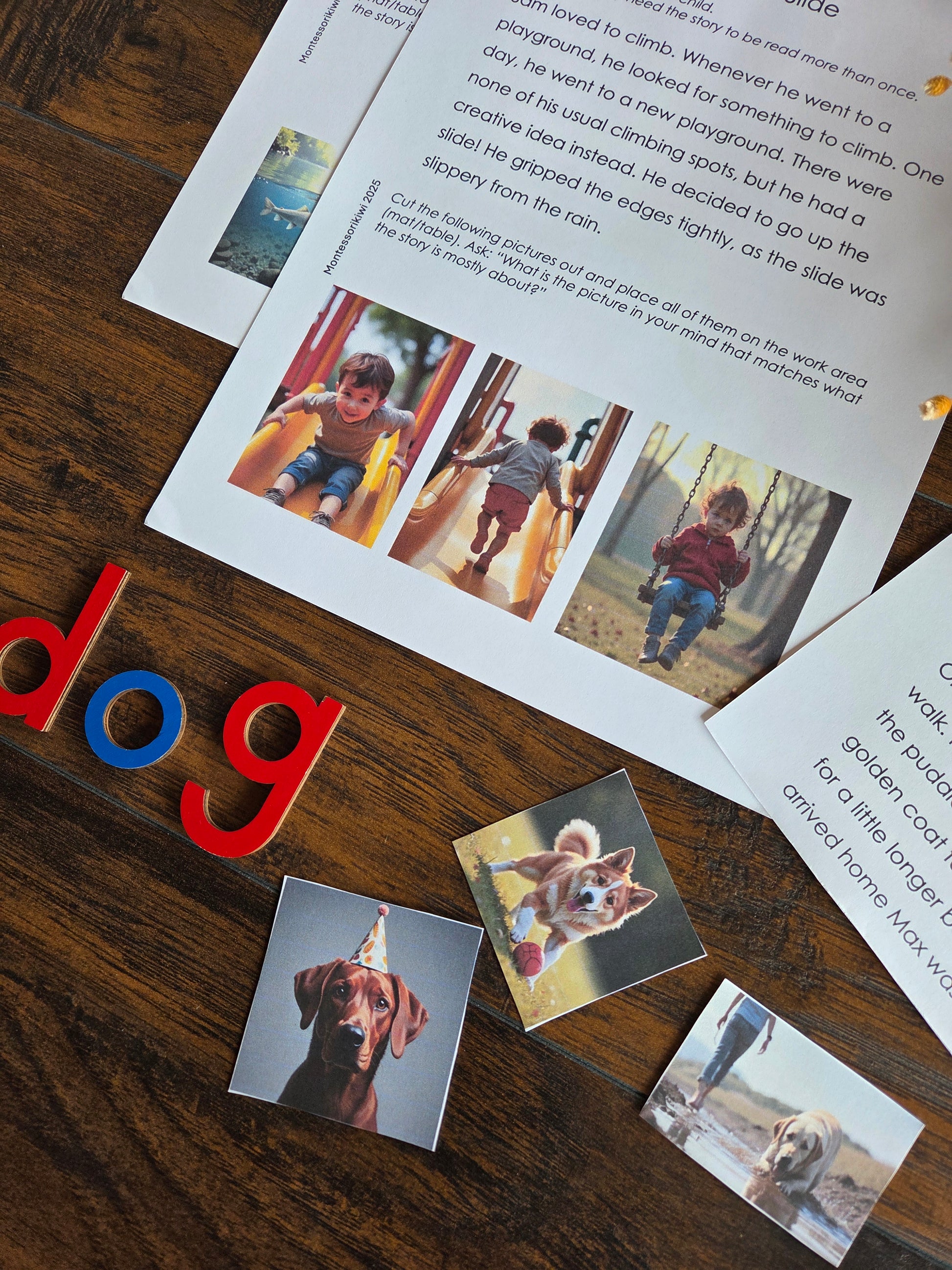
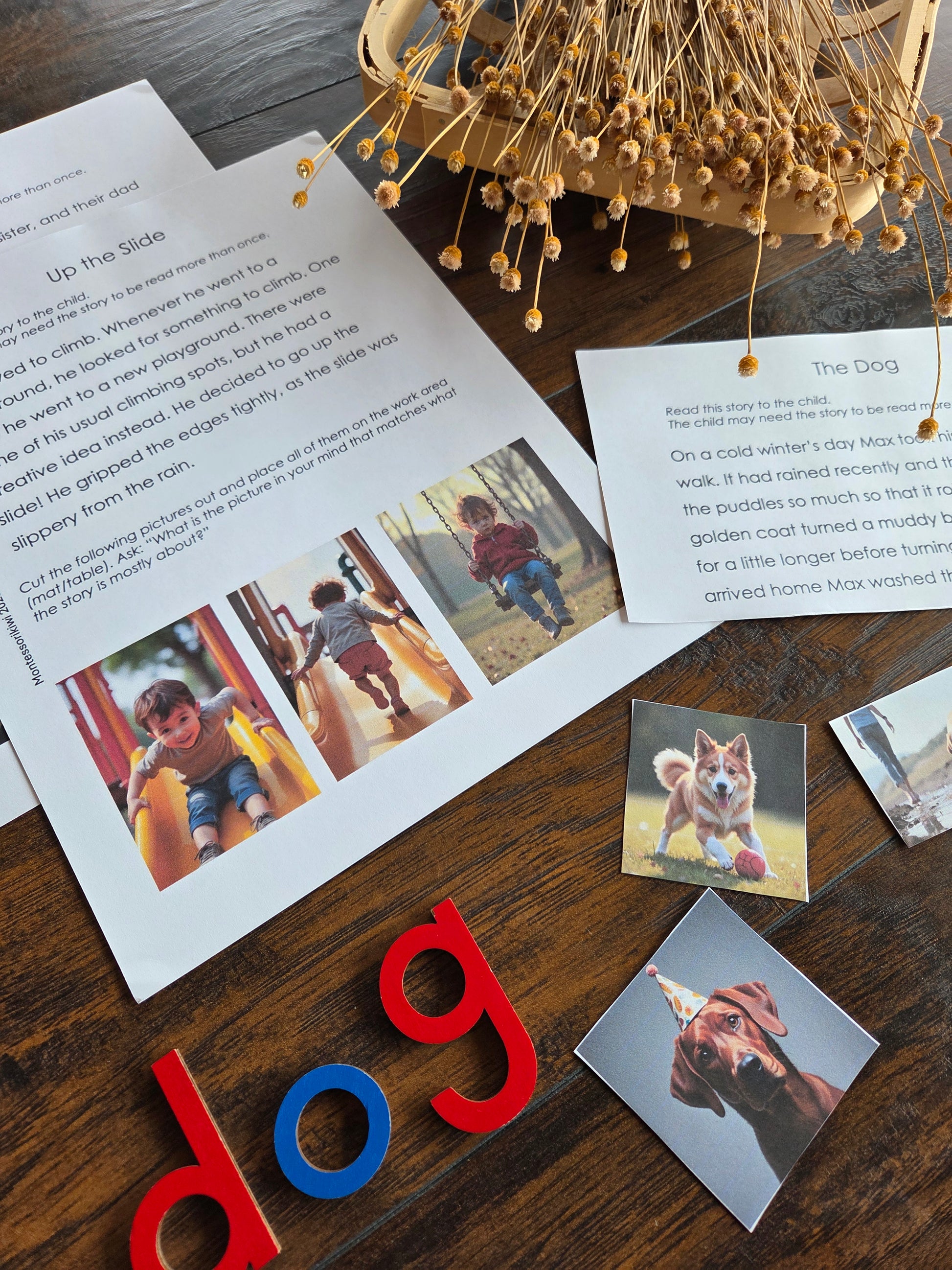
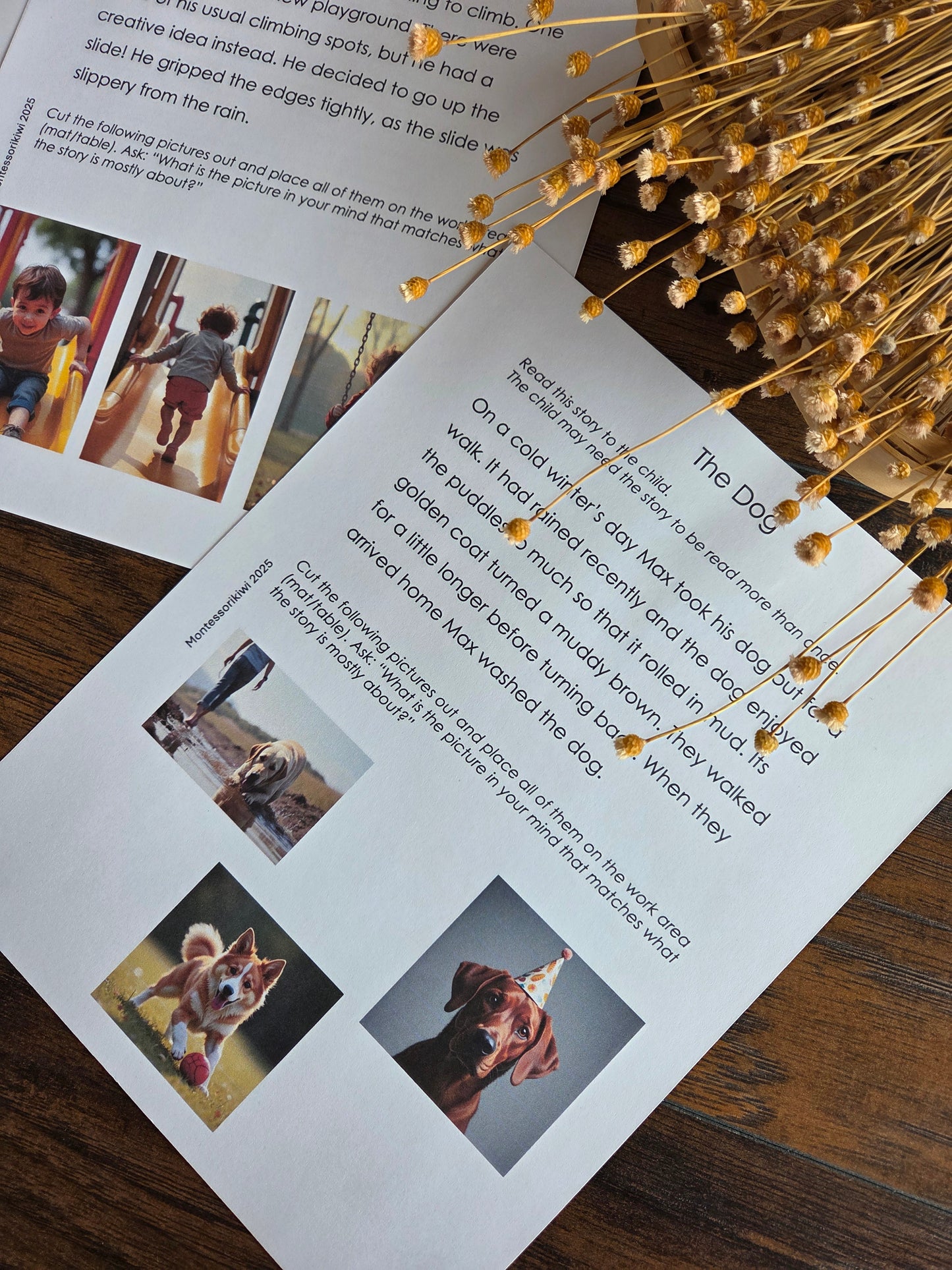
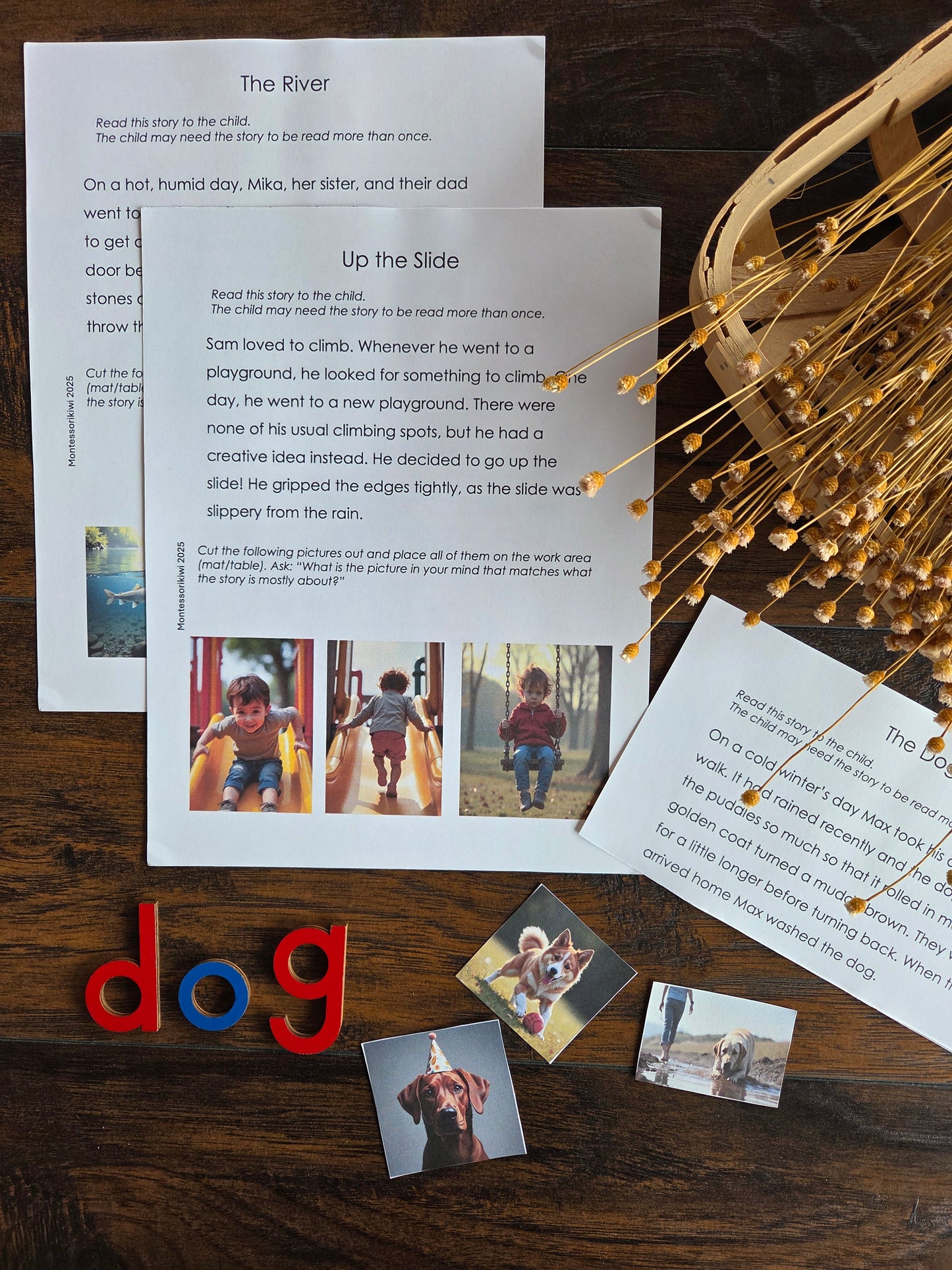
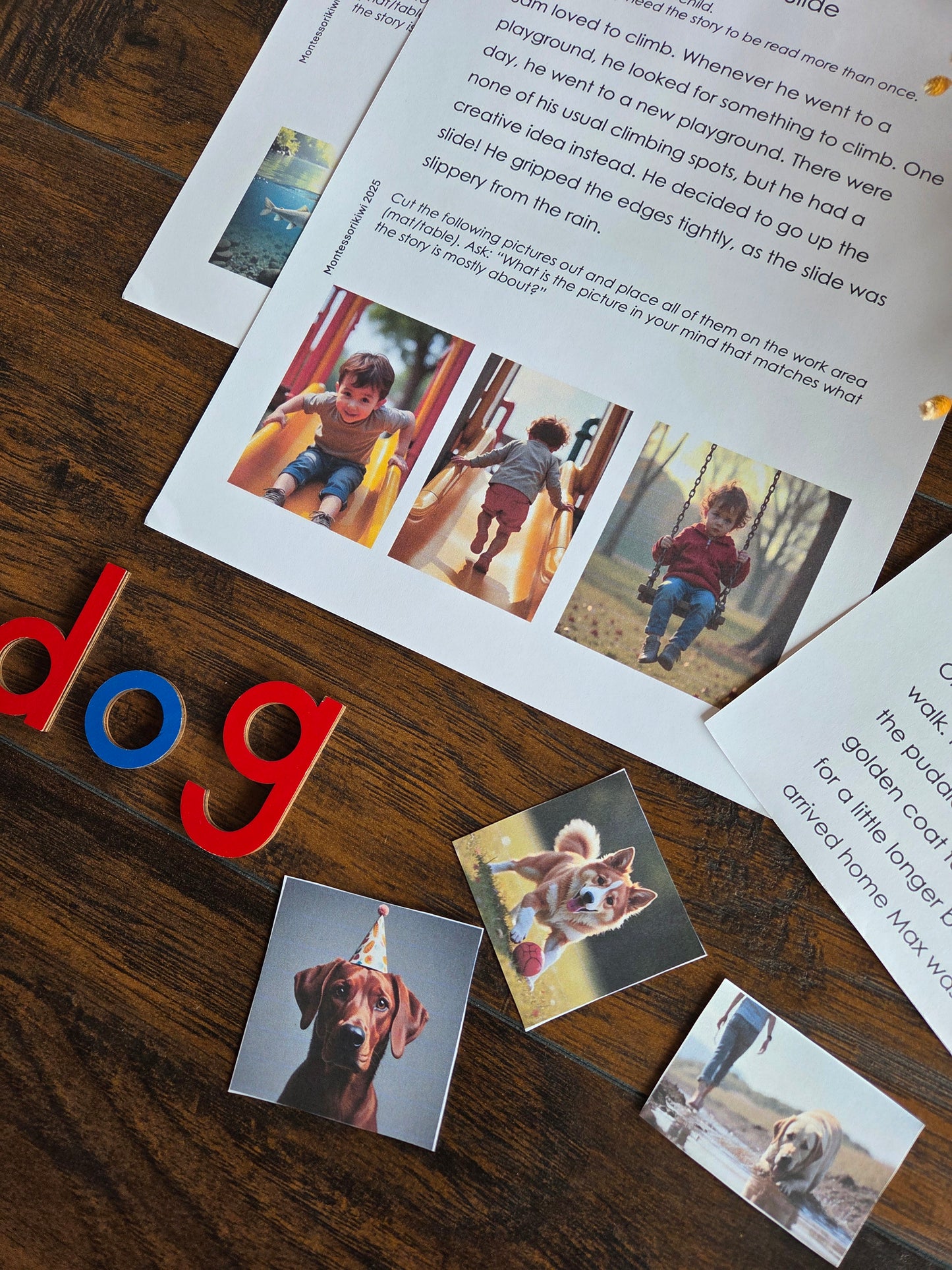
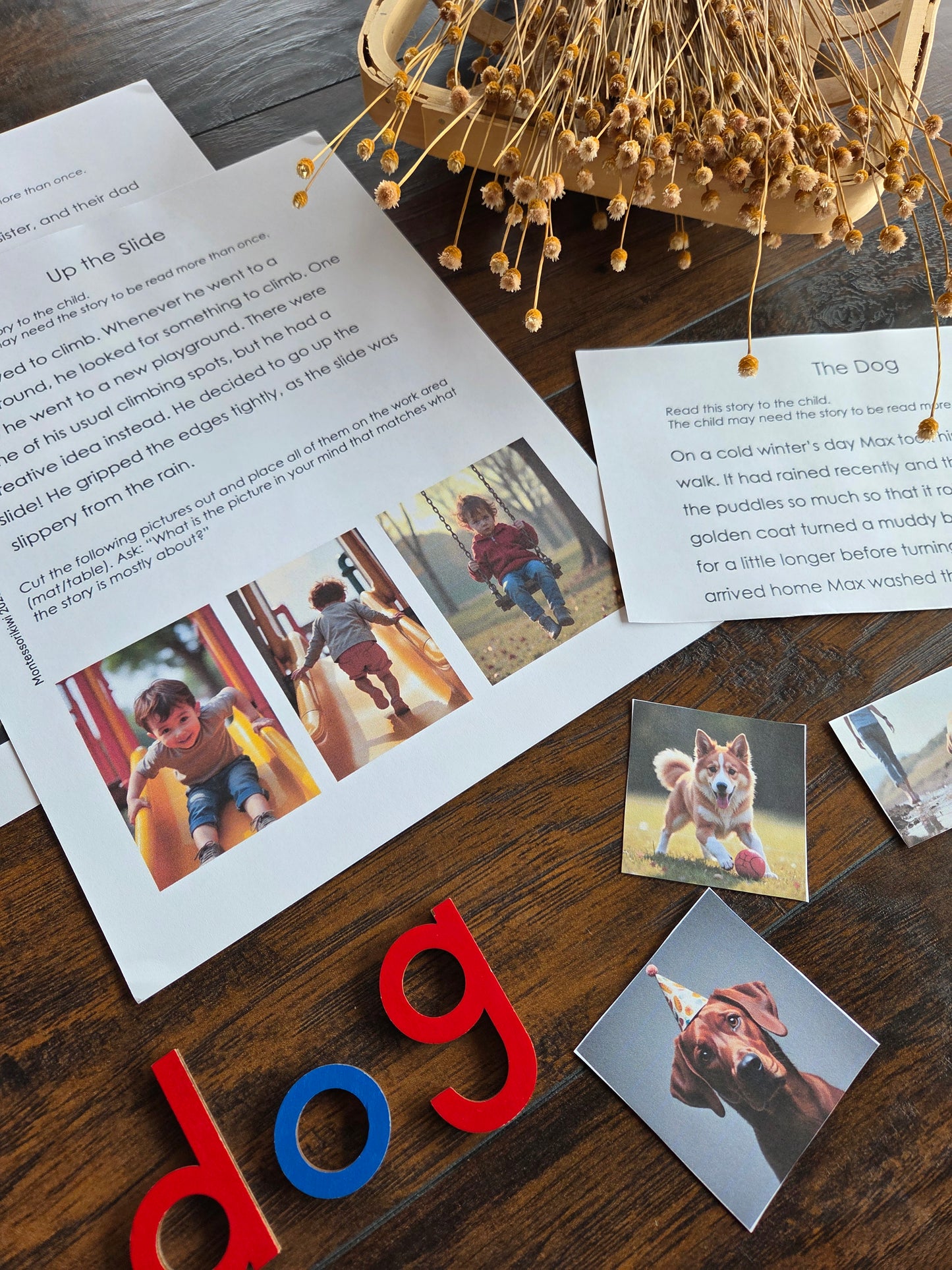
First, children listen to a story and sequence events without relying on picture clues. Then they can work independently with self-correcting picture-sequencing stories, arranging four cards into a meaningful beginning, middle and end.
Designed for Montessori classrooms, early childhood settings, Science of Reading-aligned comprehension instruction and homeschool learning, this resource helps children build the language and thinking skills that support later reading comprehension.
🌿 At a Glance
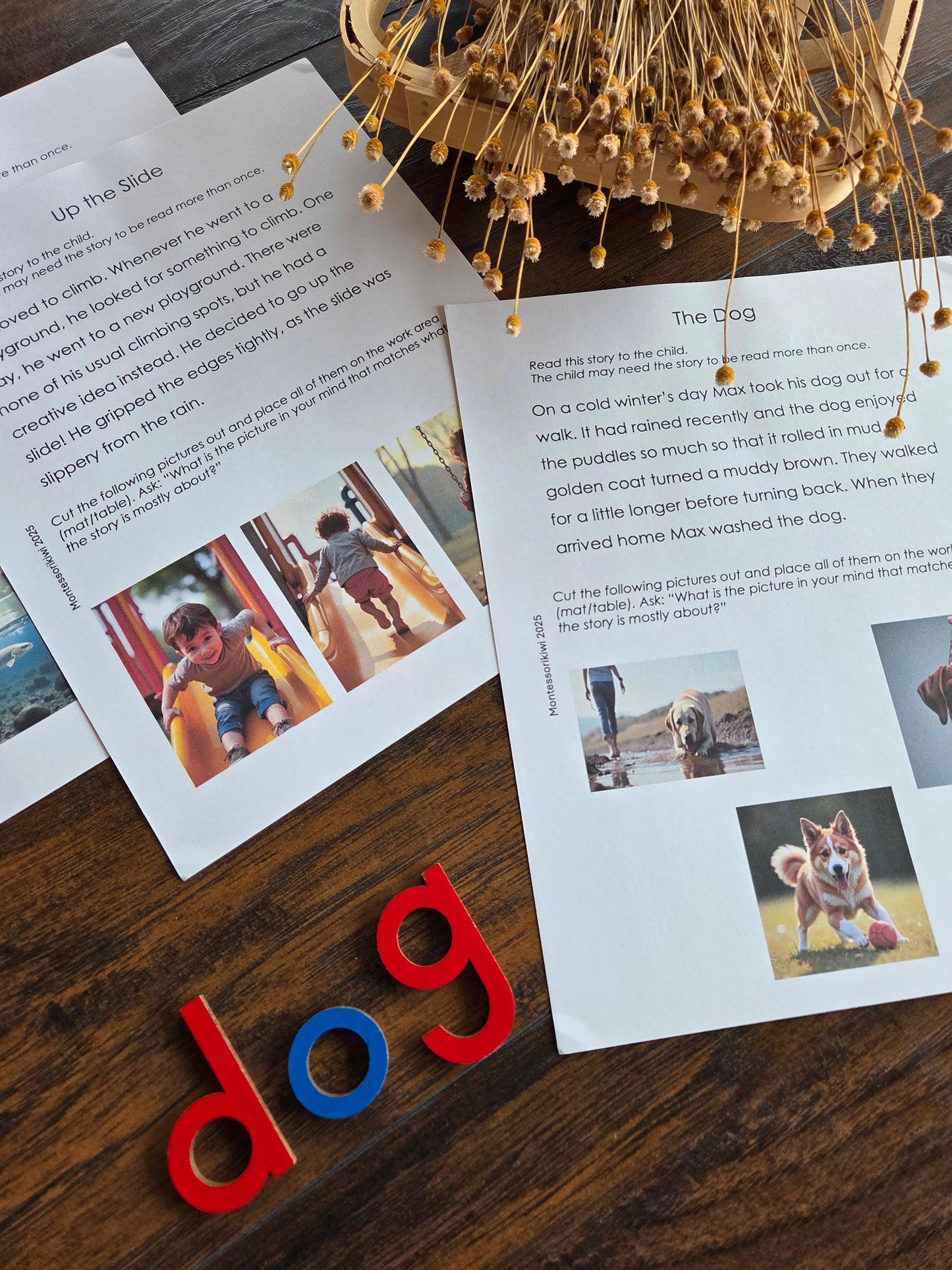
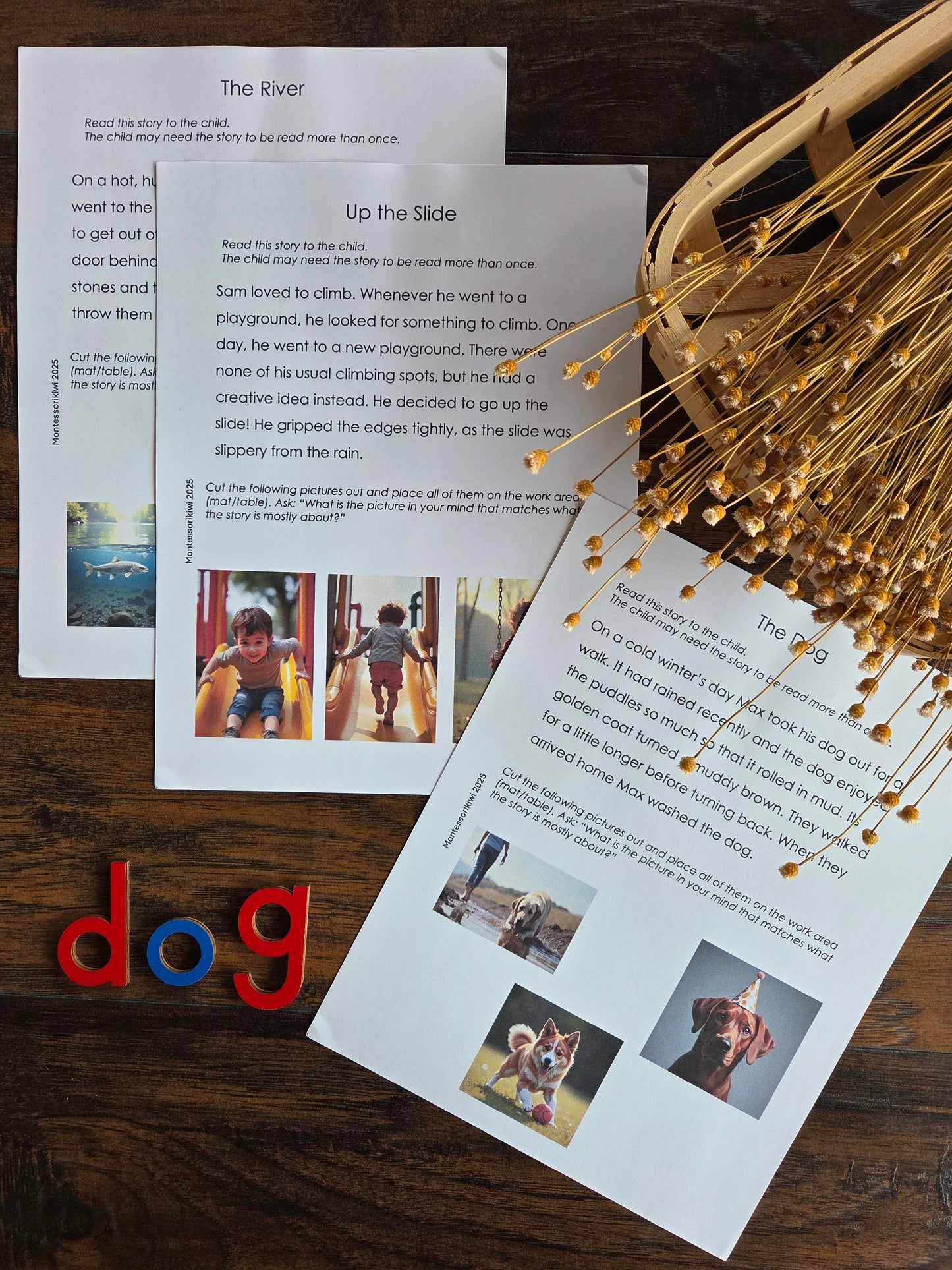
✔ 8 listening-comprehension stories
✔ Children sequence events without relying on picture clues
✔ 8 self-correcting picture-sequencing stories
✔ Each picture story includes 4 sequencing cards
✔ Supports mental imagery and listening comprehension
✔ Introduces sequence words such as first, next and last
✔ Builds awareness of beginning, middle and end
✔ Encourages retelling and oral language
✔ Ideal for Montessori shelf work, homeschool learning and early childhood classrooms
📚 What's Included?
This printable pre-reading and comprehension resource includes two different types of activity:
Activity 1: 8 Listening-Comprehension Stories
Children listen carefully to each story and sequence the events without relying on picture clues.
This encourages them to:
- Listen closely
- Form a mental picture
- Remember key events
- Understand what happened first, next and last
- Retell the story in order
Activity 2: 8 Self-Correcting Picture-Sequencing Stories
Each story includes 4 picture cards.
Children independently arrange the cards into the correct sequence and then flip them over to check their work.
This makes the activity particularly suitable for Montessori shelf work and independent practice.
Why Is Listening Comprehension So Important?
Children can understand stories before they are able to read them independently.
Listening comprehension gives children opportunities to build:
- Vocabulary
- Sentence comprehension
- Memory
- Inference
- Sequencing
- Oral language
- Story structure awareness
These skills later support reading comprehension when children begin accessing stories through print.
Why Ask Children to Form Mental Pictures?
When children listen to a story without seeing pictures, they need to create their own internal image of what is happening.
This process is sometimes called visualisation or mental imagery.
Children need to:
- Listen to the language
- Hold information in memory
- Imagine the people, objects or actions
- Connect one event with the next
This encourages active comprehension rather than passive listening.
From Listening to Sequencing
The listening stories support a clear progression:
listen to the story → form a mental picture → remember the events → identify what happened first, next and last → retell the sequence.
This is valuable because children need to understand more than isolated details.
They need to recognise how events connect together.
Why Teach Beginning, Middle and End?
Young children may remember individual parts of a story without understanding the overall structure.
Explicitly discussing:
- beginning
- middle
- end
helps children begin to notice that stories unfold in an organised sequence.
This can support later work with:
- Retelling
- Narrative comprehension
- Story writing
- Prediction
- Summarising
Why Use Sequence Words?
Words such as first, next, then and last give children useful language for explaining order.
Instead of simply pointing to cards, children can begin saying:
- First...
- Next...
- Then...
- Last...
This helps strengthen oral language while making the sequence of events more explicit.
Two Different Types of Sequencing Practice
One strength of this resource is that it approaches sequencing in two different ways.
Listening Without Picture Clues
The child needs to rely on language, memory and mental imagery.
This places a greater emphasis on listening comprehension.
Independent Picture Sequencing
The child looks carefully at four images and works out the most logical order.
This supports visual reasoning, sequencing and independent self-correction.
Together, the two activities provide a broader comprehension experience than picture sequencing alone.
Why Self-Correction Matters
The picture-sequencing stories are self-correcting.
Children can arrange the cards, turn them over and check whether they have created the correct sequence.
This supports:
- Independence
- Persistence
- Problem-solving
- Self-monitoring
- Reduced dependence on adult correction
This fits naturally with Montessori practice, where carefully designed controls of error allow children to check their own work.
What Skills Does This Resource Support?
Children will practise:
- Listening comprehension
- Story sequencing
- Mental imagery
- Auditory memory
- Beginning, middle and end
- First, next and last
- Oral retelling
- Vocabulary
- Story structure
- Logical reasoning
- Independent self-correction
Pre-Reading Does Not Mean Pre-Comprehension
A child does not need to be reading independently in order to begin developing deep comprehension skills.
Through carefully chosen listening and sequencing activities, children can practise:
- Understanding spoken language
- Remembering details
- Connecting events
- Explaining sequence
- Retelling stories
These are important foundations for later reading comprehension.
A Clear Learning Progression
This resource supports the progression:
listen → imagine → remember → sequence → retell → self-check.
That makes it more than a simple picture-ordering activity.
It deliberately supports the language, memory and comprehension skills children need before and during the early stages of reading.
🌿 Perfect For
- Montessori 3–6 classrooms
- Pre-reading language work
- Listening comprehension
- Story sequencing
- Oral language development
- Homeschool learning
- Early childhood classrooms
- Literacy centres
- Small-group teaching
- Independent Montessori shelf work
- Children who benefit from explicit sequencing practice
Help Children Build the Story in Their Minds
Before children can deeply understand stories they read, they need opportunities to deeply understand stories they hear.
These activities give children a meaningful progression:
listen to the language → form a mental picture → remember what happened → put events in order → retell the story.
Combined with the self-correcting picture sequences, this resource gives children both guided listening practice and independent hands-on comprehension work.
🔗 Related Resources
Continue building children's listening comprehension, sequencing and early reading skills with these related Montessori literacy resources:
🌿 Story Sequencing Sentence Cards
Take the next step into written comprehension by asking children to read and arrange sentences into a logical story sequence.
Explore the Story Sequencing Sentence Cards →
🌿 Sequencing Stories & Listening Comprehension
Build listening, mental imagery and story order through additional hands-on sequencing activities.
Explore the Sequencing Stories Resource →
🌿 Simple Reading Comprehension Task Cards
Help early readers decode sentences, use context and select the word that completes the meaning.
Explore the Reading Comprehension Task Cards →
🌿 CCVC Picture to Sentence Matching Cards
Support children as they read complete sentences and connect written text with meaning.
Explore the CCVC Sentence Matching Cards →
🌿 Modern Montessori Reading Collection
Explore hands-on resources for phonological awareness, phonics, decoding, oral language, sequencing, sentence reading and comprehension.
Explore the Modern Montessori Reading Collection →
🌿 Modern Montessori Science of Reading Bundle
Explore a broader Montessori-aligned literacy sequence covering phonological awareness, decoding, spelling patterns, sentence reading, sequencing and comprehension.
Created by Lisa, a Montessori-trained teacher, NZ registered teacher, school principal and former homeschooler. My resources are designed with real learners in mind—including neurodivergent children—and focus on practical, affordable, low-prep materials that support independence.
Share
-
Items are secured / Terms of Use
Our items are secured. They are not able to be altered. We secure our items because they are our intellectual property and because we use art from artists who require that we secure our files.
You may not:
-resell our items or use them for commercial gain
-claim these items as your own
-modify this resource
-share them with others by any means e.g. electronic or hard copy
-
All Items are instant downloads
You will not get a printed product in the mail.
-
All prices are in USD
Due to the international nature of our customers our prices are all in USD. If you wish to work out the conversion before you buy we recommend www.xe.com