


montessorikiwi
Reading Comprehension Task Cards | Montessori Science of Reading Fill-in-the-Gap Activity
Reading Comprehension Task Cards | Montessori Science of Reading Fill-in-the-Gap Activity
Couldn't load pickup availability
Your child can decode individual words—but can they read a whole sentence and work out what it actually means?
Moving from sounding out words to understanding connected text is an important next step for beginning readers.
These hands-on reading comprehension task cards help children practise that transition by combining phonics knowledge, sentence reading and meaning in one manageable activity.
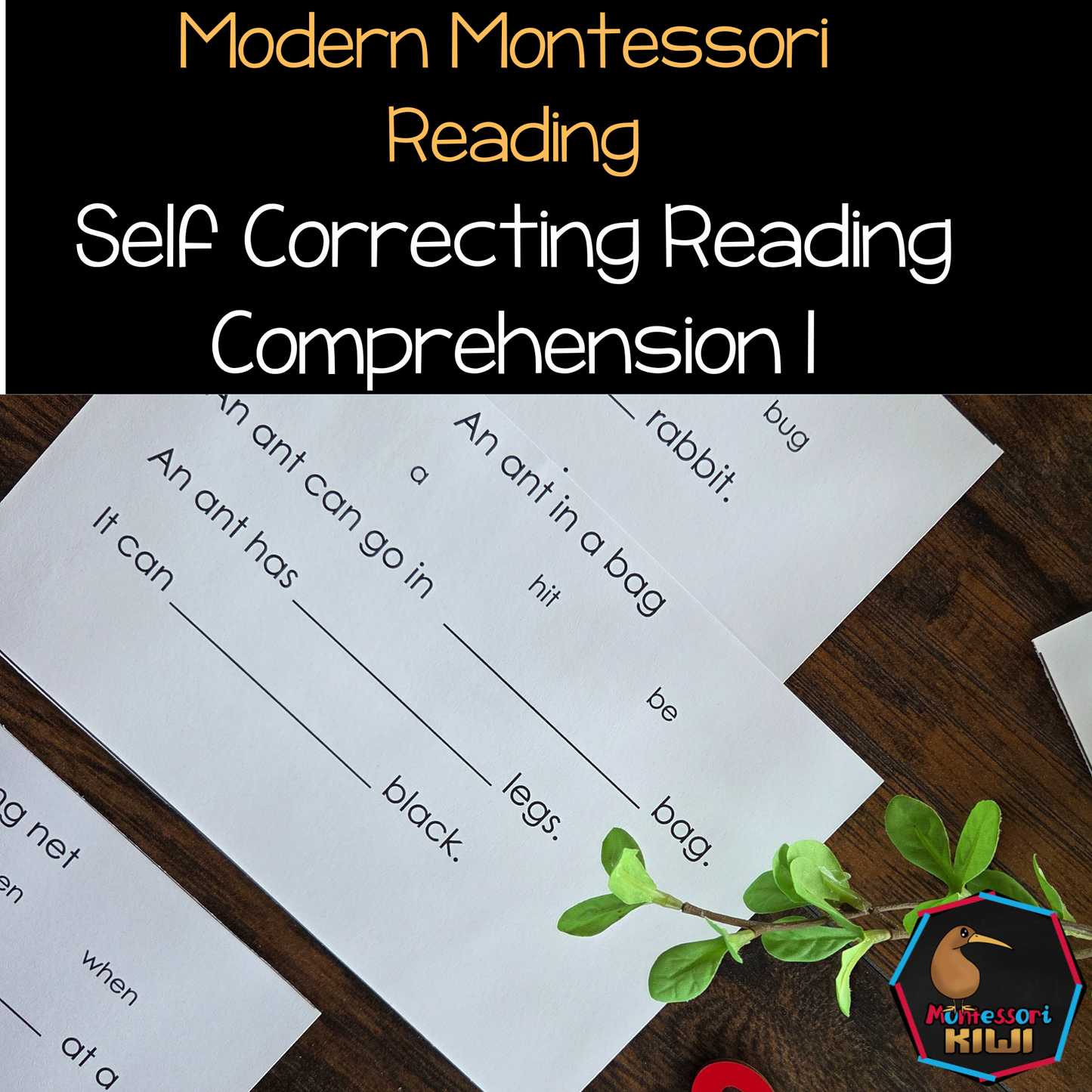
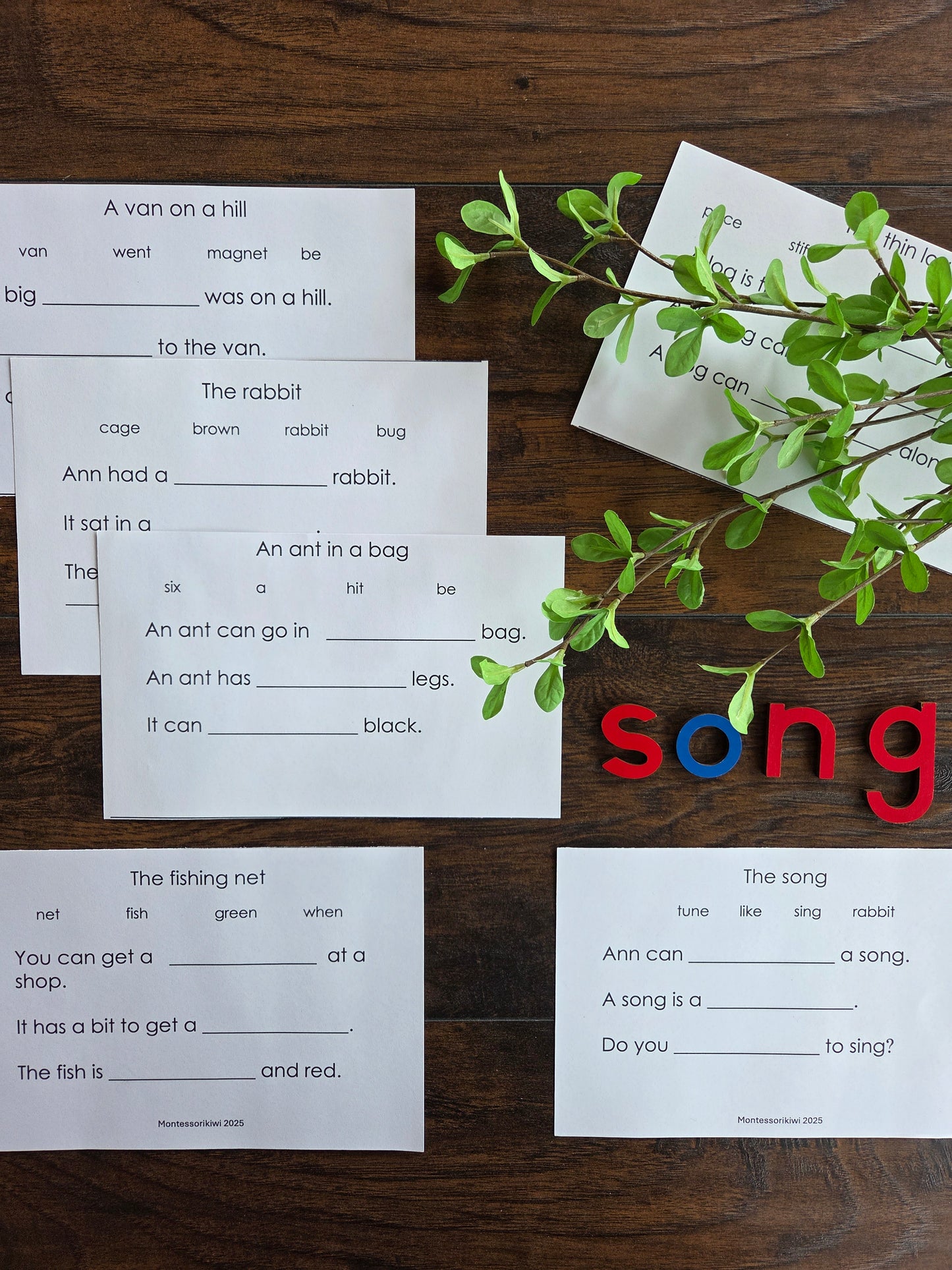
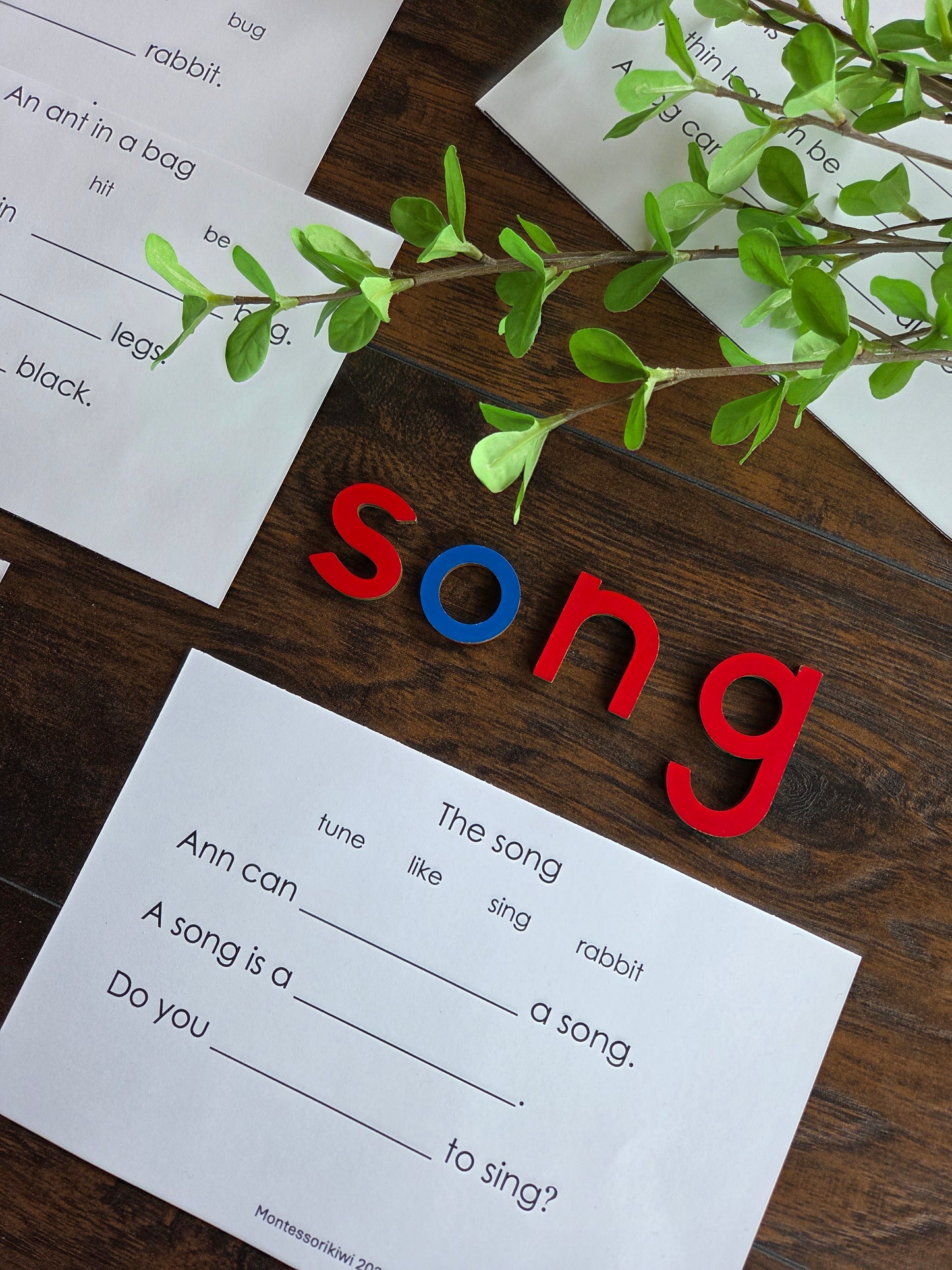
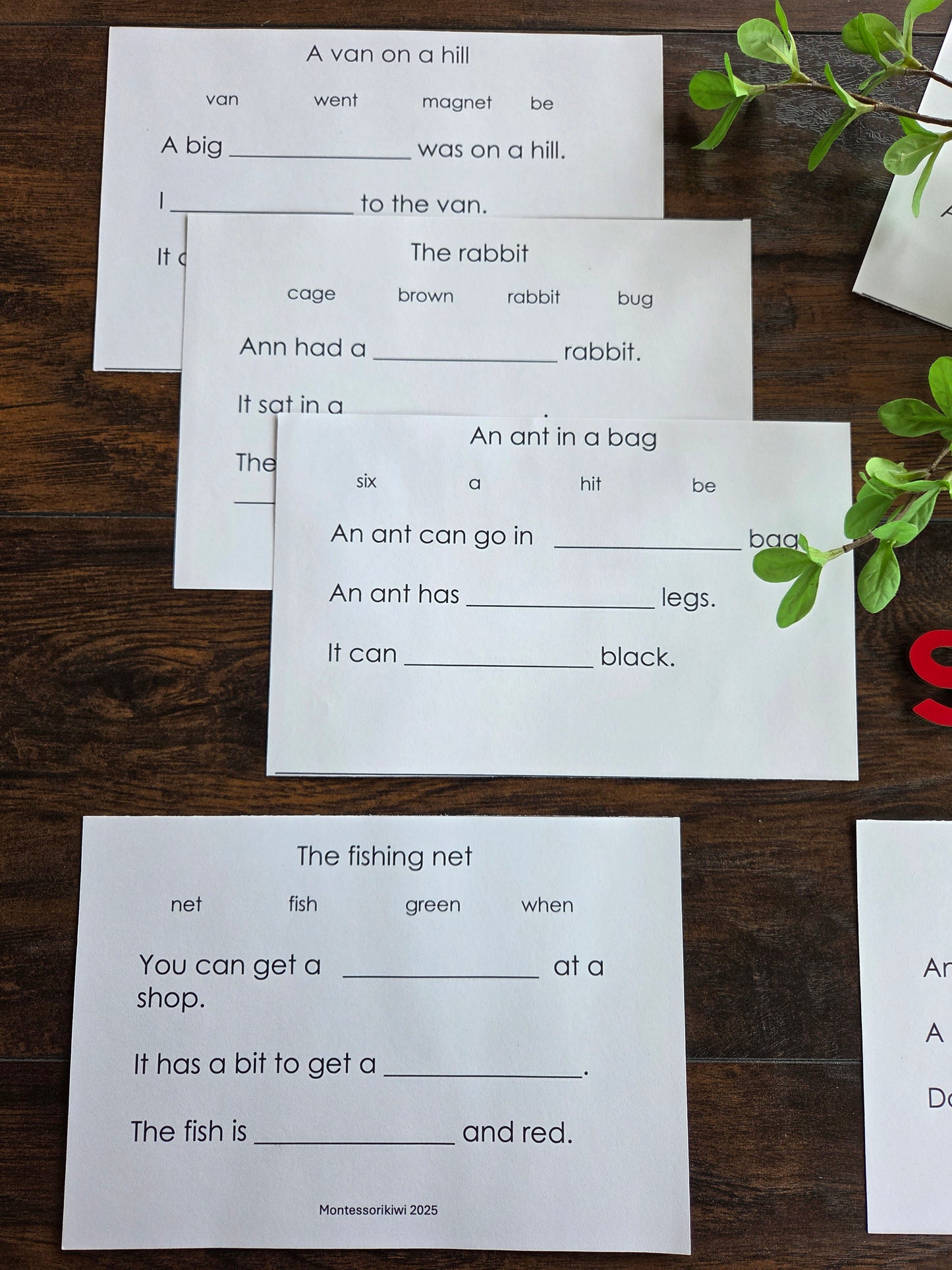
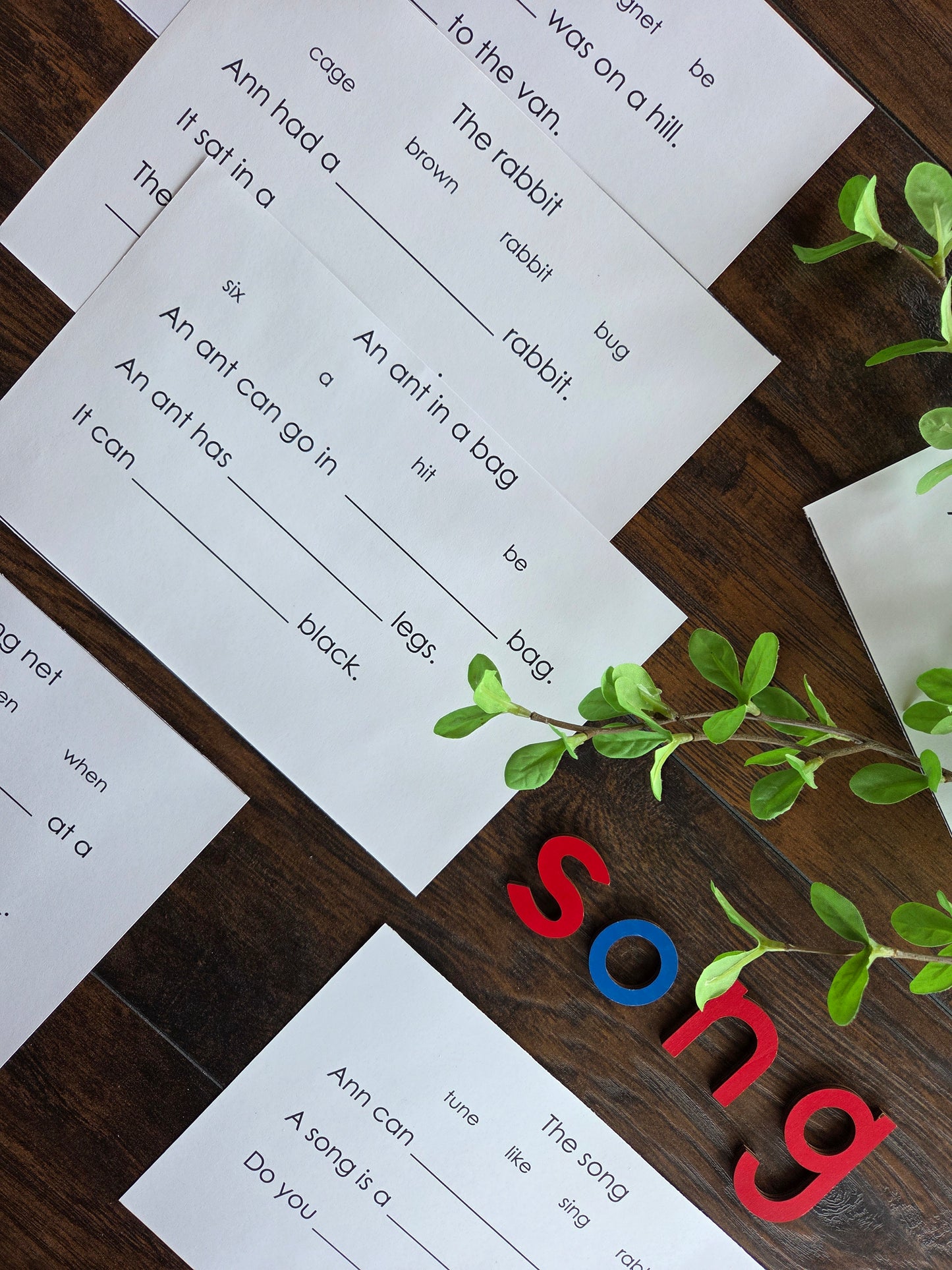
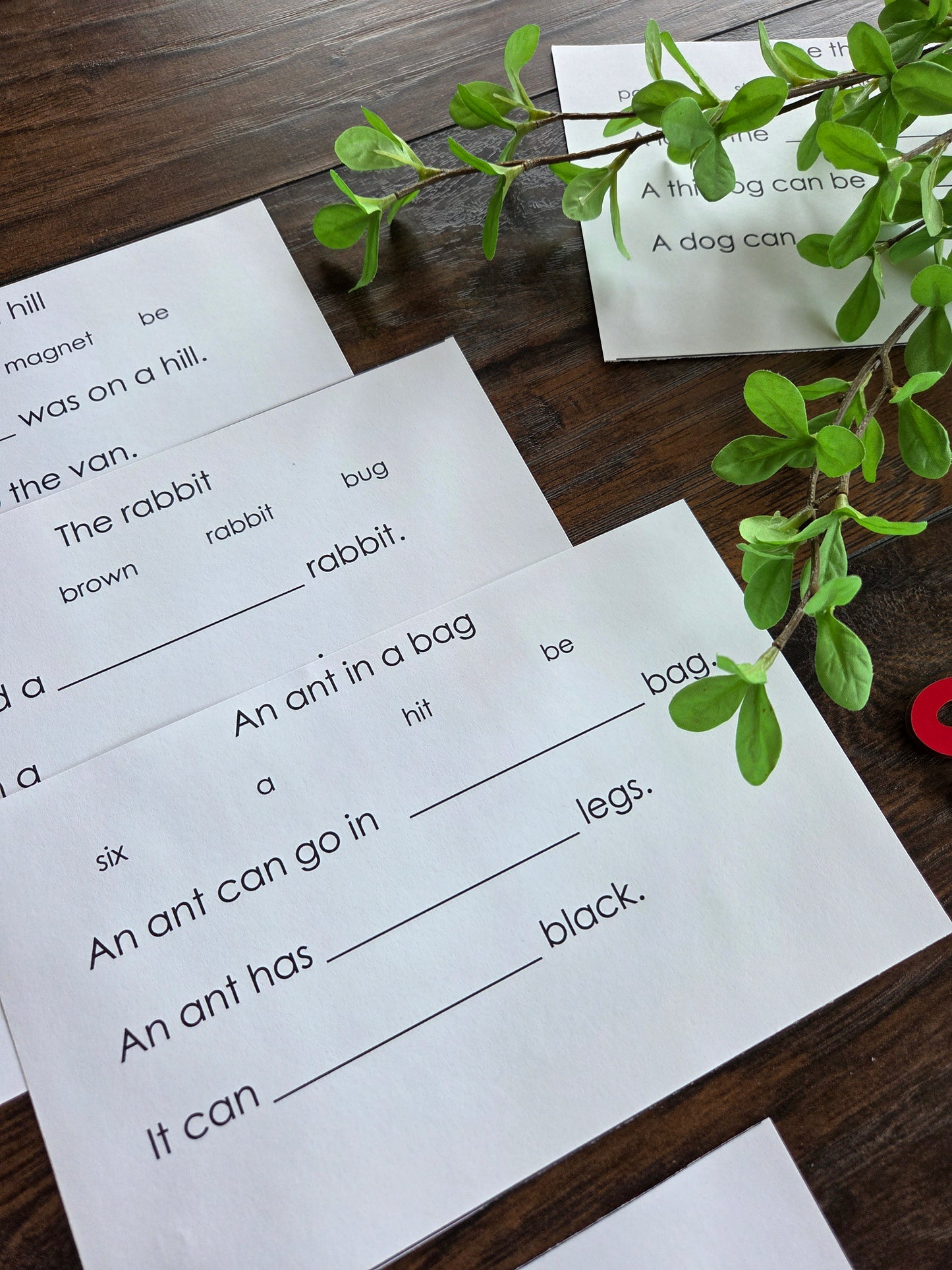
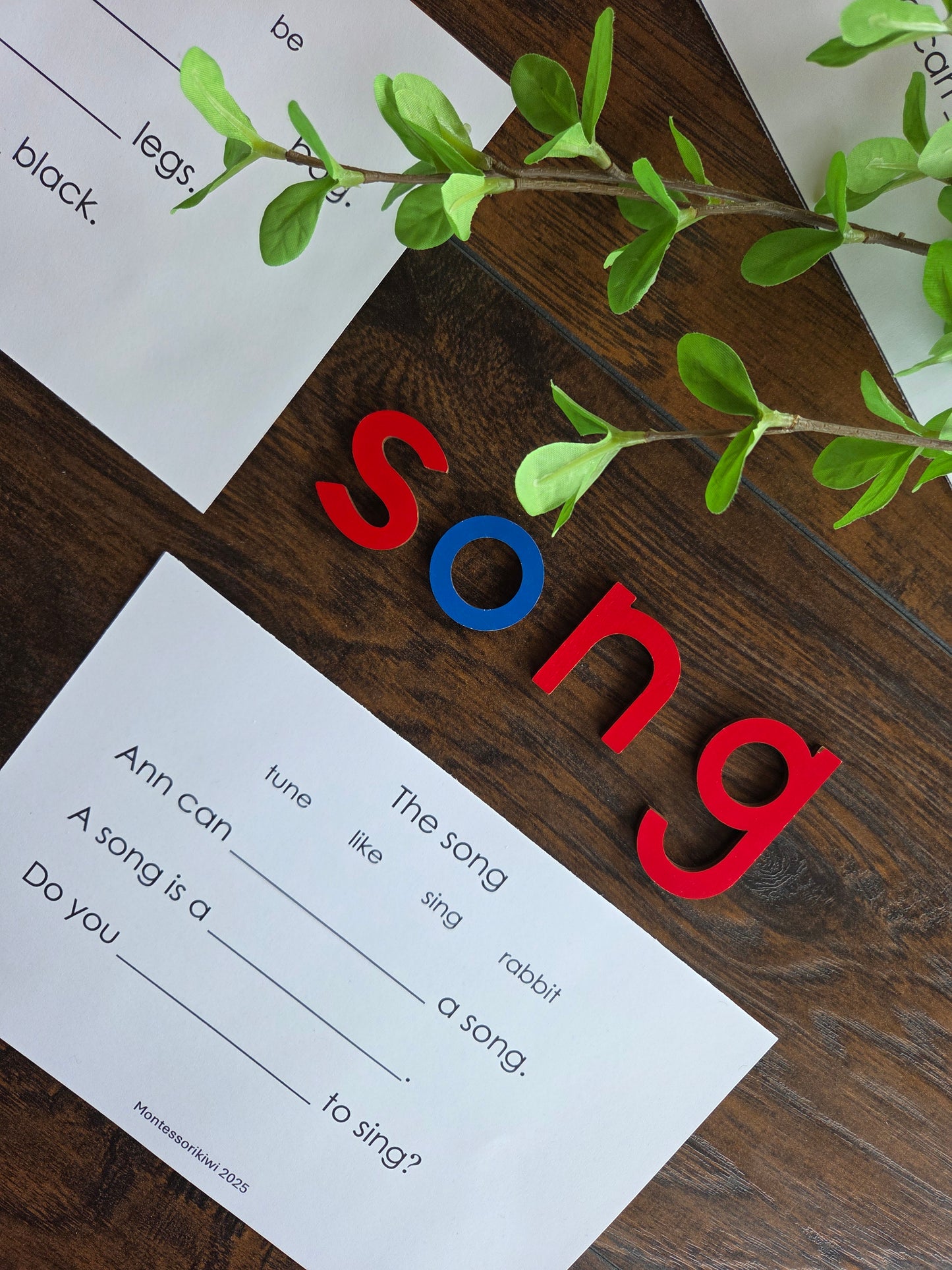
Children read a simple sentence with a missing word, use the word bank to consider their choices and select the word that makes sense.
This means they are not simply decoding words in isolation. They need to read, think, use context and understand the sentence.
Designed for Montessori classrooms, Science of Reading-aligned literacy instruction, structured literacy, intervention and homeschool learning, these self-correcting cards provide a practical bridge between early decoding and genuine reading comprehension.
🌿 At a Glance
✔ 14 printable reading comprehension task cards
✔ Self-correcting fill-in-the-gap sentence activities
✔ Word banks provide structured support for beginning readers
✔ Includes an answer key
✔ Approximately 16 printable pages, including instructions and answers
✔ Practises CVC words, CCVC words, digraphs and split-vowel words
✔ Supports decoding, fluency, context clues and sentence comprehension
✔ Ideal for Montessori shelf work, literacy centres, intervention and homeschool learning
📚 What's Included?
This printable early reading comprehension resource includes:
- 14 reading comprehension task cards
- Self-correcting fill-in-the-gap sentence activities
- Word banks to support independent work
- Answer key
- Instructions
- Approximately 16 pages in total, including answer pages and instructions
Children read each sentence, consider the words available in the word bank and choose the word that correctly completes the meaning of the sentence.
The format is simple enough for beginning readers while still requiring them to apply several important literacy skills at the same time.
From Reading Words to Understanding Sentences
Many children become quite good at decoding individual words but still need structured support to understand how those words work together in a sentence.
A child may be able to sound out every word correctly and yet still be unsure what the sentence means.
These cards help bridge that gap.
To complete each activity, the child needs to:
- Decode the words in the sentence
- Read the sentence as a whole
- Consider the meaning
- Use the word bank for support
- Choose the word that makes sense in context
This brings together phonics, fluency and comprehension in one focused activity.
What Reading Skills Does This Resource Support?
Children will practise:
- Sentence-level reading comprehension
- Decoding fluency
- Using context clues
- Applying phonics knowledge while reading
- Recognising high-frequency words
- Reading CVC words
- Reading CCVC words
- Reading words containing digraphs
- Reading split-vowel words
- Making meaning from connected text
Why Fill-in-the-Gap Activities?
Fill-in-the-gap reading activities require children to do more than simply pronounce the words correctly.
They have to ask:
- What does this sentence mean?
- Which word would make sense here?
- Can I decode each of the possible answers?
- Does my chosen word fit both the spelling pattern and the meaning?
This makes the activity particularly useful for children who are beginning to move beyond word-level decoding and towards genuine sentence comprehension.
Structured Support Without Doing the Thinking for the Child
The word banks give children enough support to make the task achievable without removing the need to think.
Rather than having to generate an answer completely independently, the child can compare a manageable group of possibilities and decide which one best completes the sentence.
This can be especially helpful for early readers, neurodivergent learners and children who benefit from a clear visual structure.
🌿 Perfect For
- Montessori reading shelves
- Science of Reading-aligned literacy practice
- Structured literacy instruction
- Literacy centres
- Independent work
- Small-group teaching
- Reading intervention
- Phonics review
- Early finisher activities
- Homeschool literacy lessons
Build the Bridge Between Decoding and Comprehension
Learning to read is not only about sounding out words.
Children also need repeated opportunities to bring together decoding, fluency and meaning.
These simple reading comprehension cards give beginning readers a manageable way to practise that process independently.
The child reads, considers the meaning, selects an answer and checks their own work—making the resource particularly well suited to Montessori environments and independent literacy practice.
🔗 Related Resources
Continue helping children move from word-level decoding towards fluent, meaningful reading with these related resources:
🌿 CVC Sentence Frames
Support beginning readers as they move from reading individual CVC words towards reading and completing simple sentences.
Explore the CVC Sentence Frames →
🌿 Silent E Clip & Flip Phonics Cards
Give children further practice applying phonics knowledge within meaningful cloze phrases using a_e, i_e, o_e and u_e words.
Explore the Silent E Clip & Flip Cards →
🌿 Modern Montessori Reading Collection
Explore hands-on resources for phonics, decoding, spelling patterns, sentence reading and comprehension.
Explore the Modern Montessori Reading Collection →
🌿 Modern Montessori Science of Reading Bundle
Looking for a more complete literacy sequence? Explore a large collection of Montessori-aligned resources covering CVC words, digraphs, silent e, vowel teams, spelling patterns, sentence reading and comprehension.
Created by Lisa, a Montessori-trained teacher, NZ registered teacher, school principal and former homeschooler. My resources are designed with real learners in mind—including neurodivergent children—and focus on practical, affordable, low-prep materials that support independence.
Share
-
Items are secured / Terms of Use
Our items are secured. They are not able to be altered. We secure our items because they are our intellectual property and because we use art from artists who require that we secure our files.
You may not:
-resell our items or use them for commercial gain
-claim these items as your own
-modify this resource
-share them with others by any means e.g. electronic or hard copy
-
All Items are instant downloads
You will not get a printed product in the mail.
-
All prices are in USD
Due to the international nature of our customers our prices are all in USD. If you wish to work out the conversion before you buy we recommend www.xe.com