


montessorikiwi
Y Makes 3 Sounds | Montessori Phonics Posters & Science of Reading Activity
Y Makes 3 Sounds | Montessori Phonics Posters & Science of Reading Activity
Couldn't load pickup availability
Does your child know that y is a consonant—but become confused when it suddenly seems to make a vowel sound?
The letter y can be tricky because it does not always make the same sound.
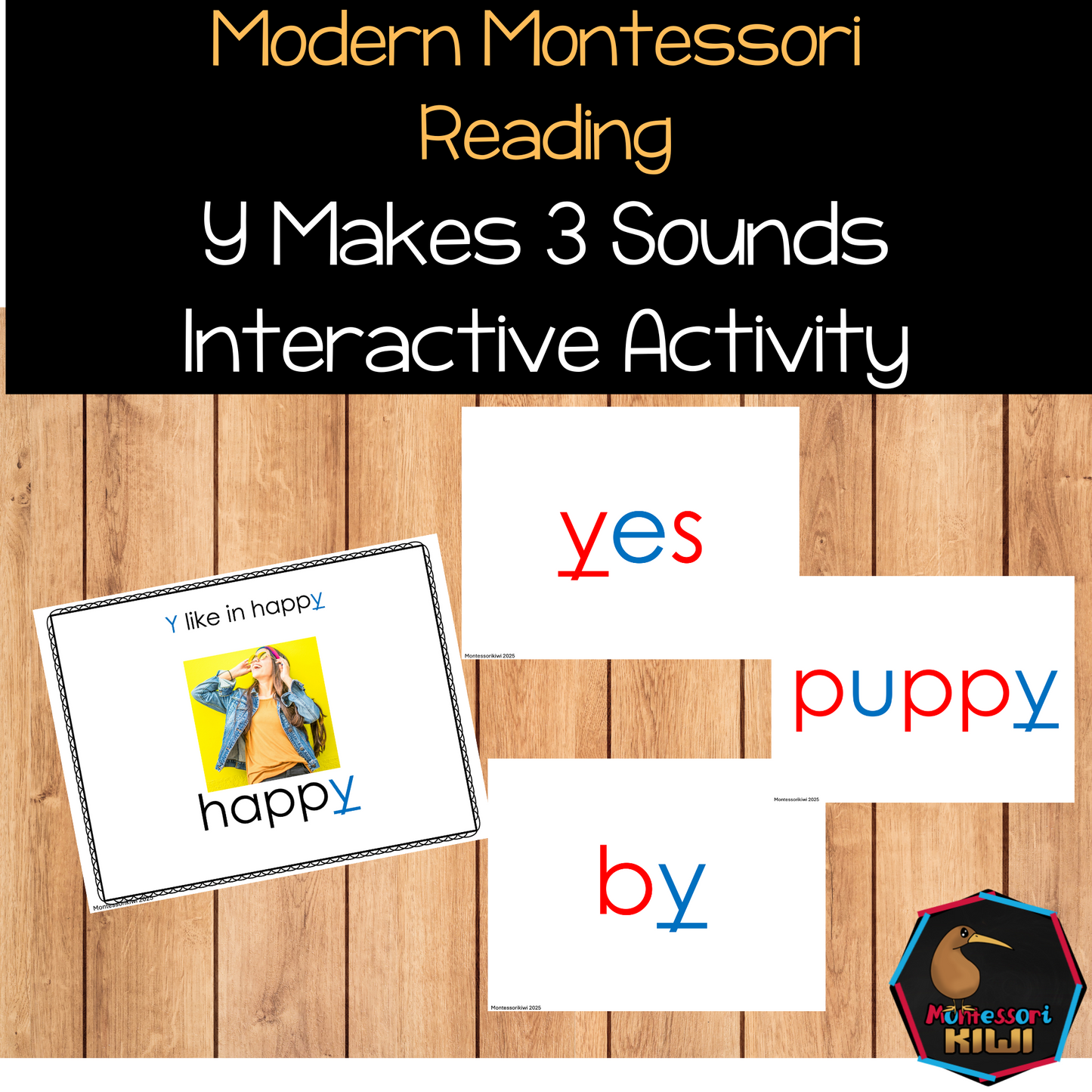
In words such as yes, my and happy, the letter y is doing three different jobs.
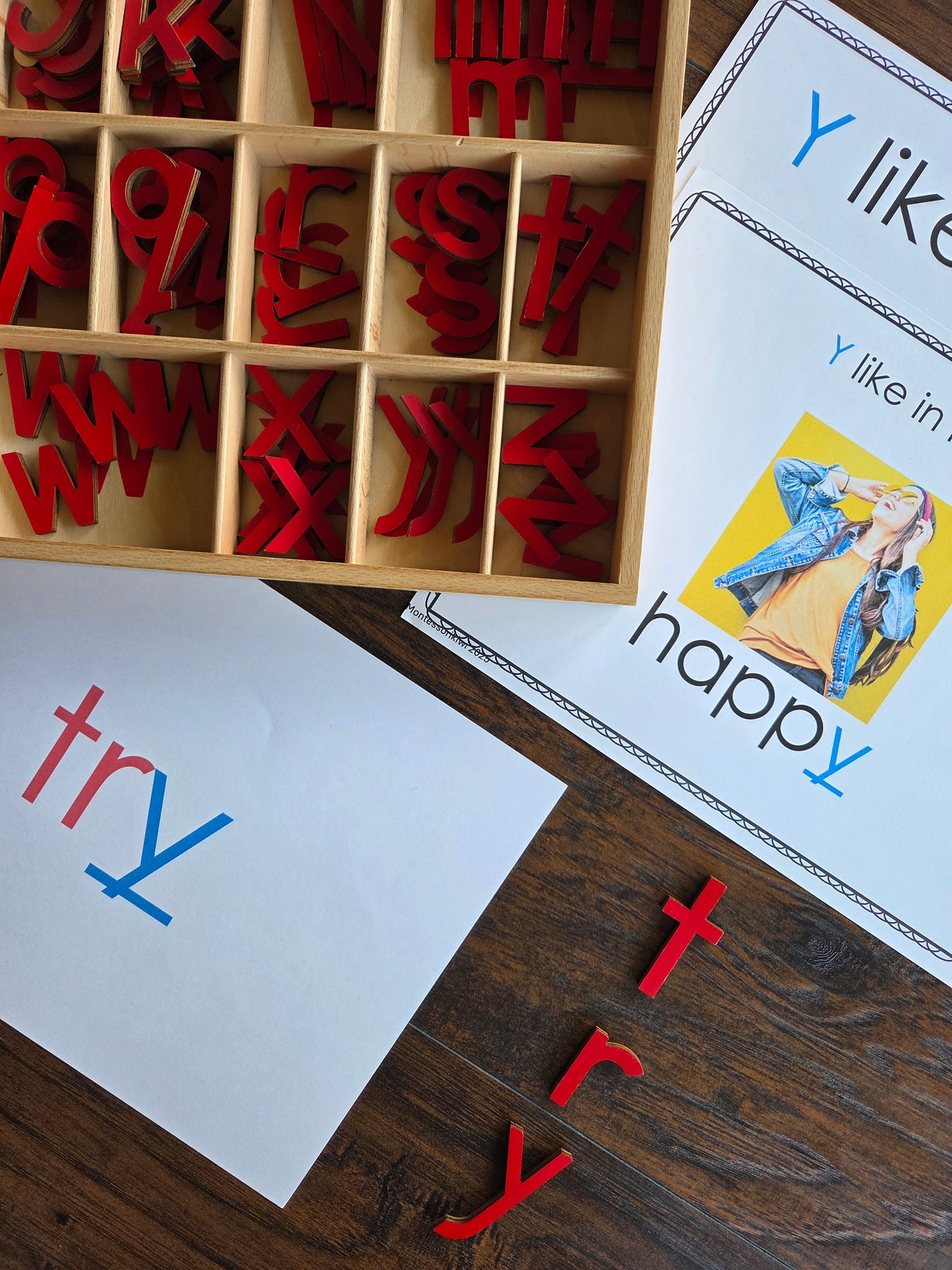
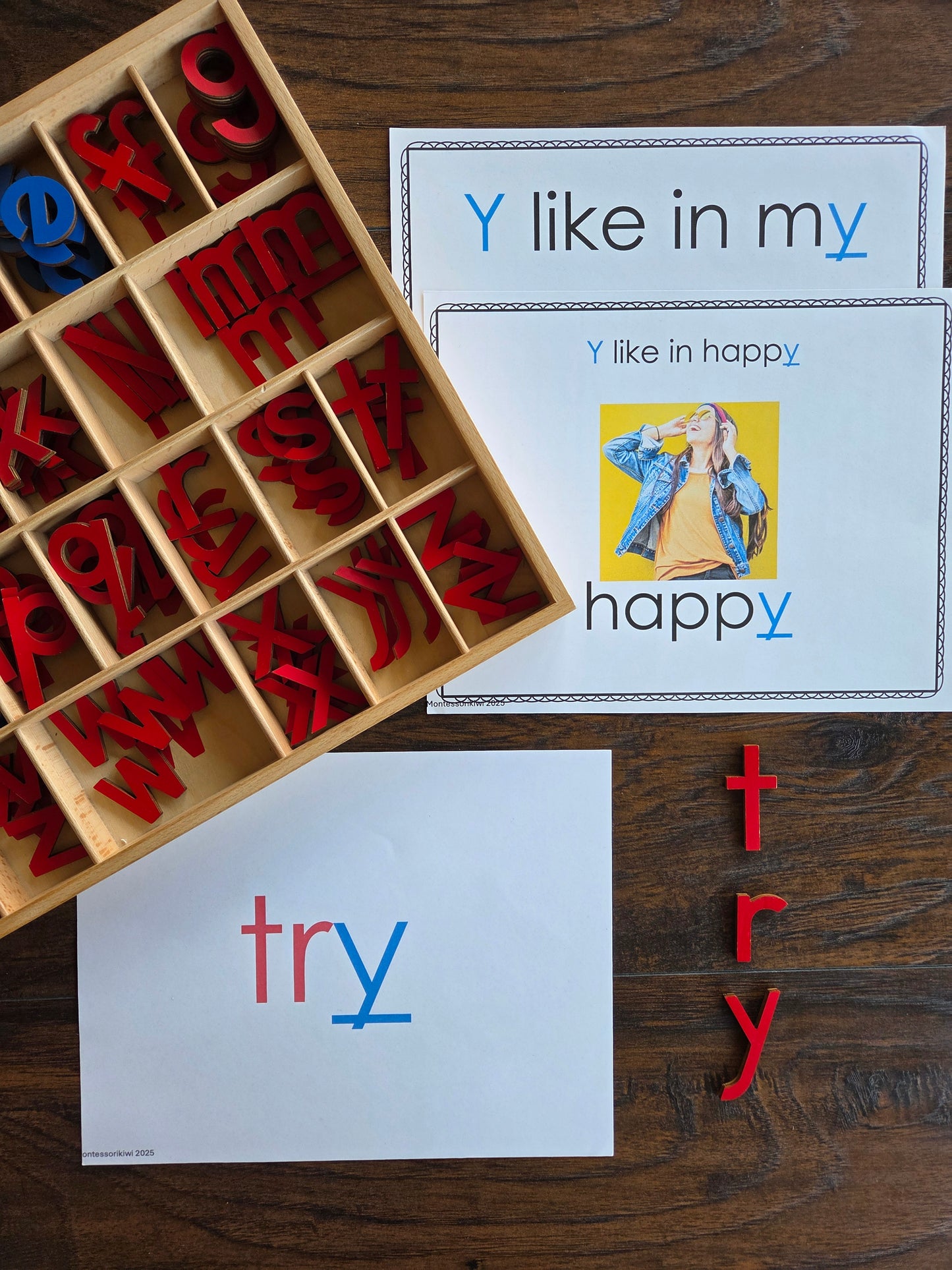
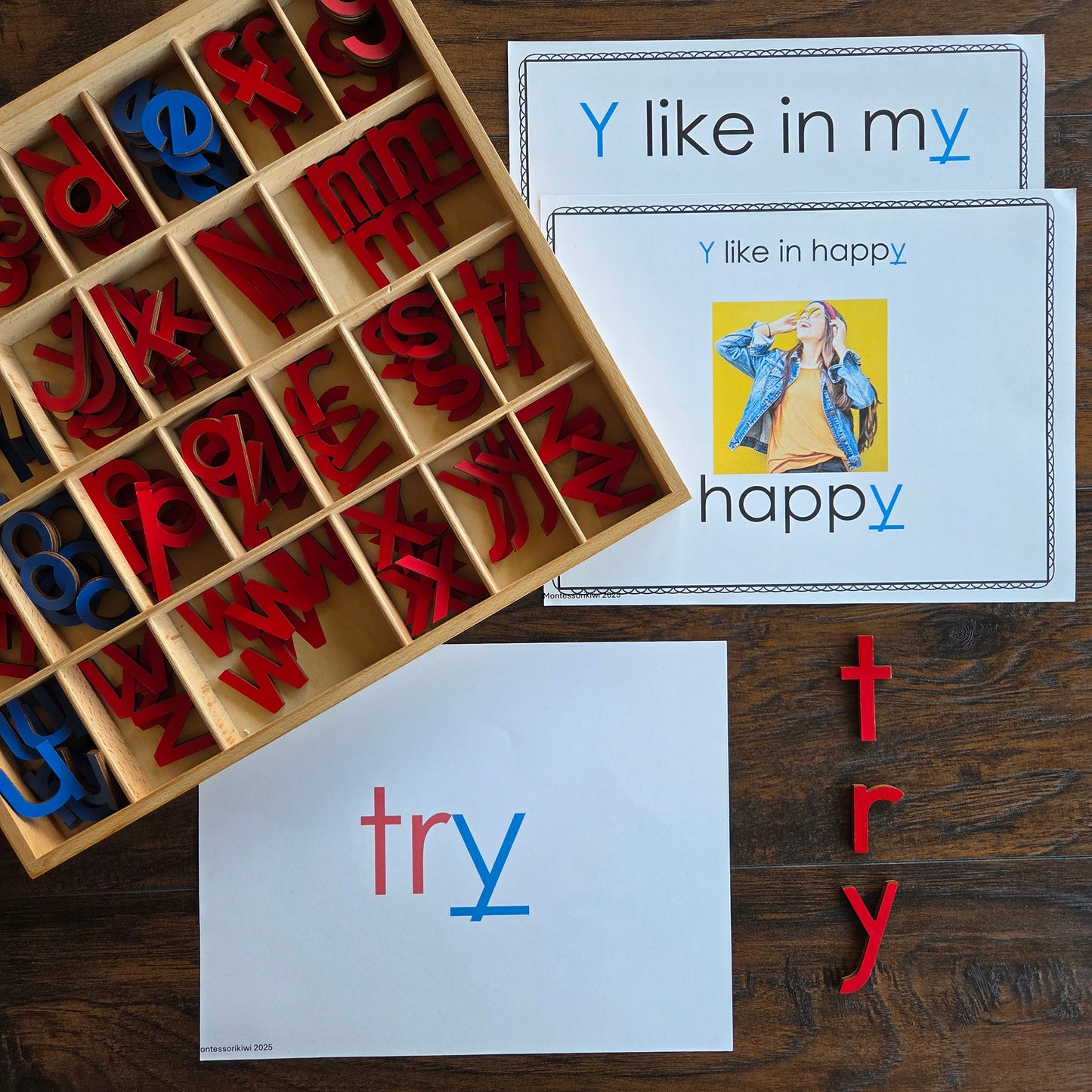
These clear 3 Sounds of Y Posters help children understand that y can represent different sounds depending on where it appears in a word.
Instead of simply memorising individual words, children can begin to notice the pattern:
- /y/ as in yes
- long /ī/ as in my
- long /ē/ as in happy
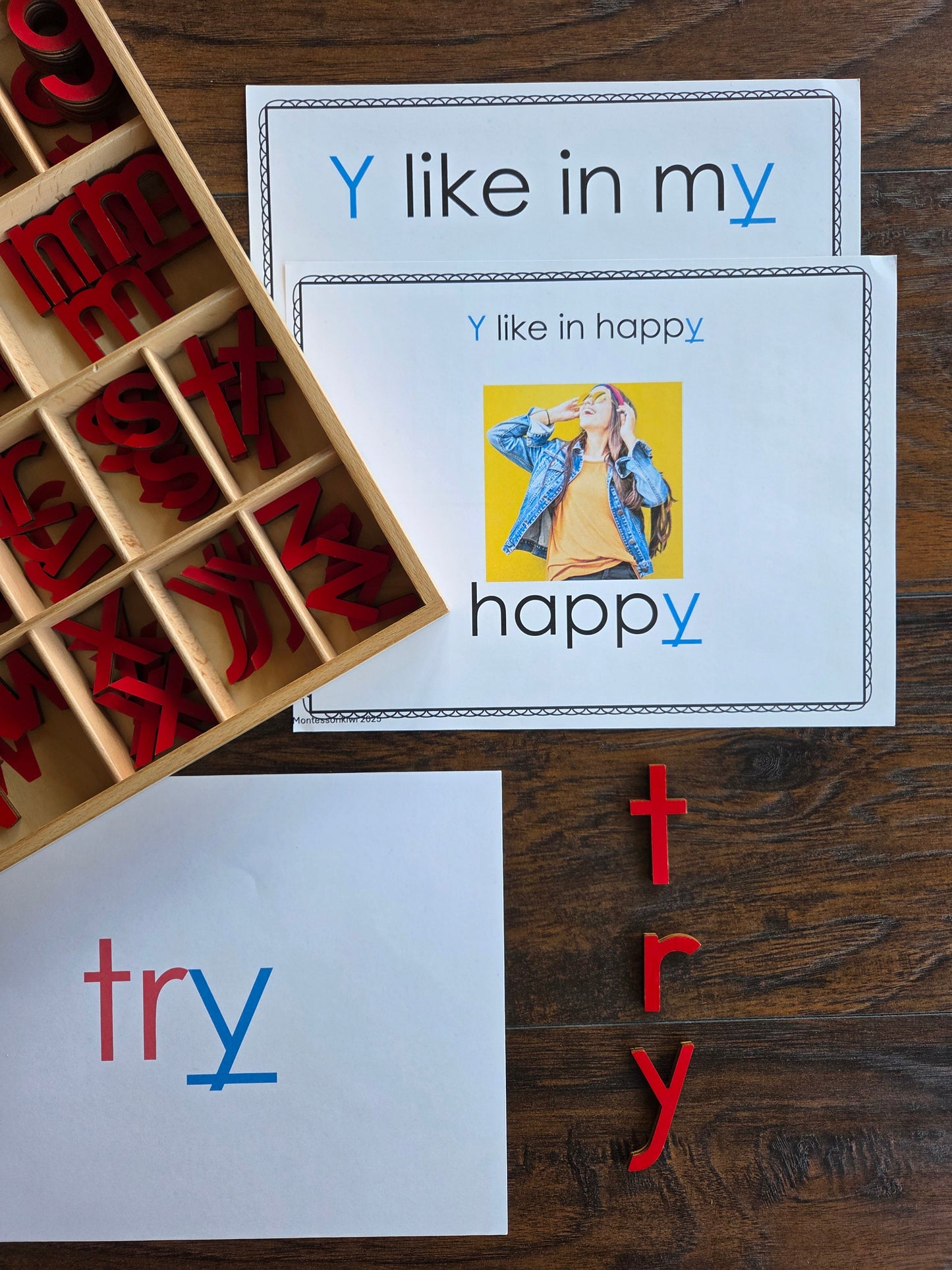
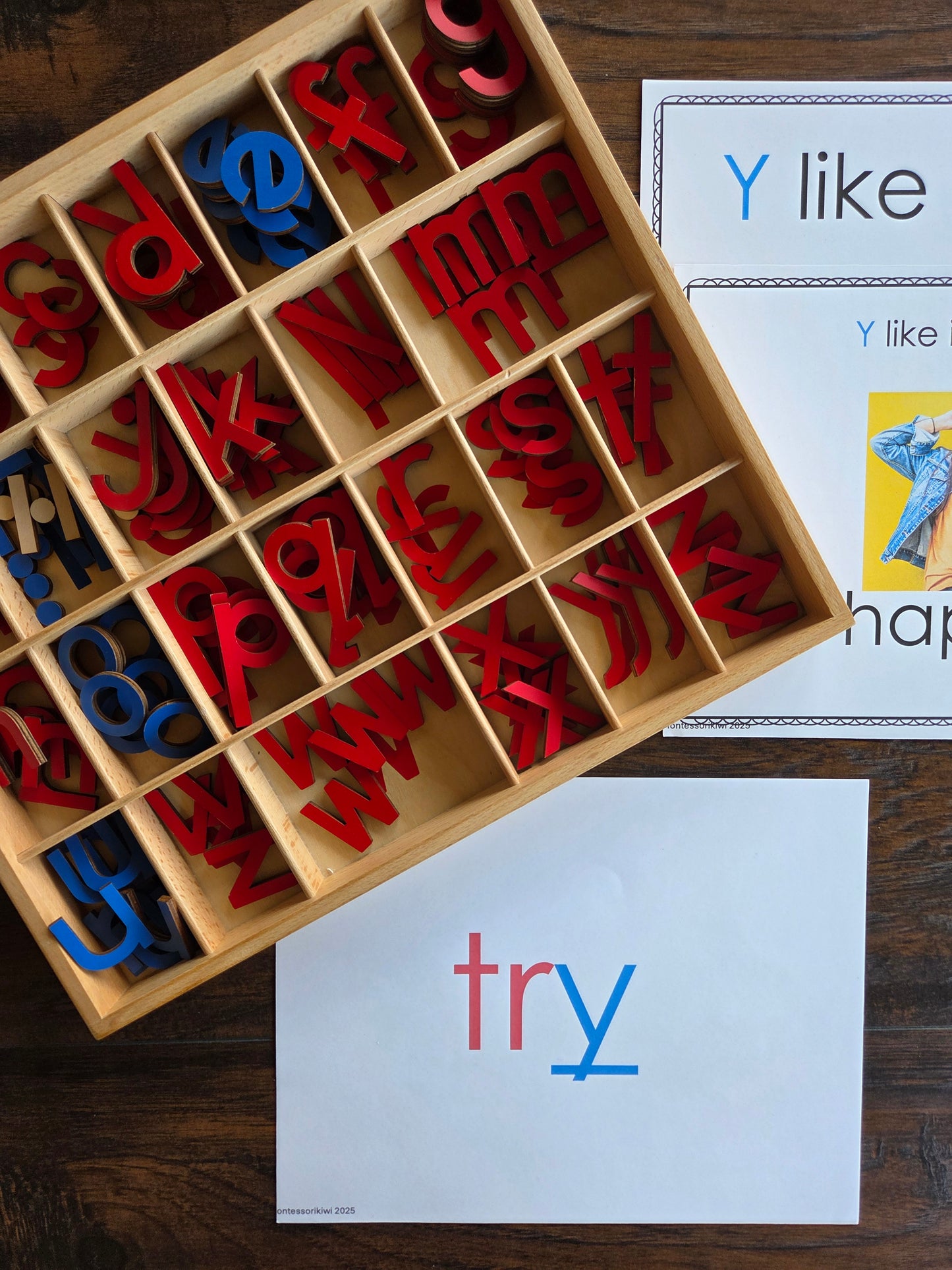
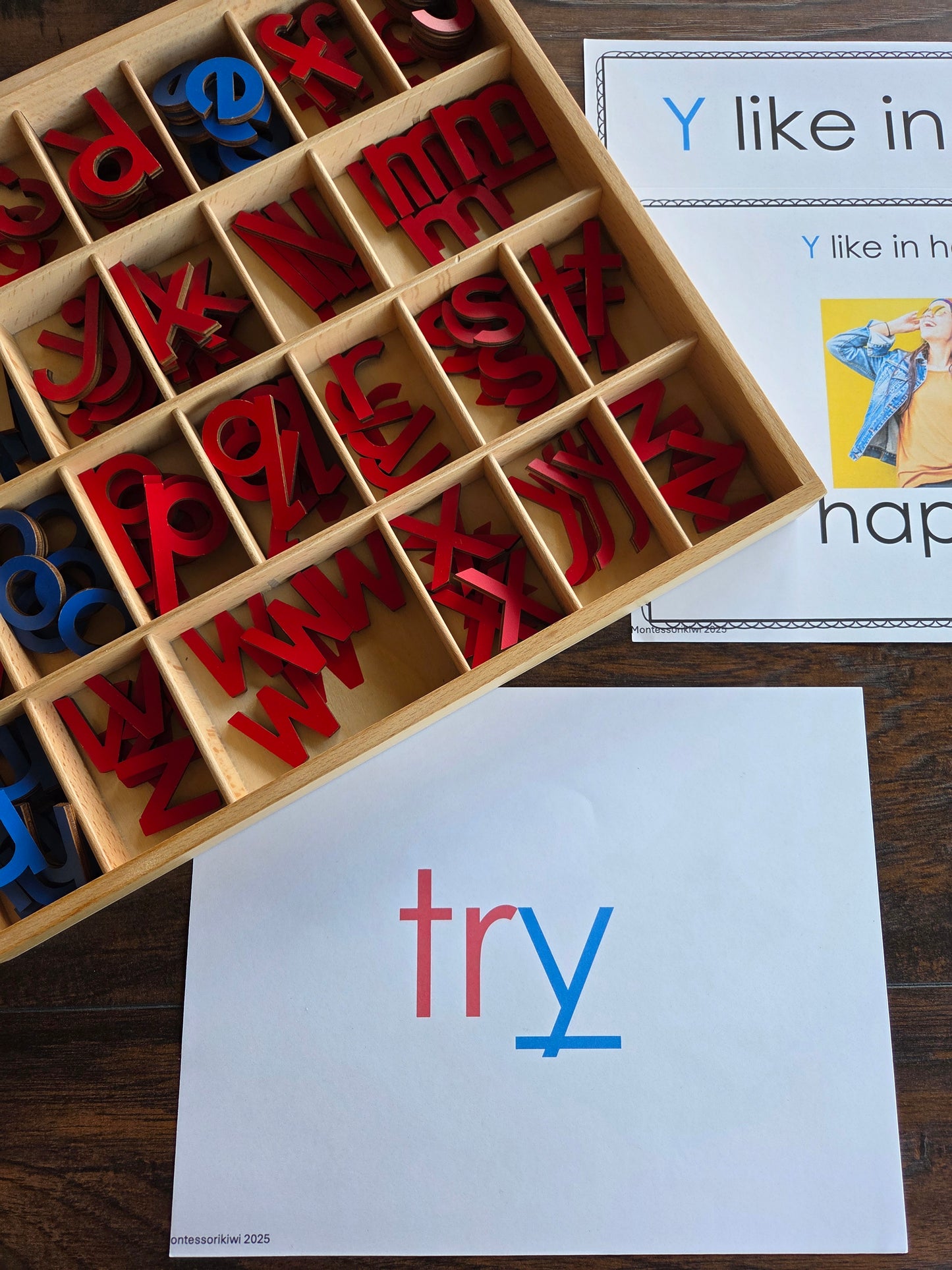
Designed for Montessori classrooms, Science of Reading-aligned phonics instruction, structured literacy, spelling lessons and homeschool learning, these posters provide a simple visual reference that can be introduced during explicit teaching and then placed on the language shelf for independent review.
🌿 At a Glance
✔ Printable 3 Sounds of Y phonics posters
✔ Teaches the three common sounds of y
✔ Covers /y/ as in yes
✔ Covers long /ī/ as in my
✔ Covers long /ē/ as in happy
✔ Includes teaching notes
✔ Uses Montessori colour coding
✔ Supports decoding, spelling and word-pattern recognition
✔ Ideal for Montessori language shelves, structured literacy and homeschool phonics
📚 What's Included?
This printable phonics resource includes:
- Teaching notes
- Montessori colour-coded posters
- Visual support for teaching the three common sounds of y
The posters can be introduced during an explicit phonics lesson and then placed on the Montessori language shelf as a visual reference for reading, spelling and independent word study.
Why Can the Letter Y Be So Confusing?
Children often first meet y as a consonant.
They learn words such as:
- yes
- yellow
- yap
Then they meet words such as:
- my
- cry
- happy
- funny
Now the same letter appears to be making completely different sounds.
Without explicit explanation, children may simply be expected to memorise these words individually.
These posters help make the pattern more visible.
The Three Common Sounds of Y
1. Y Says /y/
At the beginning of a word, y often represents the consonant sound /y/.
Examples include:
- yes
- yellow
- yap
2. Y Says Long /ī/
At the end of many short, one-syllable words, y can represent the long /ī/ sound.
Examples include:
- my
- cry
- fly
3. Y Says Long /ē/
At the end of many longer words, y can represent the long /ē/ sound.
Examples include:
- happy
- funny
- sunny
Helping children notice these patterns gives them a stronger foundation for reading and spelling unfamiliar words.
From Memorising Words to Recognising Patterns
A child may be able to read my and happy correctly without understanding why the letter y sounds different in each word.
Explicit teaching gives them a more useful framework.
The child can begin to ask:
- Where is the y in the word?
- Is it at the beginning or the end?
- How many syllables are in the word?
- Which sound of y makes sense here?
This helps move the child from memorising isolated words towards recognising orthographic patterns.
Why Use Visual Reference Posters?
Children may understand a phonics rule during a lesson but forget it later when reading or writing independently.
A clear visual reference gives them somewhere to look before immediately asking an adult for the answer.
This supports:
- Independence
- Self-correction
- Repeated exposure
- Pattern recognition
- Transfer from explicit teaching into real reading and writing
This fits naturally with Montessori practice, where children are encouraged to use carefully prepared materials to solve problems independently.
What Skills Does This Resource Support?
Children can use these posters to support:
- Recognising the three sounds of y
- Phonics
- Decoding
- Spelling
- Orthographic pattern recognition
- Word analysis
- Reading fluency
- Independent writing
- Self-correction
How to Use the Posters
Begin by introducing one sound of y at a time.
You might:
- Read the example words together
- Ask the child what they notice
- Sort words according to the sound of y
- Build words with the moveable alphabet
- Invite the child to think of additional examples
- Compare one-syllable and multisyllabic words ending in y
Once the pattern has been introduced, the posters can remain available on the Montessori language shelf for independent reference.
Why Explicit Teaching Matters
The letter y is a good example of why children need more than simple one-sound-per-letter rules.
English spelling contains patterns that become easier to understand when they are made visible and explained clearly.
Instead of simply telling children to remember how my or happy looks, we can help them notice:
where the y appears → how many syllables the word has → which sound is likely.
That gives children a much more useful strategy for approaching unfamiliar words.
🌿 Perfect For
- Montessori language shelves
- Science of Reading-aligned phonics instruction
- Structured literacy lessons
- Spelling pattern lessons
- Word study
- Independent writing support
- Literacy centres
- Small-group intervention
- Homeschool phonics lessons
Help Children See Why Y Does Not Always Sound the Same
The letter y can seem unpredictable until children begin to notice where it appears and how it behaves in different words.
These posters give children a simple visual framework:
look at the position of y → consider the word structure → choose the likely sound → apply the pattern while reading or spelling.
That makes the resource a useful reference for helping children move beyond memorising isolated words and towards understanding how English spelling works.
🔗 Related Resources
Continue building children's understanding of flexible letter sounds and English spelling patterns with these related Montessori literacy resources:
🌿 Soft C & Soft G Clip Cards
Help children notice how c and g can change sound before e, i and y while reading meaningful cloze sentences.
Explore the Soft C & G Clip Cards →
🌿 Vowel Team Matching Cards
Give children hands-on practice recognising common long vowel patterns including ai/ay, ee/ea, ie and oa/oe.
Explore the Vowel Team Matching Cards →
🌿 Silent E Phonics Booklets
Build confidence with a_e, i_e, o_e and u_e through reading, writing and comprehension activities.
Explore the Silent E Phonics Booklets →
🌿 Modern Montessori Reading Collection
Explore hands-on resources for phonological awareness, phonics, vowel patterns, spelling rules, syllables, sentence reading and comprehension.
Explore the Modern Montessori Reading Collection →
🌿 Modern Montessori Science of Reading Bundle
Looking for a broader literacy sequence? Explore Montessori-aligned resources covering CVC words, digraphs, silent e, vowel teams, spelling generalisations, syllables, morphology, decoding and comprehension.
Created by Lisa, a Montessori-trained teacher, NZ registered teacher, school principal and former homeschooler. My resources are designed with real learners in mind—including neurodivergent children—and focus on practical, affordable, low-prep materials that support independence.
Share
-
Items are secured / Terms of Use
Our items are secured. They are not able to be altered. We secure our items because they are our intellectual property and because we use art from artists who require that we secure our files.
You may not:
-resell our items or use them for commercial gain
-claim these items as your own
-modify this resource
-share them with others by any means e.g. electronic or hard copy
-
All Items are instant downloads
You will not get a printed product in the mail.
-
All prices are in USD
Due to the international nature of our customers our prices are all in USD. If you wish to work out the conversion before you buy we recommend www.xe.com