montessorikiwi
Short & Long Vowel Listening Memory Game | Montessori Science of Reading
Short & Long Vowel Listening Memory Game | Montessori Science of Reading
Couldn't load pickup availability
Can your child hear the difference between a short and long vowel sound—or do words such as tap and tape still sound confusing?
Before children can confidently read more complex vowel patterns, they need to be able to hear the difference between short and long vowel sounds in spoken words.
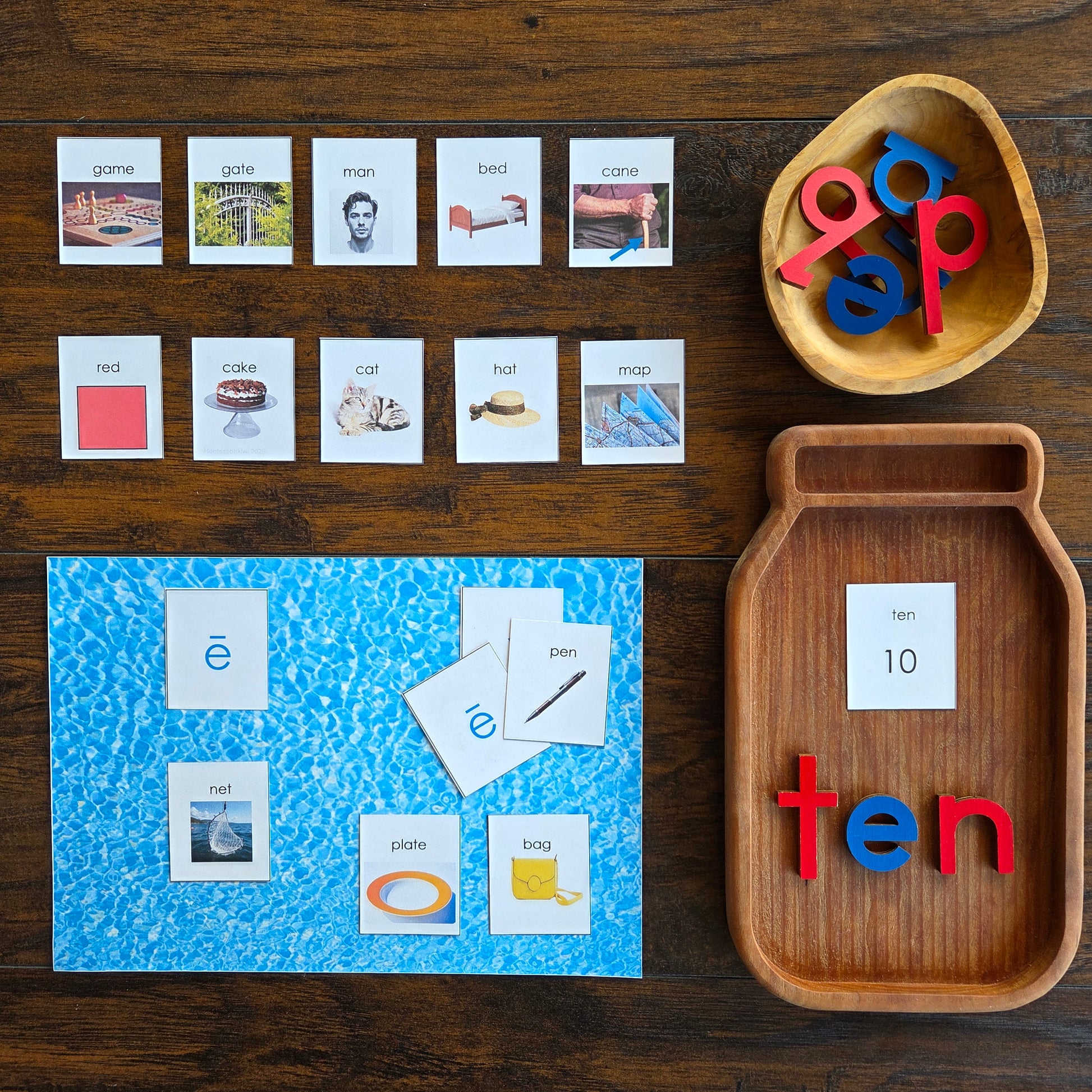
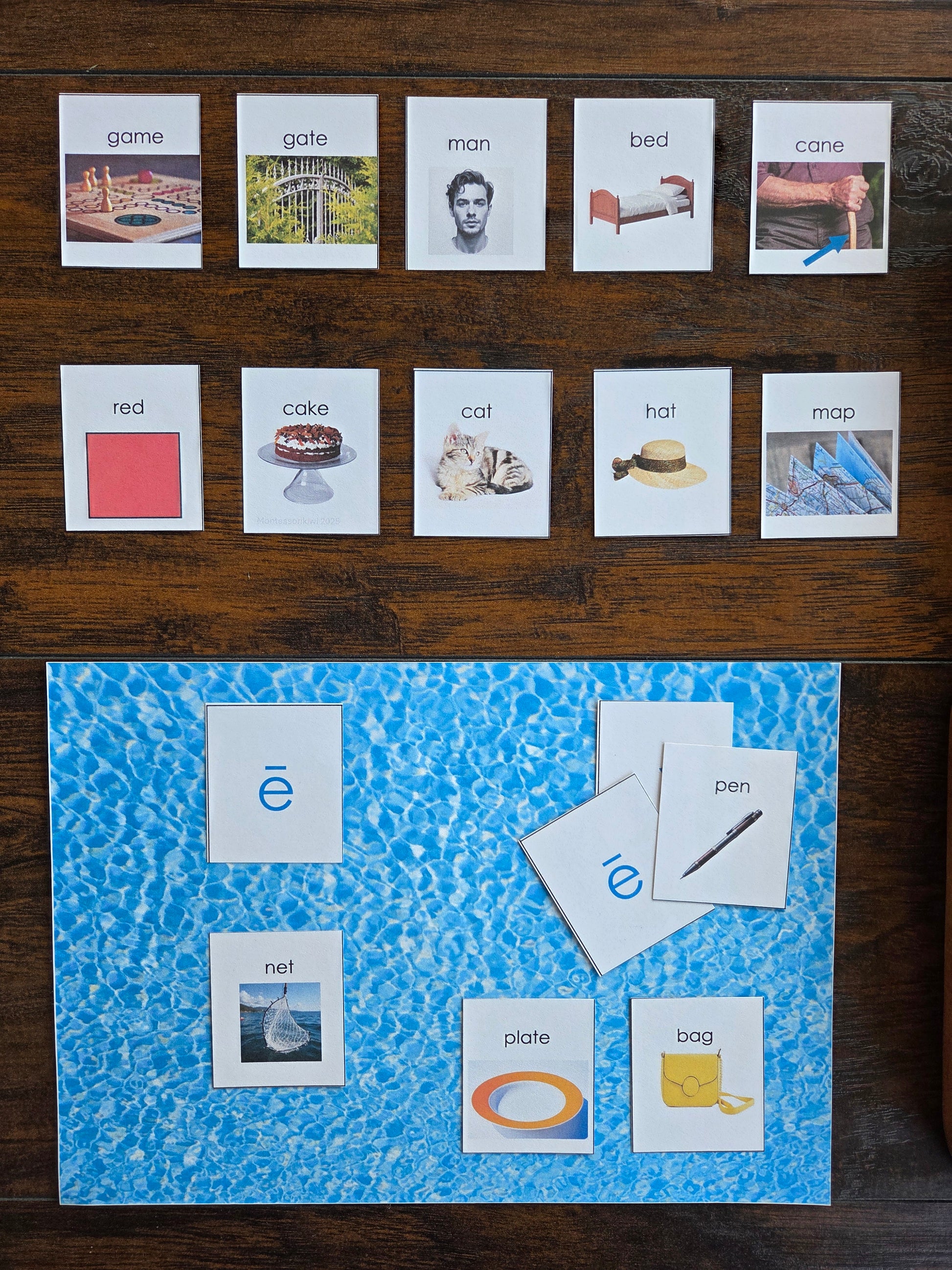
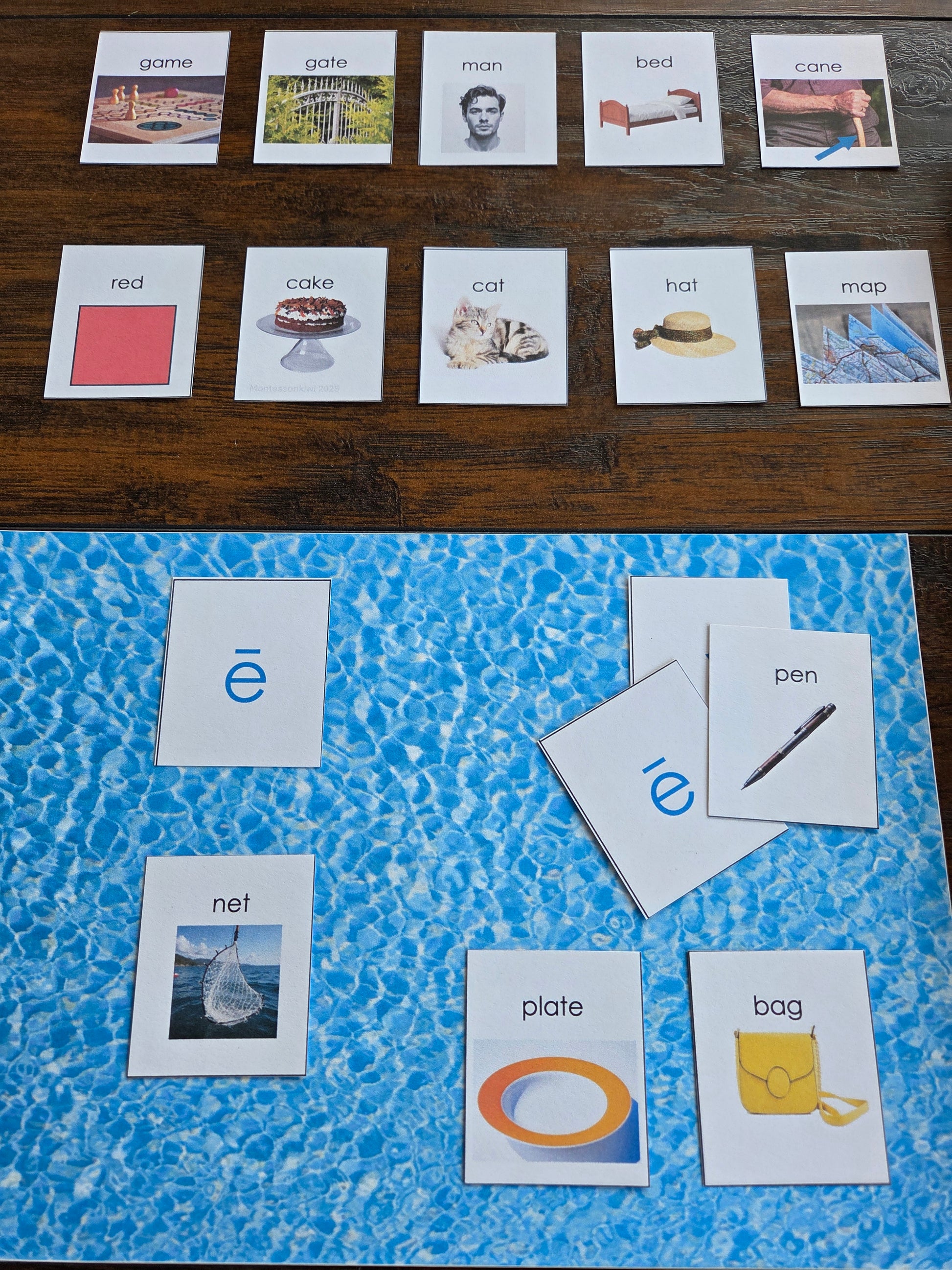
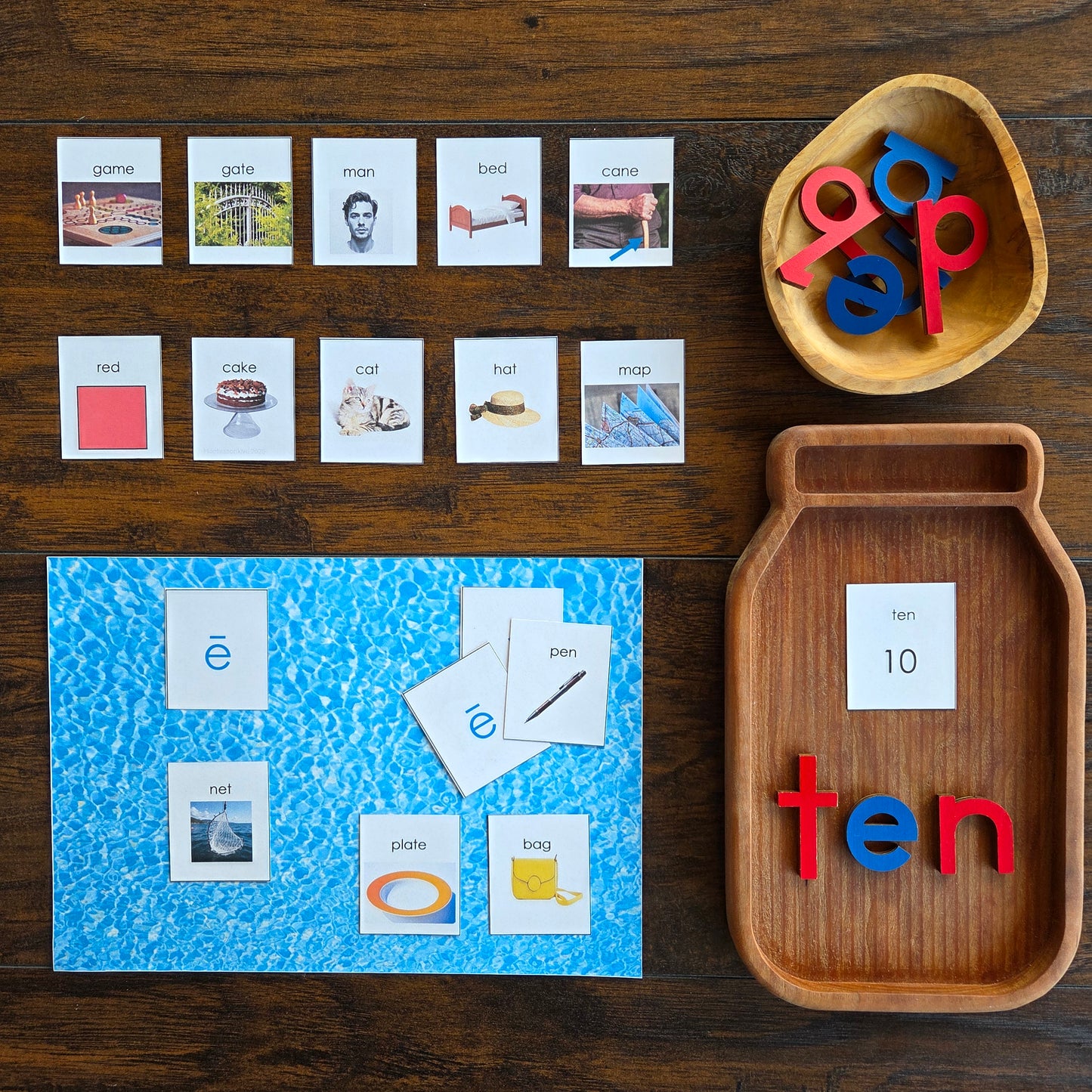
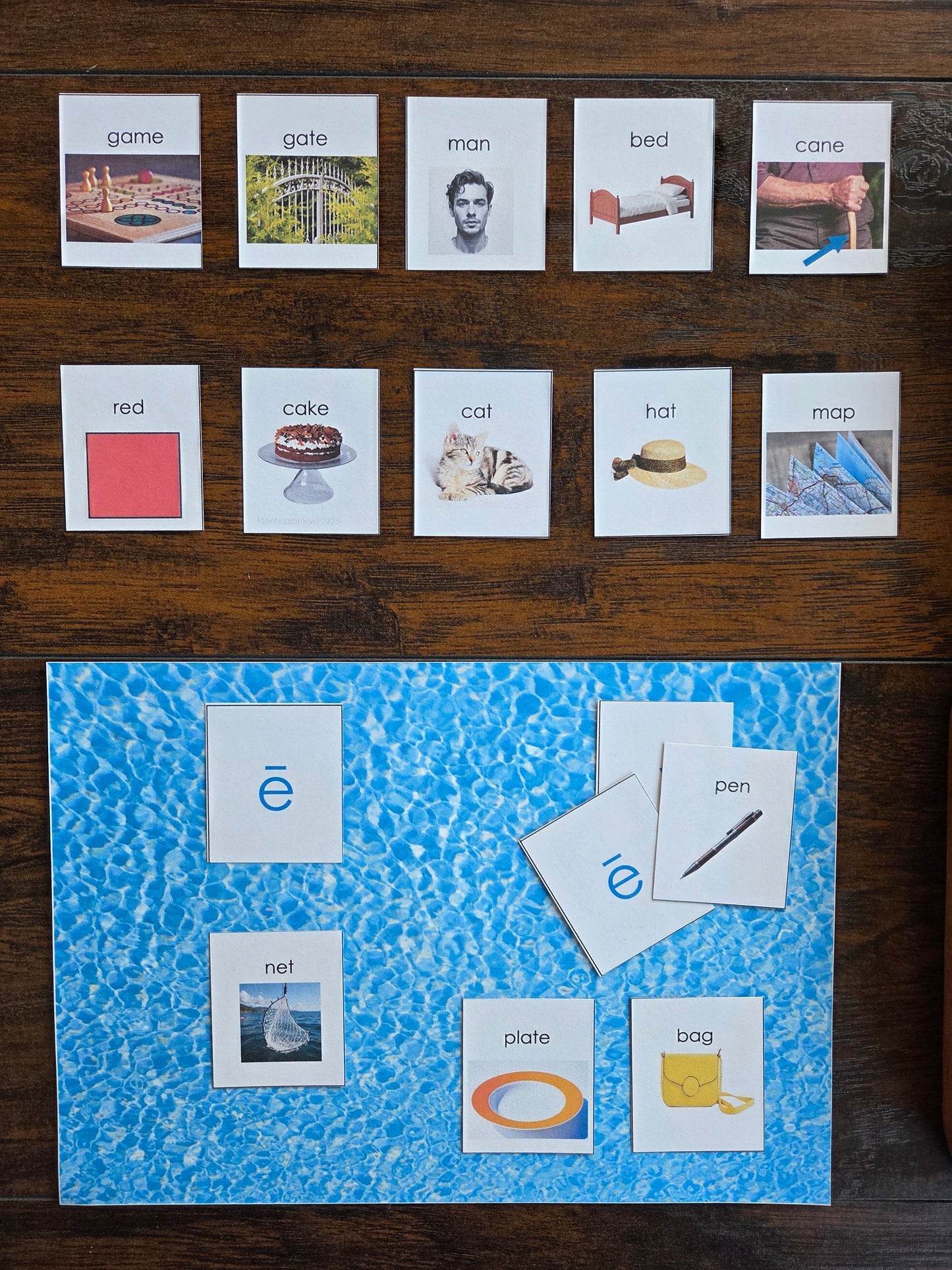
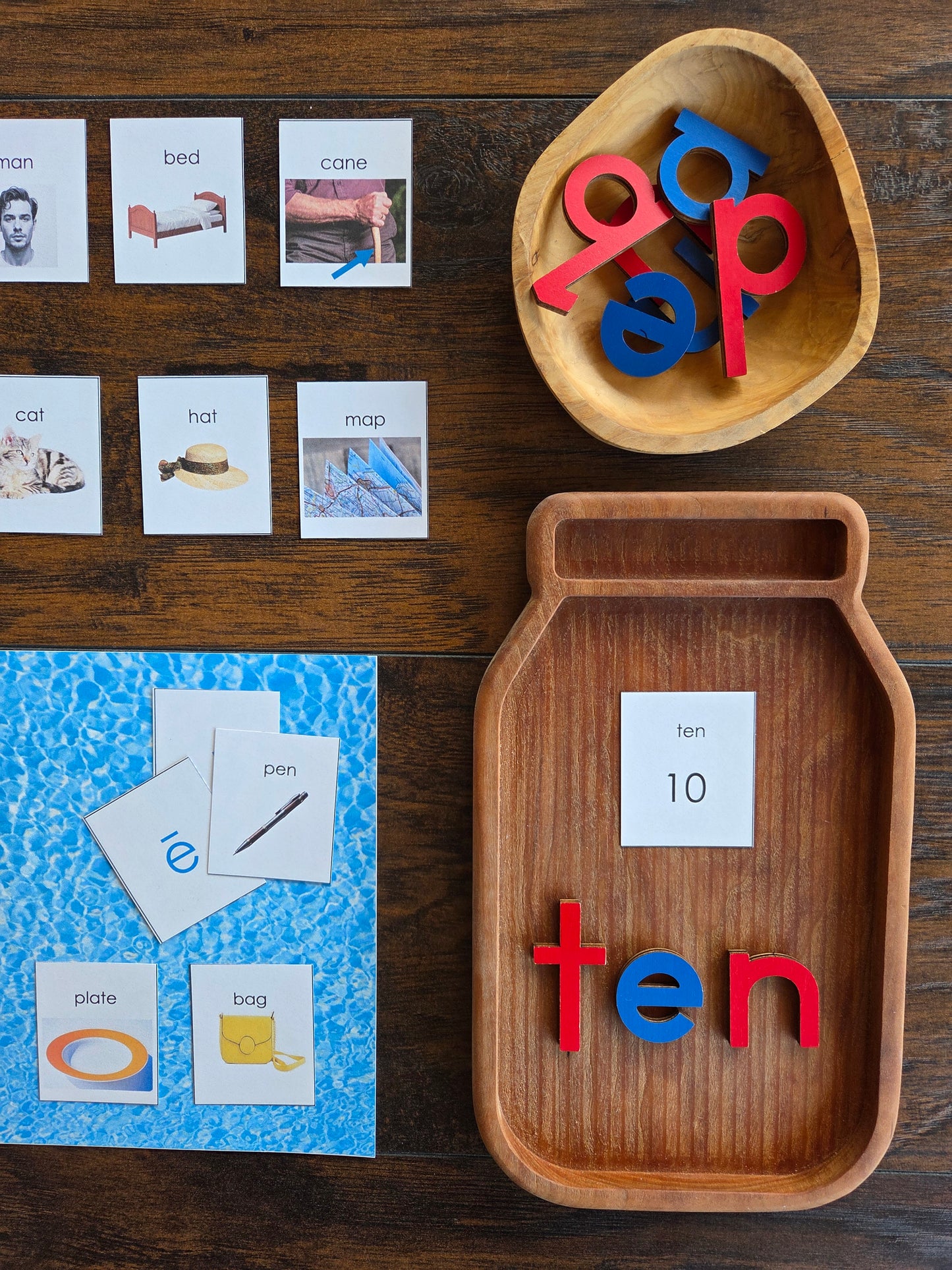
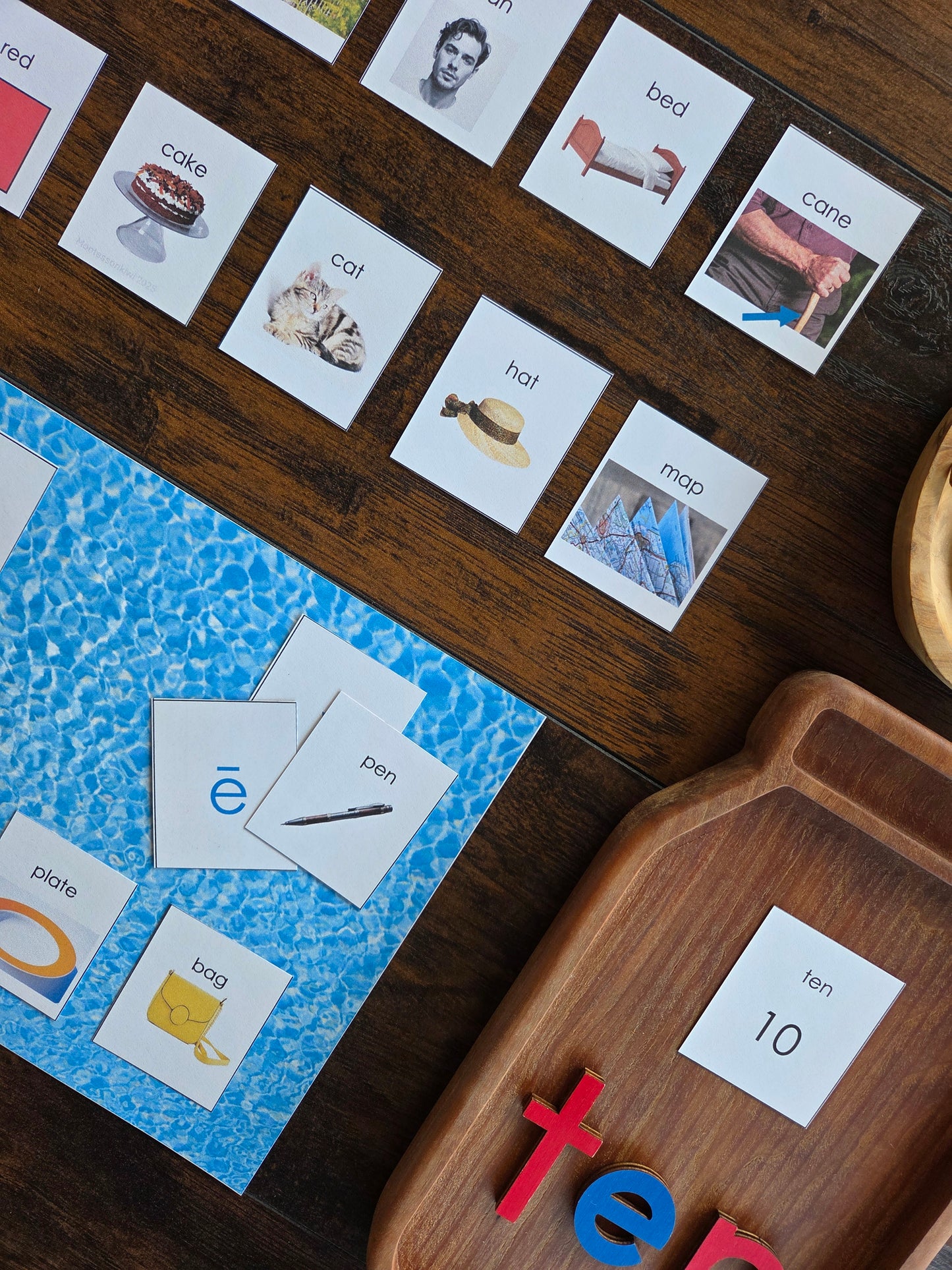
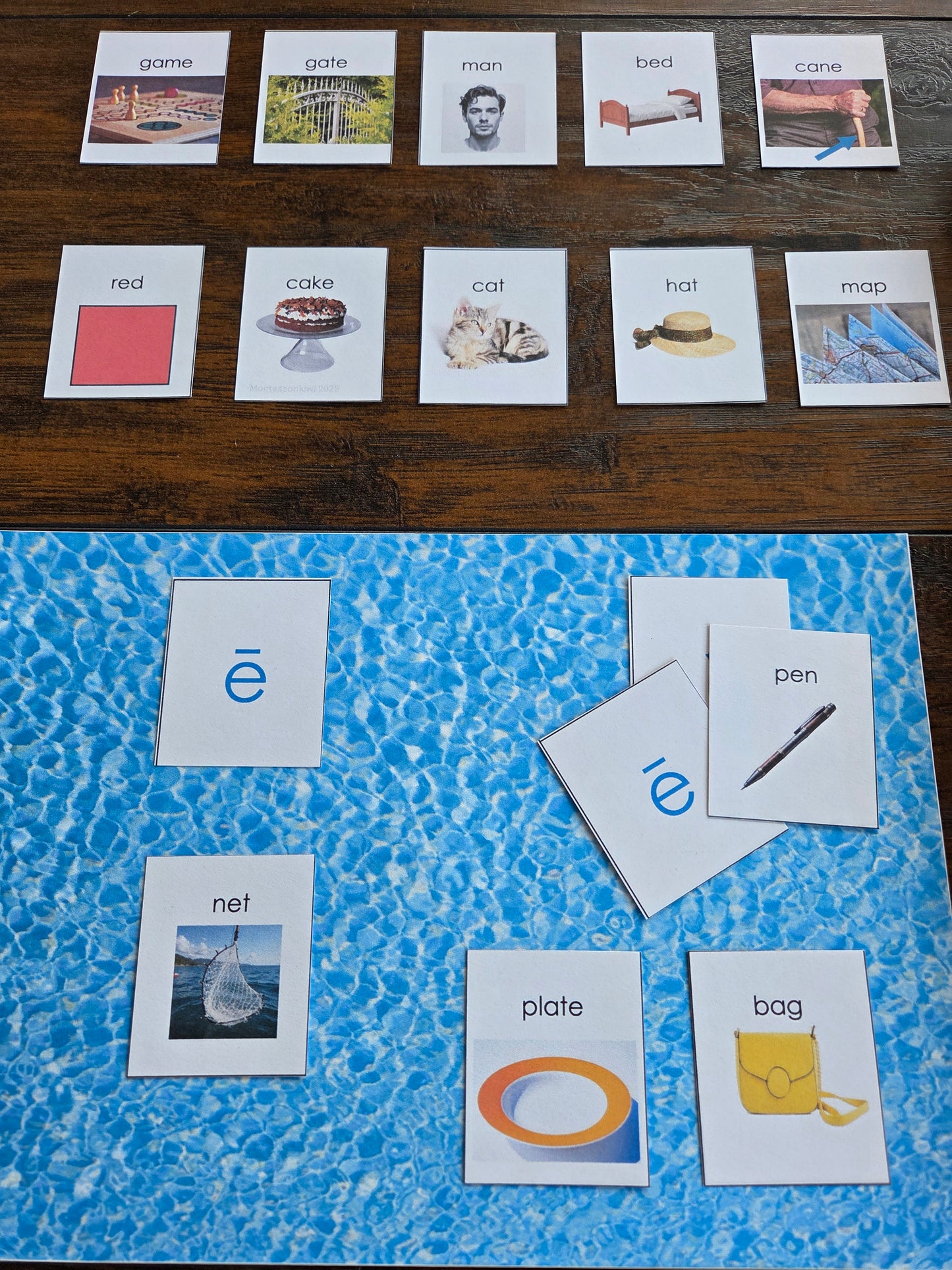
This hands-on Short & Long Vowel Listening Memory Game gives children repeated practice listening carefully to words, identifying the vowel sound and finding a matching card with the same short or long vowel sound.
Children turn over the picture cards, say or hear the words aloud and listen closely to the vowel sound. To make a match, they need to recognise whether the word contains a short or long vowel sound.
Because the focus is on listening rather than decoding printed words, this activity helps children develop the auditory foundation needed for later work with CVC words, silent e, vowel teams and more advanced spelling patterns.
Designed for Montessori classrooms, Science of Reading-aligned early literacy instruction, phonemic awareness, structured literacy, intervention and homeschool learning, this game brings together careful listening, memory and vowel-sound discrimination in a simple hands-on format.
🌿 At a Glance
✔ Hands-on short and long vowel listening memory game
✔ Children match cards according to the vowel sound they hear
✔ Focuses on distinguishing short and long vowel sounds
✔ Picture-based format keeps the focus on listening rather than reading
✔ Adds a memory and matching element to phonemic-awareness practice
✔ Print back-to-back and cut out
✔ Includes teaching notes
✔ Easily differentiated by using only some of the cards at one time
✔ Supports phonemic awareness, auditory discrimination and preparation for phonics
✔ Ideal for Montessori shelf work, small groups, intervention and homeschool learning
📚 What's Included?
This printable short and long vowel resource includes:
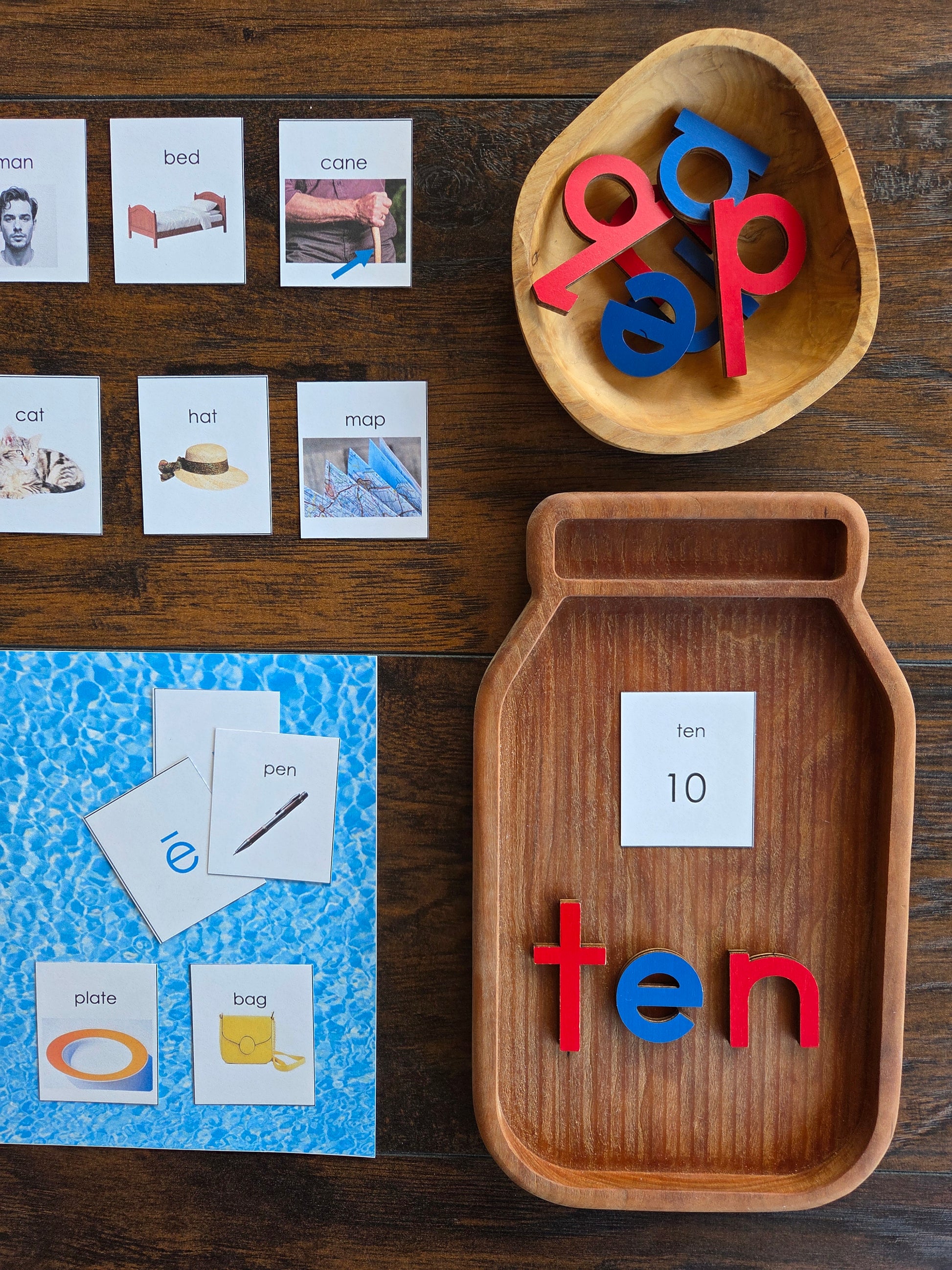
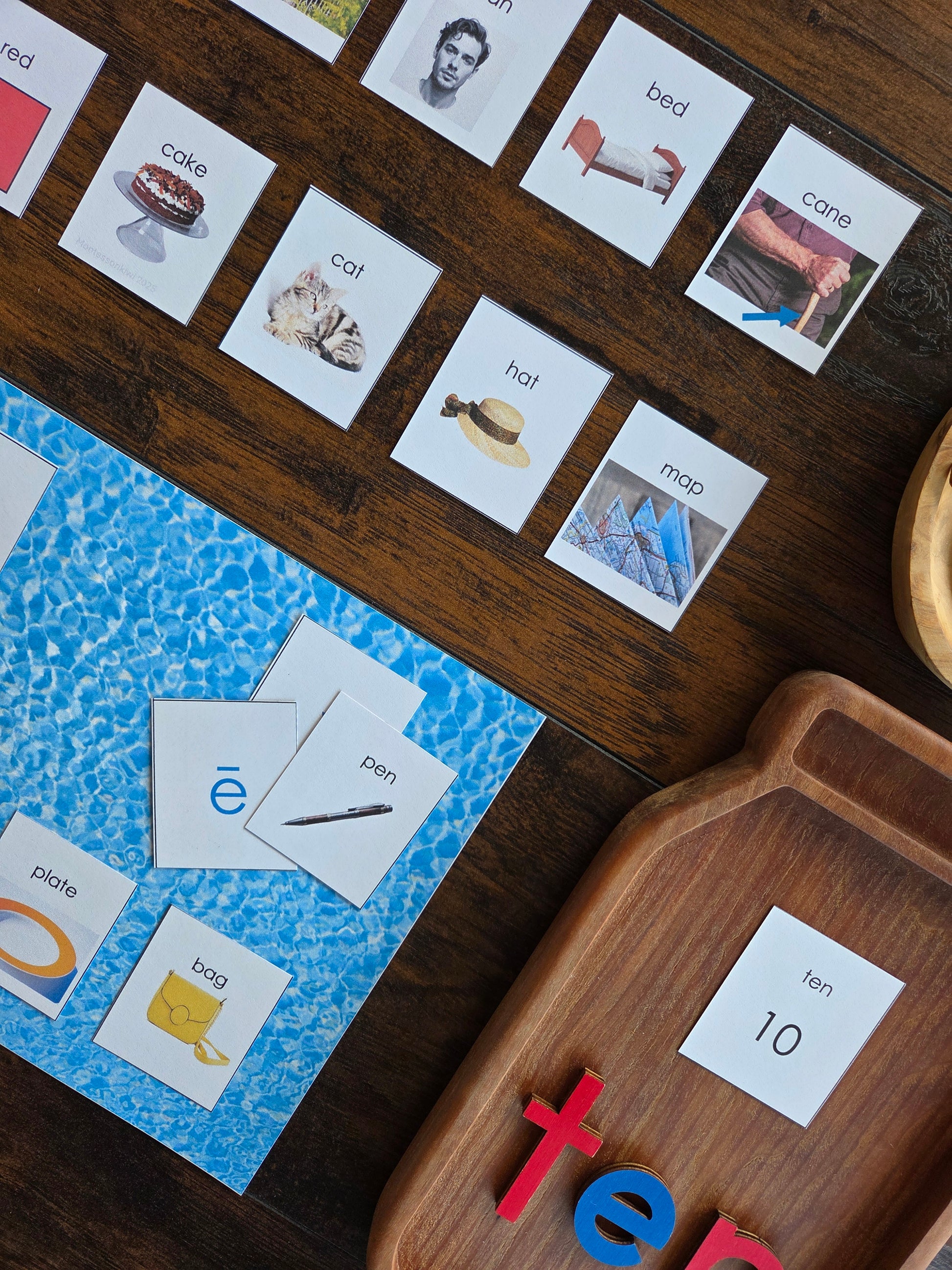
- Picture cards for a short and long vowel memory game
- Short-vowel examples
- Long-vowel examples
- Teaching notes
- A back-to-back printing format
Children turn over cards, say or hear the pictured words and listen for the vowel sound.
They then decide whether the cards belong together according to their short or long vowel sound.
Why Hearing Short and Long Vowels Matters
A child may know the names of the vowels and still struggle to hear the difference between:
- tap and tape
- kit and kite
- hop and hope
This matters because a change in the vowel sound can completely change the word.
Before children can confidently recognise spelling patterns such as silent e or vowel teams, they benefit from opportunities to hear and compare the sounds themselves.
This game keeps the attention on that auditory distinction.
Why Use a Listening Game?
Because this is an aural activity, children do not need to decode a printed word before they can participate.
Instead, they focus on spoken language.
To make a successful match, the child needs to:
- Look at the picture
- Name or hear the word
- Listen carefully to the vowel
- Decide whether the sound is short or long
- Remember where a matching card appeared
This makes the activity particularly useful for children who need more phonemic-awareness practice before or alongside formal phonics instruction.
From Hearing the Word to Identifying the Vowel
The learning progression is:
look at the picture → say the word → isolate the vowel sound → decide whether it is short or long → remember the card → find a matching sound.
This brings together:
- Phonemic awareness
- Auditory discrimination
- Vowel-sound recognition
- Working memory
- Comparison and classification
Why Can Vowel Sounds Be Tricky?
Vowels can be more difficult for beginning readers to hear clearly than consonants.
Children may:
- Focus mainly on the first consonant
- Know the vowel name but not recognise its sound inside a word
- Confuse short and long vowel sounds
- Rely on pictures rather than listening to the complete word
Repeated listening practice helps children slow down and pay attention specifically to the vowel.
Why Add a Memory Element?
This is not simply a sorting activity.
The memory format adds another layer of thinking.
Children need to:
- Listen carefully
- Analyse the vowel sound
- Remember where a card appeared
- Compare it with another sound
- Decide whether the two belong together
This can make repeated practice feel more like a game while still keeping the literacy purpose clear.
From Phonemic Awareness to Phonics
This resource provides useful preparation for later written vowel work.
A possible progression is:
hear the vowel sound → distinguish short and long vowels → read CVC words → compare CVC and CVCe words → explore vowel teams and other long-vowel spellings.
The child first learns to hear the difference before being asked to recognise increasingly complex spelling patterns in print.
Why Use Pictures Instead of Written Words?
The picture gives children access to the spoken word without requiring them to read it first.
This allows the task to remain focused on sound.
The child can ask:
- What is this picture?
- What word does it represent?
- What vowel sound can I hear?
- Is it short or long?
This separation of listening from decoding can be especially helpful for children who need targeted auditory practice.
Easy to Differentiate
You do not need to use every card at once.
For a child who is just beginning, you might:
- Use only a small number of cards
- Focus on one vowel contrast
- Use clearly different short and long vowel examples
- Work together before introducing the independent game
As confidence grows, gradually increase the number of cards and vowel contrasts.
This makes the activity useful for mixed-age Montessori classrooms and intervention settings.
How to Use the Game
- Print the cards back-to-back and cut them out.
- Choose the number of cards appropriate for the child.
- Place the cards face down.
- Turn over two cards.
- Name or say the pictured words aloud.
- Listen carefully to the vowel sounds.
- Decide whether the cards form a matching short- or long-vowel pair.
- Continue until the selected cards have been matched.
What Skills Does This Resource Support?
Children will practise:
- Short and long vowel discrimination
- Phonemic awareness
- Auditory discrimination
- Identifying vowel sounds in spoken words
- Oral language
- Working memory
- Comparison and classification
- Preparation for CVC and CVCe reading
- Preparation for vowel-team study
More Than a Memory Game
The goal is not simply to remember where a picture card is hidden.
The deeper learning progression is:
say the word → hear the vowel → decide whether it is short or long → compare it with another word → remember and match the sound.
This makes the game a purposeful phonemic-awareness activity rather than just a picture-matching game.
🌿 Perfect For
- Montessori language shelves
- Science of Reading-aligned early literacy instruction
- Phonemic awareness lessons
- Short and long vowel practice
- Structured literacy
- Small-group instruction
- Reading intervention
- Literacy centres
- Independent or partner work
- Homeschool phonics preparation
Help Children Hear the Difference Before Asking Them to Read It
Before children can confidently recognise short and long vowel spelling patterns, they need opportunities to hear the contrast in spoken words.
This game gives children a clear progression:
look at the picture → say the word → isolate the vowel sound → decide whether it is short or long → remember and find its match.
That makes it a useful auditory foundation for later work with CVC words, silent e, vowel teams and more advanced phonics.
🔗 Related Resources
Continue building children's understanding of vowel sounds and spelling patterns with these related Montessori literacy resources:
🌿 Short & Long Vowel Listening Sort
Help children listen to picture words and sort them according to whether they contain a short or long vowel sound.
Explore the Short & Long Vowel Listening Sort →
🌿 Silent E Word Matching Cards
Help children compare CVC and CVCe words and notice how a final e changes the vowel sound.
Explore the Silent E Word Matching Cards →
🌿 Silent E Word Building Cards
Move from reading into encoding as children reassemble and write words containing a_e, i_e, o_e and u_e.
Explore the Silent E Word Building Cards →
🌿 Vowel Team Matching Cards
Continue into common long-vowel spellings including ai/ay, ee/ea, ie and oa/oe.
Explore the Vowel Team Matching Cards →
🌿 Modern Montessori Reading Collection
Explore hands-on resources for phonemic awareness, phonics, vowel sounds, spelling patterns, syllables, sentence reading and comprehension.
Explore the Modern Montessori Reading Collection →
🌿 Modern Montessori Science of Reading Bundle
Explore a broader Montessori-aligned literacy sequence covering phonological awareness, decoding, spelling patterns, syllables, morphology, sentence reading and comprehension.
Created by Lisa, a Montessori-trained teacher, NZ registered teacher, school principal and former homeschooler. My resources are designed with real learners in mind—including neurodivergent children—and focus on practical, affordable, low-prep materials that support independence.
Share
-
Items are secured / Terms of Use
Our items are secured. They are not able to be altered. We secure our items because they are our intellectual property and because we use art from artists who require that we secure our files.
You may not:
-resell our items or use them for commercial gain
-claim these items as your own
-modify this resource
-share them with others by any means e.g. electronic or hard copy
-
All Items are instant downloads
You will not get a printed product in the mail.
-
All prices are in USD
Due to the international nature of our customers our prices are all in USD. If you wish to work out the conversion before you buy we recommend www.xe.com