


montessorikiwi
How to draw early humans and early humans coloring (EARLY HUMANS) (cosmic)
How to draw early humans and early humans coloring (EARLY HUMANS) (cosmic)
Couldn't load pickup availability
Turn Children’s Interest in Early Humans Into Purposeful Follow-Up Work
Children are often fascinated by early humans—but drawing species such as Australopithecus afarensis or Homo neanderthalensis independently can feel overwhelming.
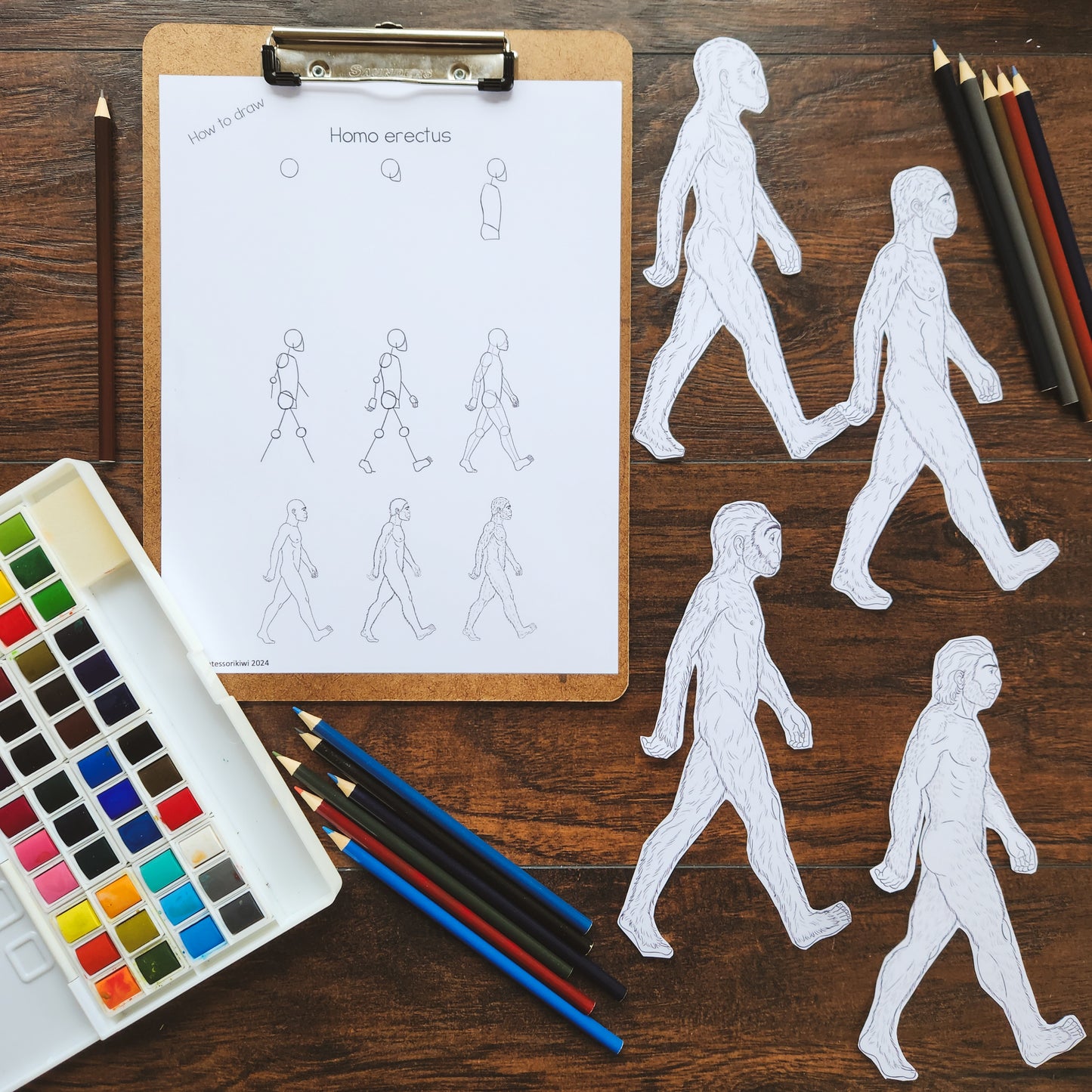
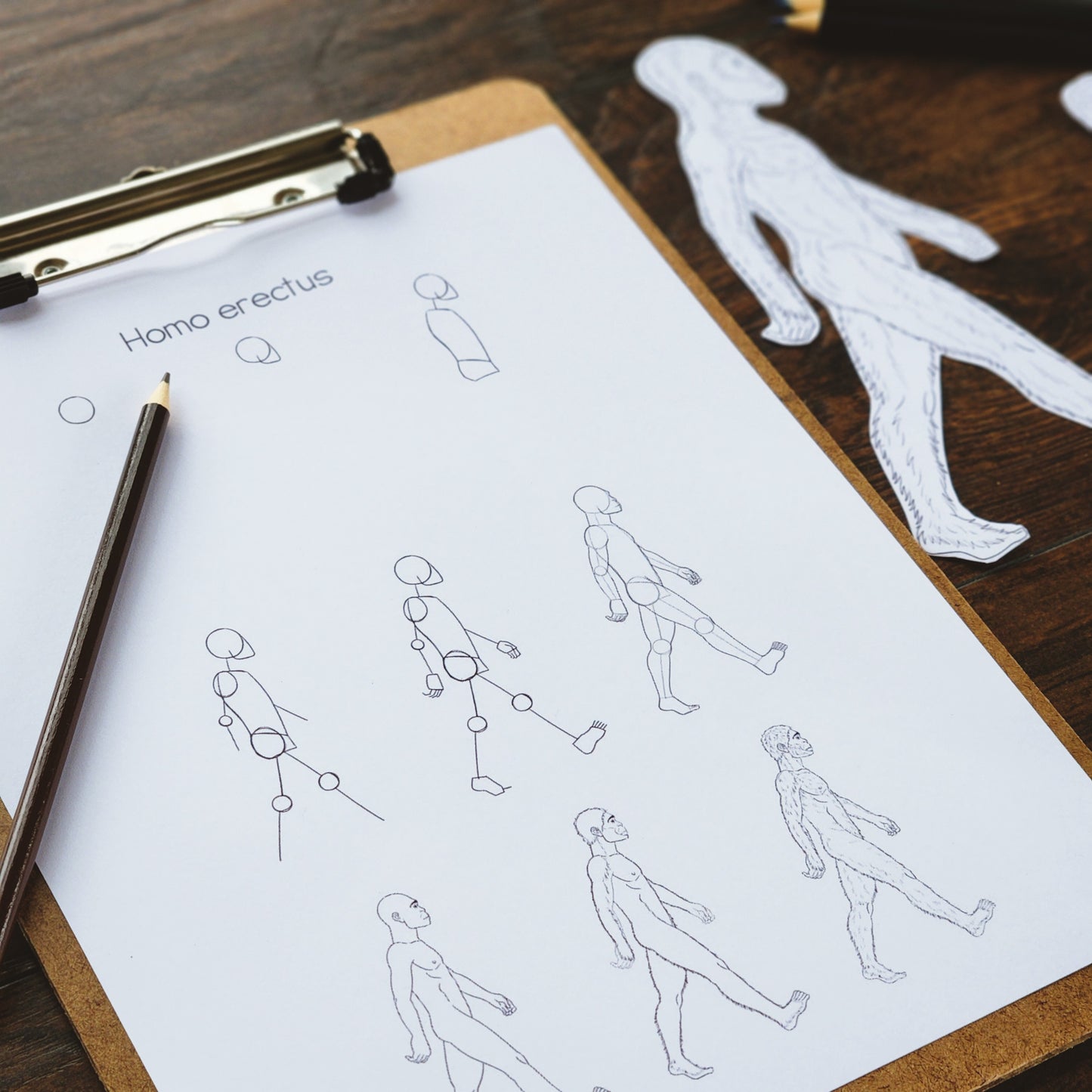
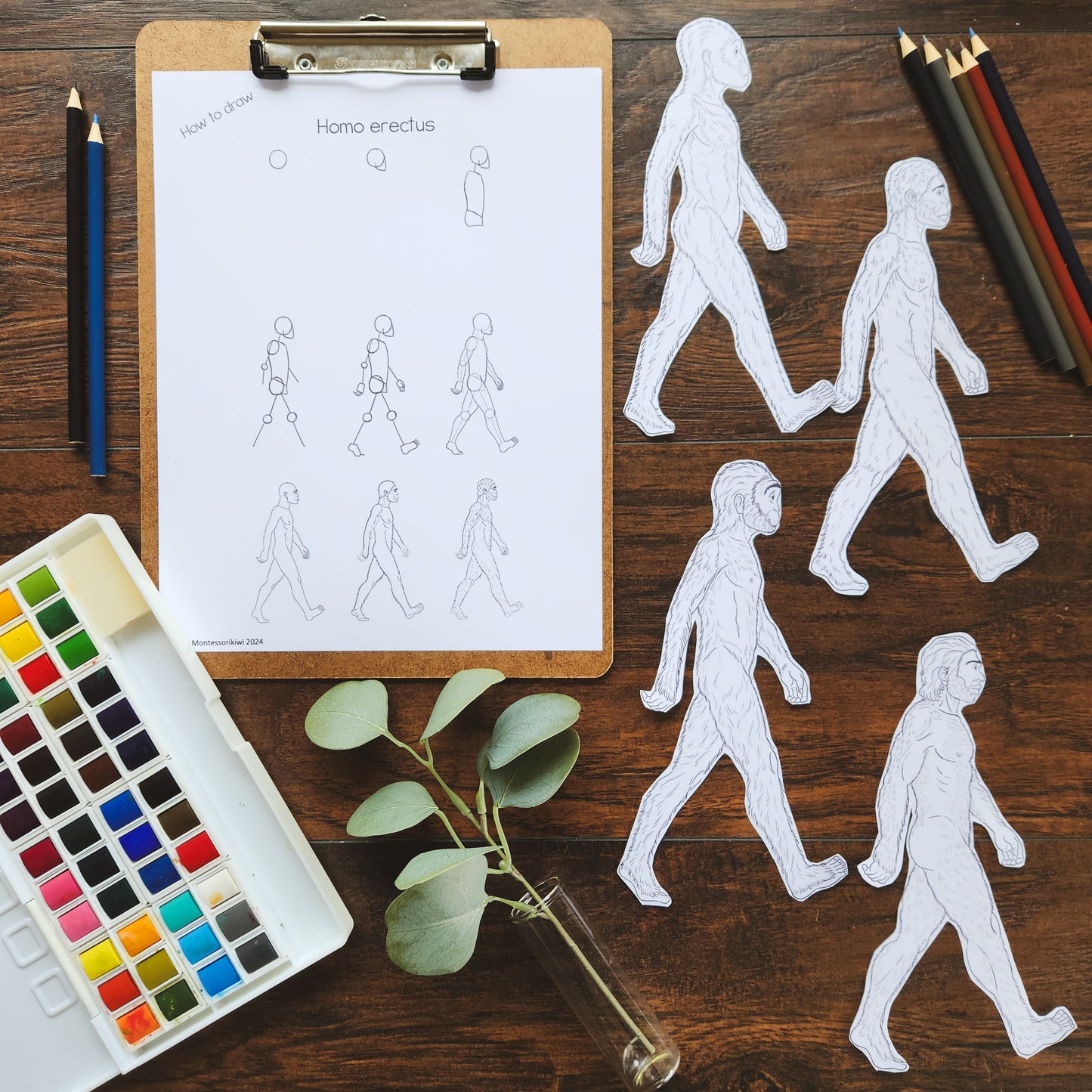
These step-by-step early humans drawing guides and colouring pages give children an accessible way to respond creatively to their studies while reinforcing the names and distinguishing features of four important early human species.
Rather than handing children a generic colouring activity, you can offer structured art work that connects directly with the Montessori Third Great Story, human evolution, timelines and early humans research.
At a Glance
Best for: Montessori elementary classrooms, homeschoolers and early humans studies
Age range: Approximately 6–12 years
Topic: Early humans, human evolution and the Third Great Story
Includes: Four step-by-step drawing guides and four corresponding colouring pages
Species featured: Australopithecus afarensis, Homo habilis, Homo erectus and Homo neanderthalensis
Use for: Great Story follow-up, independent shelf work, research projects, timeline extensions and art integration
Format: Eight-page printable PDF
What Is Included?
This eight-page printable resource includes:
- Step-by-step drawing instructions for Australopithecus afarensis
- Step-by-step drawing instructions for Homo habilis
- Step-by-step drawing instructions for Homo erectus
- Step-by-step drawing instructions for Homo neanderthalensis
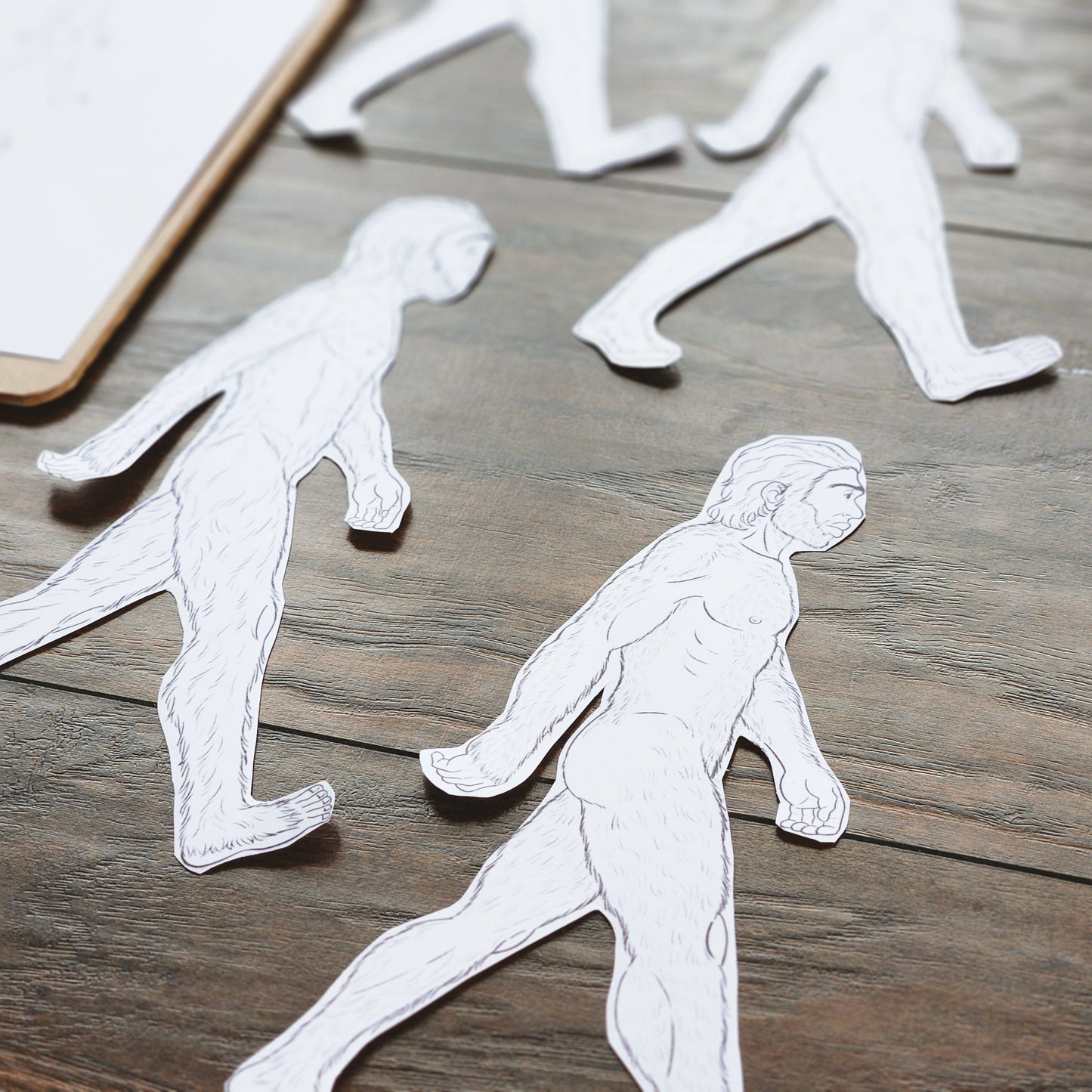
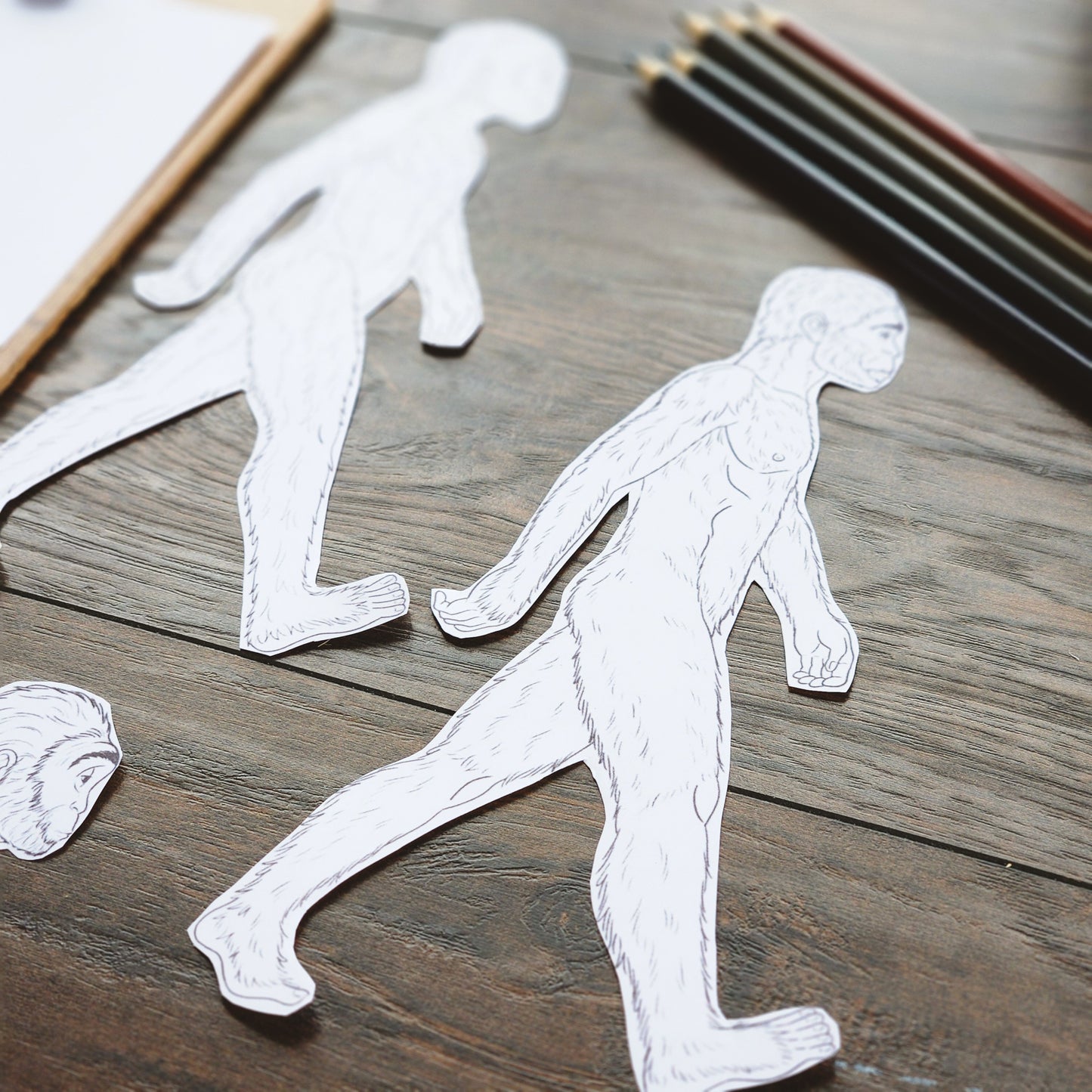
- One colouring page for each featured species
Each drawing is broken into manageable stages so children can see how a more complex picture develops from simple shapes and lines.
More Than an Early Finisher Activity
Drawing can help children slow down, observe details and remember what they have learned.
This activity provides a useful bridge between listening to the Coming of Humans and beginning more detailed research. As children draw, they can revisit species names, compare physical features and discuss how early humans changed over time.
The completed pictures can also become part of:
- an early humans research booklet
- a Montessori history notebook
- a human evolution timeline
- a labelled diagram activity
- a Third Great Story display
- a Fundamental Needs project
- a child-created report or presentation
Designed for Different Levels of Confidence
Not every child approaches drawing with confidence.
Some learners want to create their own detailed illustration but do not know where to begin. Others may prefer the lower-demand option of colouring a prepared picture.
By including both formats, this resource allows children to engage at an appropriate level:
- Beginning or hesitant artists can use the colouring pages
- Children ready for more challenge can follow the guided drawing sequence
- Older or confident learners can add labels, facts, tools, shelters or environments
This flexibility makes the activity useful in mixed-age classrooms and for neurodivergent learners who may benefit from a clear visual sequence and a predictable starting point.
How to Use This Resource
- Introduce the selected species through a Great Story lesson, timeline, book or research activity.
- Show the child how the drawing develops one step at a time.
- Encourage the child to complete each stage lightly before adding detail.
- Invite the child to colour and label the finished illustration.
- Add the drawing to a notebook, research project, timeline or classroom display.
You could also place the printed guides on your Cosmic Education shelf so children can revisit them independently.
A Natural Third Great Story Follow-Up
The Montessori Third Great Story introduces the arrival of human beings and leads naturally into the study of human evolution, migration, tools, shelter, art, culture and the Fundamental Needs of Humans.
These drawing activities help children move from the broad impression of the story into closer observation of particular early human species.
Use them after presenting the Montessori Third Great Story, alongside a human timeline or as part of a longer early humans study.
Build a Richer Early Humans Study
- Montessori Early Humans Bundle – combine drawing with timelines, classification, research and wider inquiry activities
- ```
- Montessori Third Great Story Bundle – present the Coming of Humans and provide meaningful independent follow-up work
- Third Great Story Vocabulary Cards – strengthen understanding of key language relating to early humans, survival, tools and culture
- Hominin or Hominid? Posters and Picture Sort – introduce two commonly confused scientific classification terms
- Montessori Timeline of Humans – help children see how the story of humanity unfolds from early humans to the modern world
- Browse All Early Humans and History Resources
- ```
Planning Your Cosmic Education Sequence?
Read The Montessori Great Stories: A Practical Guide to the Five Great Lessons to see how the Third Great Story opens the door to human evolution, early societies, migration, inventions, art and Fundamental Needs.
You may also enjoy Fundamental Needs Through Time for ideas about extending an early humans study into comparisons of food, shelter, clothing, transport, tools and culture.
Created for Real Montessori Learners
I am a Montessori-trained teacher, New Zealand registered teacher, school principal and former homeschooler.
I create resources from real experience working with mixed-age learners, including neurodivergent children and children with varied confidence in writing, drawing and independent work.
My aim is to provide practical, affordable materials that help children respond actively to the Montessori Great Stories—without requiring the adult to prepare a completely new activity for every interest and ability level.
Important Information
- This product is an instant digital download.
- No printed materials will be mailed.
- The secured PDF is intended for use by one classroom or homeschool.
- Finished drawings may vary from the examples, and children should be encouraged to make their work their own.
Share
-
Items are secured / Terms of Use
Our items are secured. They are not able to be altered. We secure our items because they are our intellectual property and because we use art from artists who require that we secure our files.
You may not:
-resell our items or use them for commercial gain
-claim these items as your own
-modify this resource
-share them with others by any means e.g. electronic or hard copy
-
All Items are instant downloads
You will not get a printed product in the mail.
-
All prices are in USD
Due to the international nature of our customers our prices are all in USD. If you wish to work out the conversion before you buy we recommend www.xe.com