


montessorikiwi
Hominin or Hominid posters or picture sort (cosmic) (early humans)
Hominin or Hominid posters or picture sort (cosmic) (early humans)
Couldn't load pickup availability
This is a digital download. No physical item will be shipped.
Help Children Understand the Difference Between Hominins and Hominids
Hominin and hominid look and sound almost identical—and the words are sometimes used inconsistently in books, websites and older resources.
This can make an already complex early humans study unnecessarily confusing for children.
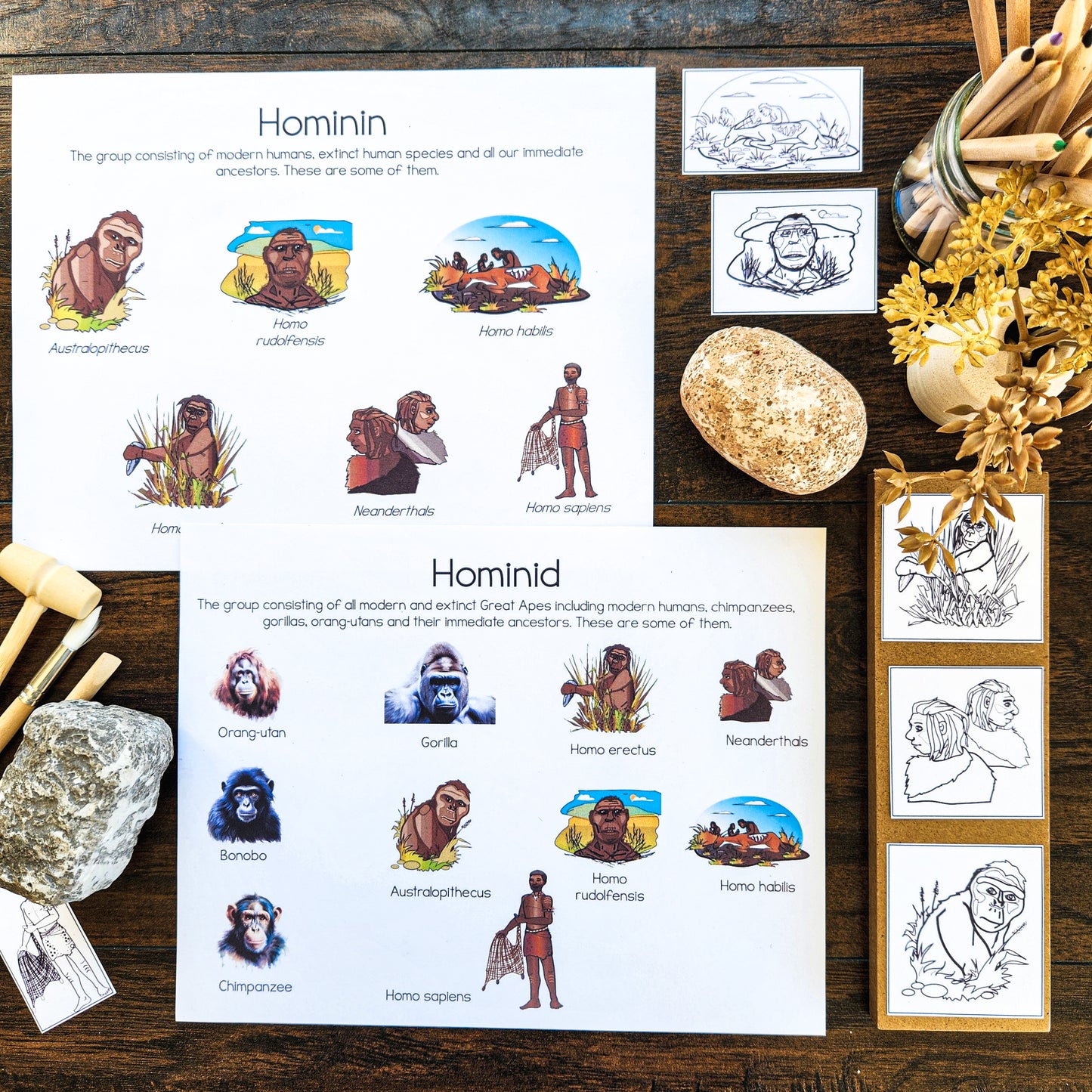
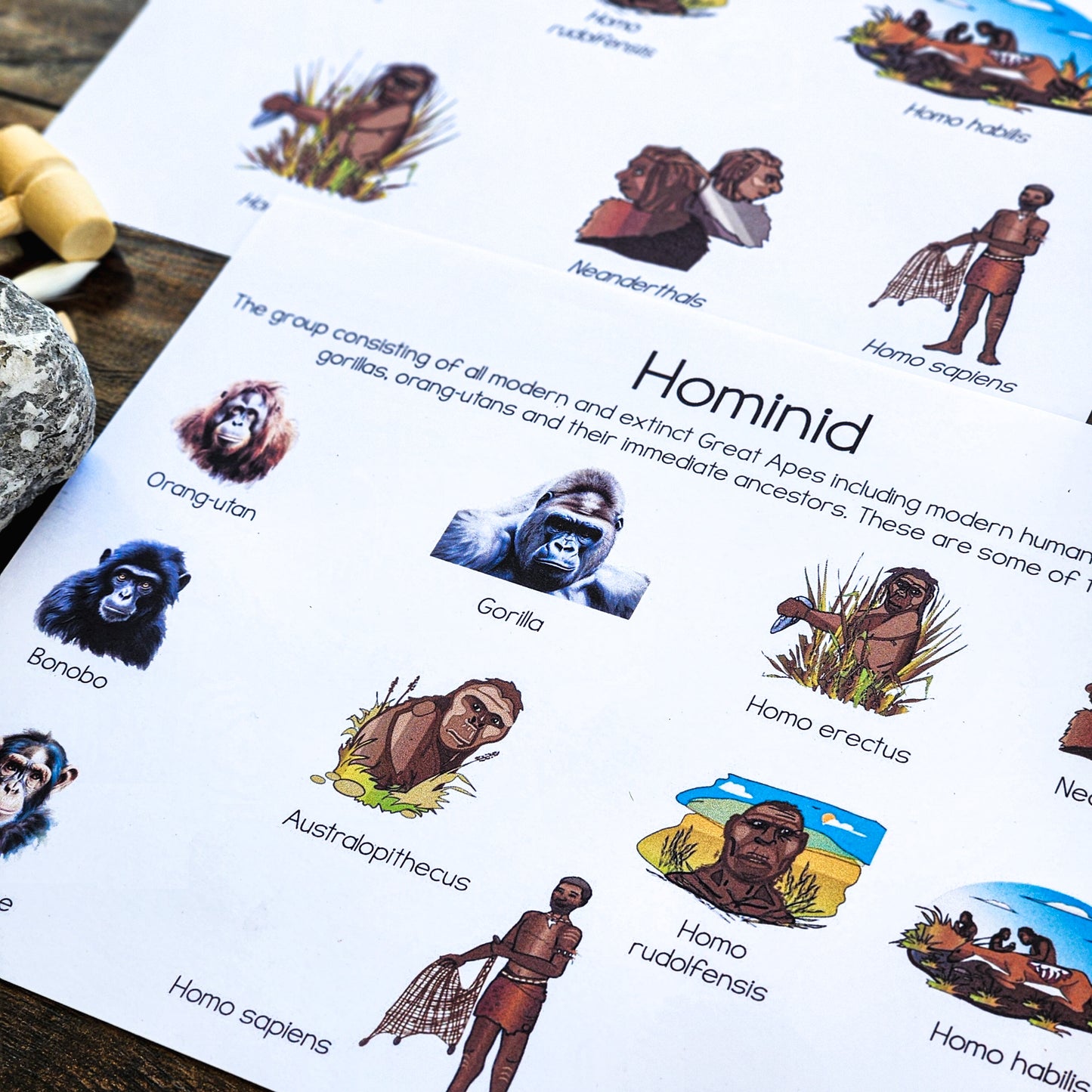
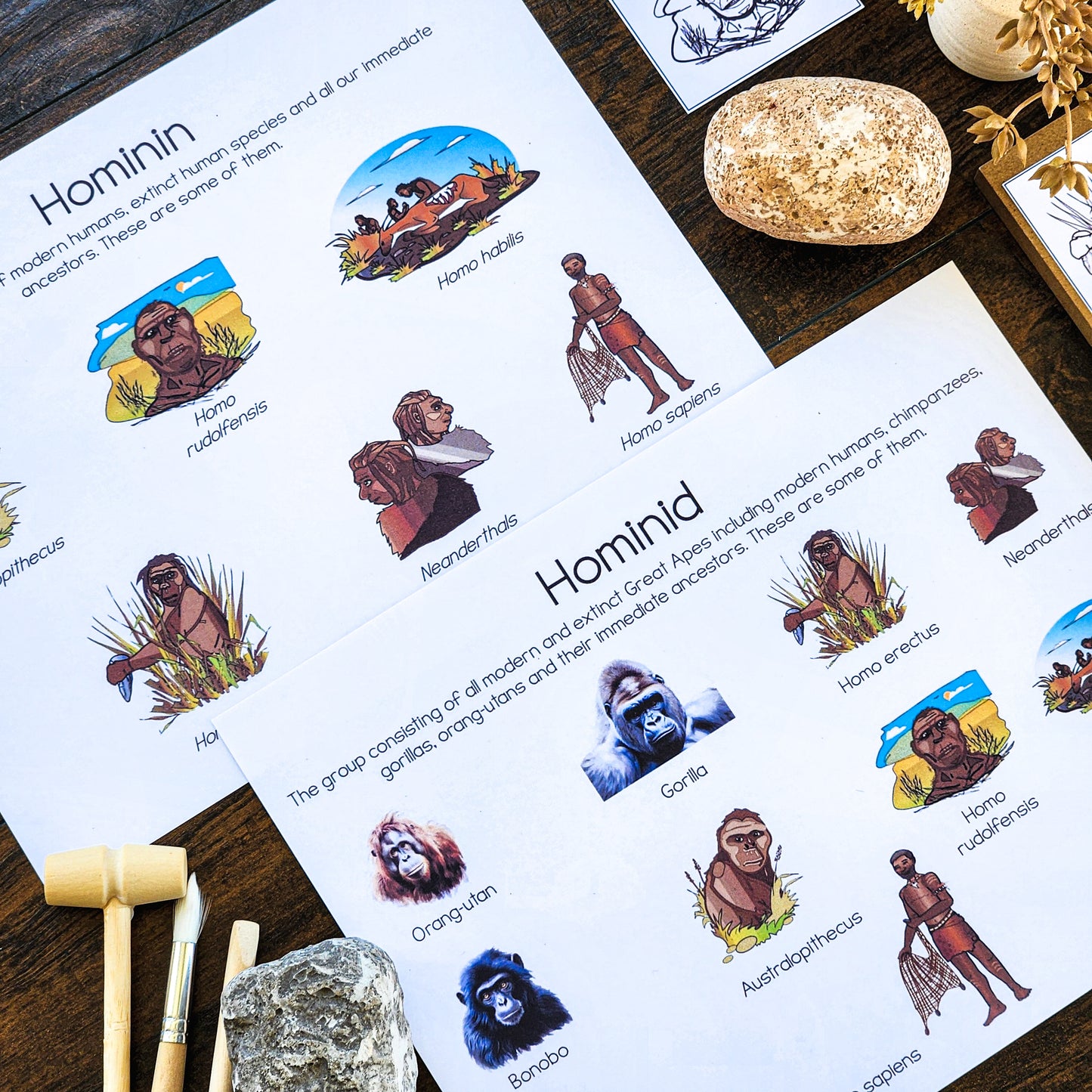
These Hominin or Hominid Montessori posters and picture-sorting cards give children aged approximately 6–9 a simple, visual introduction to the two scientific terms.
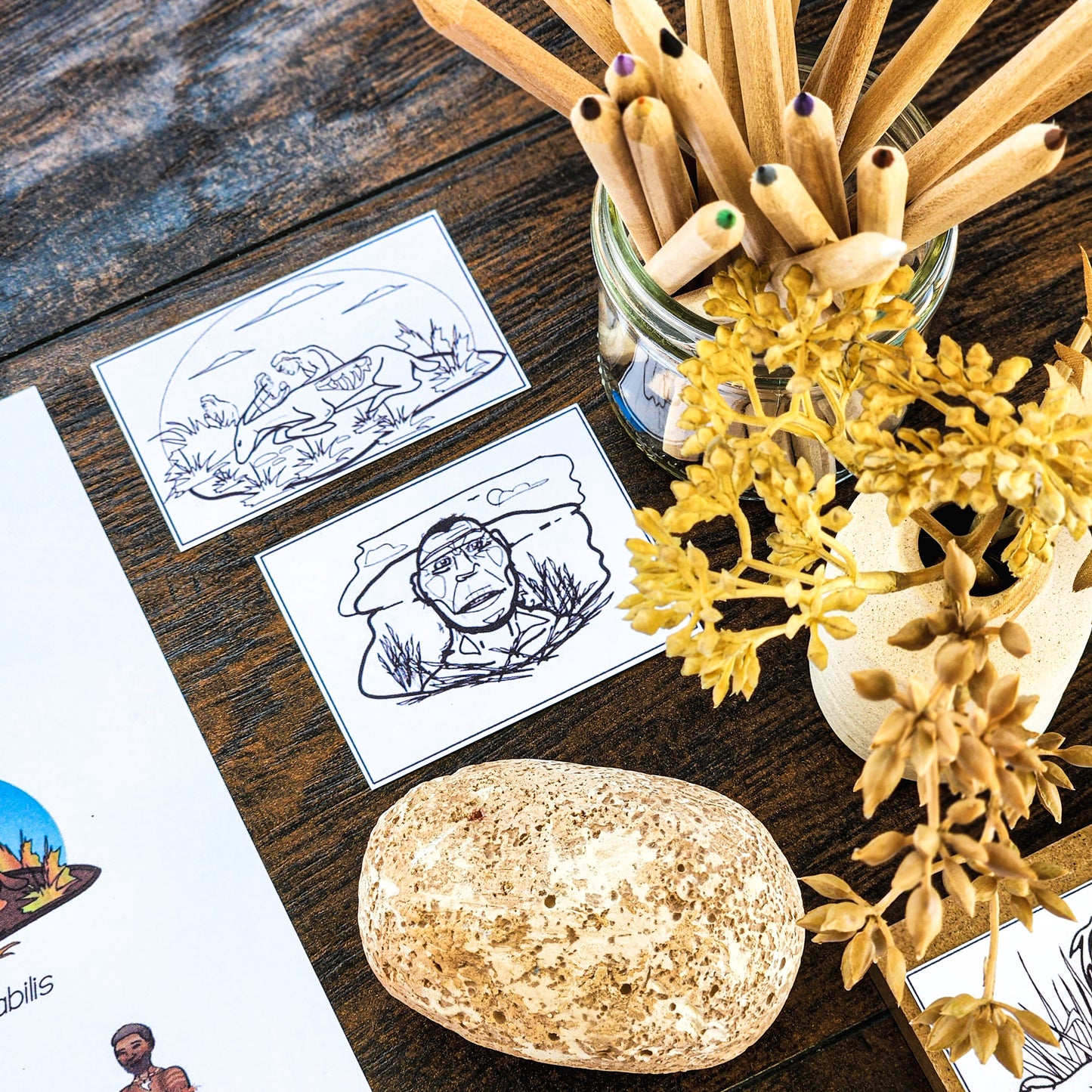
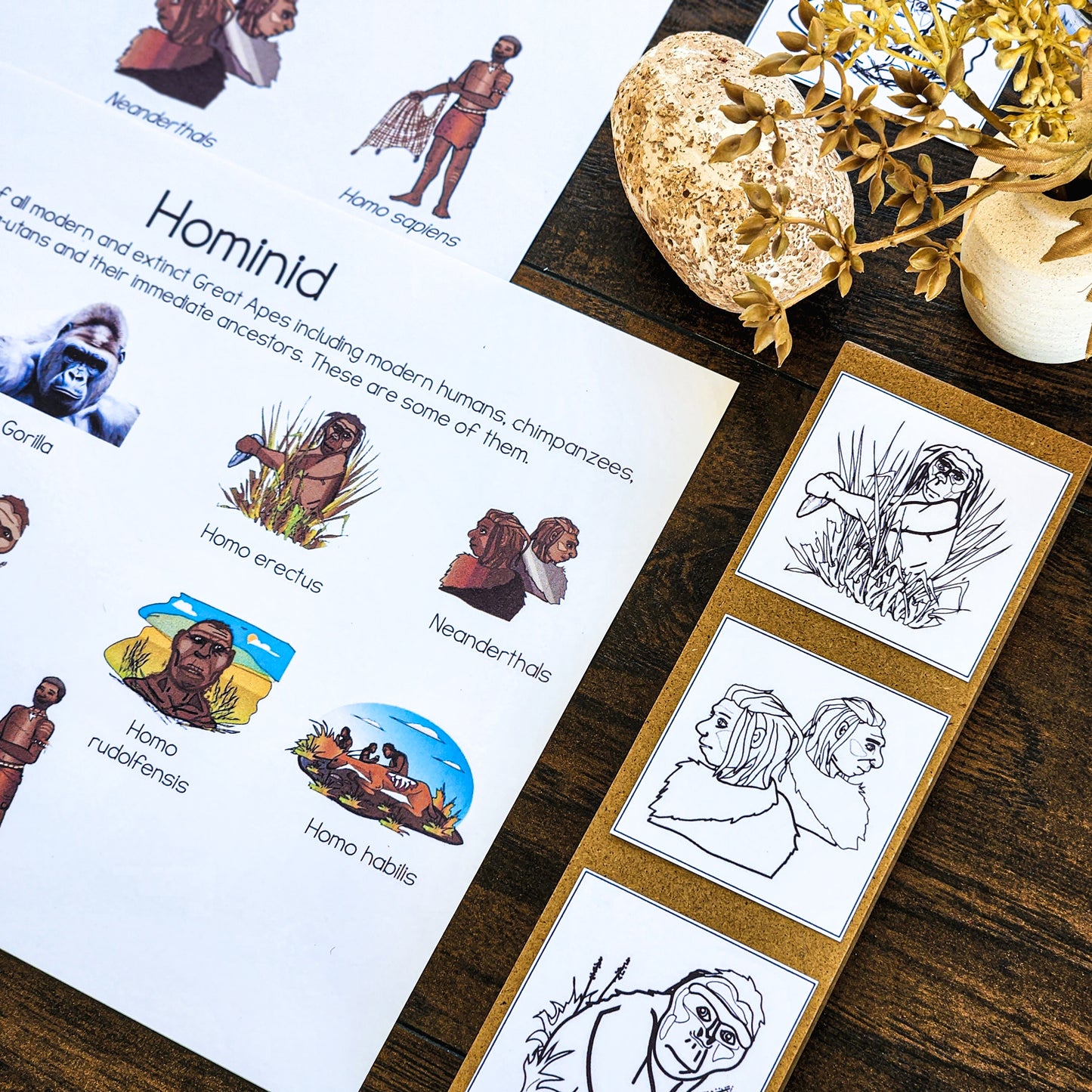
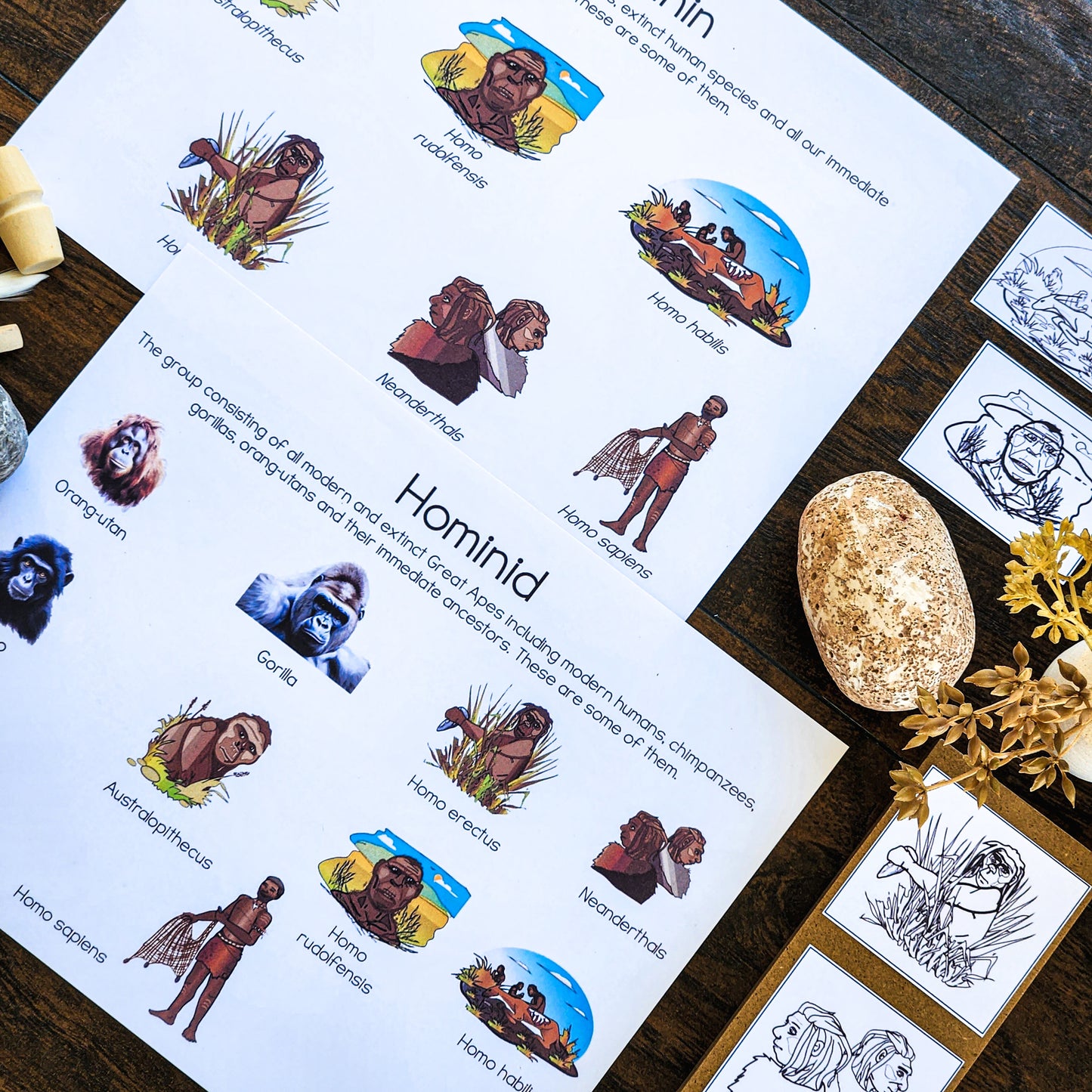
Use the posters for a short presentation, then invite children to sort the black-and-white pictures onto the correct category. The activity helps children move beyond memorising definitions by looking carefully, comparing examples and applying what they have learned.
At a Glance
Best for: Montessori elementary classrooms, homeschoolers and early humans studies
Age range: Approximately 6–9 years
Topic: Hominins, hominids, human evolution and classification
Includes: Two teaching posters and black-and-white sorting pictures
Use for: Third Great Story follow-up, small-group lessons, science vocabulary and independent shelf work
Format: Four-page PDF digital download
A Clear Introduction to Easily Confused Scientific Language
In current scientific usage, hominid generally refers to members of the great ape family, including humans, chimpanzees, bonobos, gorillas and orangutans.
Hominin refers more specifically to modern humans and the extinct species on the human side of the evolutionary family tree.
Because the word hominid was historically also used to refer only to humans and their ancestors, children may encounter different definitions in older books. This resource provides an accessible starting point while also creating an opportunity to discuss how scientific language and classification can change as knowledge develops.
What Is Included?
- Two full-page teaching posters introducing the terms hominin and hominid
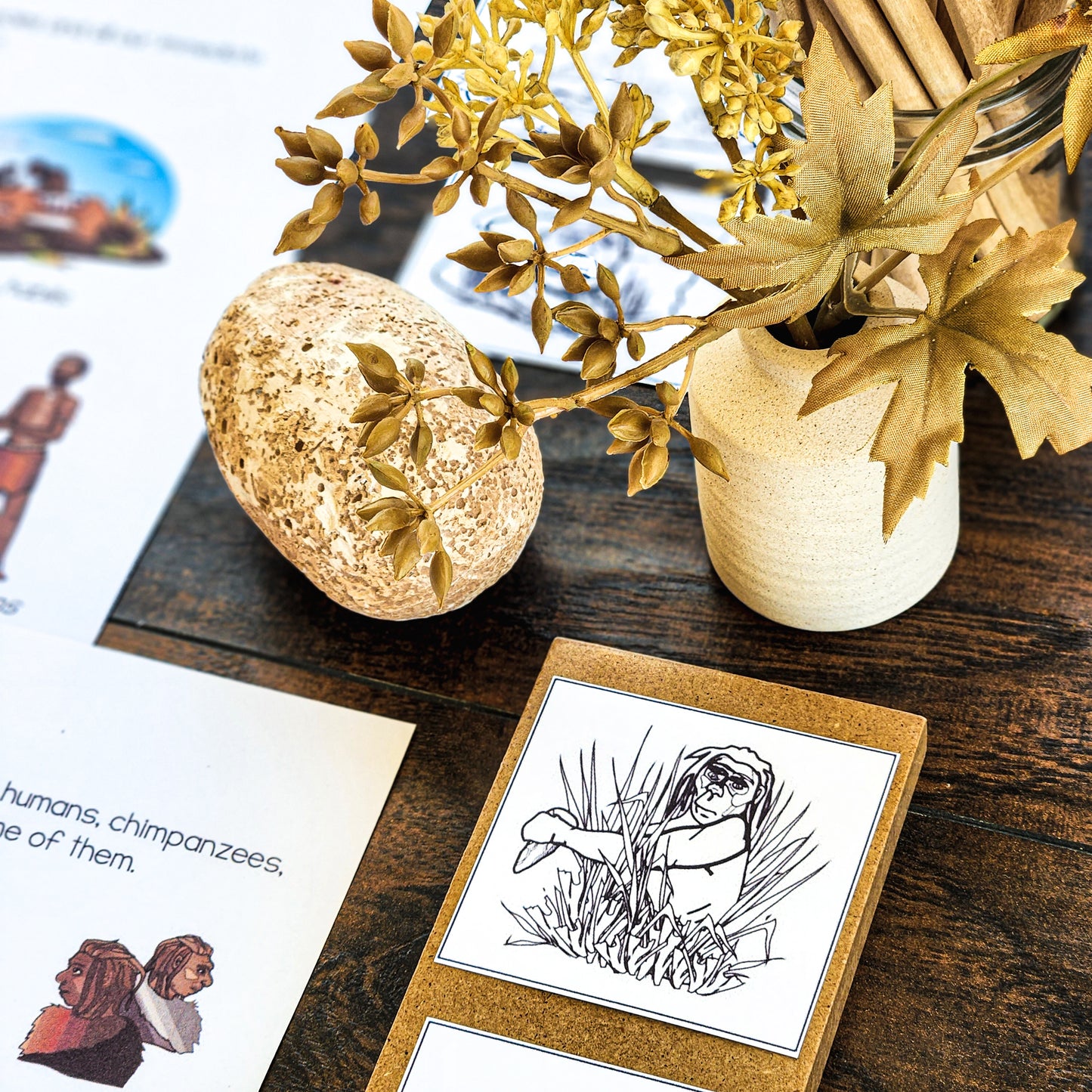
- Black-and-white picture cards for children to sort onto the posters
- Four printable PDF pages
The low-prep format makes it easy to add a short, hands-on classification lesson to your Third Great Story or early humans sequence.
How to Use the Posters and Picture Sort
- Present the two posters during a small-group or whole-class lesson.
- Read and discuss each term with the children.
- Compare the examples shown on the posters.
- Print and cut out the black-and-white picture cards.
- Invite the child to place each picture onto the appropriate poster.
- Encourage the child to explain the reasoning behind each choice.
You can also display the posters on your Cosmic Education wall, add them to an early humans research area or place the sorting activity on the shelf for repetition.
A Useful Follow-Up to the Third Great Story
The Montessori Third Great Story opens the door to enormous questions about human origins, evolution, migration, survival and the qualities that make humans distinctive.
However, children also need carefully sequenced follow-up work that helps them understand the scientific language they will meet in books, timelines and research.
This resource works particularly well after presenting the Montessori Third Great Story or before children begin independent research into early human species.
Supports Visual and Hands-On Learning
The poster-and-sort format is particularly helpful for children who find dense explanations difficult to retain.
It supports:
- visual comparison and classification
- explicit teaching of scientific vocabulary
- oral language and discussion
- careful observation
- independent repetition
- mixed-age Montessori environments
- neurodivergent learners who benefit from clear categories and concrete examples
Continue Your Early Humans Study
- Montessori Third Great Story Script and PowerPoint – introduce the Coming of Humans with an engaging, ready-to-present lesson
- ```
- Third Great Story Vocabulary Cards – support children with the important language used throughout the story
- What Makes Us Human? Booklet – explore the gifts of the human hand, mind and heart
- Montessori Timeline of Humans – trace human history from early humans to the modern age
-
Browse Early Humans and History Resources – find timelines, research activities and further Cosmic Education follow-up work
New to the Montessori Great Stories?
Read The Montessori Great Stories: A Practical Guide to the Five Great Lessons to see how the Third Great Story connects with early humans, Fundamental Needs, evolution, migration and the wider Montessori elementary curriculum.
Created for Real Montessori Classrooms
I am a Montessori-trained teacher, New Zealand registered teacher, school principal and former homeschooler.
I create resources from real experience teaching mixed-age Montessori learners, including children with a wide range of literacy, language, attention and learning needs.
My resources are designed to make complex ideas accessible without removing the curiosity, independence and interconnected thinking at the heart of Montessori Cosmic Education.
Please note: This activity is intended as an introductory classification resource for elementary-aged children. Human evolutionary science continues to develop, and terminology may be used differently in older texts.
Share
-
Items are secured / Terms of Use
Our items are secured. They are not able to be altered. We secure our items because they are our intellectual property and because we use art from artists who require that we secure our files.
You may not:
-resell our items or use them for commercial gain
-claim these items as your own
-modify this resource
-share them with others by any means e.g. electronic or hard copy
-
All Items are instant downloads
You will not get a printed product in the mail.
-
All prices are in USD
Due to the international nature of our customers our prices are all in USD. If you wish to work out the conversion before you buy we recommend www.xe.com