montessorikiwi
Montessori Volcano Vocabulary Cards | 3-Part & 4-Part Earth Science Cards
Montessori Volcano Vocabulary Cards | 3-Part & 4-Part Earth Science Cards
Couldn't load pickup availability

Children are often fascinated by volcanoes—but fascination alone does not always lead to accurate scientific understanding.
Words such as lava, magma, vent, crater and magma chamber are easily confused. Children may also hear terms such as shield volcano, composite volcano or dormant volcano without having a clear picture of what each one means.
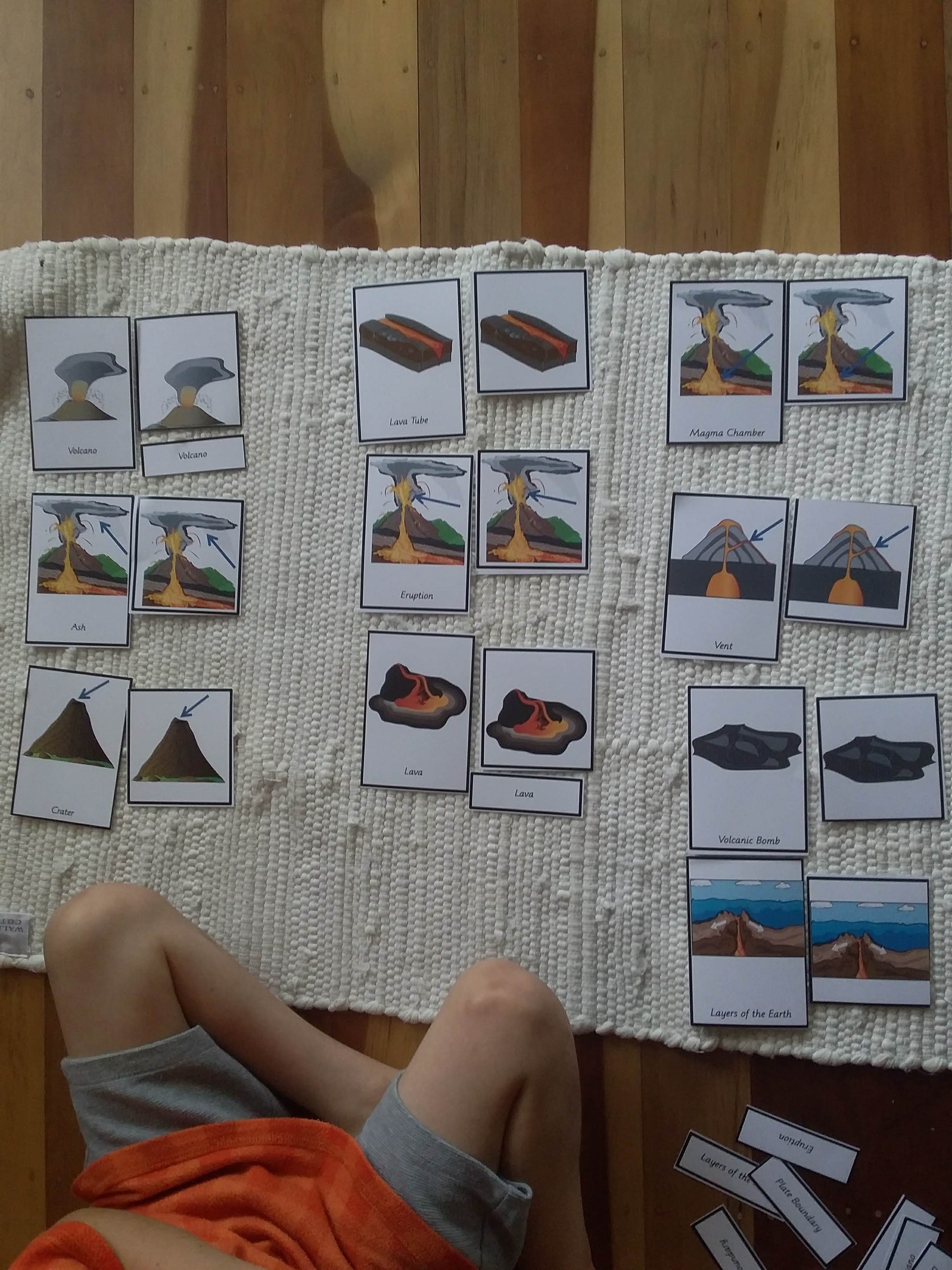
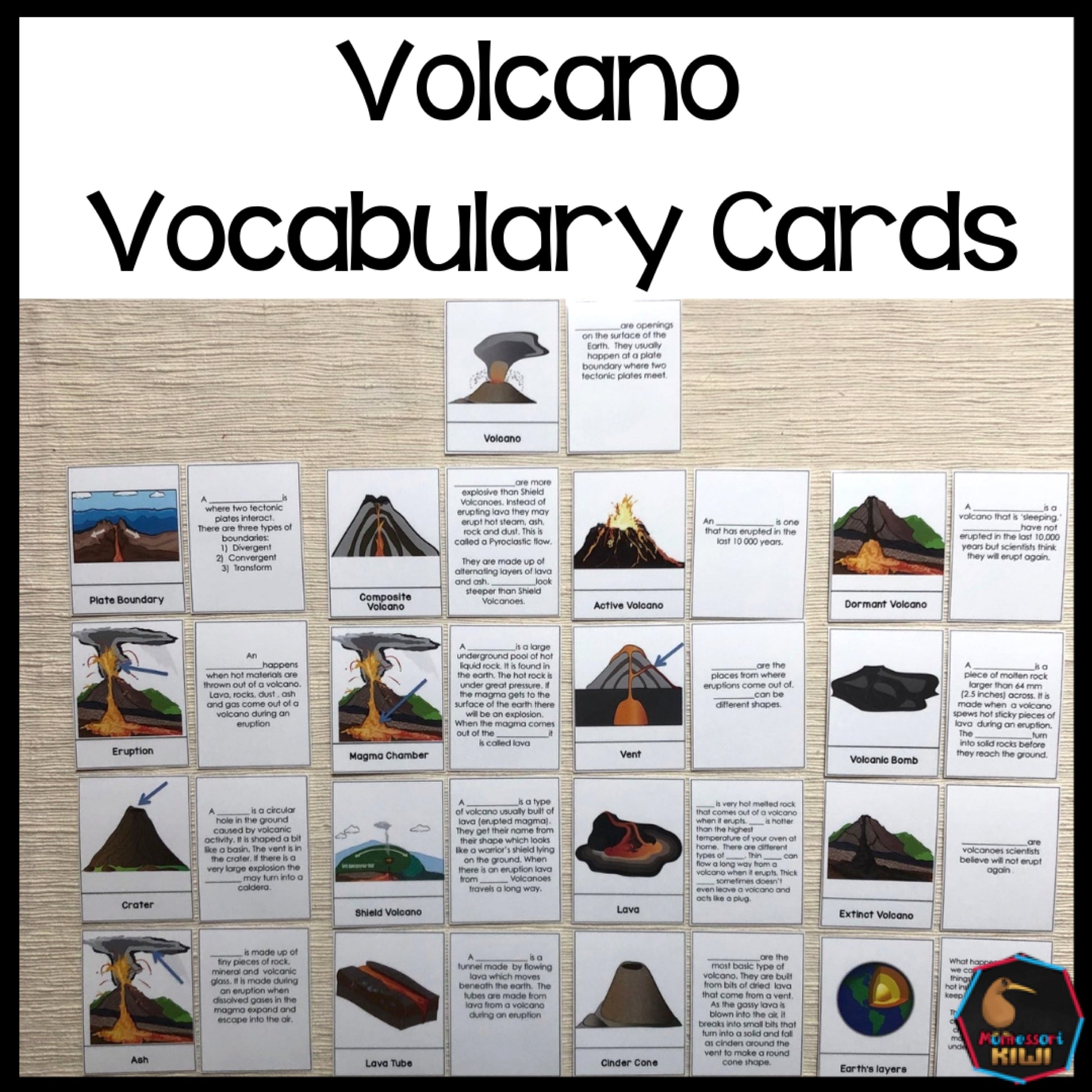
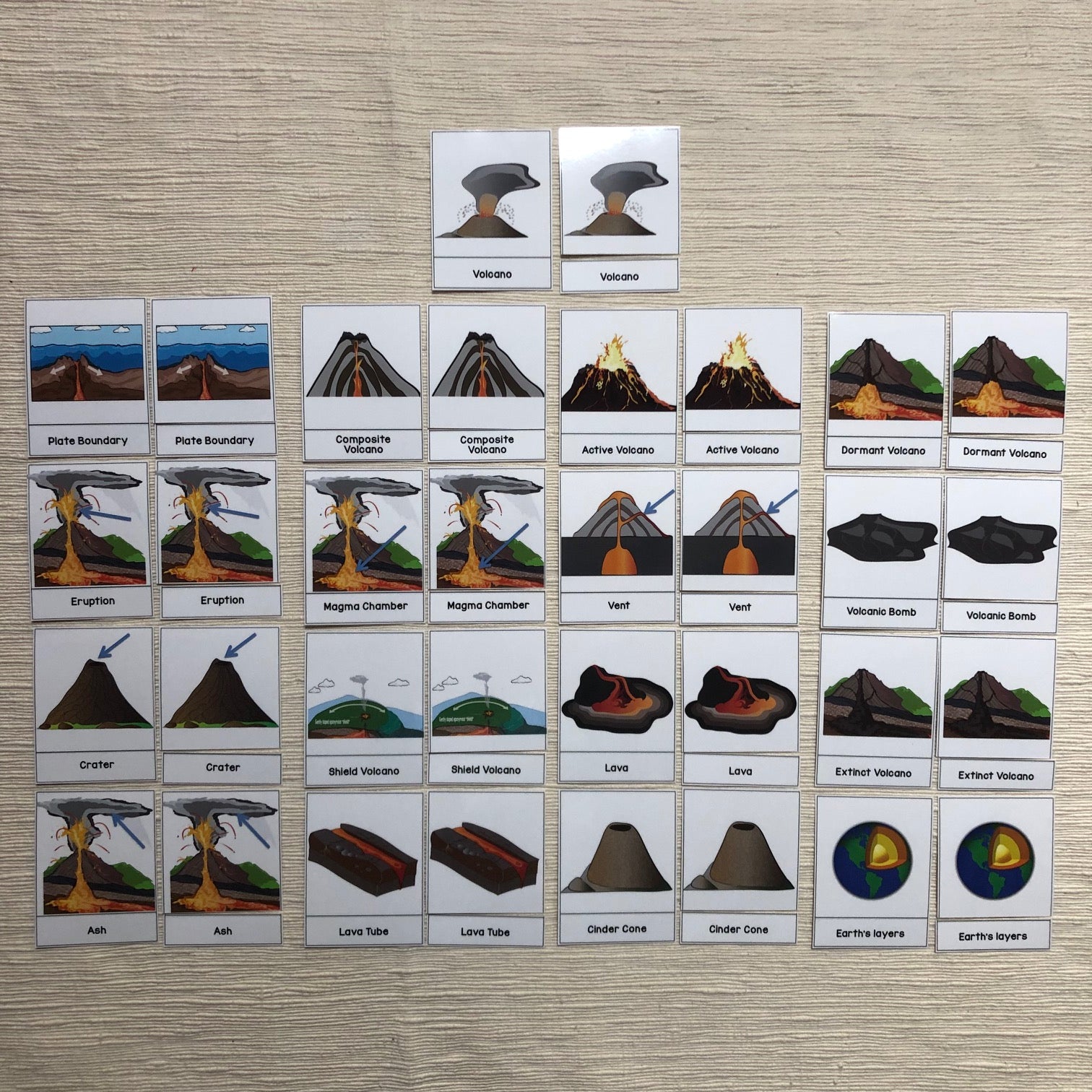
These Montessori Volcano Vocabulary and Definition Cards give elementary learners a structured, hands-on way to explore 17 important Earth science terms.
With pictures, labels and clear definitions, children can build precise scientific language while strengthening reading, matching, classification and independent research skills.
At a Glance
- Topic: Volcanoes, volcanic eruptions and Earth science
- Vocabulary: 17 scientific terms
- Includes: Montessori 3-part and 4-part cards
- Best for: Montessori elementary, homeschool and science centres
- Suggested ages: Approximately 6–12 years
- Use for: Vocabulary lessons, shelf work, research and unit studies
- Length: 25 printable pages
- Format: Instant digital PDF download
Give Children the Language to Explain What They See
A dramatic photograph or model volcano can spark curiosity, but children also need accurate vocabulary to describe the processes taking place.
This resource helps learners distinguish between related ideas, including:
- magma beneath Earth’s surface and lava above it;
- a crater, vent and magma chamber;
- different volcano shapes and structures;
- active, dormant and extinct volcanoes;
- materials released during an eruption; and
- the relationship between volcanoes and plate boundaries.
As children match the words, pictures and definitions, they move from recognising an image to understanding and using the scientific term.
Turn Excitement Into Deeper Understanding
You do not need to create separate diagrams, vocabulary lists and definition cards for your volcano unit. This pack gives children a clear language foundation, making later reading, experiments, mapping and research more meaningful.
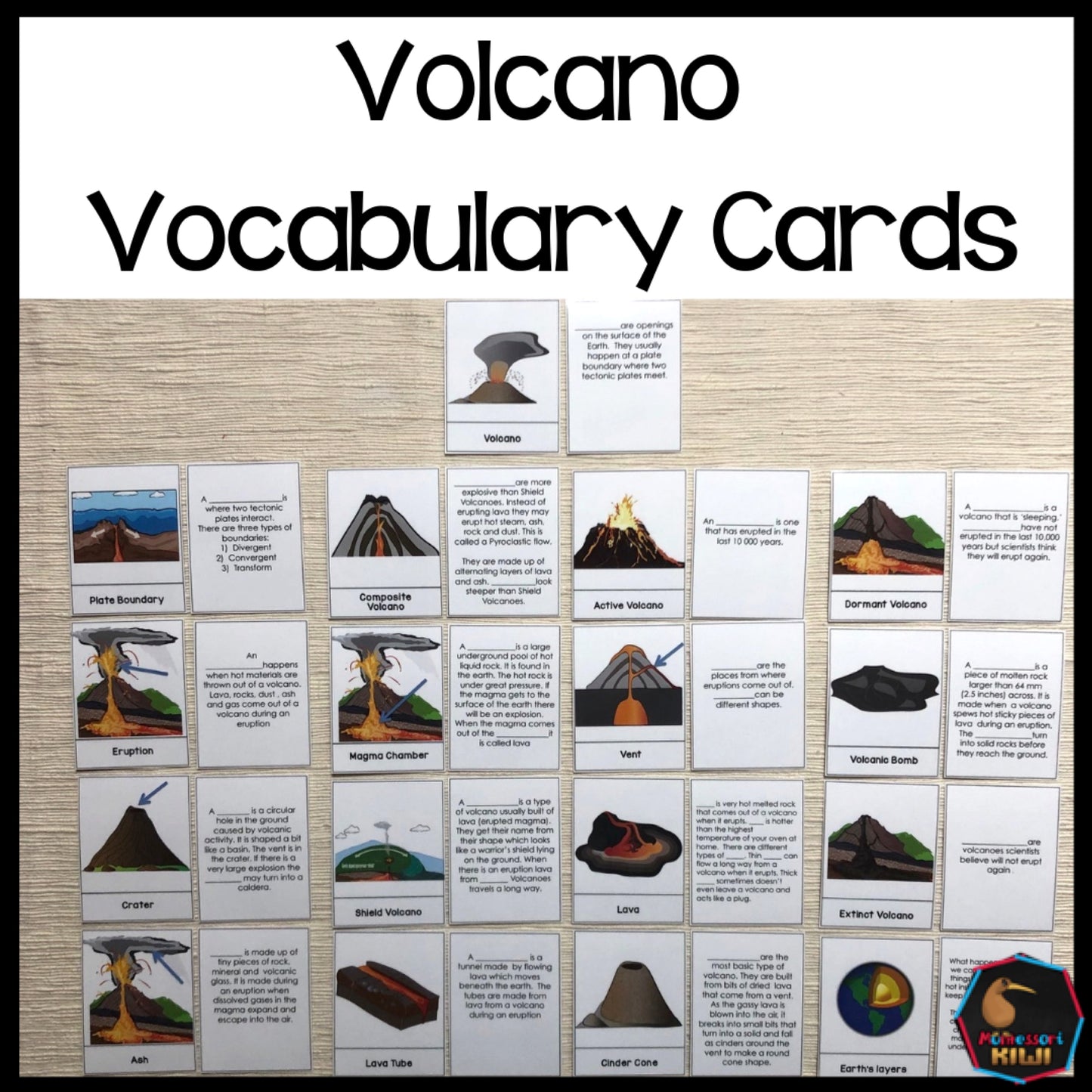
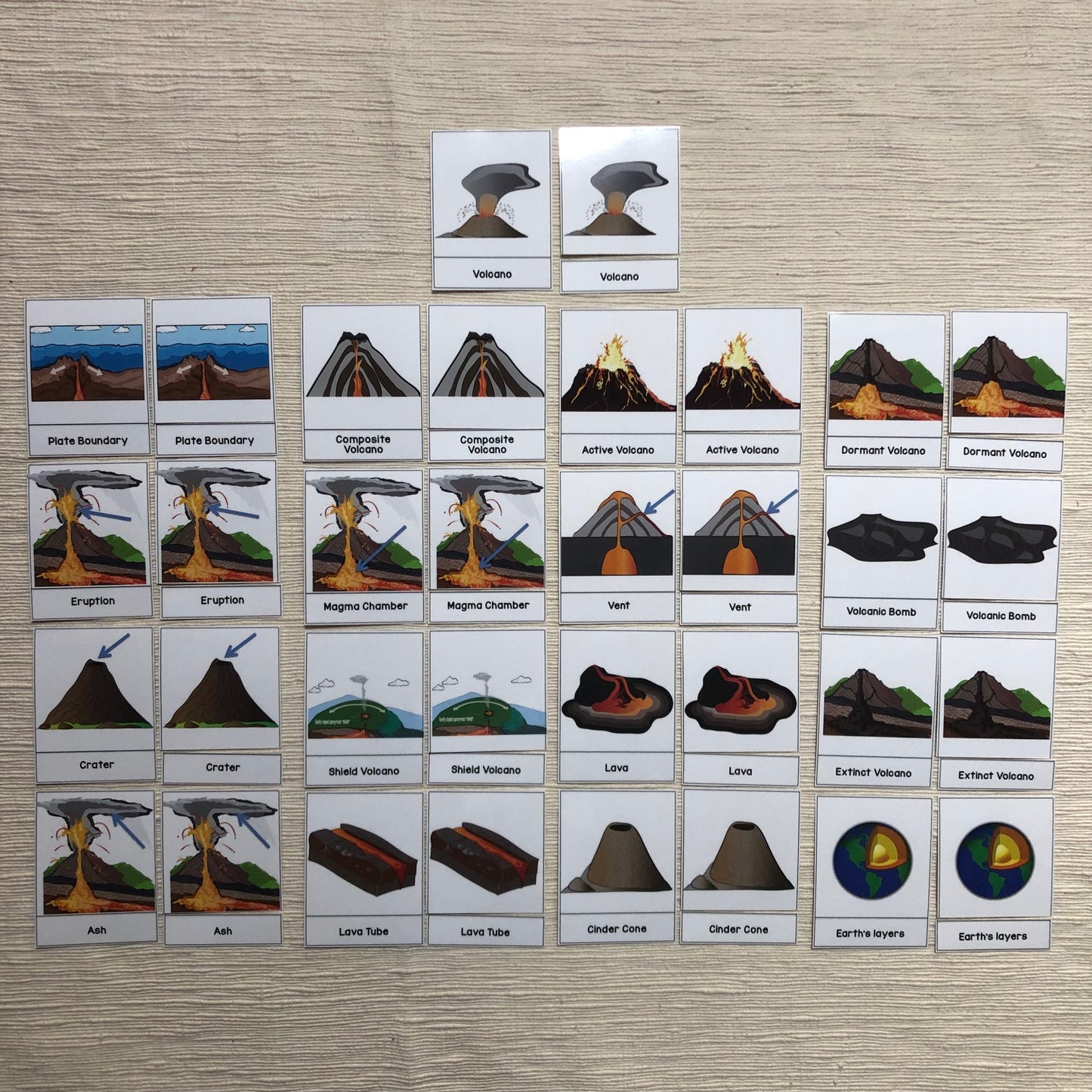
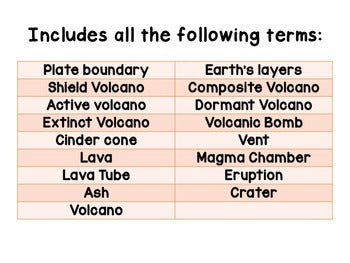
Volcano Vocabulary Included
The resource introduces:
- Layers of the Earth
- Plate boundary
- Volcano
- Shield volcano
- Composite volcano
- Active volcano
- Dormant volcano
- Extinct volcano
- Volcanic bomb
- Cinder cone
- Vent
- Lava
- Magma chamber
- Lava tube
- Eruption
- Ash
- Crater
The range of terms allows children to explore more than the external parts of a volcano. They also investigate volcano classification, eruption status, underground structures and the geological context in which volcanoes form.
What Is Included?
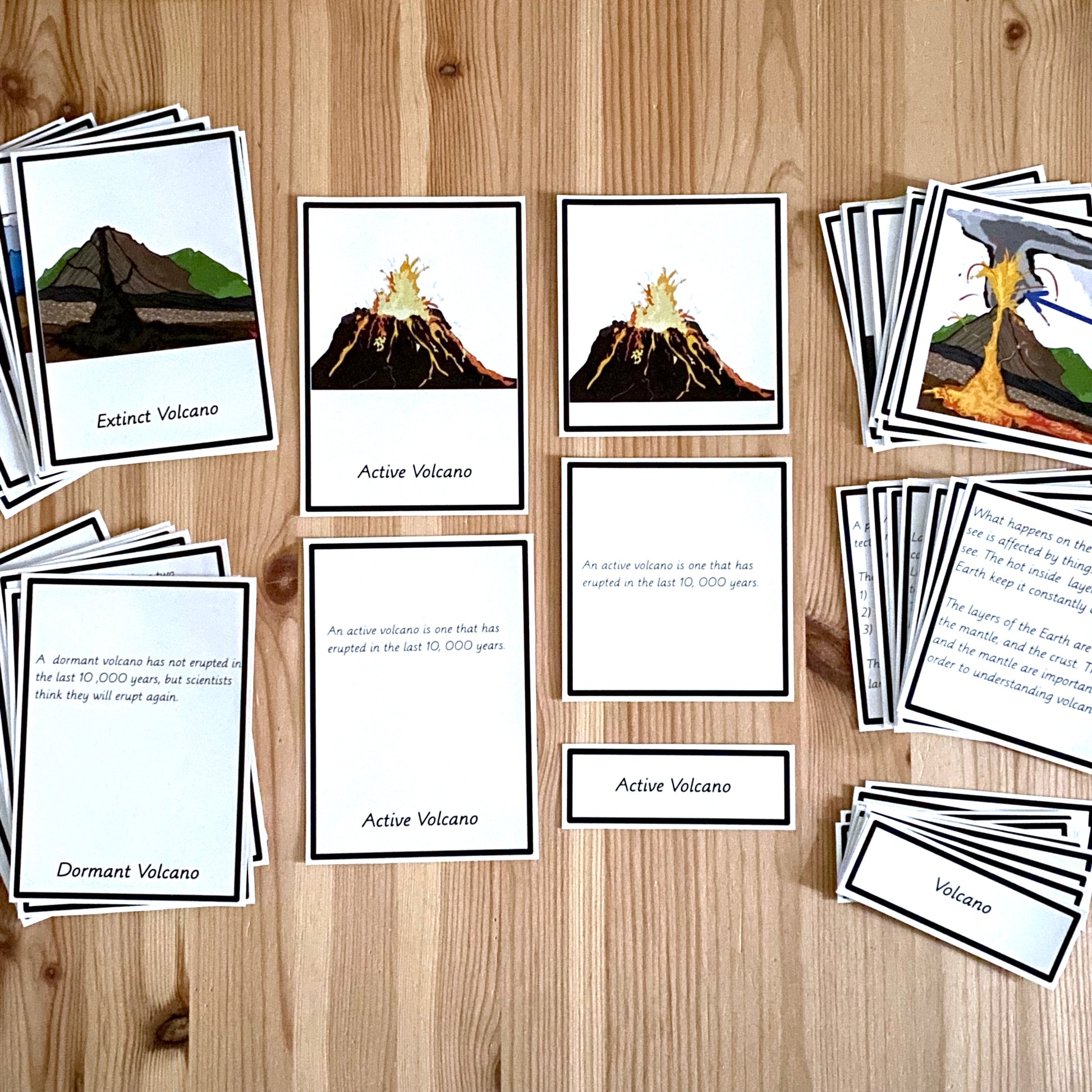
This 25-page printable PDF includes:
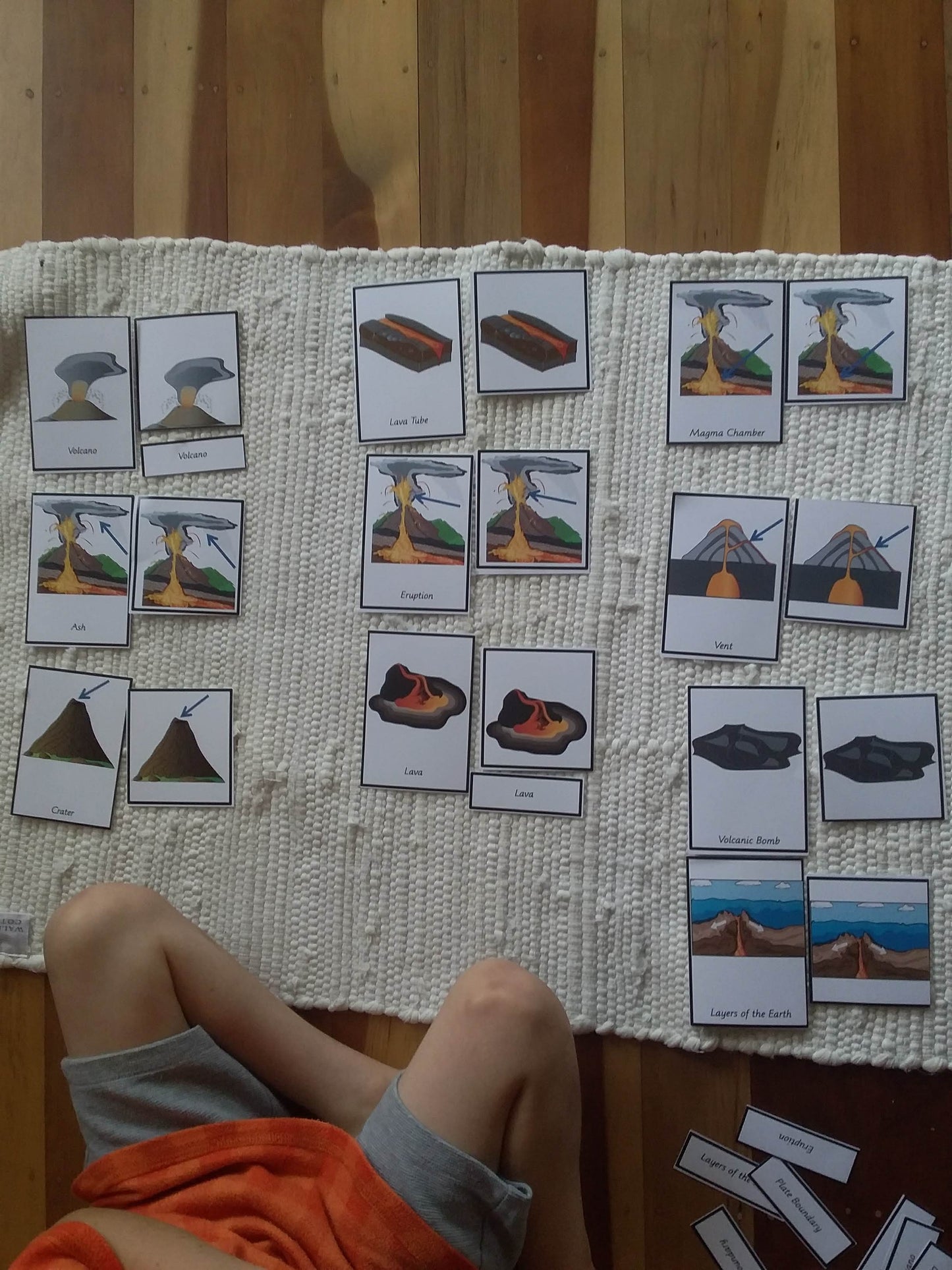
- Montessori 3-part vocabulary cards
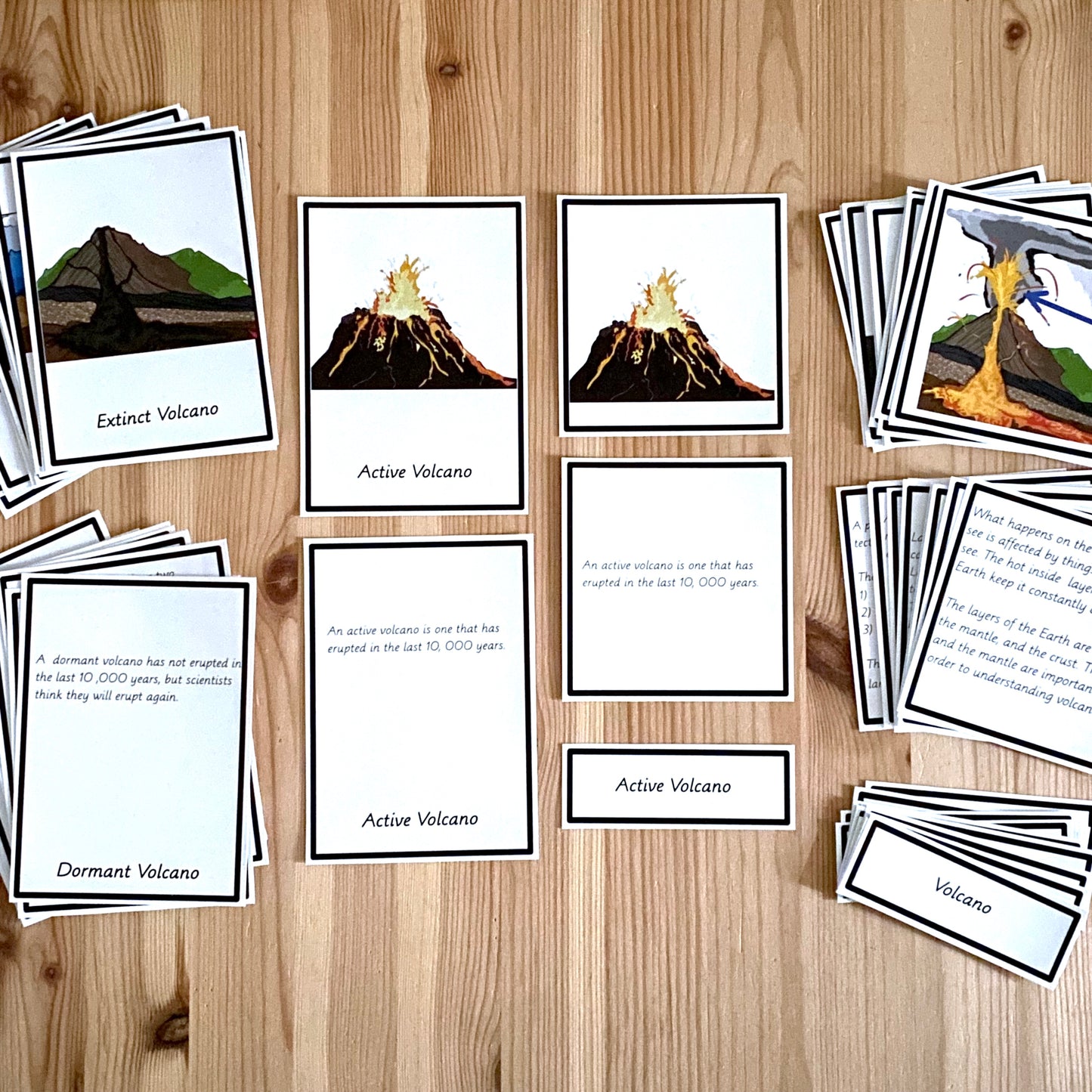
- Montessori 4-part definition cards
- Picture cards
- Vocabulary labels
- Definition or description cards
- Control cards for checking matches
- 17 key volcano and Earth science terms
- Materials suitable for individual, partner or small-group work
Three-Part Cards for Vocabulary Recognition
Use the 3-part cards to help children connect:
- the scientific term;
- the corresponding image; and
- the complete labelled control card.
Children can begin by matching labels to familiar images. As confidence develops, they can identify the picture independently and check their work using the control cards.
This format supports:
- visual recognition;
- reading vocabulary;
- accurate terminology;
- classification;
- independent learning; and
- Montessori language-shelf routines.
Four-Part Cards for Deeper Understanding
The 4-part card format adds a definition or description to the picture and label.
This helps children move beyond naming the term and begin understanding:
- what the feature or process is;
- where it is found;
- how it relates to a volcano;
- how similar terms differ; and
- how the vocabulary can be used during research and discussion.
More confident readers can match the definitions independently, while developing readers may complete the activity with an adult or partner.
A Flexible Teaching Sequence
- Begin with a volcano demonstration, diagram or discussion. Invite children to share the words they already know.
- Introduce a small group of cards. Avoid presenting all 17 terms at once to children who are new to the topic.
- Use a Montessori three-period lesson. Name the terms, ask children to identify them and then invite independent recall.
- Add the definitions. Once the pictures and labels are familiar, introduce the 4-part matching activity.
- Place the cards on the shelf. Children can revisit them independently during the work cycle.
- Extend into research. Use selected terms as headings for booklets, diagrams or short reports.
You can organise the cards into smaller thematic groups, such as volcano types, eruption status, internal structures and eruption materials.
Easy to Adapt for Different Learners
For beginning readers: Focus on pictures, oral vocabulary and matching labels with adult support.
For independent readers: Match the pictures, labels and definitions before checking with the control cards.
For older elementary students: Sort the terms into categories, compare related concepts and use each word in scientific research or explanatory writing.
Ways to Use This Resource
- Montessori cultural or science shelves
- Cosmic Education follow-up
- Earth science units
- Volcano unit studies
- Three-period lessons
- Small-group vocabulary teaching
- Science centres and rotations
- Independent matching work
- Research preparation
- Vocabulary revision
- Homeschool geography lessons
- Substitute-teacher activities
Supports Science and Literacy Together
While studying volcanoes, children also practise:
- reading informational language;
- matching words with meaning;
- using context clues;
- comparing closely related ideas;
- classifying information;
- recalling scientific vocabulary;
- explaining natural processes; and
- preparing for independent research.
This makes the cards useful for integrating science with reading comprehension and vocabulary development.
Connect Volcanoes With Wider Cosmic Education
Volcano vocabulary can open pathways into:
- the layers of the Earth;
- plate tectonics;
- continental movement;
- the Ring of Fire;
- rocks and minerals;
- island formation;
- earthquakes;
- natural disasters;
- physical geography; and
- the ways people adapt to their environments.
The cards can be used as a focused standalone resource or as the language foundation for a much broader Earth science study.
Who Is This Resource For?
This pack is suitable for:
- Montessori lower and upper elementary classrooms;
- approximately ages 6–12;
- homeschool and home-education settings;
- mainstream primary science classrooms;
- mixed-age learning environments;
- children interested in volcanoes and natural disasters;
- learners who benefit from visual vocabulary support; and
- teachers seeking low-preparation Earth science work.
Begin With the Parts of a Volcano—Free
Download the Free Montessori Parts of a Volcano 3-Part Cards to introduce eight essential structural terms, including magma, lava, crater, ash, main vent and cone.
Use the free set as an introduction, then extend into volcano types, plate boundaries, eruption status and more advanced vocabulary with this complete pack.
Build a Deeper Volcano Study
-
Volcanoes of the World Matching Cards
Explore ten famous volcanoes through photographs, labels, descriptions, flags and map work. -
Major Volcanic Eruptions Map
Locate 13 significant eruptions and help children identify global patterns in volcanic activity. -
Montessori Plate Tectonics Activities
Connect volcanoes with plate movement, earthquakes, mountains, ocean basins and the Ring of Fire. -
Earthquake Matching and Vocabulary Cards
Extend Earth science vocabulary into faults, epicentres, seismic waves, aftershocks and liquefaction.
Teaching a Volcano Unit?
-
Volcanoes of the World: Studying Locations and Famous Volcanoes
Explore ways to connect volcanoes with geography, flags, measurement, plate tectonics and the Fundamental Needs of Humans. -
Earthquakes and Volcanoes
Find ideas for teaching vocabulary and connecting Earth science with significant real-world events.
Created by an Experienced Montessori Educator
I’m Lisa—an NZ registered teacher, Montessori-trained educator, school principal and former homeschooler.
I create resources from real experience teaching mixed-age learners, including neurodivergent children and students with varied reading, writing and attention needs.
These vocabulary cards were designed to give children a clear, manageable way to revisit scientific language independently—without requiring the adult to create every diagram, definition and matching activity from scratch.
Digital Resource Information
This is an instant digital PDF download. No physical cards will be mailed.
Your purchase provides a licence for use by one teacher or one homeschool family. Please purchase additional licences rather than sharing the digital file or printed cards with other teachers or classrooms.
Help Children Speak the Language of Earth Science
Give learners the pictures, definitions and precise vocabulary they need to understand volcano structures, types and eruptions.
Download the Montessori Volcano Vocabulary Cards and build a stronger foundation for independent Earth science learning.