montessorikiwi
US Money Skip Counting Matching Cards | Financial numeracy
US Money Skip Counting Matching Cards | Financial numeracy
Couldn't load pickup availability
Montessori Aligned Symbiosis Activities for Upper Elementary
Help upper elementary students understand symbiosis through clear, meaningful, Montessori-aligned activities.
Symbiosis is a fascinating science concept, but children can easily mix up mutualism, commensalism, and parasitism if they only read definitions once and move on.
This printable resource gives students structured ways to explore relationships between living things so they can understand how organisms depend on, help, harm, or live alongside each other.
It is ideal for Montessori biology, ecology studies, cosmic education, upper elementary science, homeschool learning, and nature-based inquiry.
Why symbiosis matters
Symbiosis helps children see that living things are connected.
It supports big-picture thinking about:
-
ecosystems
-
interdependence
-
animal and plant relationships
-
survival
-
adaptation
-
balance in nature
-
cause and effect
-
the needs of living things
This fits beautifully with Montessori cosmic education because it encourages children to look beyond isolated facts and consider the relationships that hold the natural world together.
What students explore
Students learn about different types of symbiotic relationships, including:
-
mutualism
-
commensalism
-
parasitism
They consider how organisms interact, who benefits, who is harmed, and how these relationships affect ecosystems.
How to use it
Use this resource after an introductory lesson on ecosystems, food chains, habitats, or interdependence.
Students can work through the activities independently, in pairs, or in small groups. The resource can also be used as a research prompt, discussion starter, or follow-up for a Montessori biology shelf.
This resource is ideal for
-
Montessori upper elementary classrooms
-
Cosmic education biology work
-
Ecology units
-
Homeschool science
-
Nature studies
-
Independent research
-
Small group science lessons
-
Students learning about ecosystems and interdependence
Why teachers will find it useful
Planning upper elementary science follow-up can take time, especially when you want the work to be more meaningful than a simple definition worksheet.
This resource gives you ready-to-use activities that help students think, compare, classify, and explain.
Created by a Montessori teacher
I’m a Montessori-trained and state-trained teacher in New Zealand. I create science resources that encourage children to think beyond themselves and understand their place in the wider world.
This resource was designed to support curiosity, ecological thinking, and deeper understanding of relationships in nature.
Please note: This is a downloadable PDF resource. No physical product will be shipped.
Montessori Inspired Pollination Resource
Make pollination clear, visual, and meaningful with this Montessori-inspired science resource.
Pollination is one of those topics children often hear about, but do not always fully understand. They may know that bees visit flowers, but not why pollination matters, how it helps plants reproduce, or how pollinators are connected to food, ecosystems, and life on Earth.
This printable resource helps children explore pollination in a hands-on, child-friendly way.
It is ideal for Montessori botany, biology, spring science, garden studies, homeschool learning, and lower or upper elementary science shelves.
Why pollination matters
Pollination is not just a plant topic.
It connects to:
-
plant reproduction
-
food production
-
insects and animals
-
ecosystems
-
interdependence
-
environmental care
-
the needs of living things
-
human dependence on nature
When children understand pollination, they begin to see how small living things can have a huge role in the world.
This makes pollination a beautiful topic for Montessori cosmic education because it shows connection, purpose, and interdependence.
What children can learn
This resource supports children to explore:
-
what pollination is
-
how pollen moves
-
the role of bees and other pollinators
-
how flowers are involved
-
why pollination is important
-
how plants and animals depend on one another
-
vocabulary connected to plant science
How to use it
Use this resource as part of a botany unit, a spring science shelf, a garden study, or a follow-up after a lesson about flowers and plant reproduction.
Children can complete the activities independently or with teacher support. You can also pair the resource with real flowers, a garden walk, bee research, or a practical life gardening activity.
Perfect for
-
Montessori botany
-
Lower elementary science
-
Upper elementary review
-
Homeschool science
-
Spring units
-
Garden studies
-
Pollinator lessons
-
Cosmic education follow-up
-
Nature-based learning
Created by a Montessori teacher
I created this resource to help children see pollination as more than a definition. It is part of the living web that connects plants, animals, food, and humans.
The resource is designed to be practical, thoughtful, and easy to add to your science shelves.
Please note: This is a downloadable PDF resource. No physical product will be shipped.
Compost Activities
Help children understand composting as a real, practical way to care for the Earth.
Composting is one of the best science topics for children because it is concrete, useful, and deeply connected to daily life. Children can see food scraps, leaves, worms, soil, decomposition, and new growth. They can understand that waste does not simply disappear — it changes, breaks down, and becomes part of the cycle of life.
This printable compost resource gives students a practical introduction to composting and why it matters.
It is ideal for Montessori science, sustainability units, Earth Day, gardening work, homeschool learning, and environmental education.
Why composting matters
Composting helps children understand:
-
decomposition
-
food waste
-
soil health
-
sustainability
-
cycles in nature
-
human responsibility
-
care of the environment
-
practical ways to reduce waste
It is also a beautiful Montessori topic because it connects science with real action. Children are not just learning facts; they are learning how their choices can make a difference.
What children can explore
This resource supports learning about:
-
what compost is
-
what can and cannot go in compost
-
how organic materials break down
-
why compost is good for soil
-
how composting helps reduce waste
-
the role of worms and decomposers
-
how compost connects to gardening and plant growth
How to use it
Use this resource as a science shelf activity, a small group lesson, a follow-up to gardening work, or part of an environmental studies unit.
It works especially well if your class has a compost bin, worm farm, garden, or outdoor learning area. Children can connect the printable activities to real-life composting and observe what happens over time.
Perfect for
-
Montessori science
-
Sustainability lessons
-
Earth Day activities
-
Gardening units
-
Homeschool science
-
Environmental education
-
Practical life extensions
-
Nature studies
-
Lower elementary classrooms
Created by a Montessori teacher
I’m a Montessori-trained and state-trained teacher, and I love creating resources that help children understand their place in the world.
This compost resource is designed to support curiosity, responsibility, and practical environmental care.
Please note: This is a downloadable PDF resource. No physical product will be shipped.
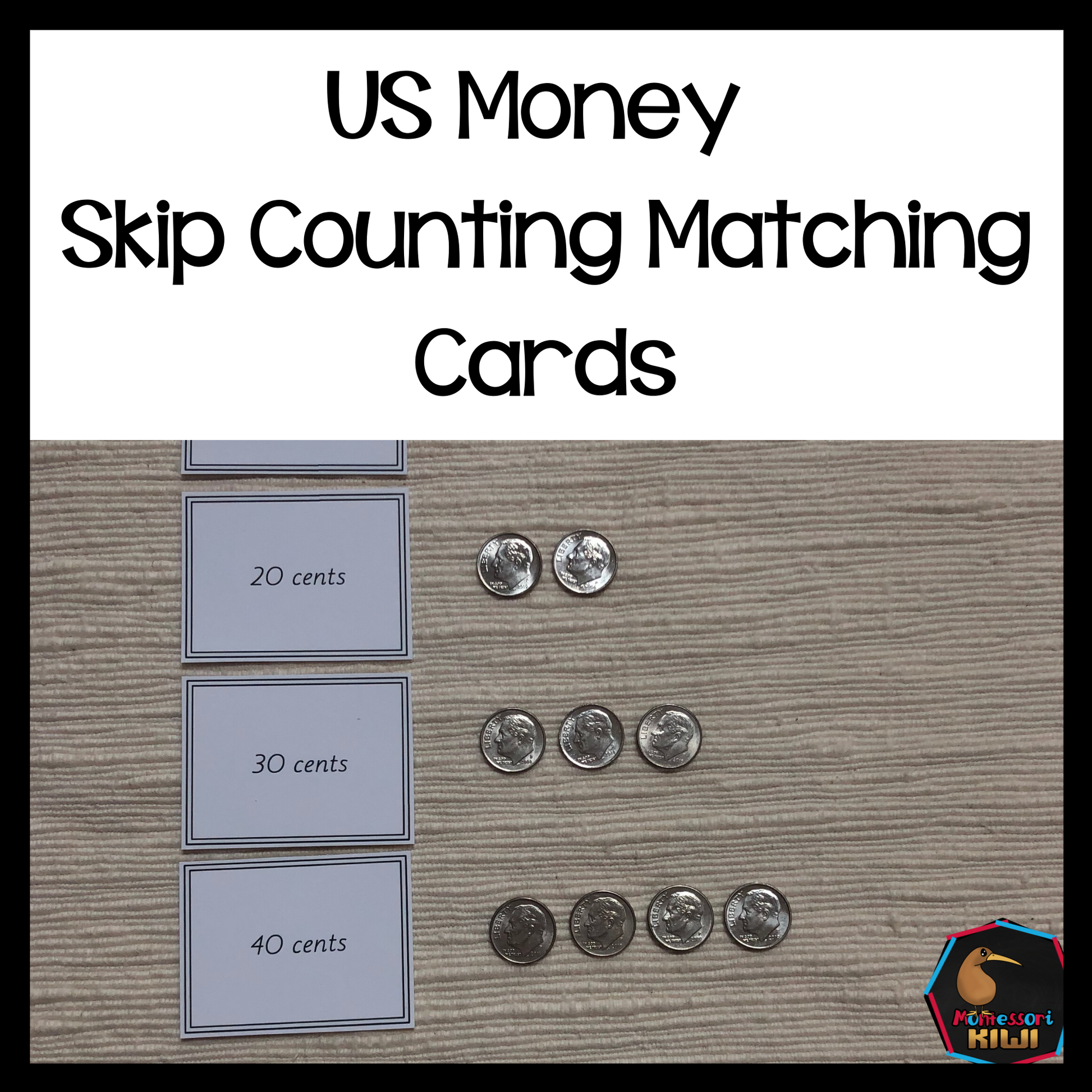
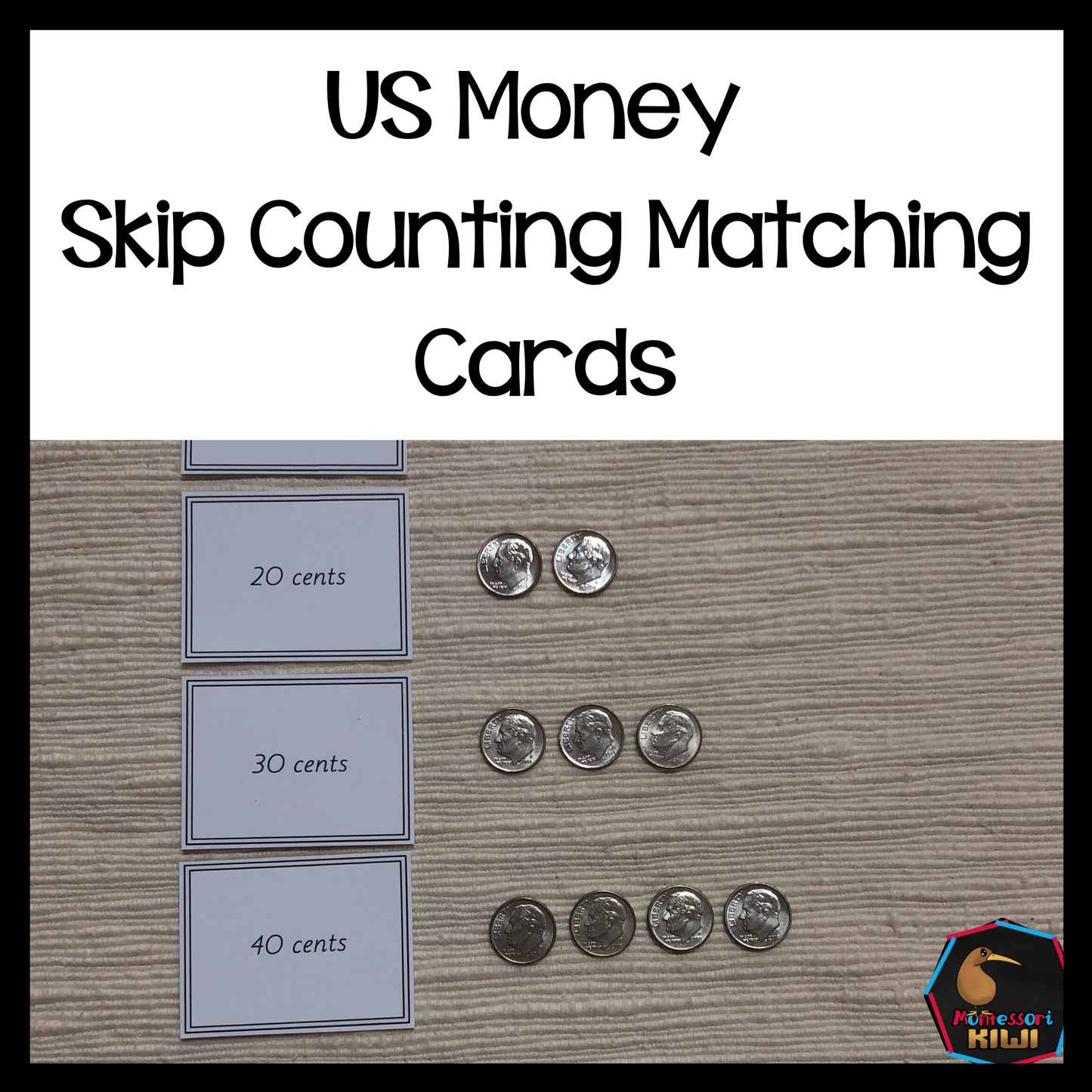
US Money Skip Counting Matching Cards
Build money confidence with simple, hands-on skip counting practice using US coins.
Learning to count money can be tricky for children because they have to combine coin recognition, skip counting, place value, and mental maths all at once. Many children can identify coins, but still struggle to count groups of nickels, dimes, quarters, or mixed amounts fluently.
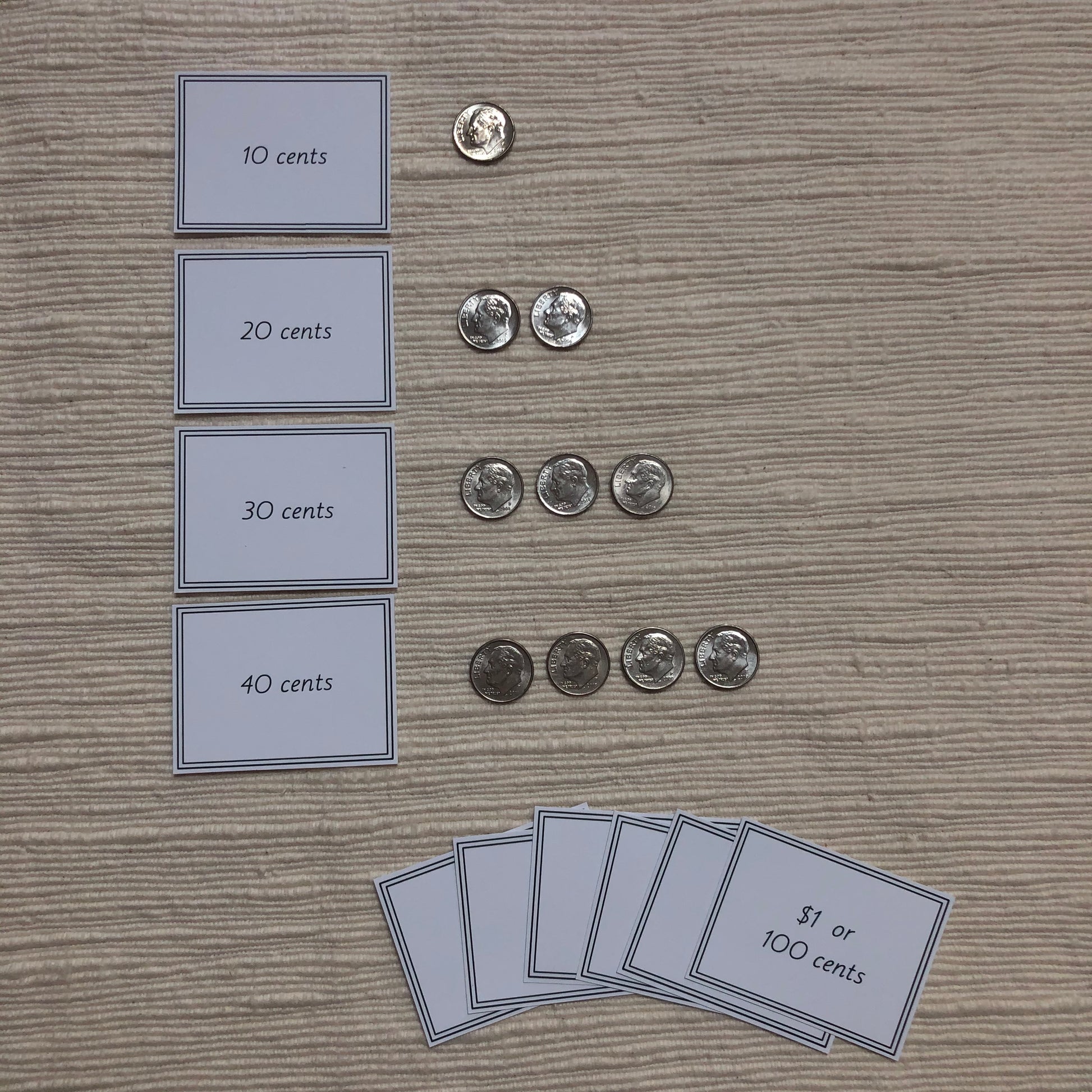
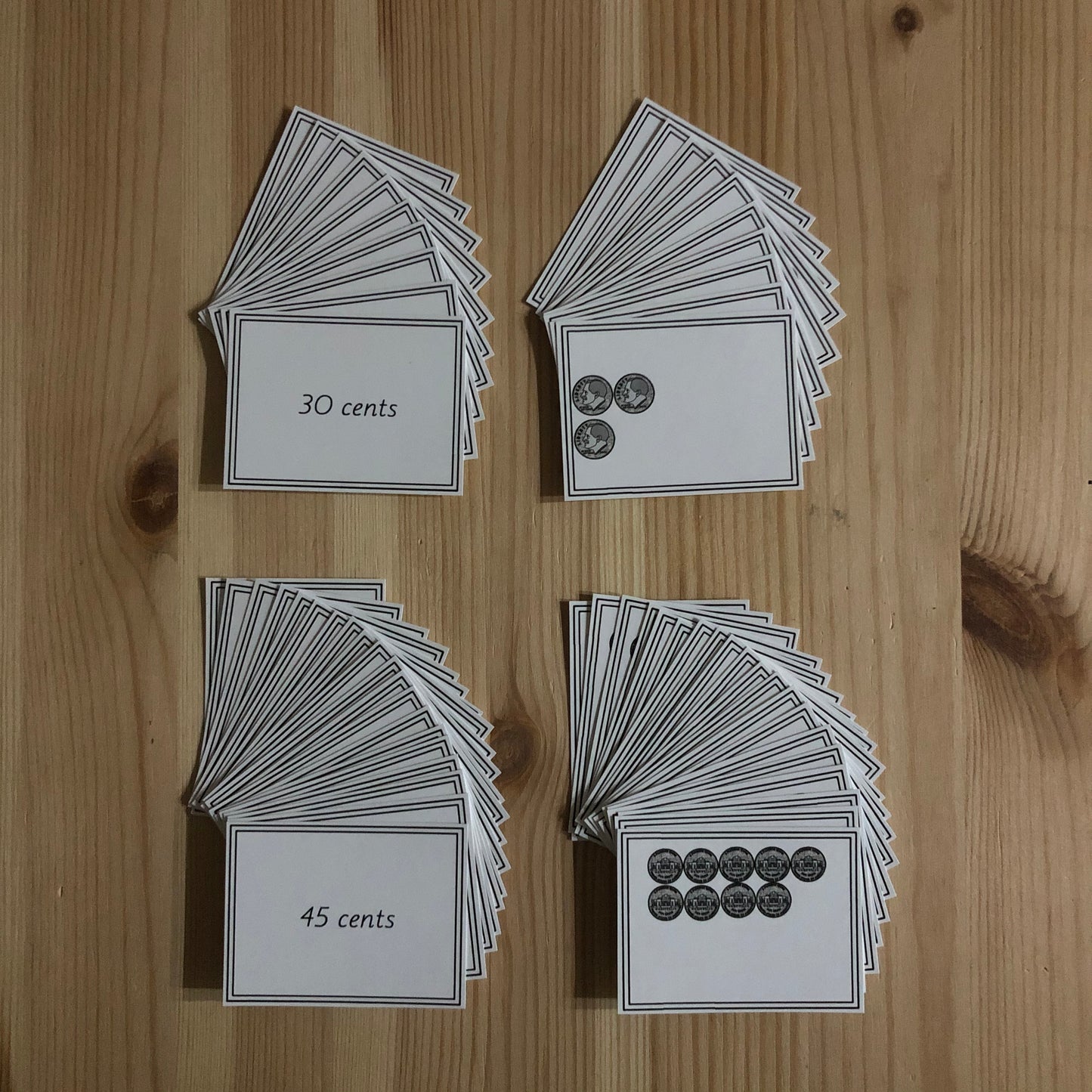
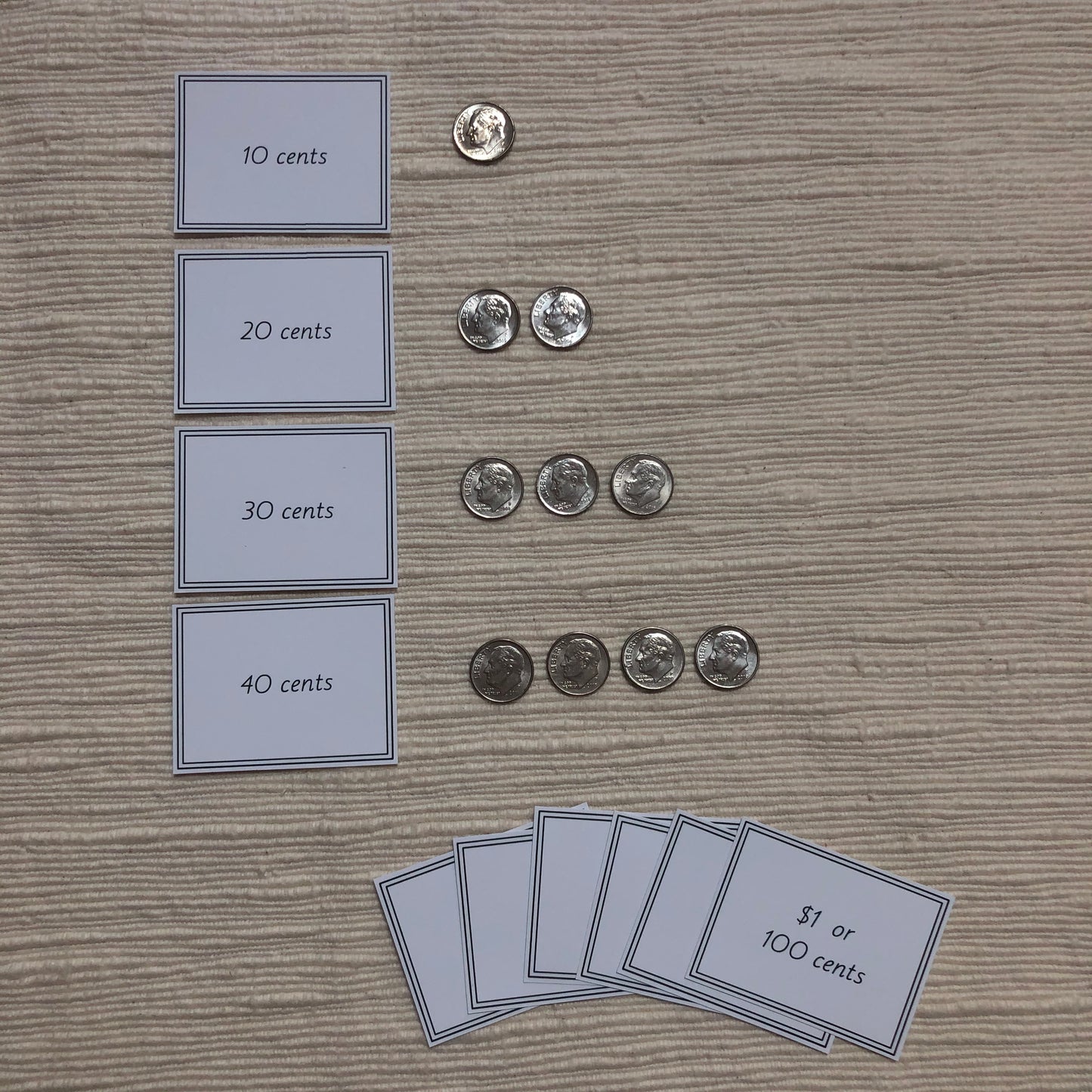
These US Money Skip Counting Matching Cards give students focused practice with counting coins in a clear, Montessori-inspired format.
They are ideal for money shelves, financial literacy lessons, homeschool maths, small group support, and children who need repeated practice before moving into word problems or making change.
Why skip counting money matters
Skip counting is a key bridge between recognising coins and actually using money.
Children need to understand that:
-
nickels are counted by 5s
-
dimes are counted by 10s
-
quarters can be counted by 25s
-
coins can be grouped and counted efficiently
-
money amounts can be built and compared
This resource helps children practise those skills in a hands-on way.
How to use it
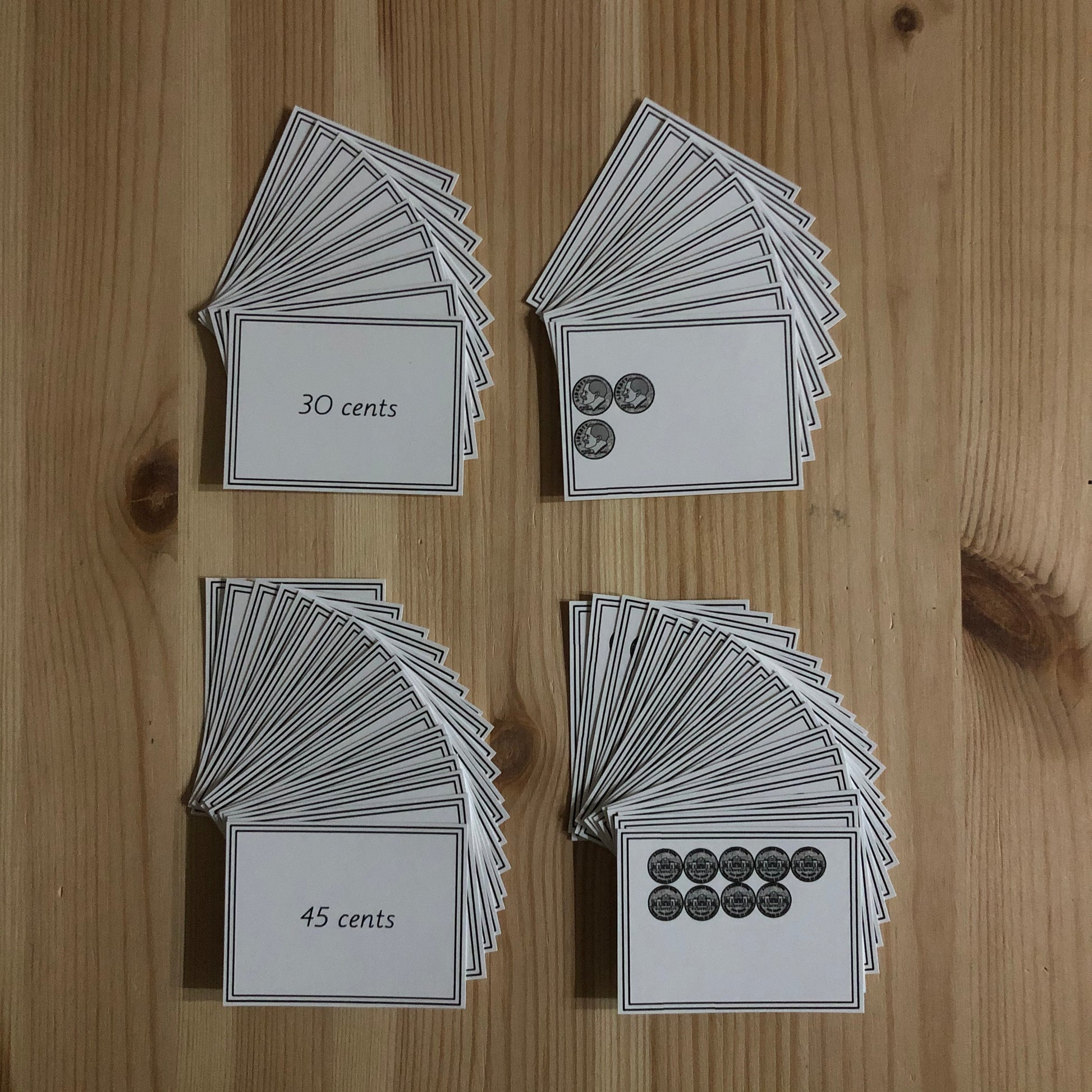
Students match coin groups with the correct money amount.
You can use the cards as:
-
independent shelf work
-
a matching activity
-
a small group lesson
-
homeschool practice
-
financial literacy review
-
intervention for students needing more repetition
-
a warm-up before money word problems
For extra support, children can use real coins alongside the cards.
Perfect for
-
US money lessons
-
Montessori-inspired maths
-
Homeschool financial literacy
-
Lower elementary money practice
-
Skip counting review
-
Coin counting support
-
Independent maths shelves
-
Small group intervention
Why teachers will find it useful
Money skills are practical, but they need repetition. This resource gives children a simple, focused way to practise counting coins without a full worksheet.
It is easy to print, cut, laminate, and place on the shelf for repeated use.
Created by a Montessori teacher
I create maths resources that help children build independence and real understanding. This set was designed to make money practice more concrete, visual, and manageable.
Please note: This is a downloadable PDF resource. No physical product will be shipped.
This is also part of my 250 page US Money Bundle
Share
-
Items are secured / Terms of Use
Our items are secured. They are not able to be altered. We secure our items because they are our intellectual property and because we use art from artists who require that we secure our files.
You may not:
-resell our items or use them for commercial gain
-claim these items as your own
-modify this resource
-share them with others by any means e.g. electronic or hard copy
-
All Items are instant downloads
You will not get a printed product in the mail.
-
All prices are in USD
Due to the international nature of our customers our prices are all in USD. If you wish to work out the conversion before you buy we recommend www.xe.com