montessorikiwi
Montessori Ratios & Proportions Task Cards | Self-Correcting Upper Elementary Math (Math)
Montessori Ratios & Proportions Task Cards | Self-Correcting Upper Elementary Math (Math)
Couldn't load pickup availability
Your students may know how to multiply and divide—but can they recognise when two quantities have the same proportional relationship?
Ratios and proportions can feel highly abstract when children are presented with symbols and procedures before they understand what the numbers are comparing.
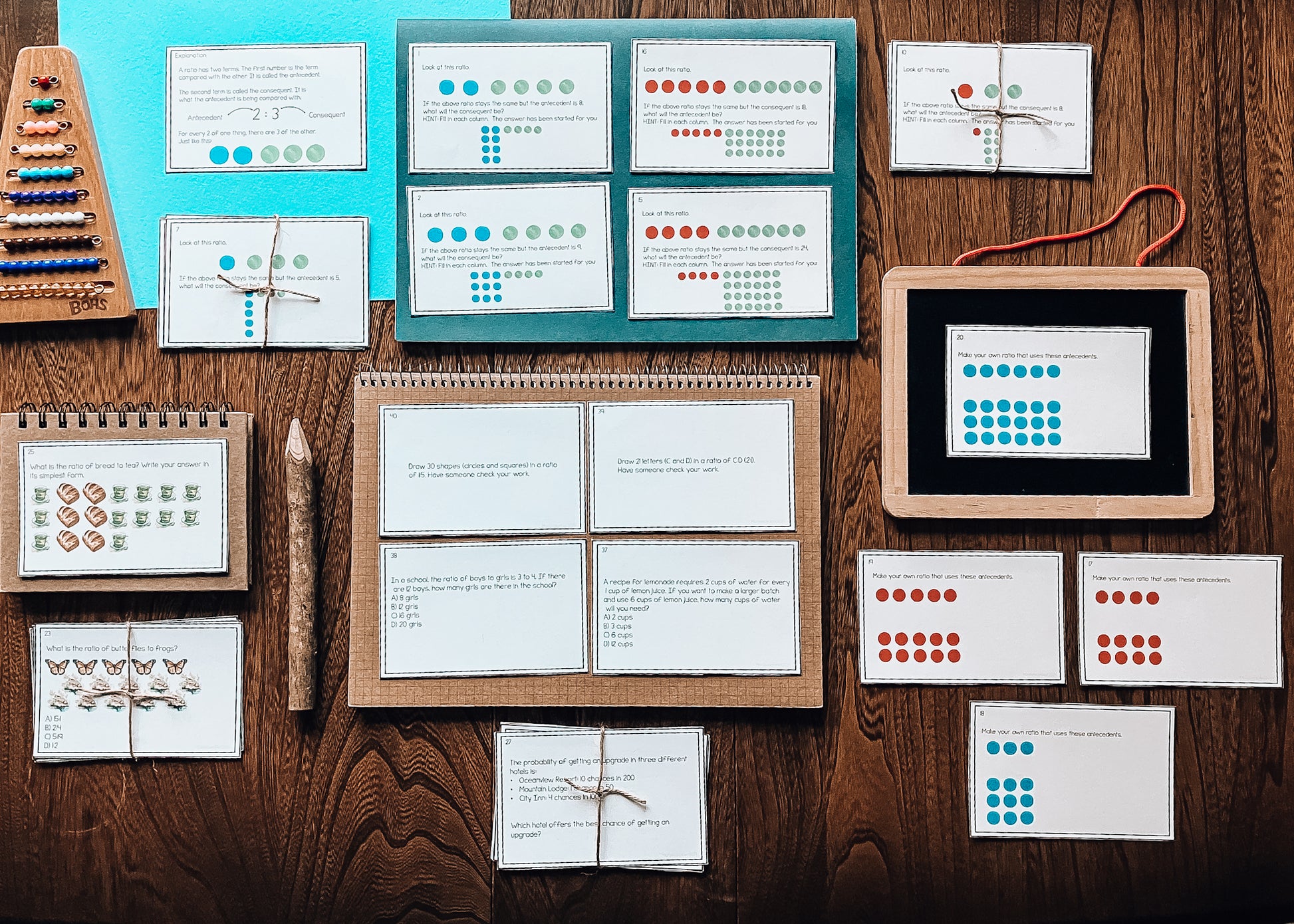
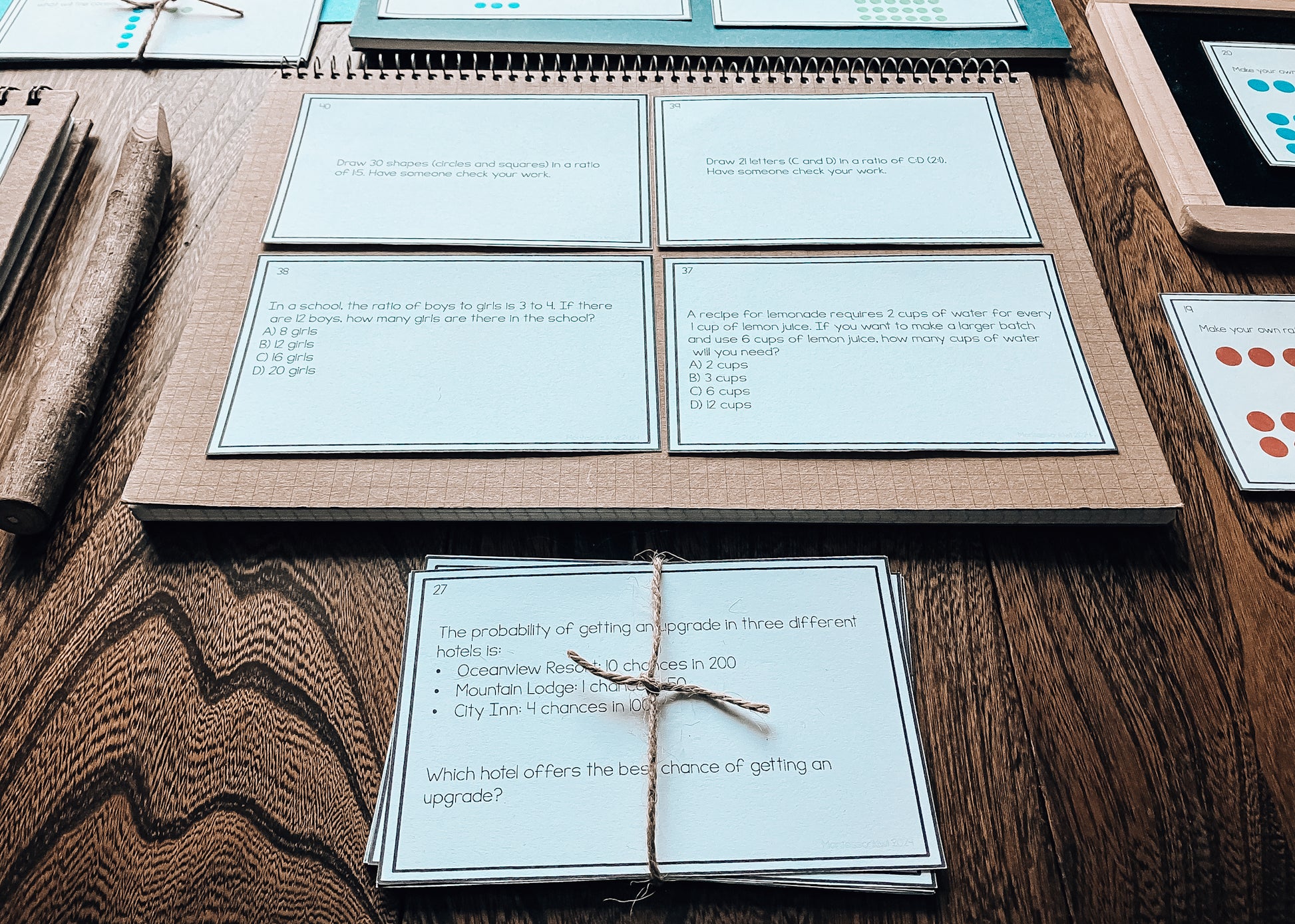
These Montessori Ratios and Proportions Task Cards help upper-elementary learners move from visual quantities towards equivalent ratios, simplified ratios, proportions, percentages, probability comparisons and practical word problems.
The first activities use coloured visual quantities inspired by the Montessori peg-board colour system. Later cards gradually remove the visual support, encouraging students to apply their understanding to increasingly abstract and real-life problems.
At a Glance
- Learning focus: Ratios, equivalent ratios and proportional reasoning
- Best for: Montessori upper elementary, homeschool and independent maths work
- Suggested ages: Approximately 9–13 years
- Includes: 40 progressive task cards
- Support: Introductory explanation card and visual scaffolding
- Control of error: Corresponding answer and explanation pages
- Printing: Designed for double-sided printing
- Format: Instant digital PDF download
Bridge the Gap Between Concrete Maths and Abstract Ratios
Many students can follow a rule for solving a proportion without understanding why it works.
They may multiply or divide the correct numbers but still struggle to explain:
- what the two parts of a ratio represent;
- why two ratios are equivalent;
- how changing one quantity affects the other;
- why both parts must be multiplied or divided by the same amount;
- how ratios connect with fractions and percentages; or
- when proportional reasoning is useful in everyday life.
This resource gives learners a more gradual pathway. Students begin by studying visible groups of objects, then use the same underlying reasoning in increasingly abstract situations.
Give Students a Way to Work Independently Without Leaving Them Stuck
The answer pages do more than provide a final number. Many include a brief explanation of the reasoning used, helping children check their work, notice errors and understand what they could do differently next time.
Begin With the Language of Ratios
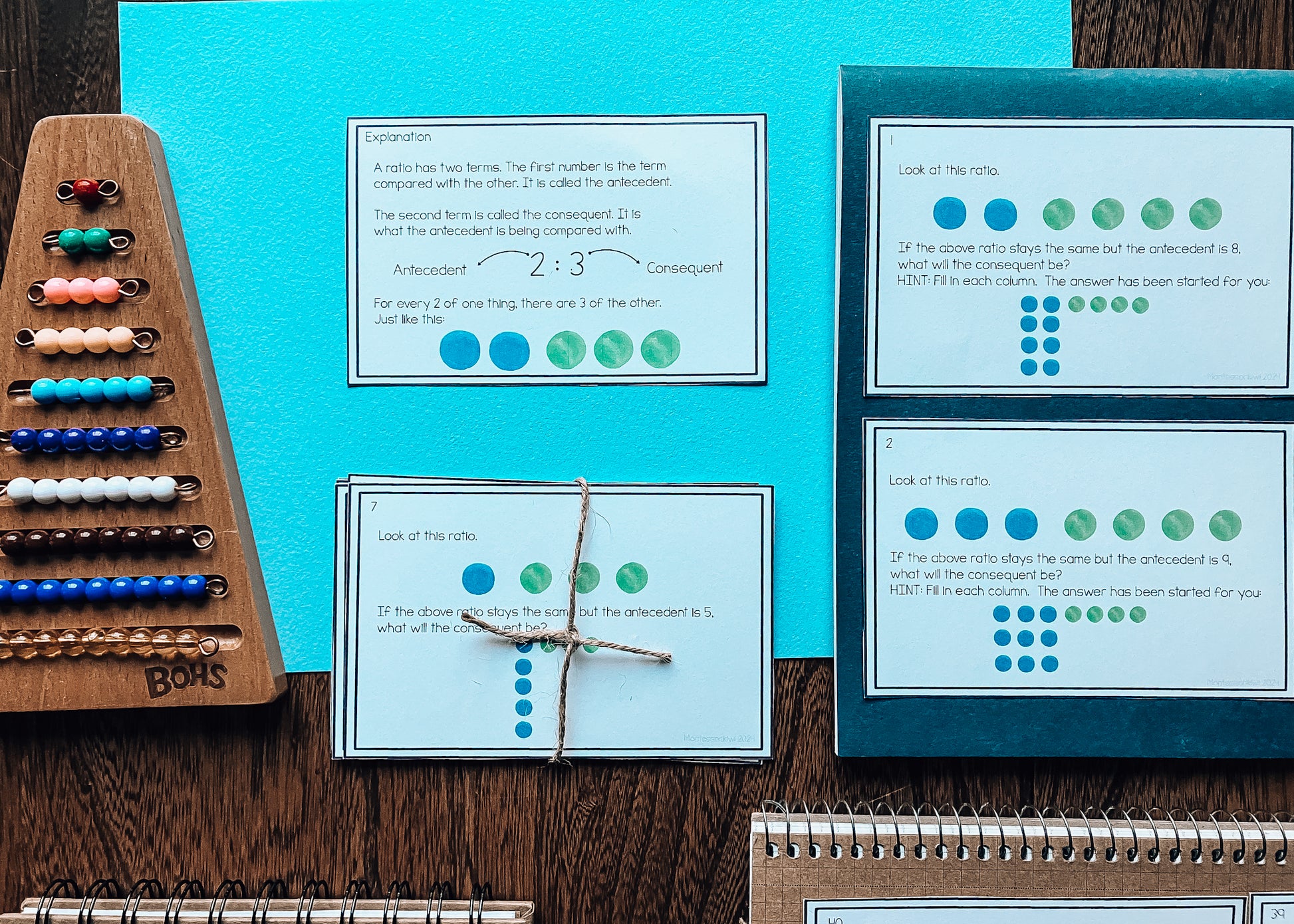
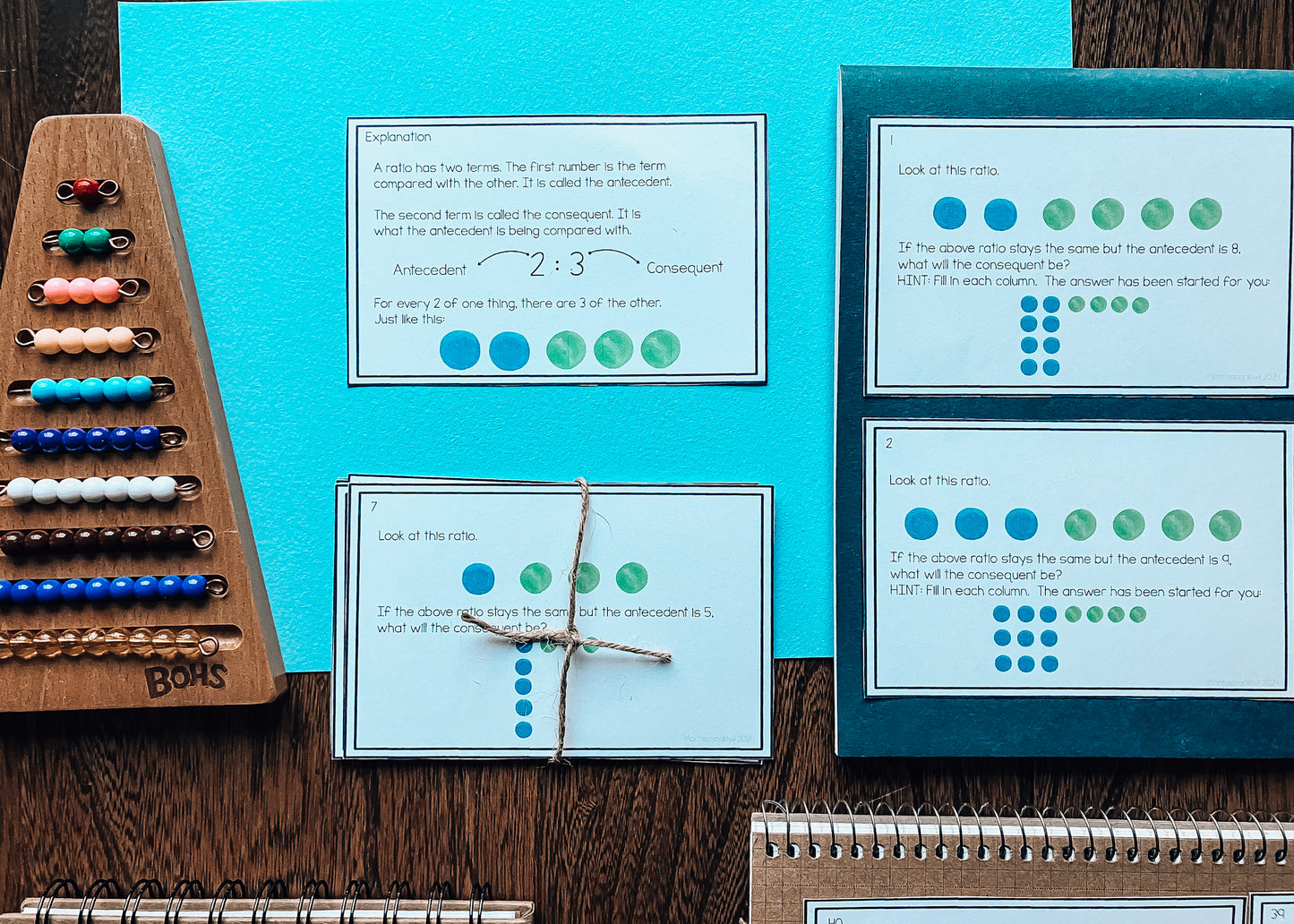
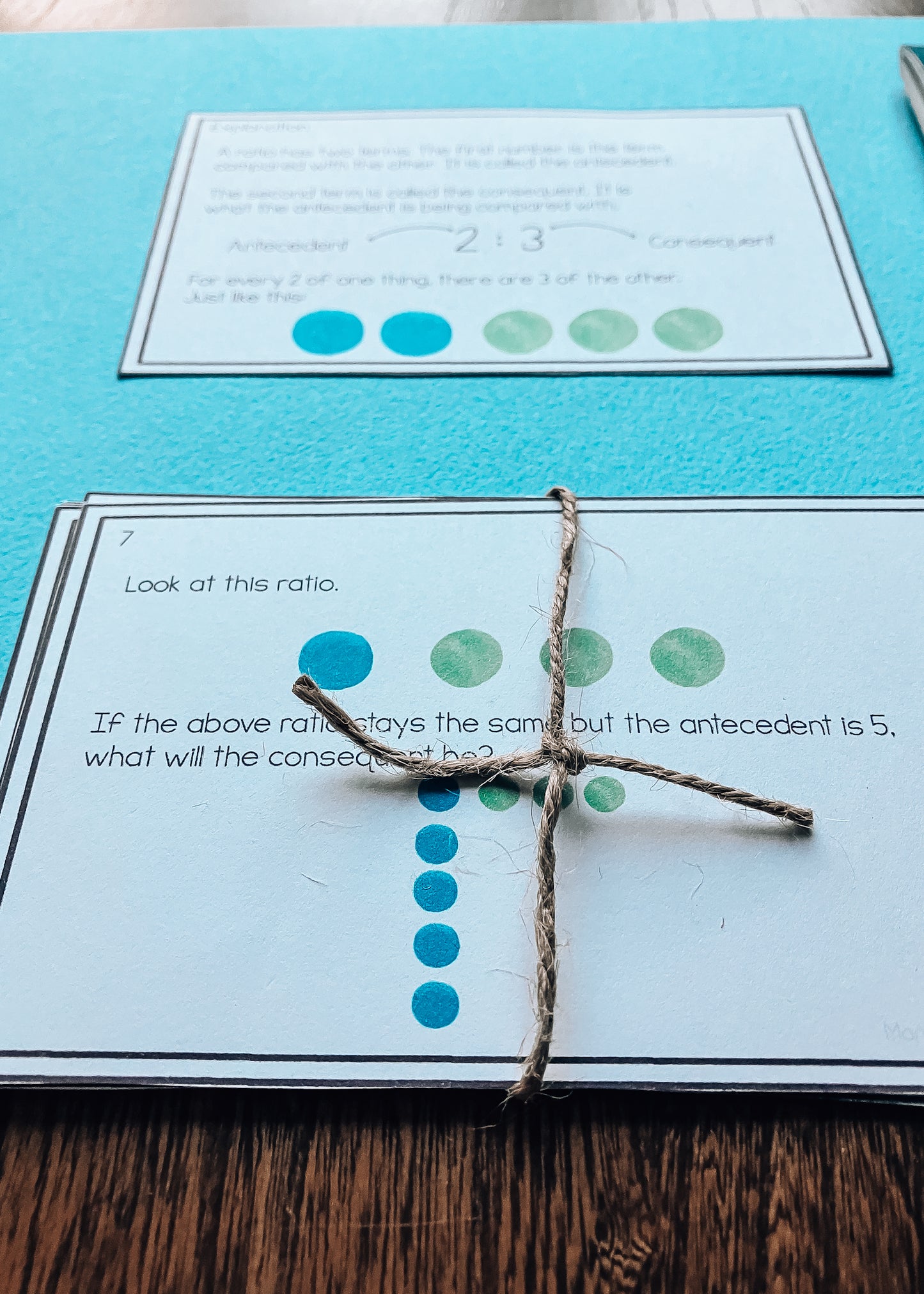
The introductory card explains that a ratio has two terms:
- Antecedent: The first quantity being compared
- Consequent: The second quantity being compared
For example, a ratio of 2:3 means that for every two of one quantity, there are three of the other.
This gives learners clear mathematical language they can use while discussing and solving the task cards.
What Is Included?
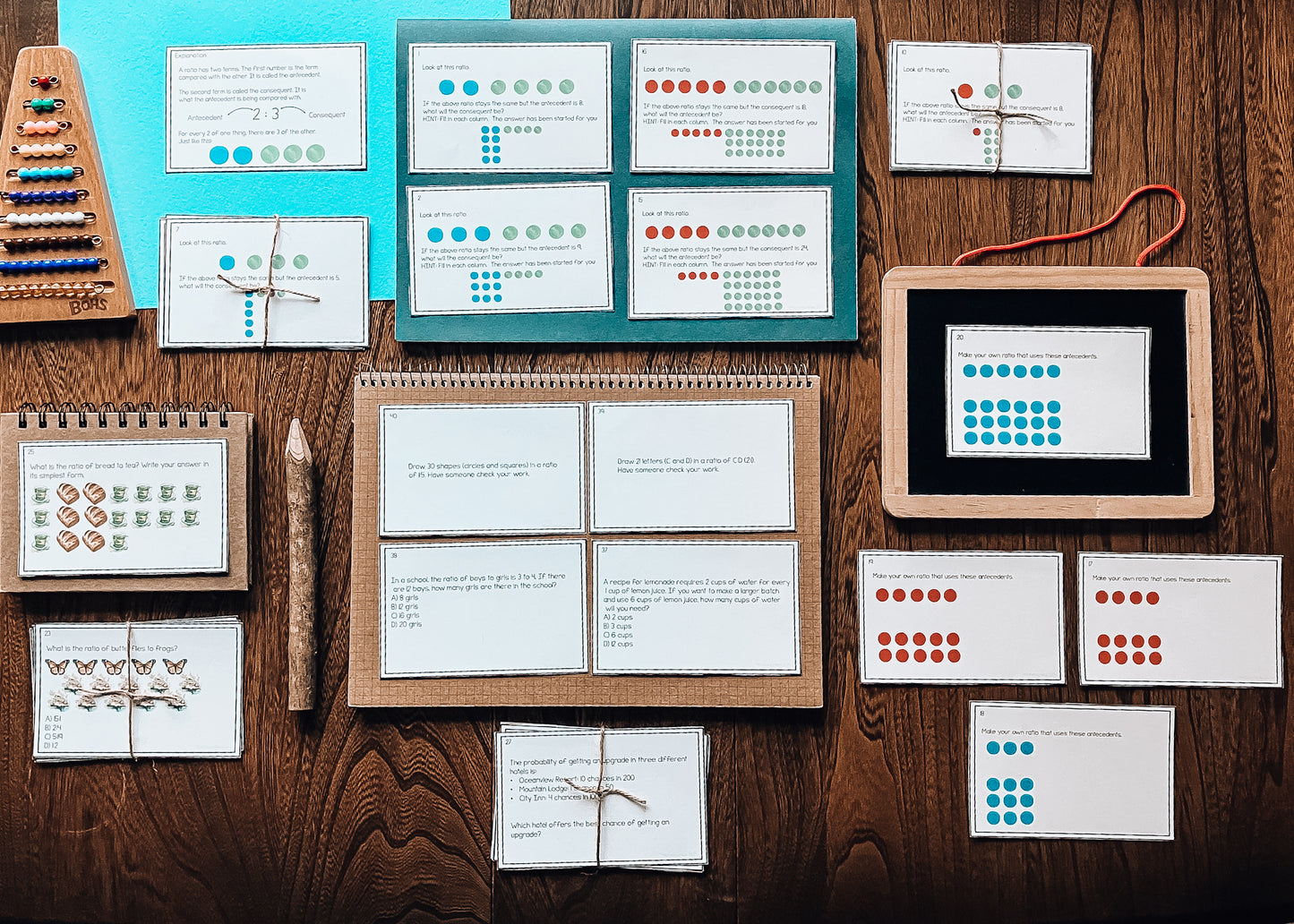
The printable PDF includes:
- Teacher guidance for using and printing the cards
- An introductory ratio explanation
- 40 numbered task cards
- Visual ratio and proportion problems
- Equivalent-ratio tasks
- Missing antecedent and consequent problems
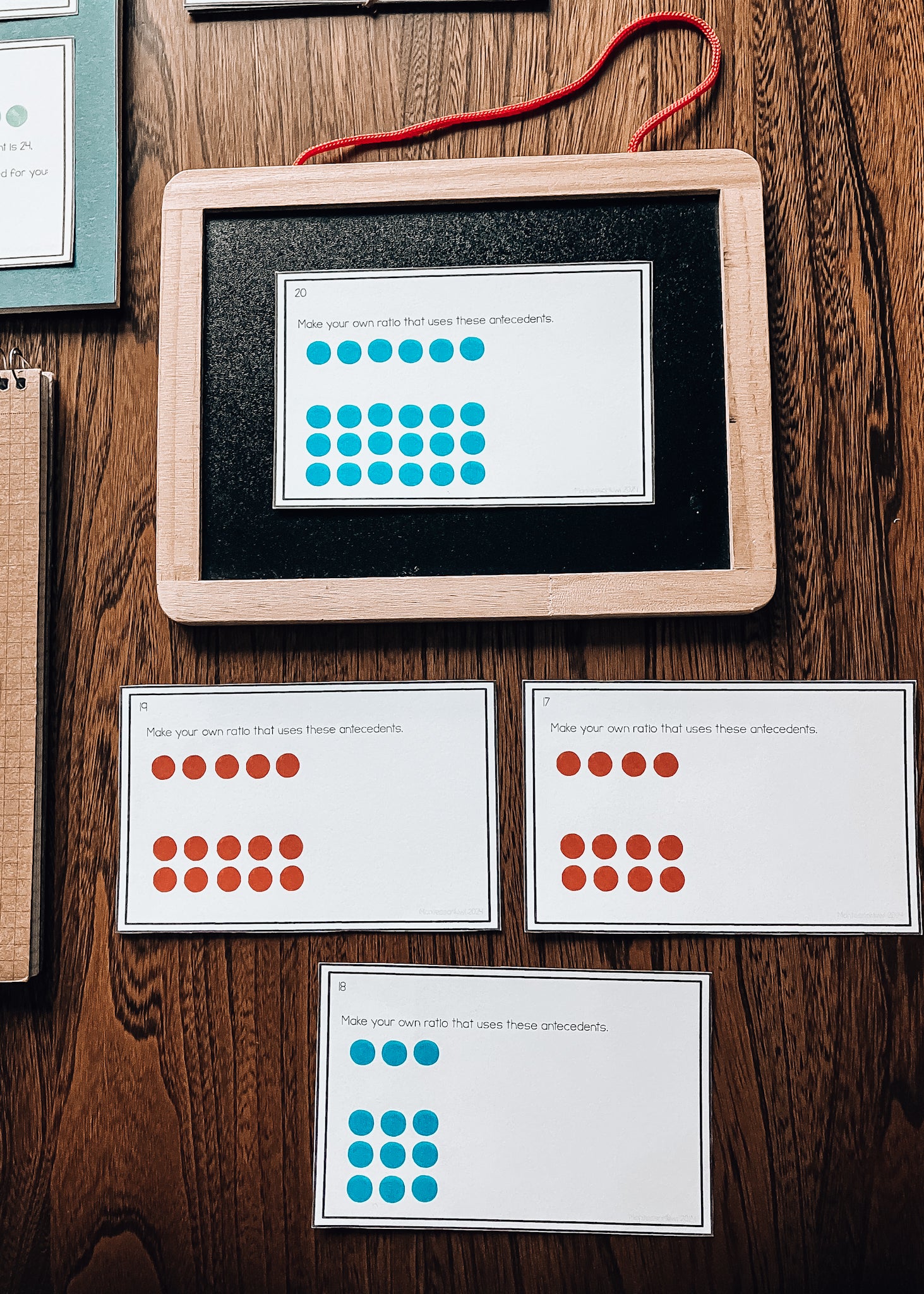
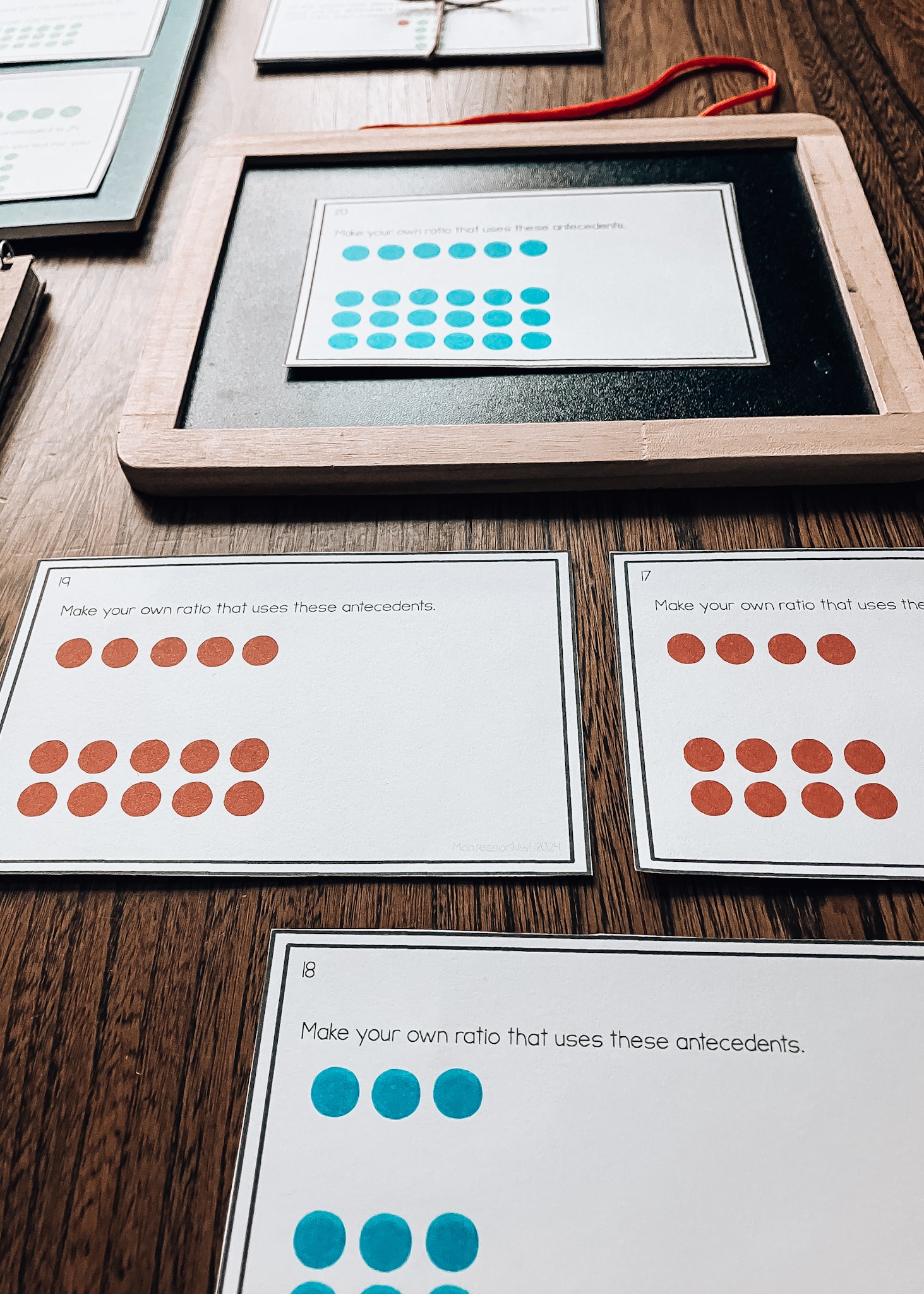
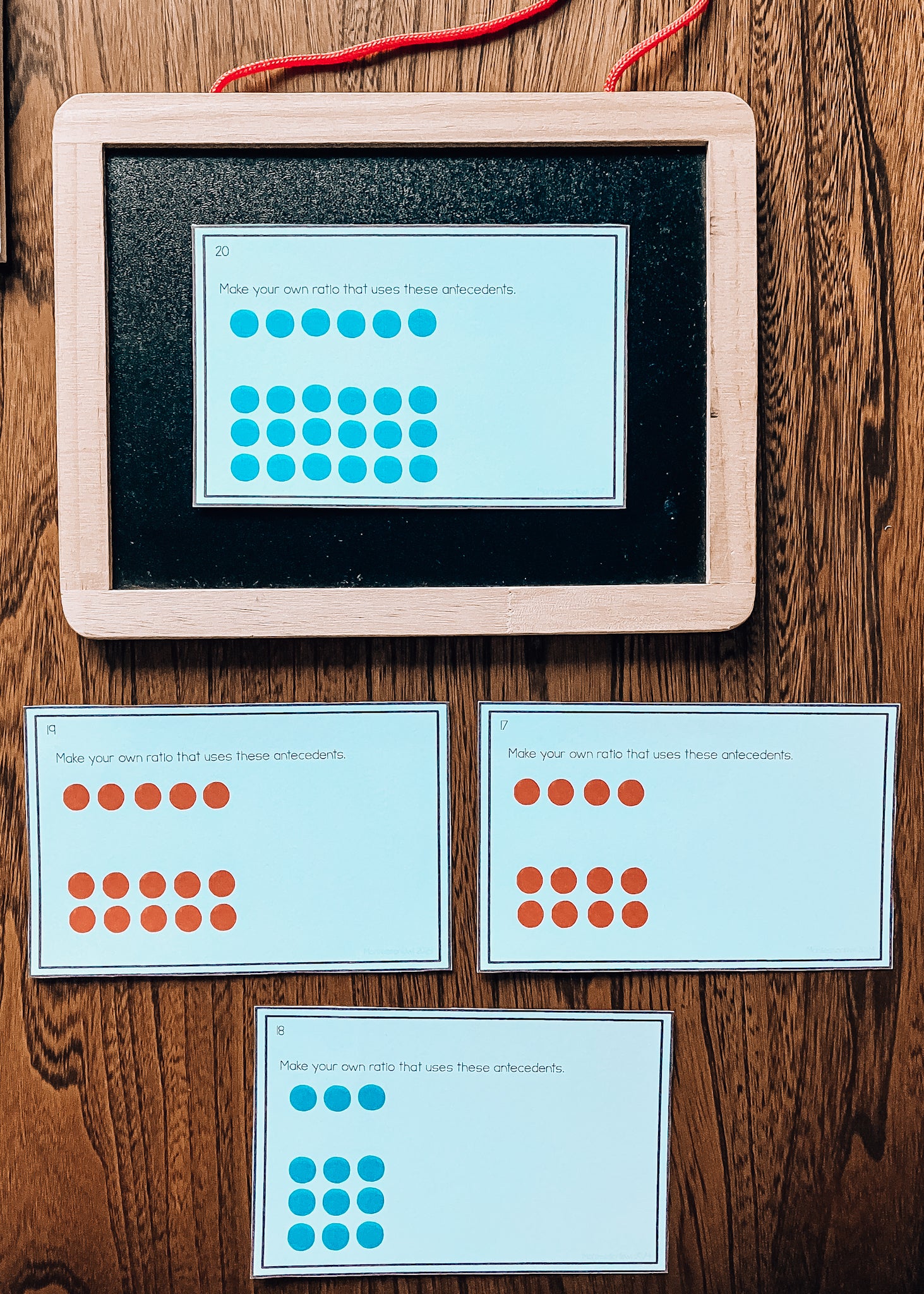
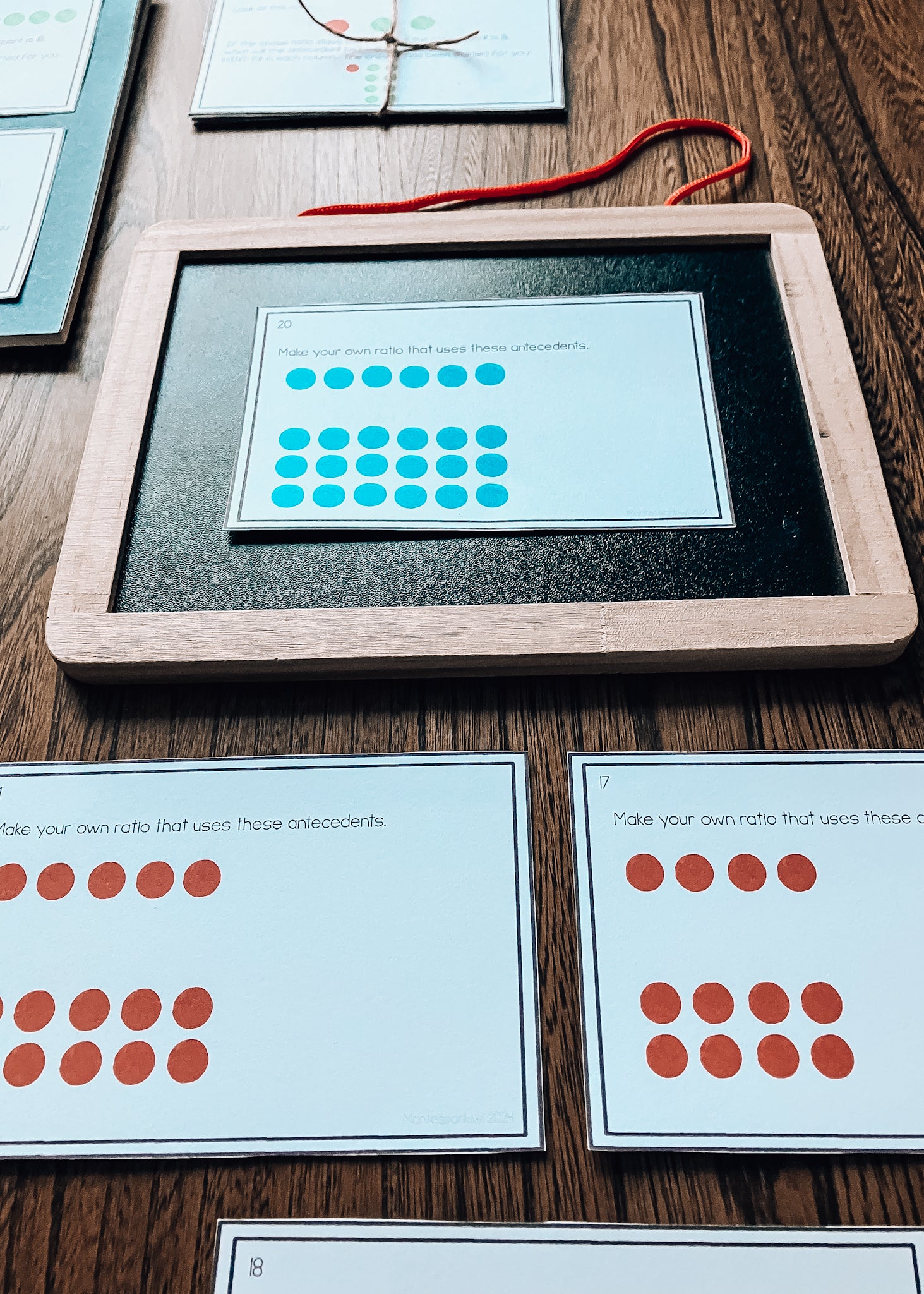
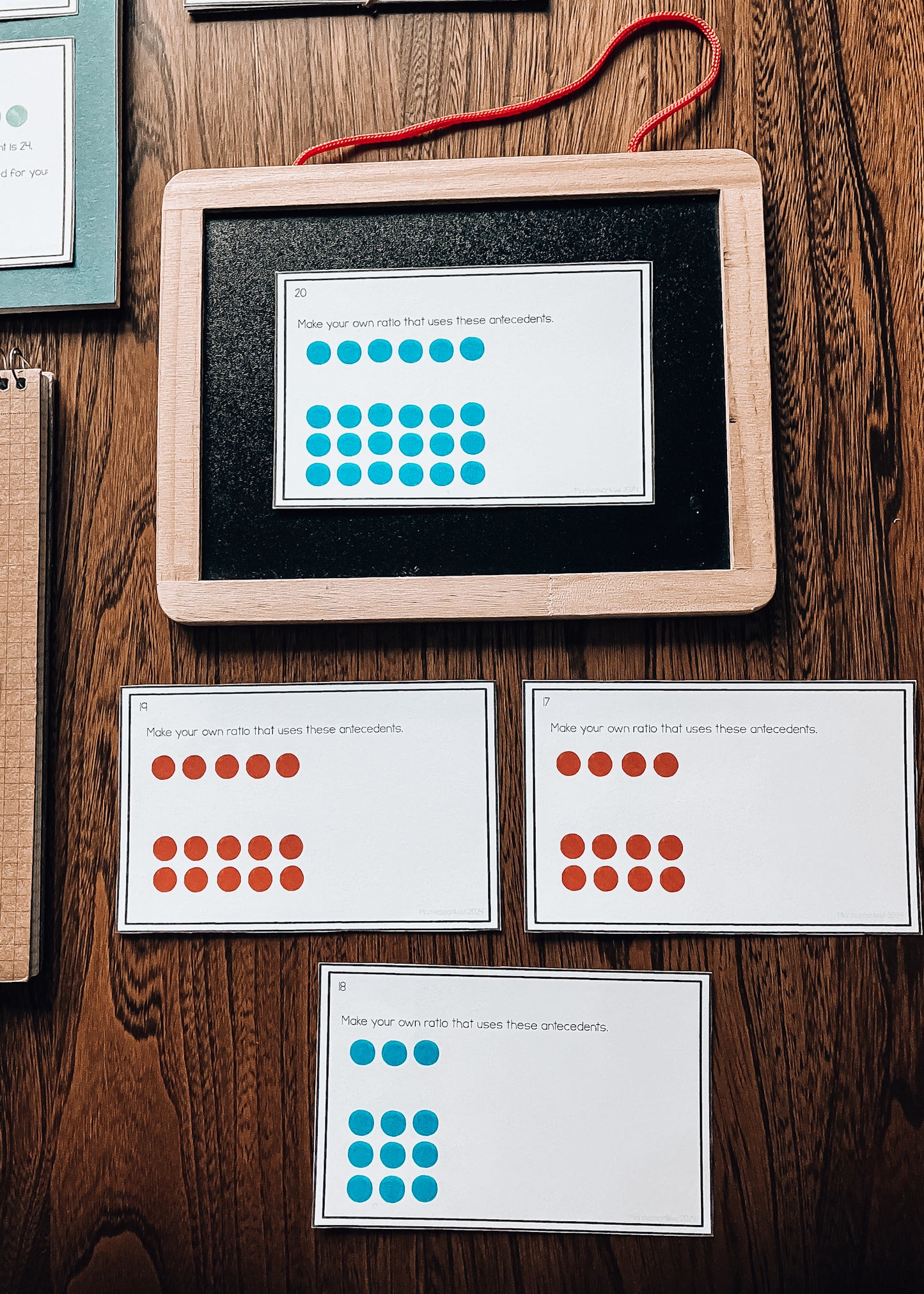
- Create-your-own-ratio challenges
- Picture-based ratio questions
- Simplifying-ratio activities
- Probability comparison problems
- Percentage and discount applications
- Recipe and mixture proportions
- Multi-step real-world problems
- Open-ended drawing challenges
- Corresponding answer and explanation pages
A Progressive Sequence of Ratio Work
1. Visual Equivalent Ratios
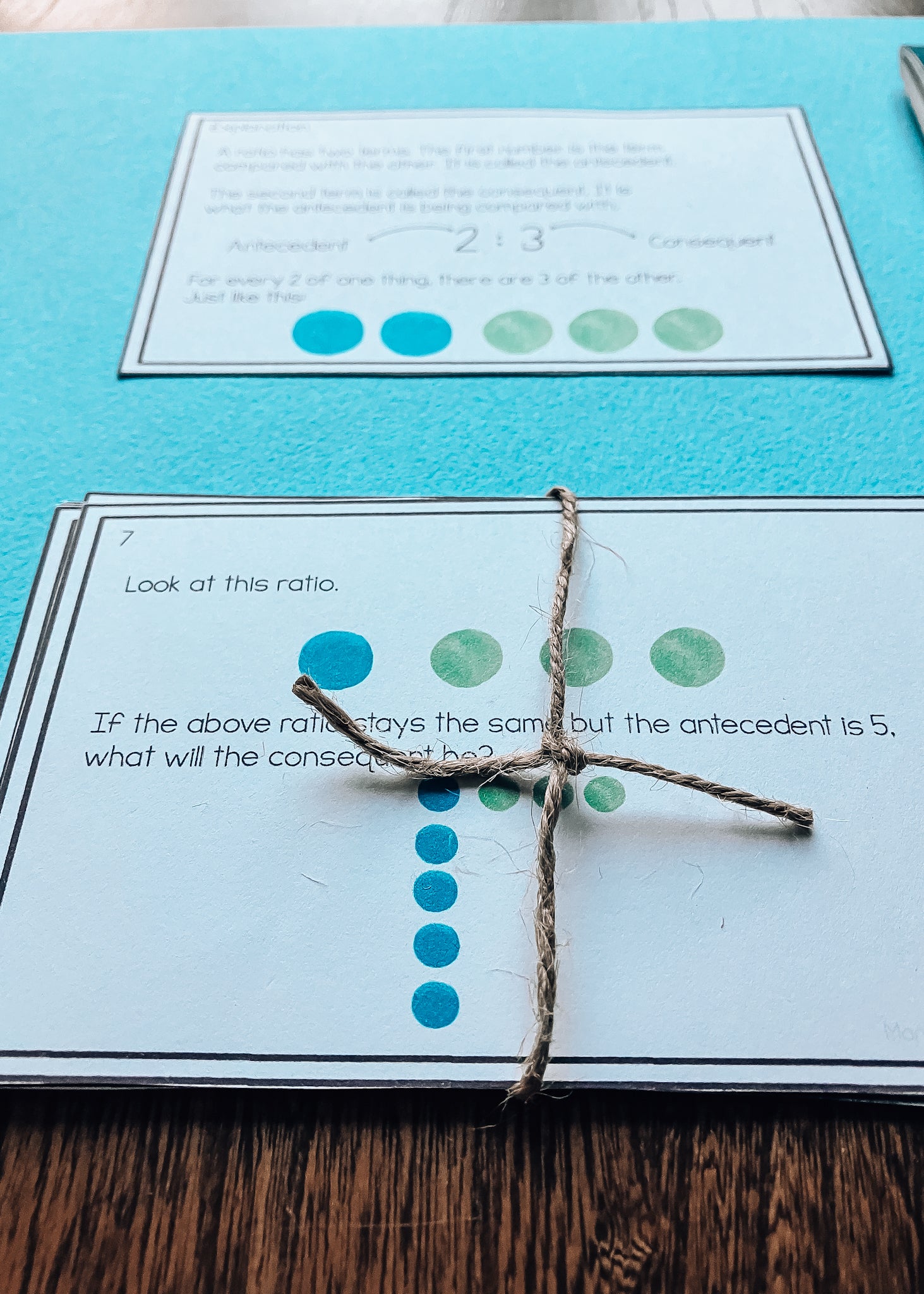
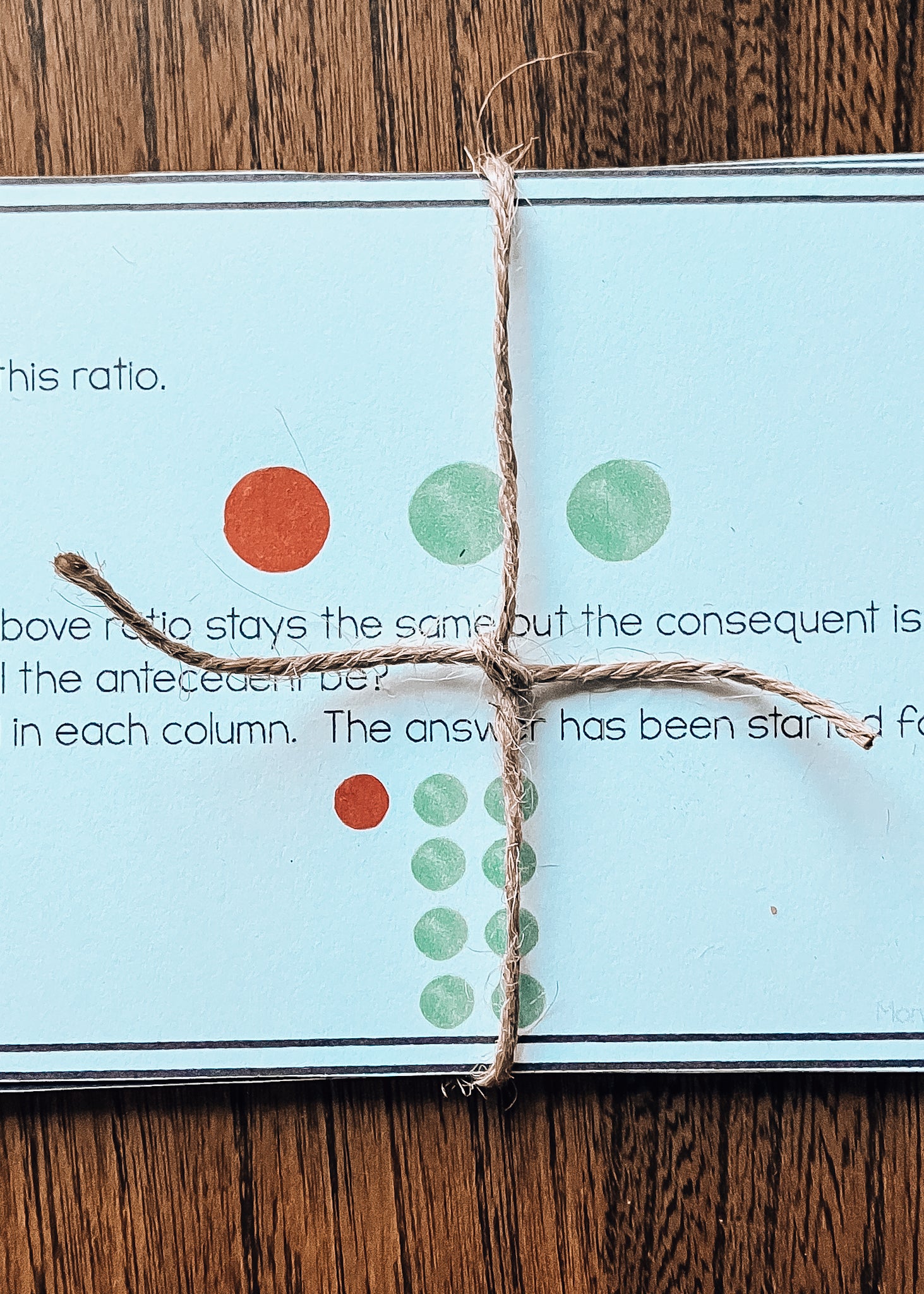
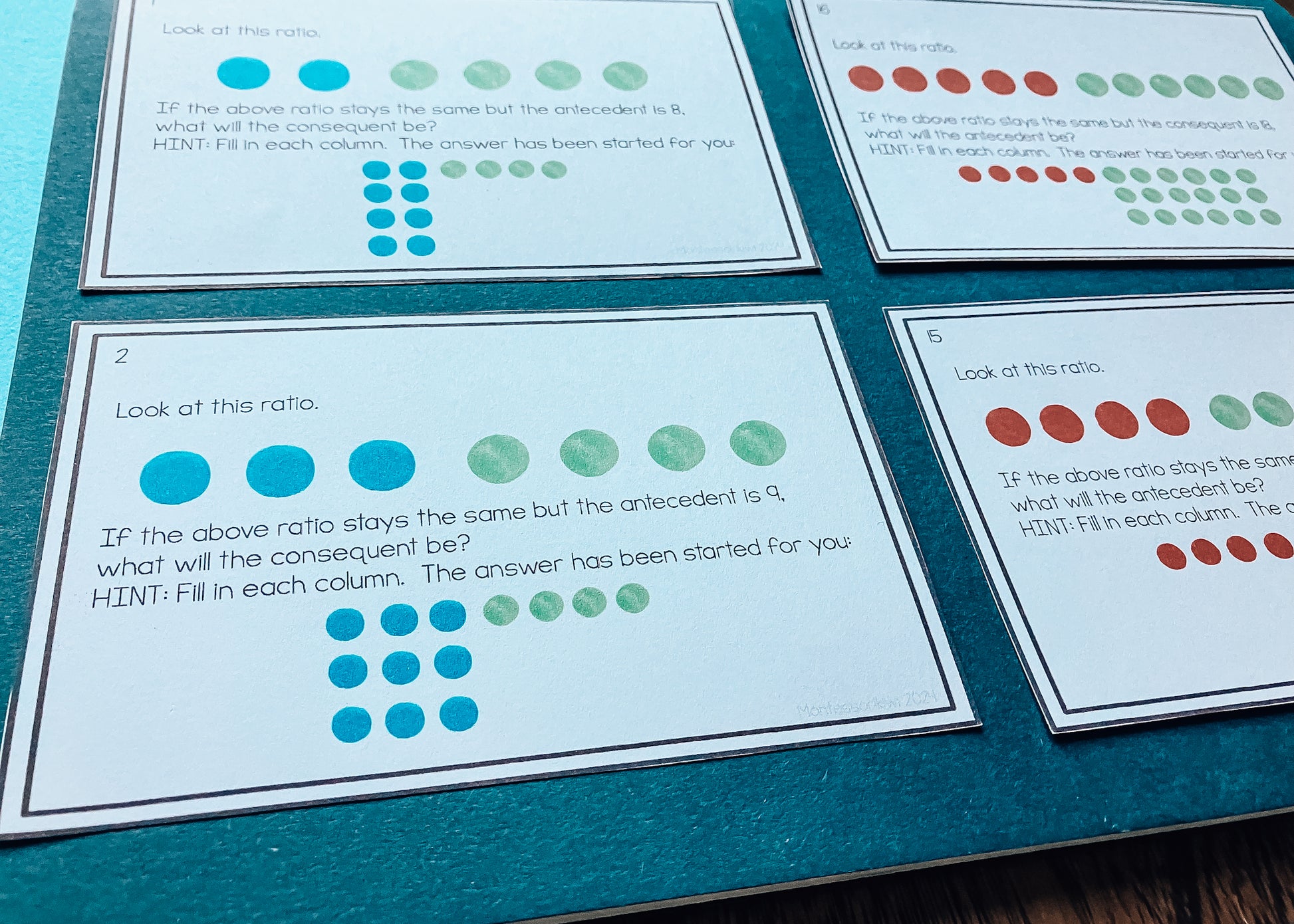
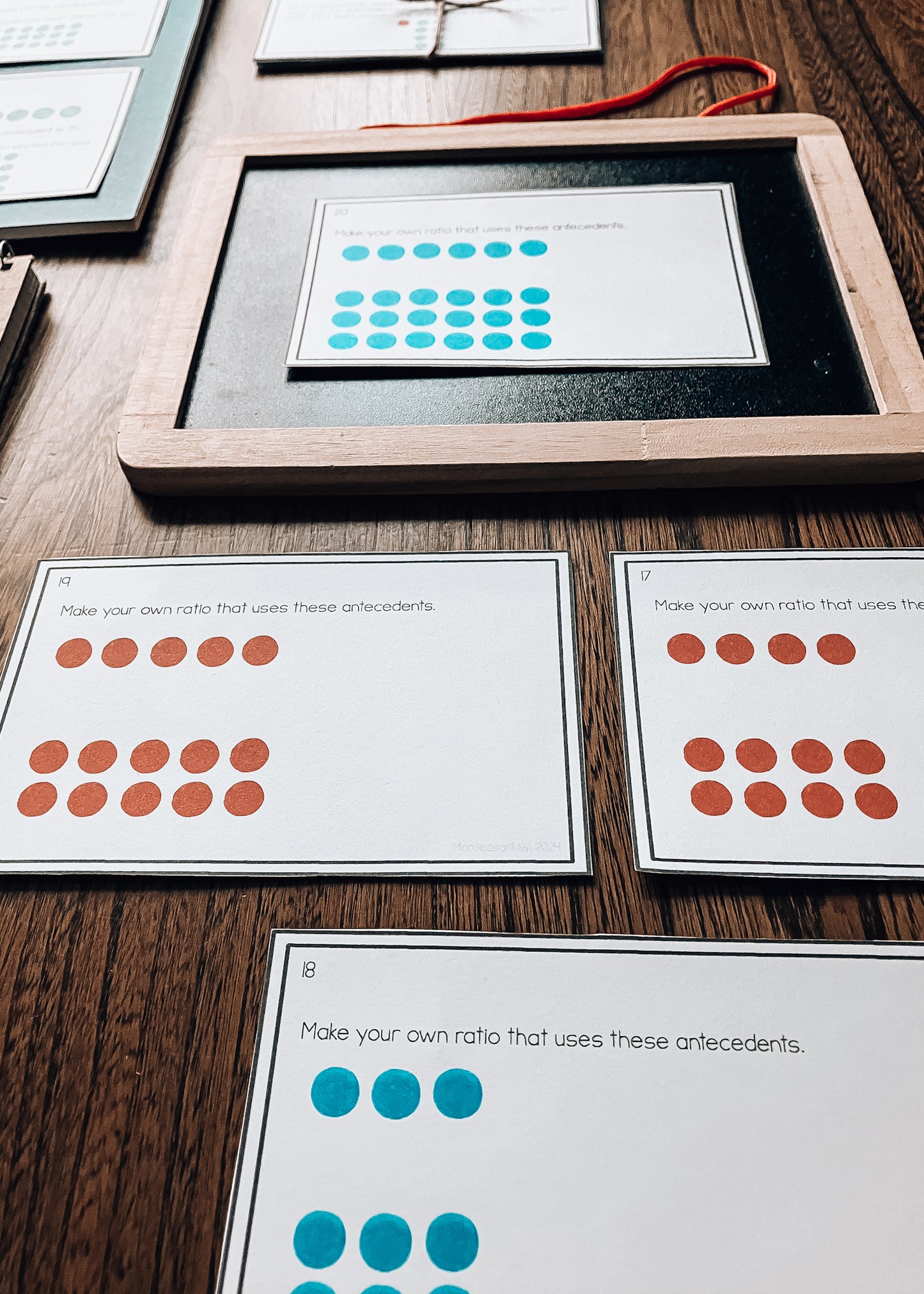
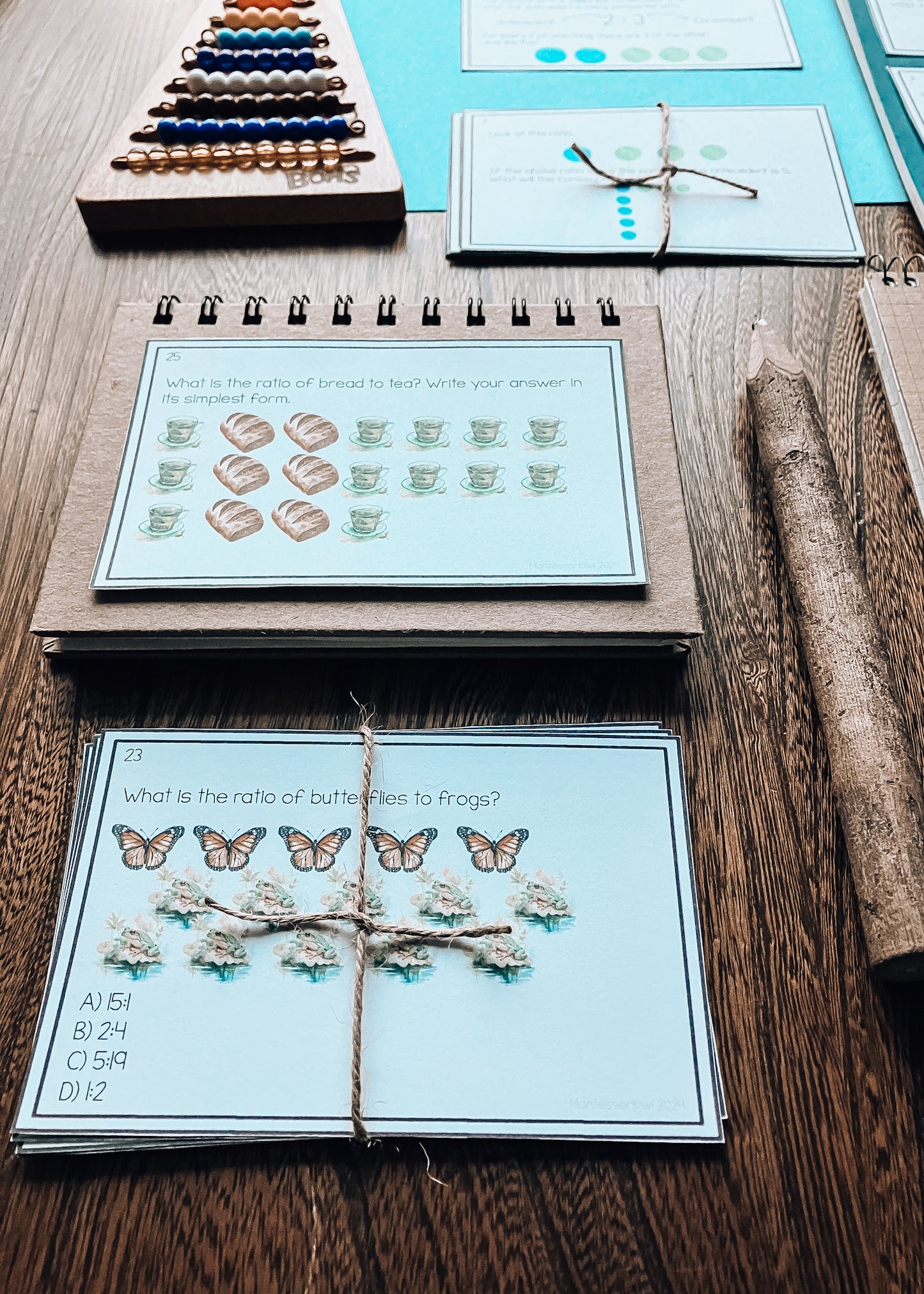
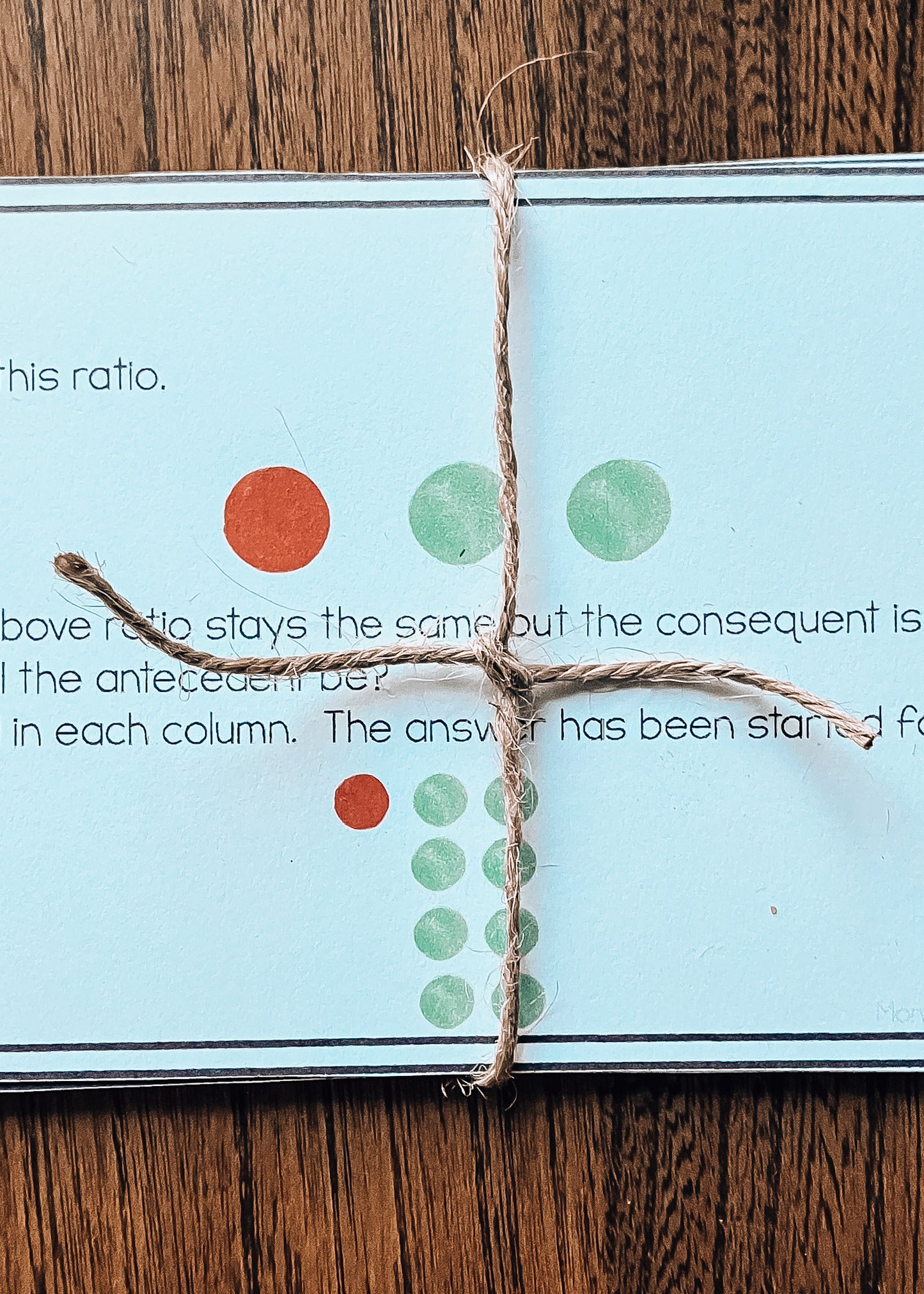
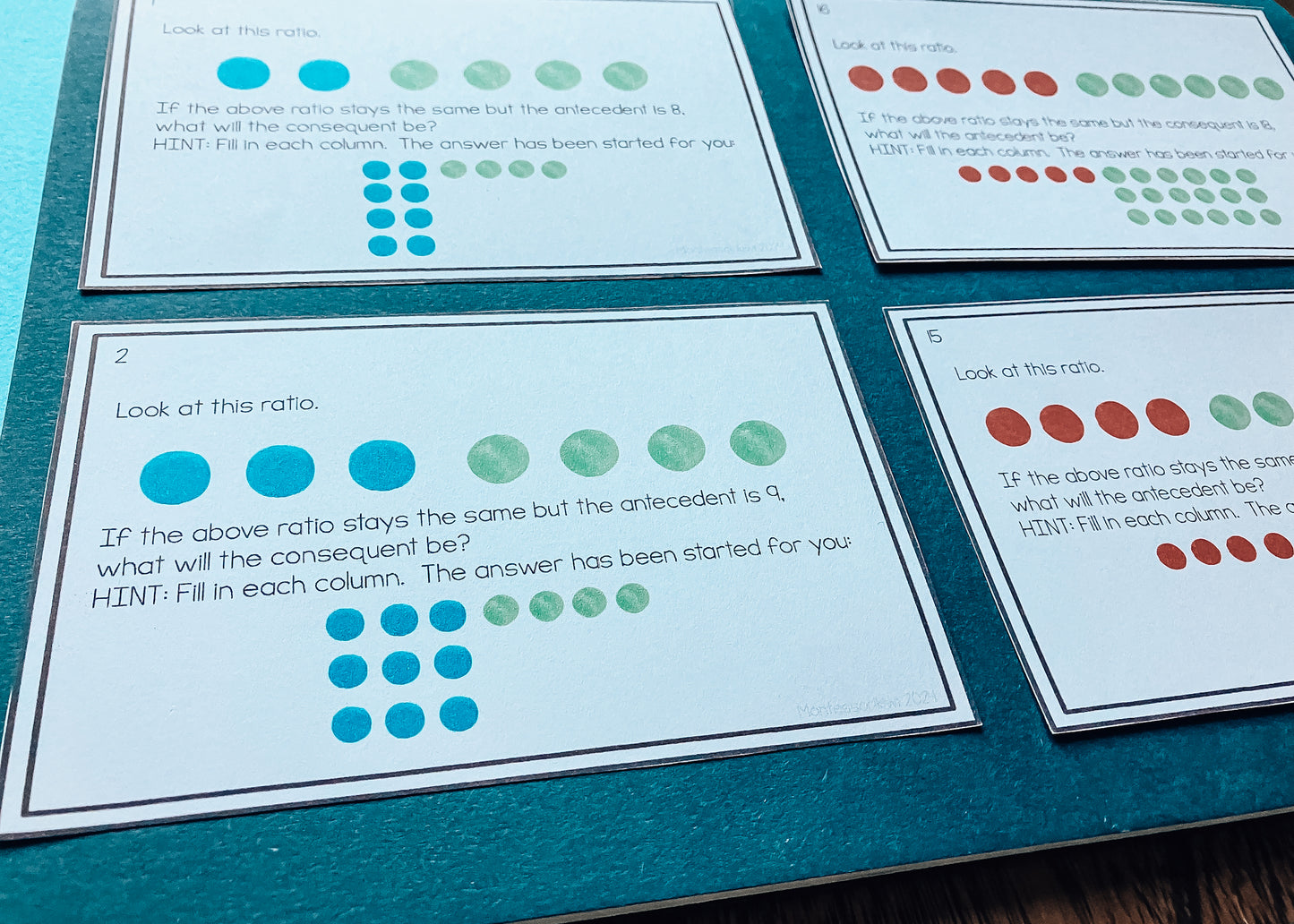
The opening task cards show two differently coloured quantities. Students identify the original relationship and determine a missing antecedent or consequent when the ratio is enlarged.
Some cards begin the new arrangement for the student, helping them organise the quantities into corresponding columns.
This is useful for children who understand multiplication but need help seeing that both parts of a ratio must change proportionally.
2. Finding a Missing Term
Students solve questions in which either the antecedent or consequent is given.
They must determine the scale factor and apply the same operation to the other part of the ratio. This reinforces the central principle:
What we do to one side of the ratio, we must also do to the other.
3. Constructing Ratios
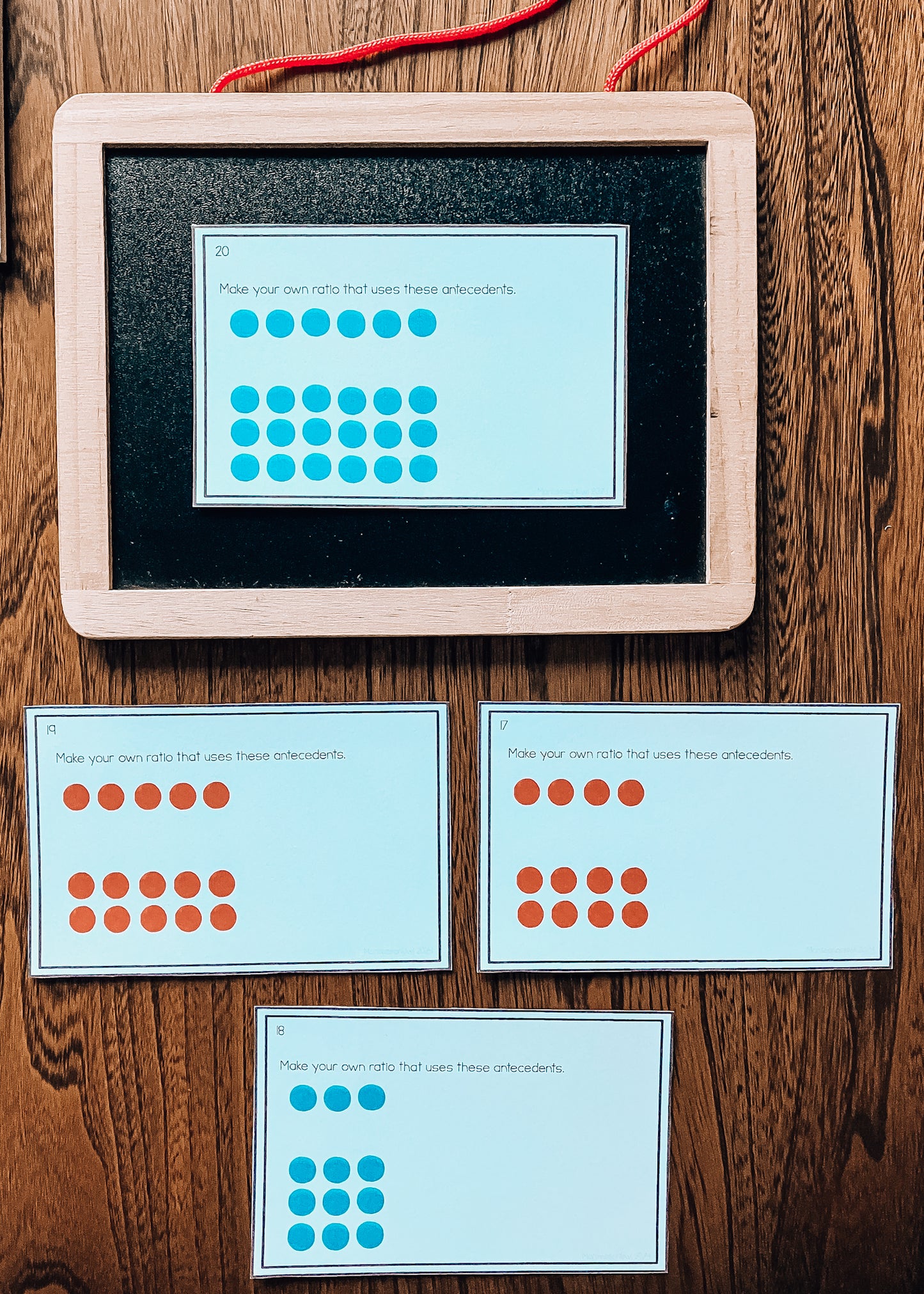
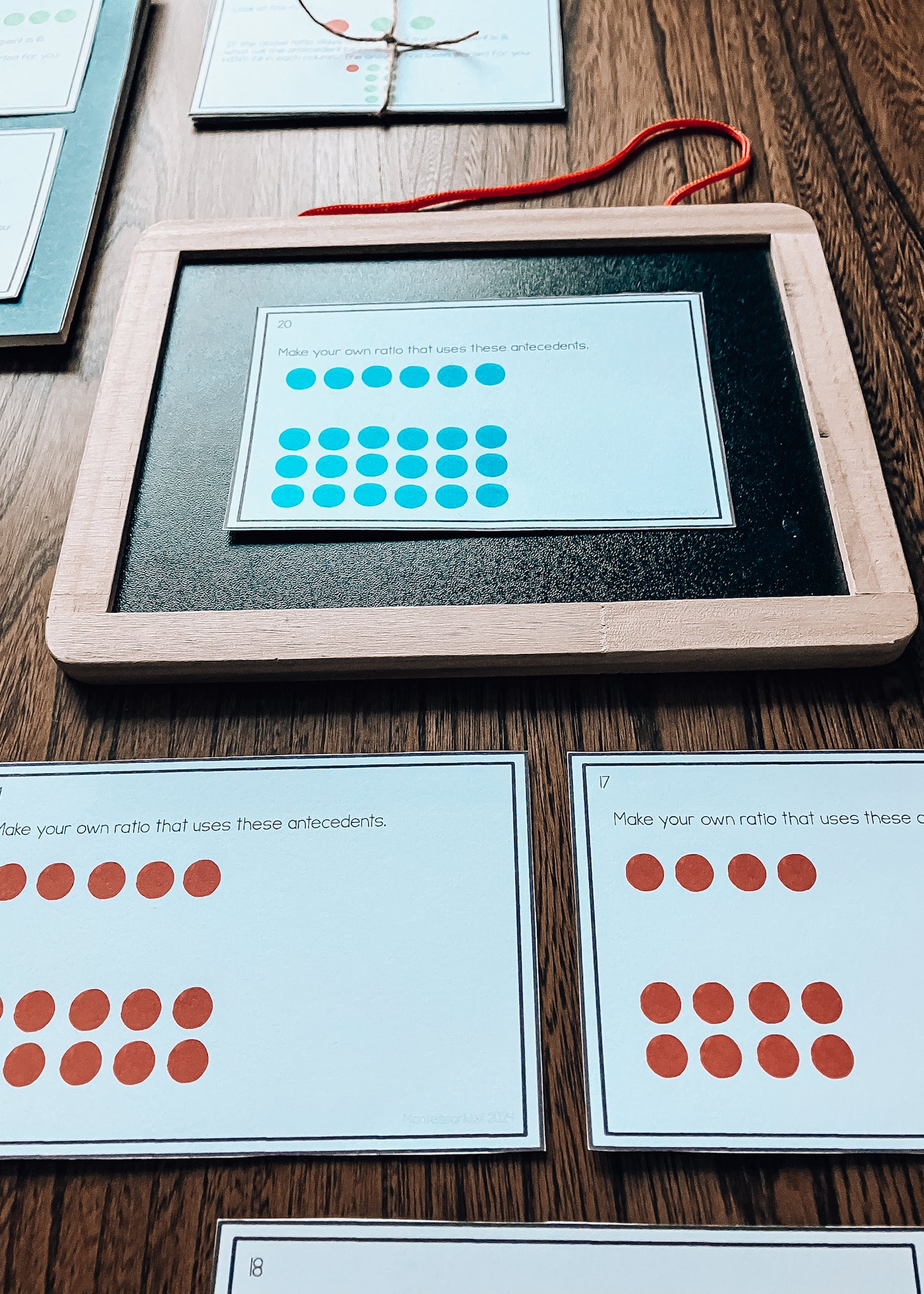
Open-ended cards provide one or more antecedents and ask students to create their own ratios.
These tasks encourage learners to:
- generate rather than simply recognise a relationship;
- show more than one possible answer;
- represent proportional quantities visually;
- explain the ratio they created; and
- check whether their quantities remain equivalent.
4. Ratios in Pictures
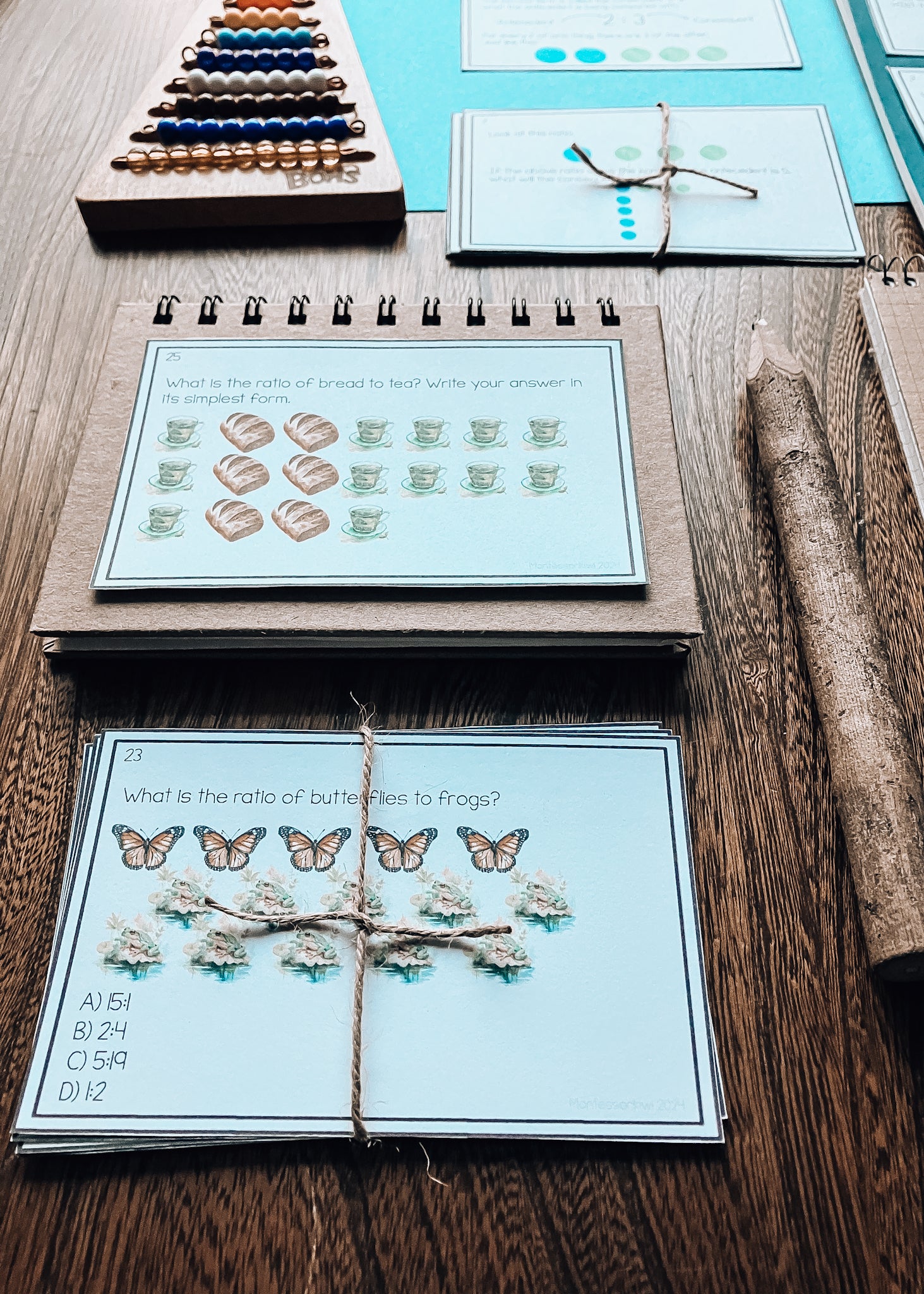
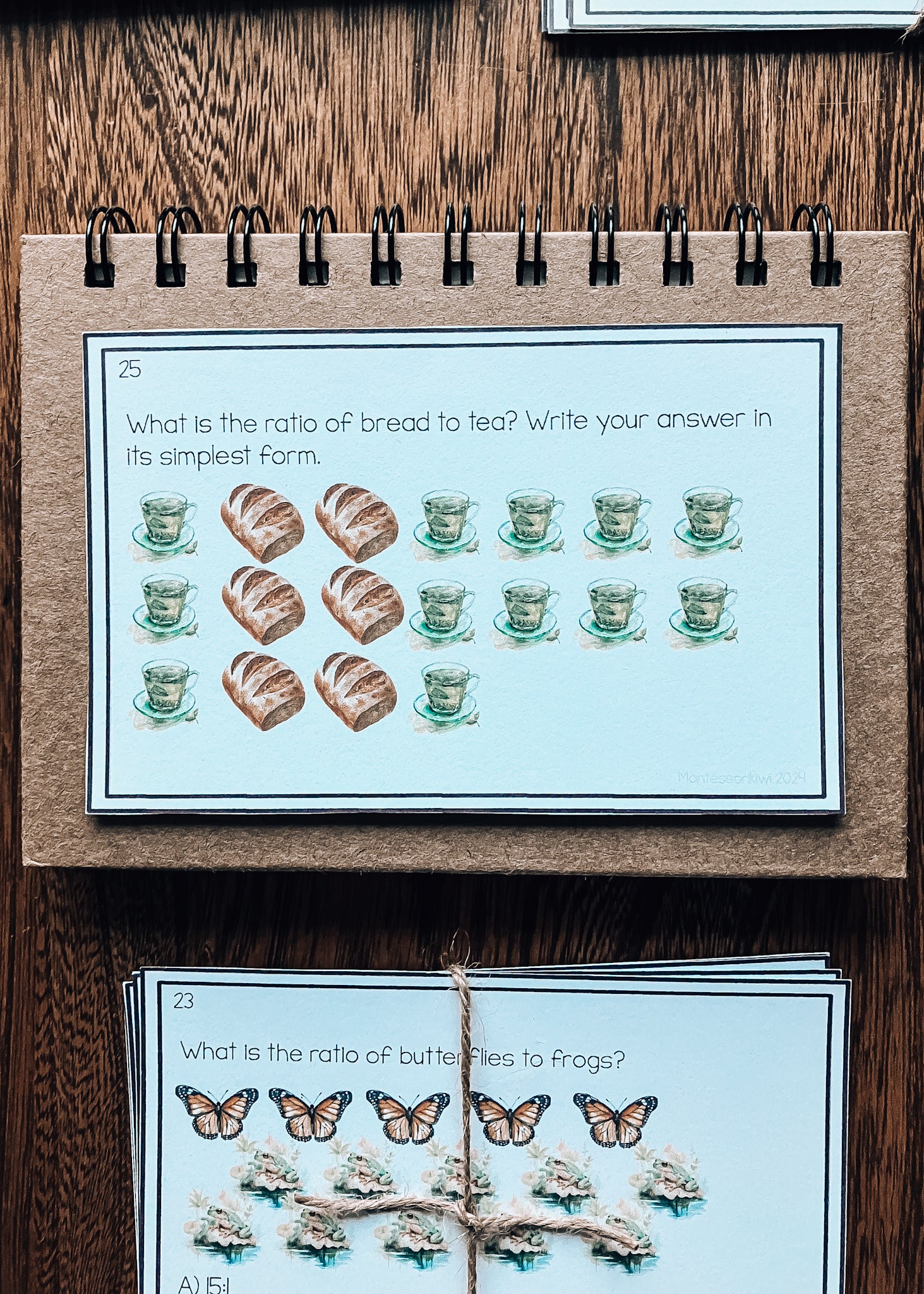
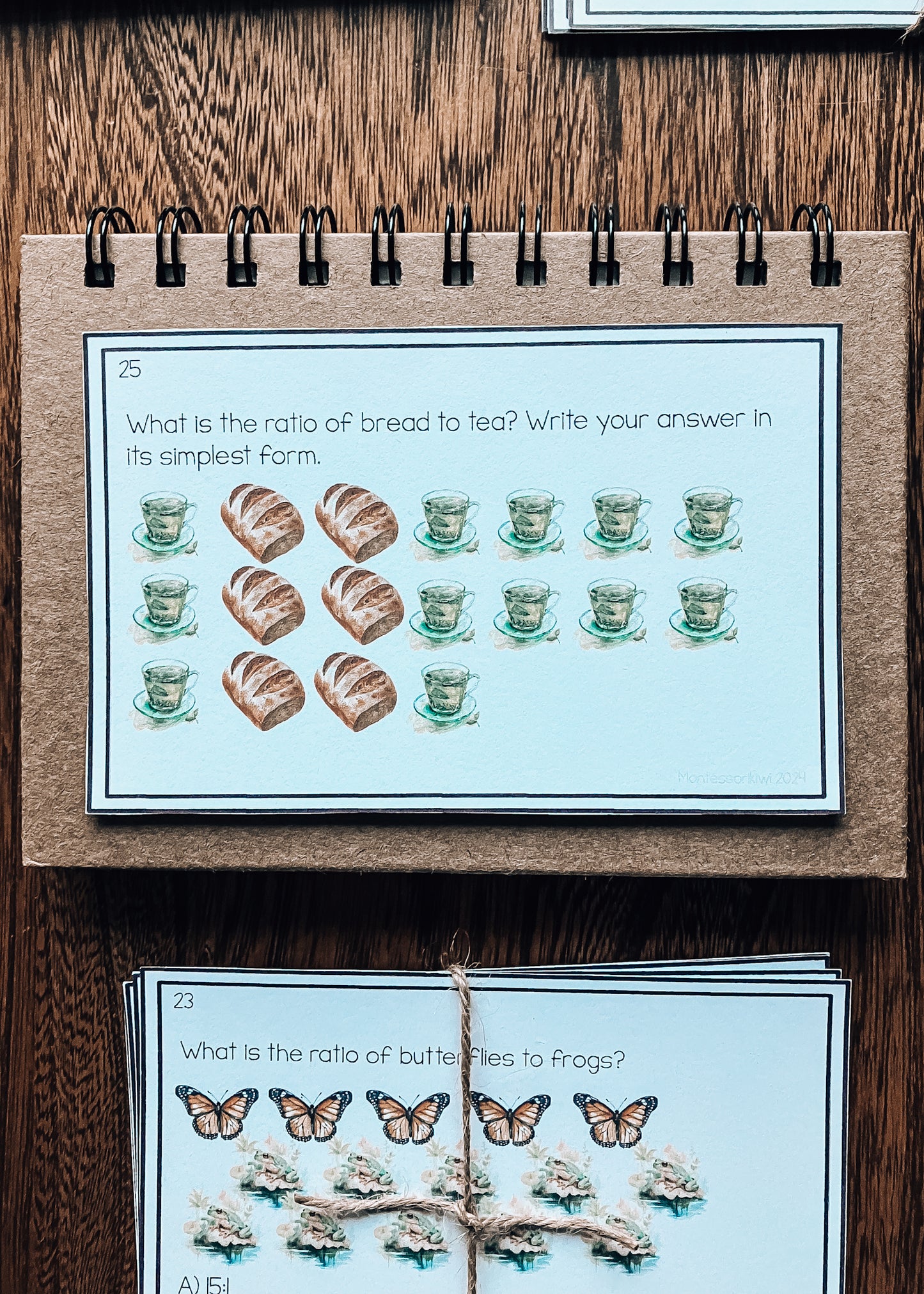
Students examine groups of familiar objects, animals and foods and identify ratios such as:
- trees to flowers;
- watermelons to oranges;
- butterflies to frogs;
- zebras to hippos;
- bread to tea; and
- pandas to snow leopards.
Some cards use multiple-choice answers, while later cards require students to write and simplify the ratio independently.
5. Simplifying Ratios
Students identify a ratio from a picture and write it in its simplest form.
This strengthens connections with:
- common factors;
- equivalent fractions;
- division;
- multiples; and
- fraction simplification.
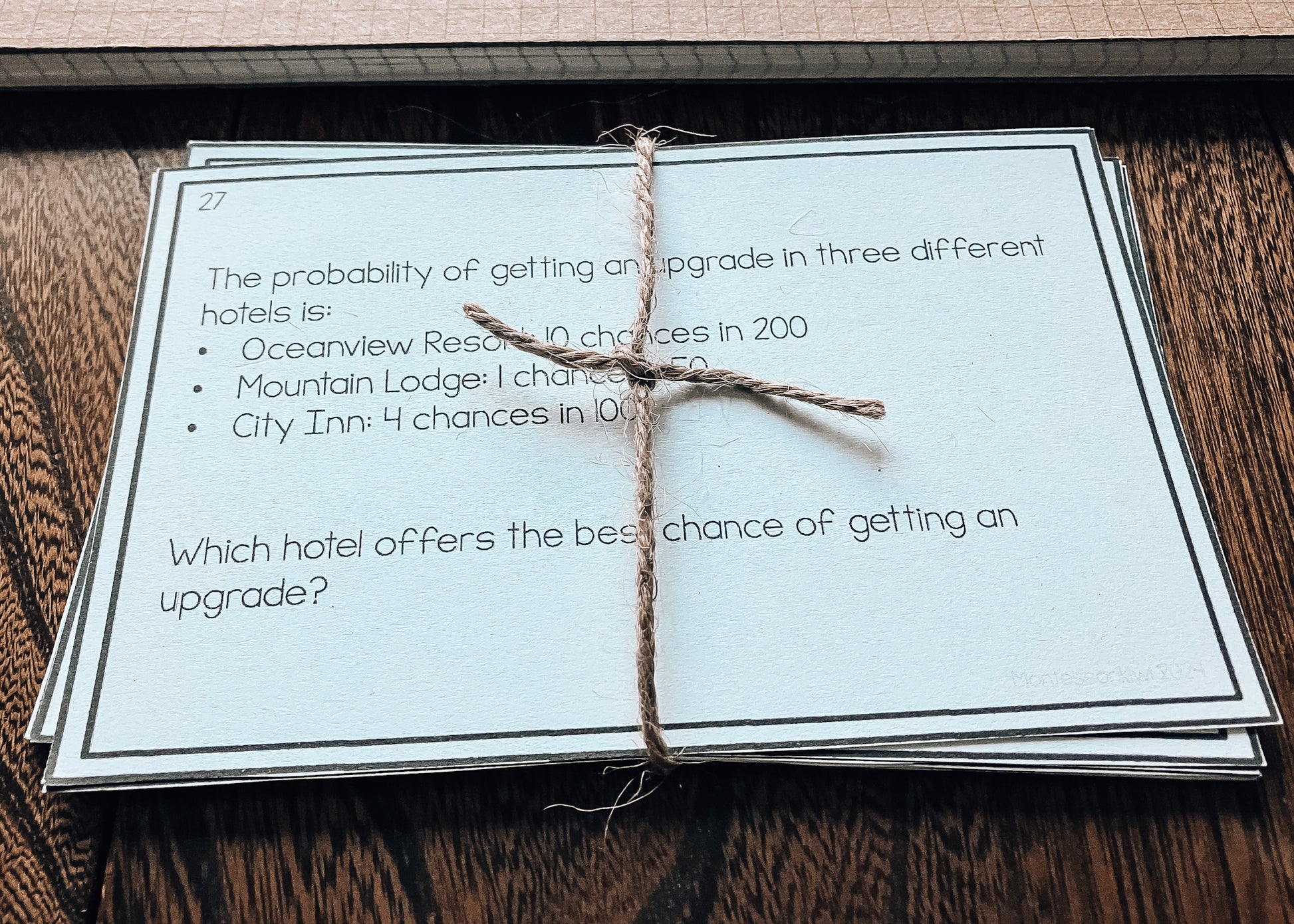
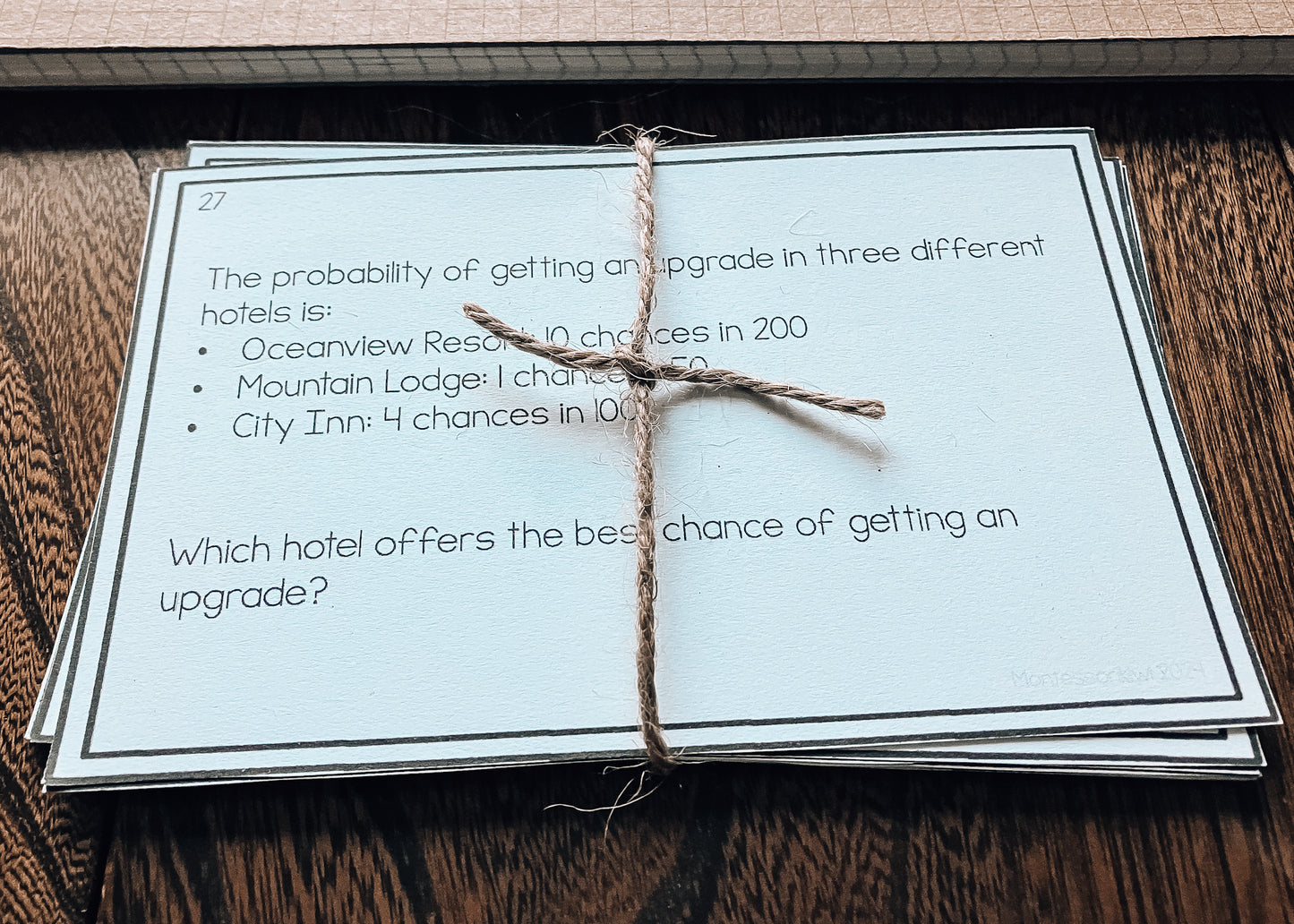
6. Comparing Probability
The task cards extend proportional reasoning into probability contexts.
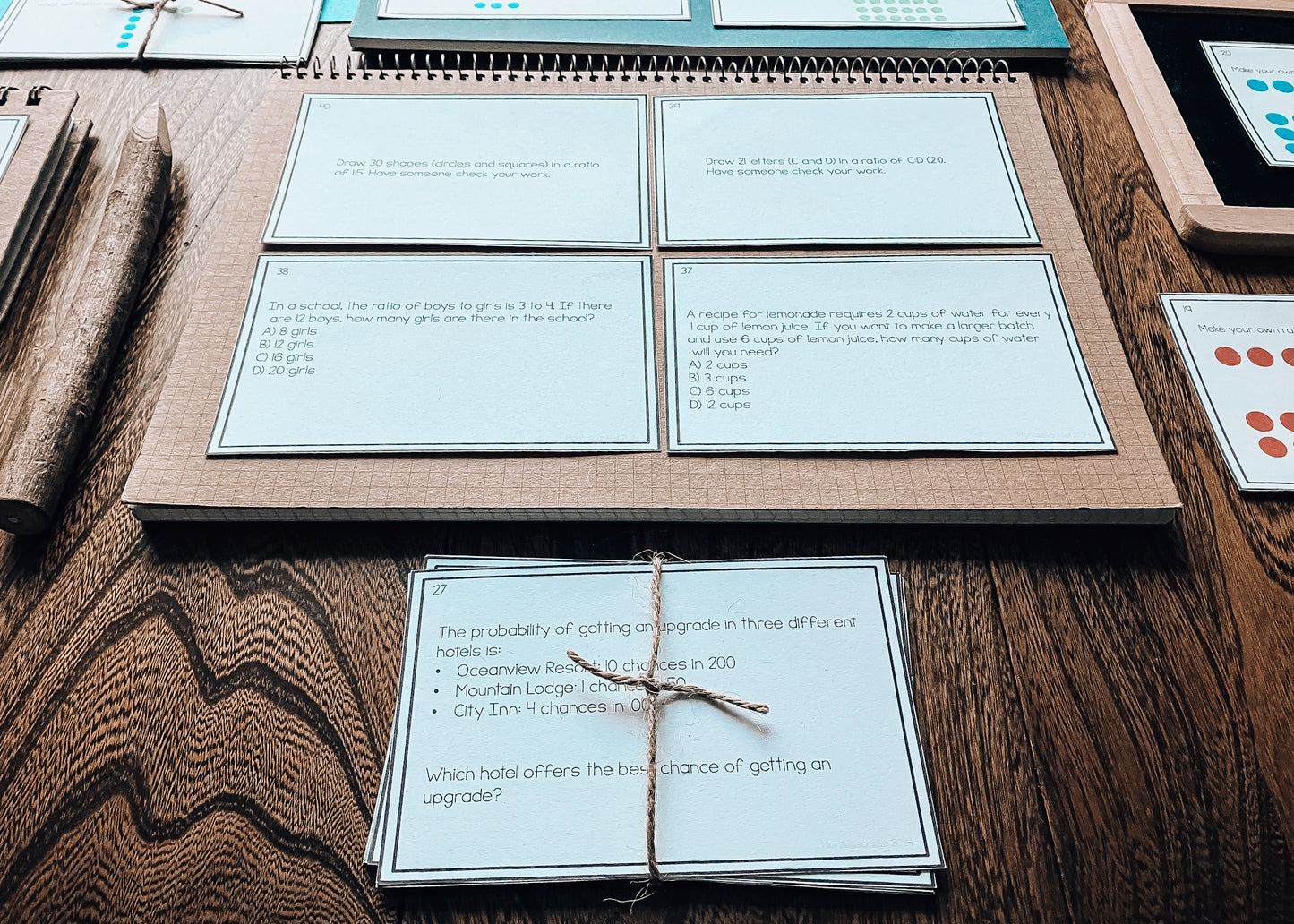
Students compare chances with different denominators, such as offers from several hotels, flights or shops. They must convert the figures to a common denominator before deciding which option provides the greatest likelihood.
This helps children understand why fractions cannot always be compared reliably by looking at the numerators alone.
7. Percentages and Real-World Proportions
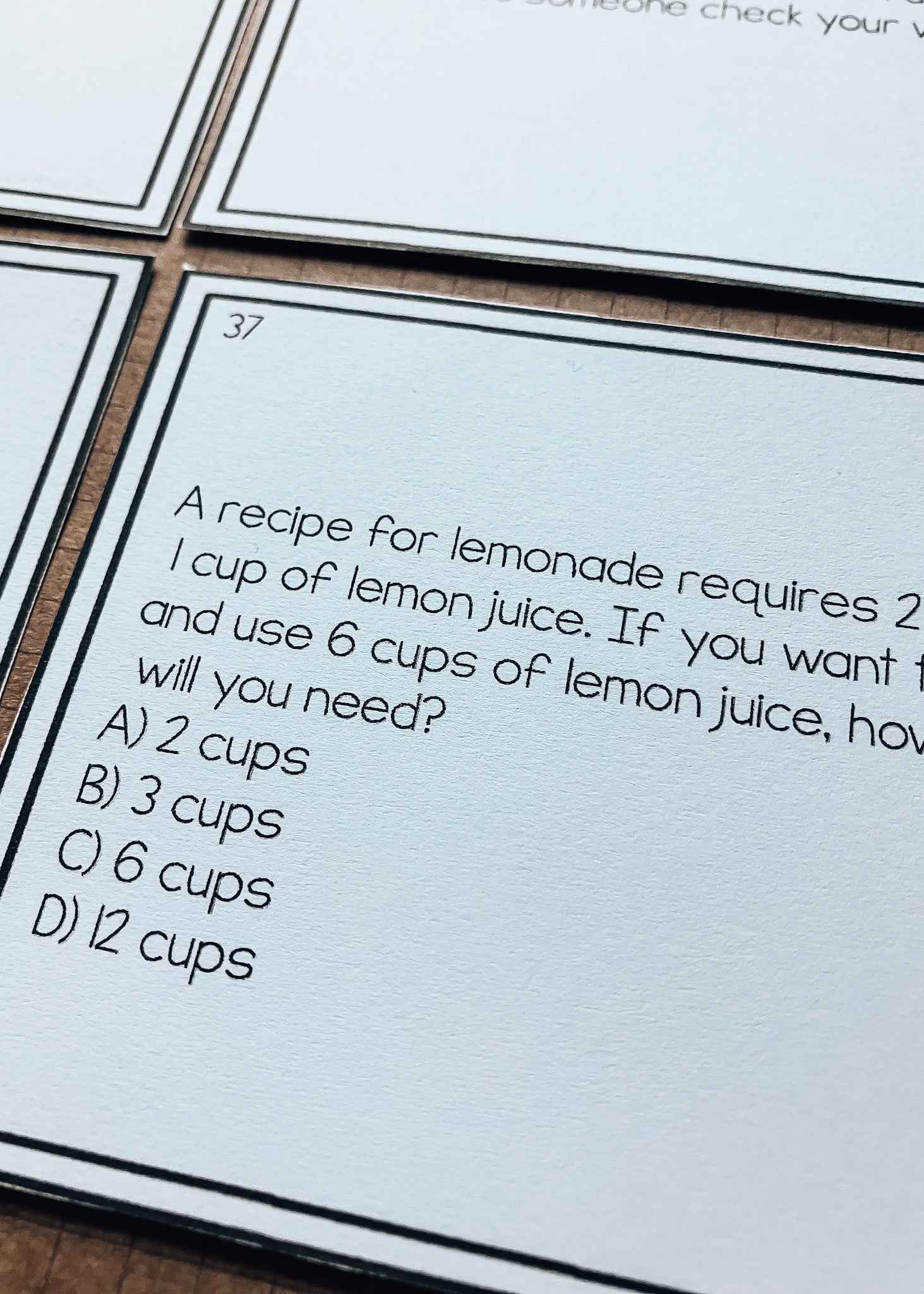
Later cards apply proportional thinking to situations involving:
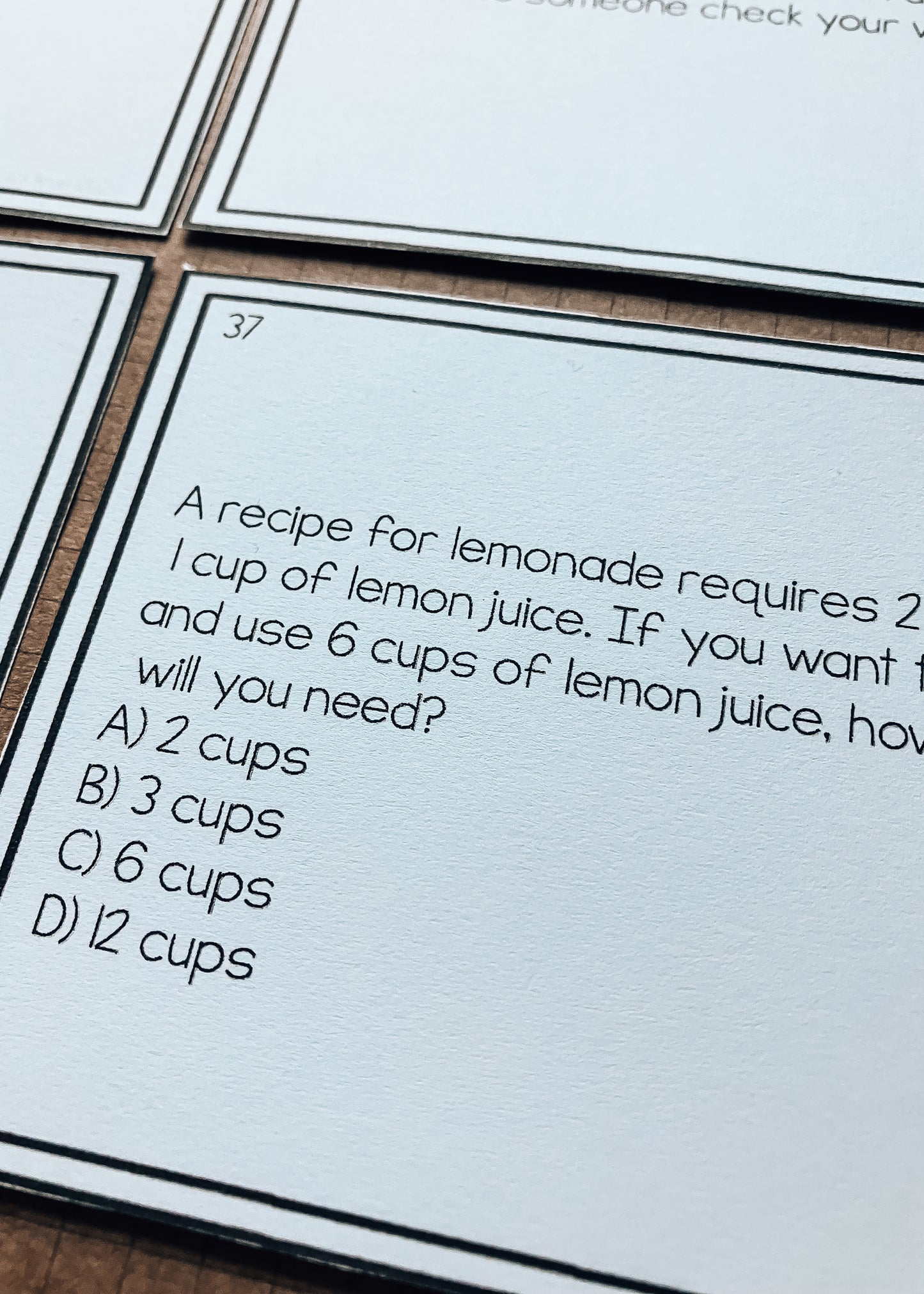
- recipes;
- sale discounts;
- paint mixtures;
- gardens;
- construction materials;
- recipe scaling;
- school supplies;
- population ratios; and
- quantities divided between categories.
These problems show children that ratio and proportion are not isolated textbook topics. They are used whenever a relationship must remain consistent while the quantities change.
Self-Correcting by Design
The resource is designed to be printed double-sided so that each task card has its corresponding answer on the reverse.
Many answer cards also include a concise explanation showing:
- the original relationship;
- the scale factor used;
- how both quantities were adjusted;
- how a ratio was simplified;
- how common denominators were found; or
- why one probability is greater than another.
This built-in control of error supports independent Montessori work while still giving students access to meaningful feedback.
Important Printing Information
For the questions and answers to align correctly, print the PDF double-sided using Adobe PDF Reader and select flip on the long edge.
Some open-ended cards do not have a fixed answer. Check the pages before printing so that each question is paired with the intended reverse side.
Ways to Use the Task Cards
Use this resource for:
- follow-up after a lesson on ratios;
- Montessori upper-elementary maths shelves;
- independent work cycles;
- partner problem solving;
- small-group maths instruction;
- homeschool lessons;
- maths centres and rotations;
- revision before percentages;
- extension for confident fraction students;
- intervention for students needing visual support;
- formative assessment; or
- real-world problem-solving practice.
Recommended Prior Knowledge
These cards are intended for students who have already received an introduction to ratios.
Children will benefit from prior experience with:
- multiplication and division;
- factors and multiples;
- fractions;
- equivalent fractions;
- simplifying fractions;
- percentages; and
- comparing quantities.
The visual cards can be used with counters, bead bars or other manipulatives when students need a more concrete starting point.
Use With or Without Montessori Materials
The first cards use colours inspired by the traditional Montessori peg board for proportions and ratios.
No direct reference is made to the peg board on the student cards, so the pack can also be used successfully in:
- mainstream classrooms;
- homeschool environments;
- tutoring programmes;
- microschools; and
- intervention groups.
When a peg board is not available, children can model the quantities with counters, coloured beads, pom-poms or other small objects.
Who Is This Resource For?
This pack is particularly useful for:
- Montessori 9–12 classrooms;
- upper-elementary maths learners;
- approximately ages 9–13;
- homeschool families;
- mixed-age maths groups;
- students transitioning from fractions to proportions;
- learners who need visual support before abstract calculation;
- children ready for independent task-card work; and
- teachers seeking low-preparation ratio practice.
Created by an Experienced Montessori Educator
I’m Lisa—an NZ registered teacher, Montessori-trained educator, school principal and former homeschooler.
I create resources for real mixed-age learning environments, including students who are ready for advanced mathematical ideas but still benefit from clear visuals, structured progression and opportunities to check their own work.
These cards were designed to help learners understand proportional relationships—not simply memorise another procedure.
Prepare for and Extend Ratio Work
-
Fractions of an Amount Task Cards
Strengthen the fraction-of-a-quantity skills children need before applying proportional reasoning. -
Equivalent Fraction Task Cards
Help students recognise equivalent relationships before moving into equivalent ratios. -
Fraction, Decimal and Percentage Flip Book
Give learners a visual reference for connecting equivalent forms of the same value. -
Montessori Percentage Activities
Extend proportional reasoning into percentage conversions and percentages of quantities. -
Montessori Probability Activities
Build on the probability-comparison questions included in this ratio pack.
Explore More Fractions, Decimals and Percentages
Browse the Montessori Fractions and Decimals Collection for visual fraction materials, decimal work, percentage activities, conversions and independent upper-elementary follow-up.
Need a Complete Upper-Elementary Maths Library?
The Montessori Upper Elementary Maths Bundle includes broader work across fractions, decimals, percentages, ratios and proportions, algebraic thinking, measurement, probability, graphing and mathematical reasoning.
Choose the larger bundle when you need a wide bank of ready-to-print maths materials for ages 9–12 rather than one focused ratios resource.
Teaching Fractions Before Ratios?
The Montessori Fraction Bundle provides a broader printable pathway through fraction identification, equivalence, ordering, fractions of amounts, operations and connections with decimals and percentages.
It is a useful choice for students who need to strengthen fraction understanding before beginning formal ratio and proportion work.
Browse the Montessori Maths Collection
Explore Montessori maths resources for fractions, place value, operations, geometry, measurement, probability, problem solving and independent elementary task cards.
Digital Resource Information
This is a downloadable PDF. No physical cards, counters or Montessori peg board will be posted.
Your purchase is licensed for use by one teacher or one homeschool family. Please purchase additional licences rather than sharing the file or printed copies with other teachers, classrooms or organisations.
Help Ratios Become Relationships—Not Just Rules
Move students from visual quantities to equivalent ratios, proportions, percentages and practical problem solving through progressive, self-correcting work.
Download the Montessori Ratios and Proportions Task Cards and give upper-elementary learners a clearer pathway into proportional reasoning.
Share
-
Items are secured / Terms of Use
Our items are secured. They are not able to be altered. We secure our items because they are our intellectual property and because we use art from artists who require that we secure our files.
You may not:
-resell our items or use them for commercial gain
-claim these items as your own
-modify this resource
-share them with others by any means e.g. electronic or hard copy
-
All Items are instant downloads
You will not get a printed product in the mail.
-
All prices are in USD
Due to the international nature of our customers our prices are all in USD. If you wish to work out the conversion before you buy we recommend www.xe.com