


montessorikiwi
Schwa Sound Syllable Sort | Montessori Science of Reading & Spelling Activity
Schwa Sound Syllable Sort | Montessori Science of Reading & Spelling Activity
Couldn't load pickup availability
Can your child count syllables in a simple word—but become confused when an unstressed vowel no longer sounds the way they expect?
Words containing the schwa sound can be particularly tricky for developing readers and spellers.
A vowel may be clearly written in the word but sound reduced or unexpected when spoken. This can make syllable division, decoding and spelling much harder.
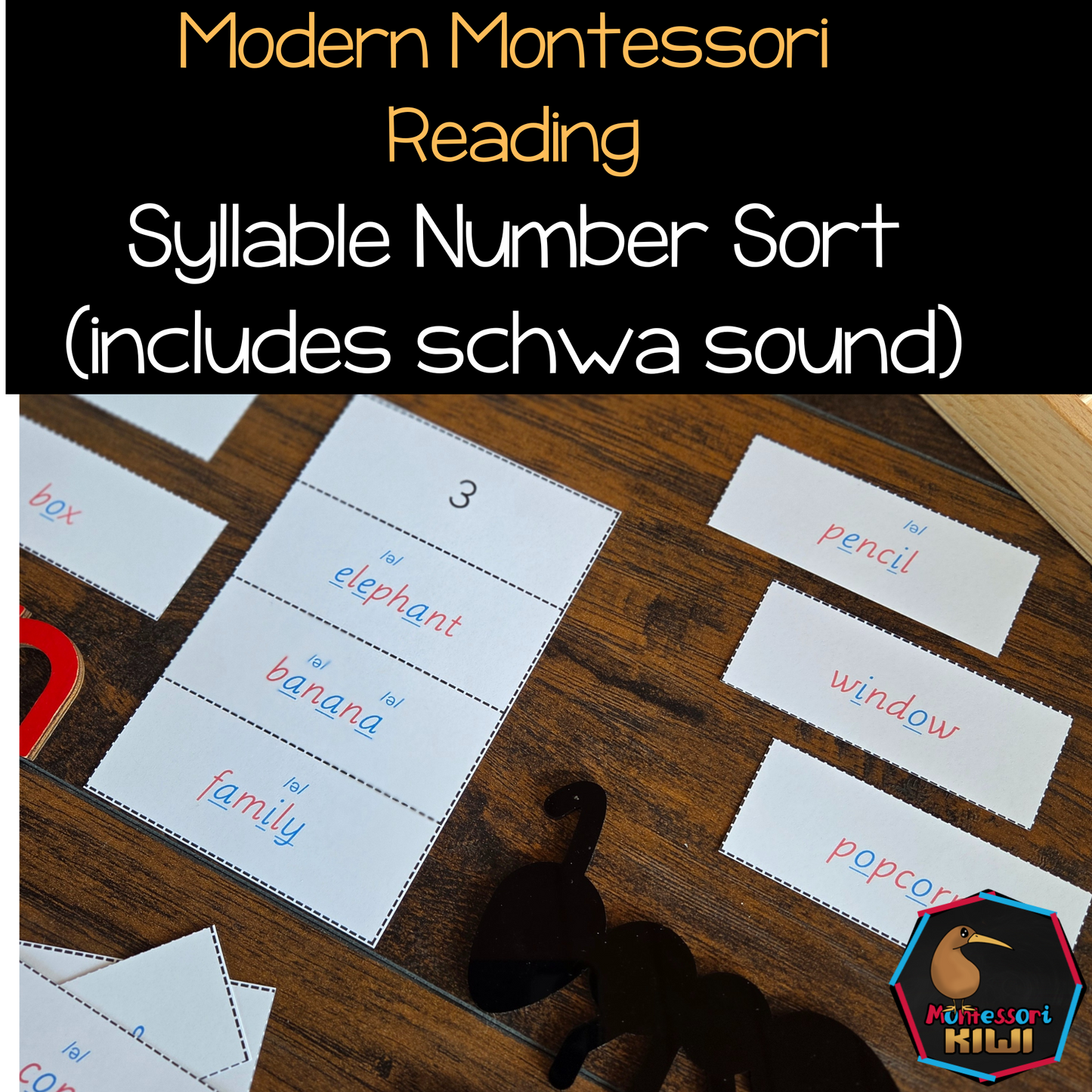
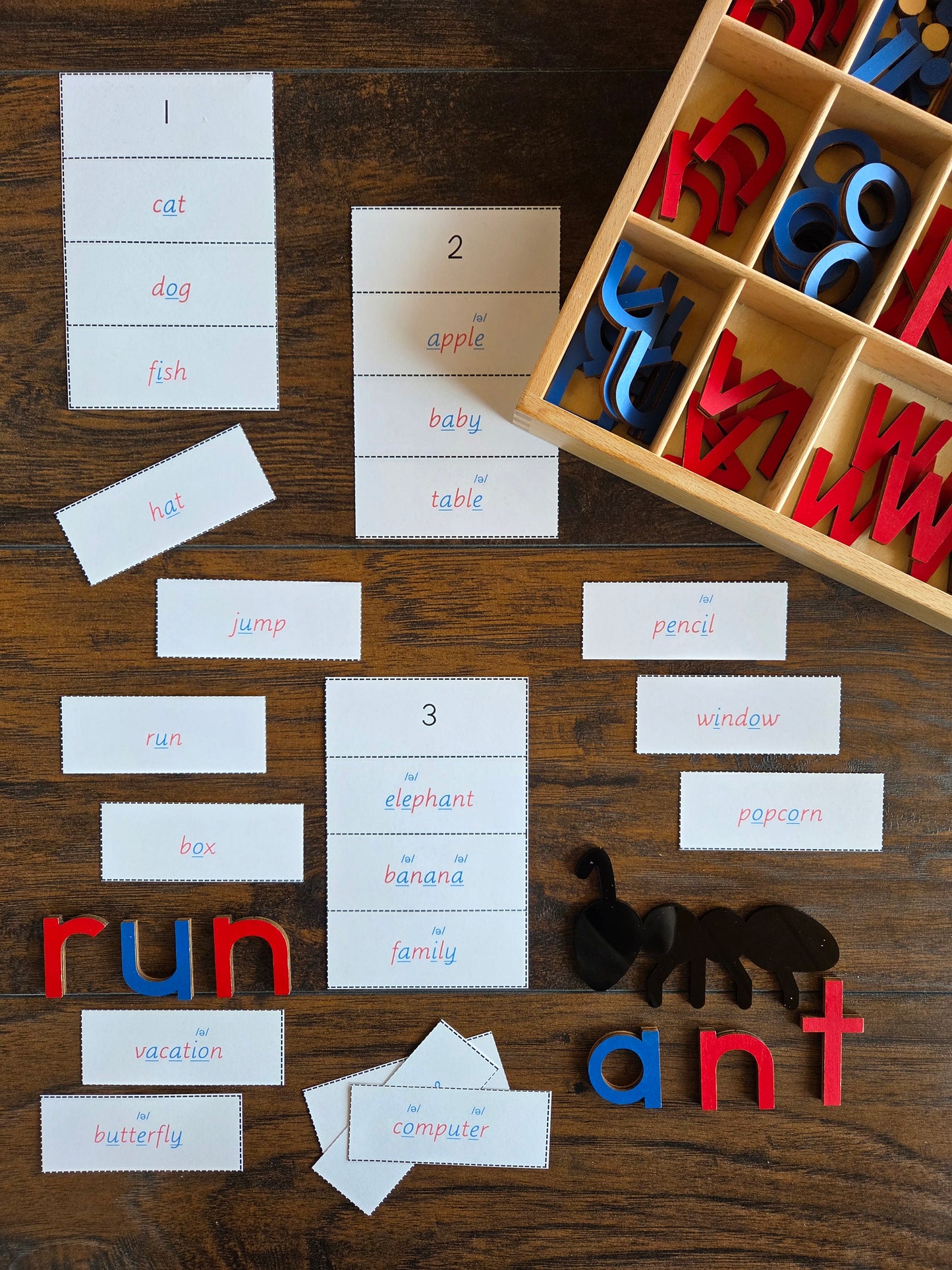
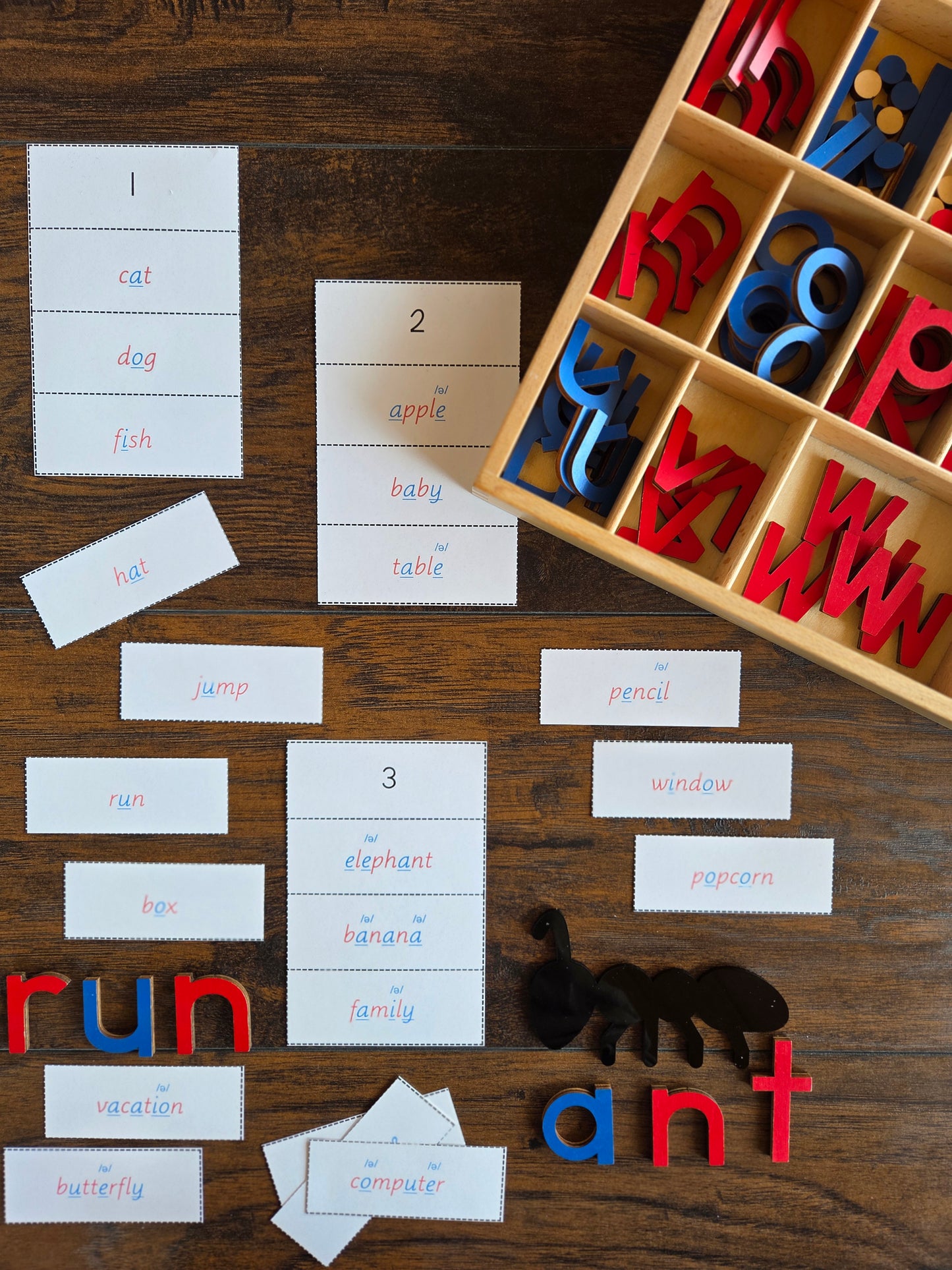
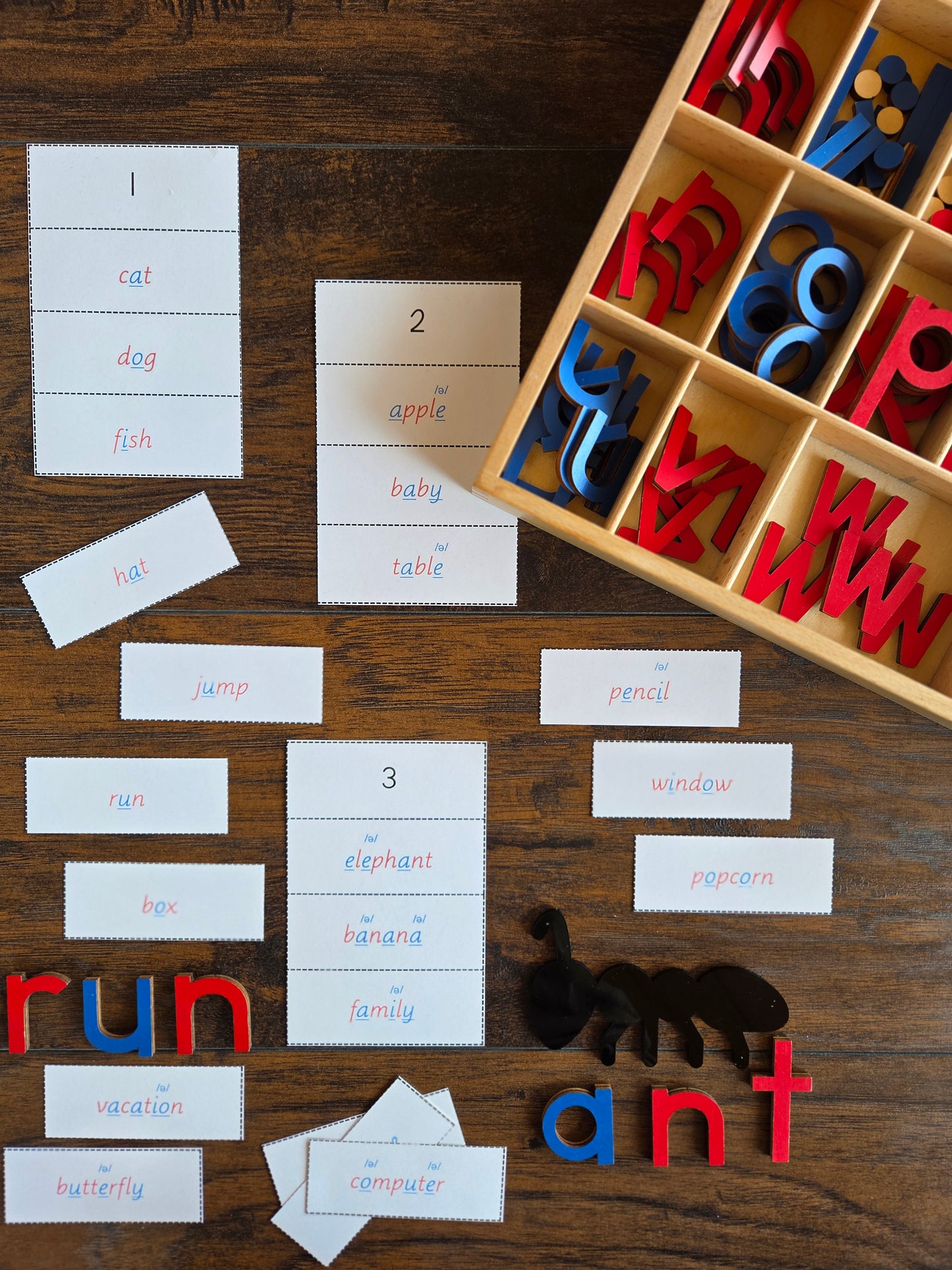
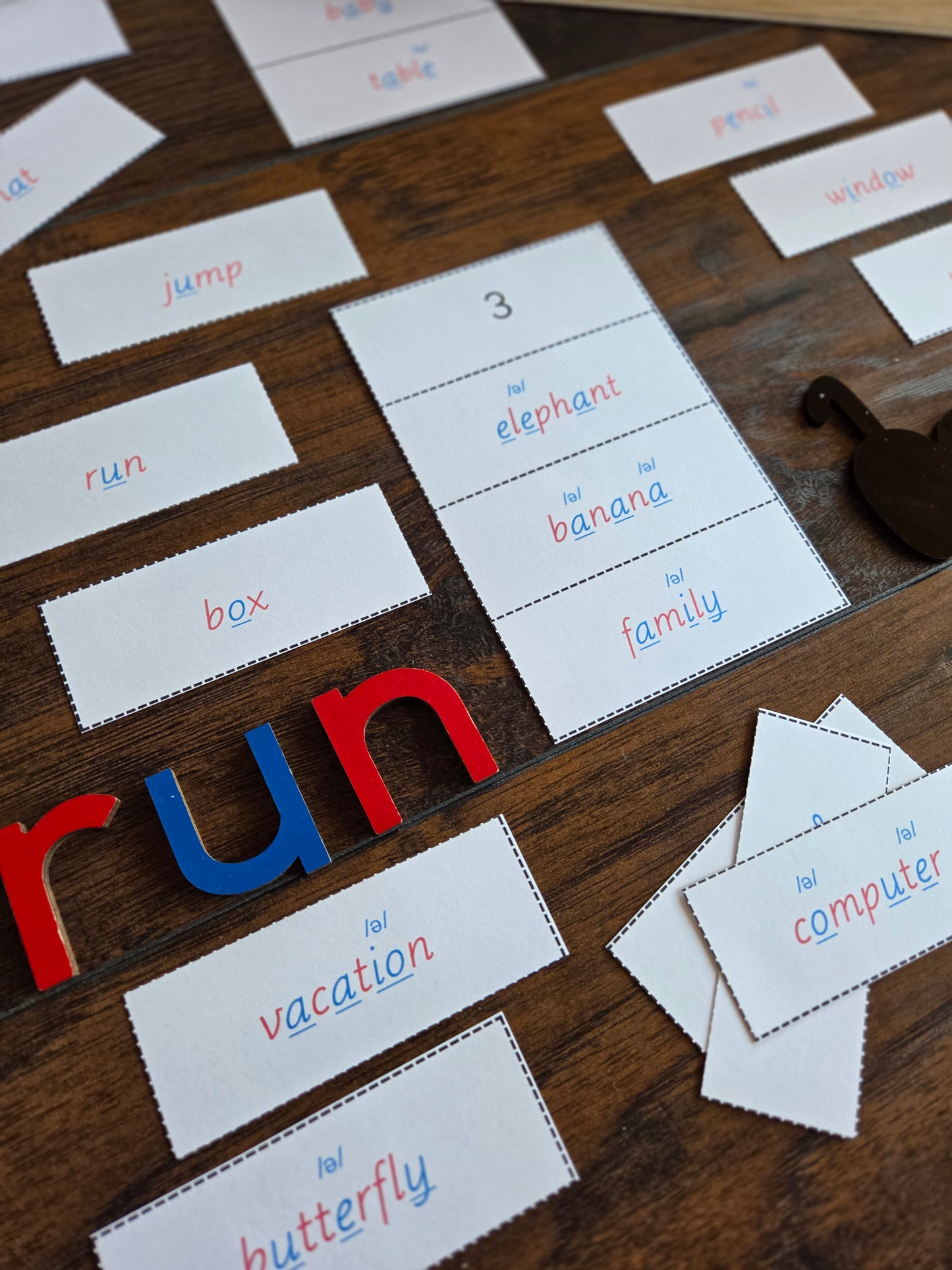
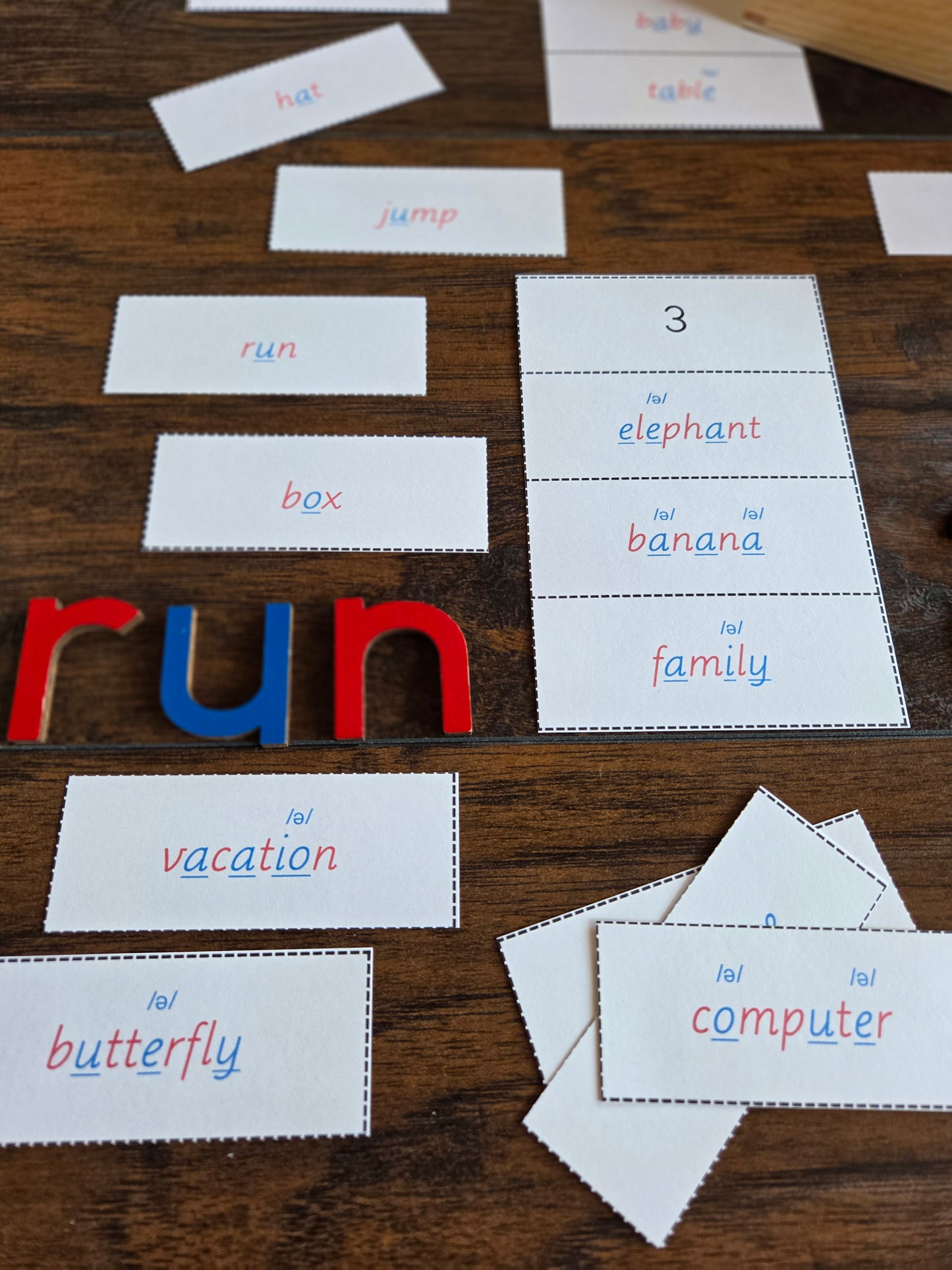
This hands-on schwa syllable sorting activity helps children practise identifying the number of syllables in words while also beginning to notice what happens to vowels in unstressed syllables.
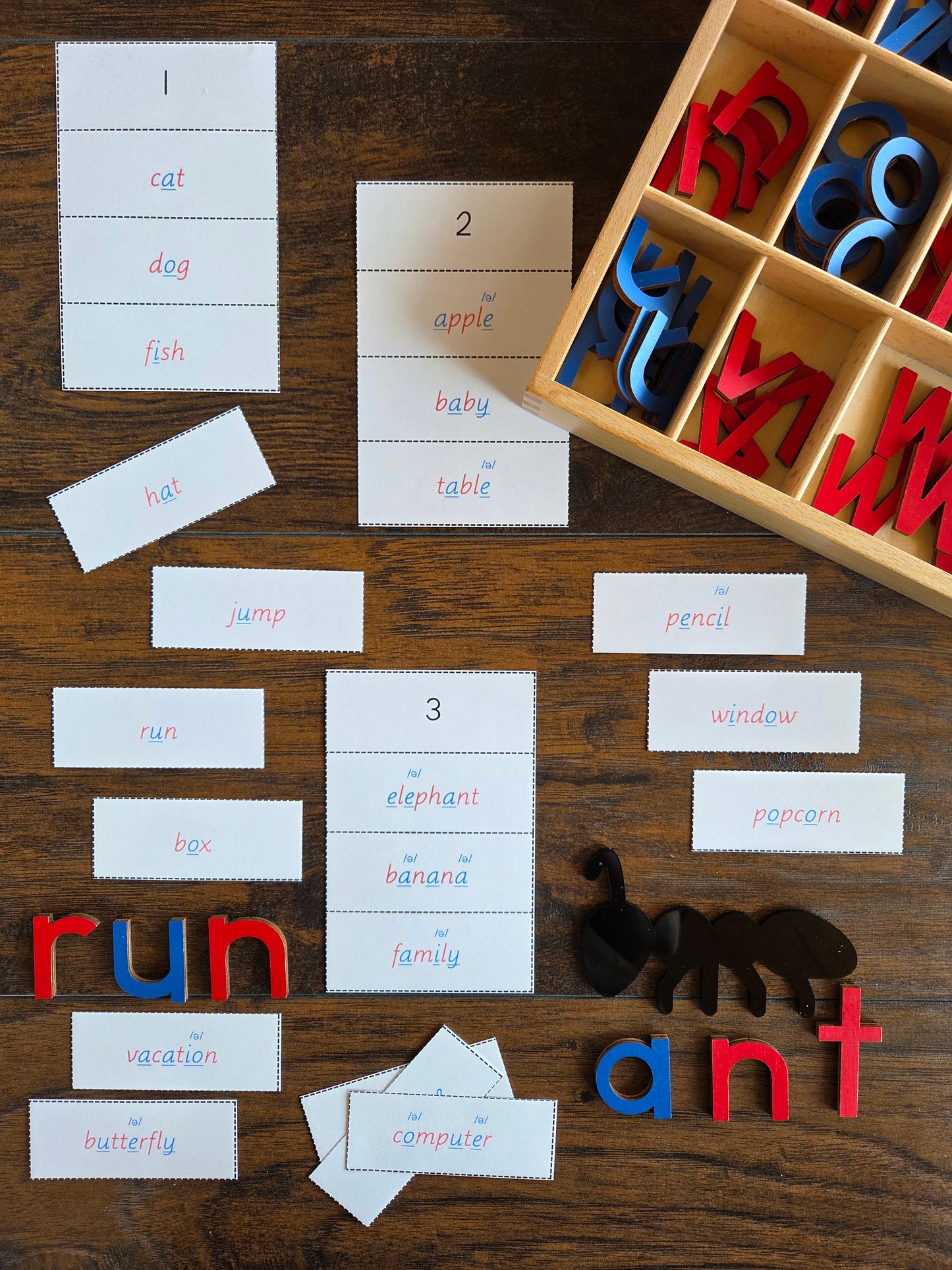
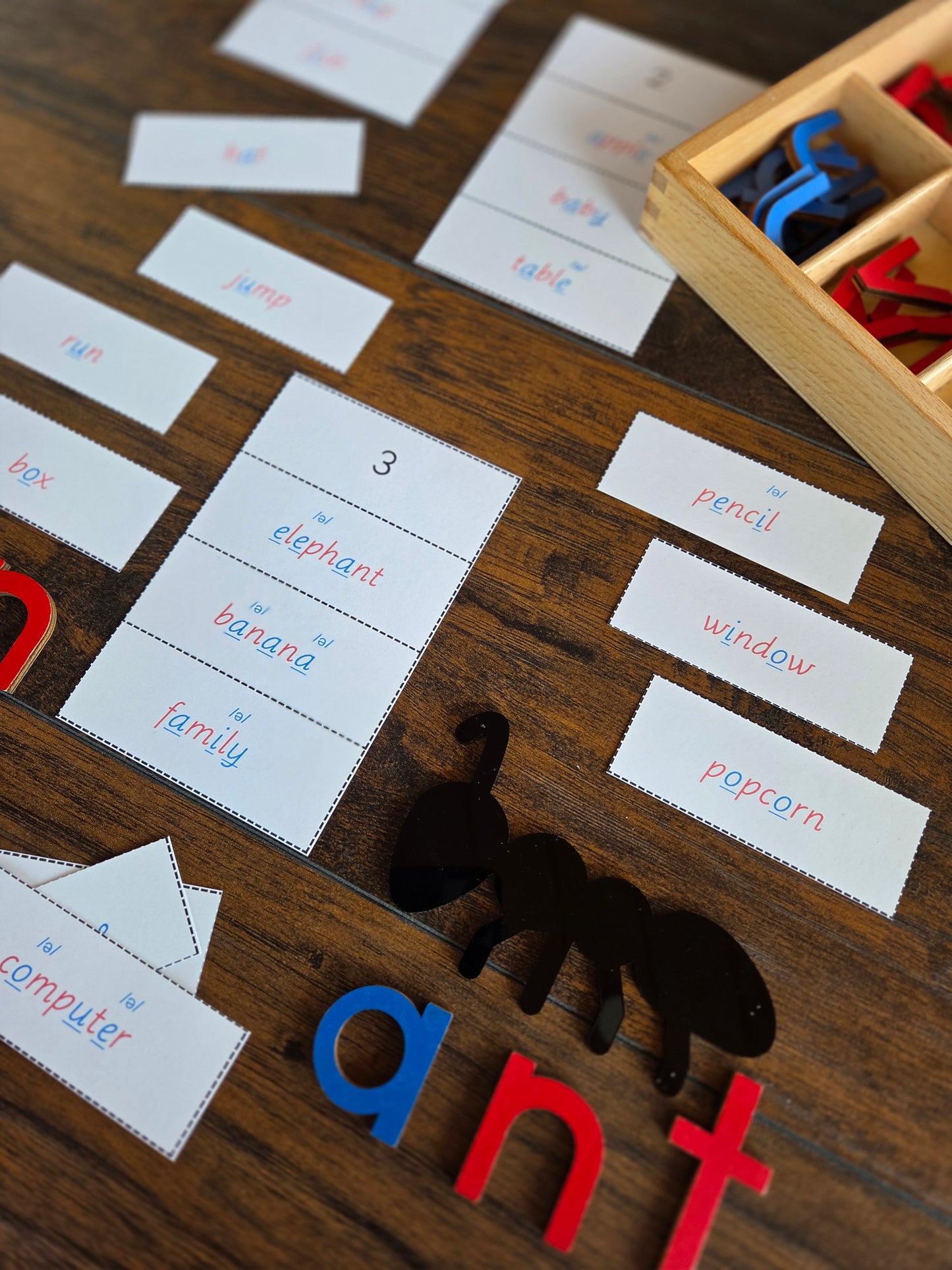
Children sort words into one-syllable, two-syllable and three-syllable groups, giving them focused practice with syllable awareness, vowel sounds and more complex word analysis.
Designed for Montessori classrooms, Science of Reading-aligned literacy instruction, structured literacy, word study, intervention and homeschool learning, this resource provides a simple way to make an often-confusing spelling concept more visible.
🌿 At a Glance
✔ Hands-on schwa syllable sorting activity
✔ Includes 30 words in total
✔ 10 one-syllable words
✔ 10 two-syllable words
✔ 10 three-syllable words
✔ Helps children count and identify syllables
✔ Introduces awareness of schwa and unstressed vowels
✔ Supports decoding, spelling and word analysis
✔ Can easily be made self-correcting
✔ Ideal for Montessori shelf work, structured literacy, intervention and homeschool learning
📚 What's Included?
This printable word study activity includes:
- 10 one-syllable words
- 10 two-syllable words
- 10 three-syllable words
- Syllable sorting headings
- Words containing schwa or unstressed vowel patterns
- A simple format that can be adapted for self-correction
Children read each word, say it aloud, identify how many syllables it contains and sort it under the correct heading.
You can print a second copy to create a control or answer set, or simply write the correct answer on the back of each card.
Why Can Schwa Be So Tricky?
Many children learn early that vowels make particular sounds.
Then they meet words in which a written vowel does not sound quite the way they expect.
This often happens in an unstressed syllable.
The reduced vowel sound that appears in many unstressed syllables is called a schwa and is often represented by the symbol ə.
For example, a child may be able to hear and spell the sounds in a short phonetic word quite easily, but longer words can become much more difficult when an unstressed vowel is less clearly pronounced.
This is one reason why syllable awareness is so useful for both reading and spelling.
From Counting Syllables to Understanding Word Structure
Knowing how many syllables are in a word gives children a useful framework for analysing longer words.
Every spoken syllable contains a vowel sound, so identifying the syllables helps children slow a word down and consider its structure more carefully.
To complete this activity, children need to:
- Read or hear the word
- Say it aloud
- Listen for each spoken syllable
- Identify whether it has one, two or three syllables
- Notice that some vowels may be unstressed or reduced
- Sort the word under the correct heading
This helps build the bridge between phonological awareness, decoding, spelling and morphology.
What Skills Does This Resource Support?
Children will practise:
- Syllable counting
- Syllable awareness
- Reading multisyllabic words
- Listening for vowel sounds
- Recognising unstressed syllables
- Beginning understanding of the schwa sound
- Spelling awareness
- Word analysis
- Independent sorting and classification
Why Teach Schwa Explicitly?
For some children, schwa becomes a major source of spelling confusion.
They may reasonably try to spell words exactly as they hear them, only to discover that the written vowel does not match the reduced vowel sound they hear in speech.
Explicitly introducing the idea of an unstressed vowel can help children understand that:
- Not every vowel is pronounced with its clearest or strongest sound
- Unstressed syllables can contain reduced vowel sounds
- Longer words often need to be analysed one syllable at a time
- Spelling may require knowledge beyond simply writing the first sound heard
This does not mean children need to memorise complicated terminology before they are ready.
It simply gives them a useful explanation for something they may already have noticed: sometimes a written vowel does not sound the way we expect.
A Note About Accent and Pronunciation
Schwa pronunciation can vary according to accent and dialect.
A vowel that is reduced to a schwa in one accent may be pronounced more distinctly in another.
This is an important part of teaching spoken language respectfully and accurately. Encourage children to listen closely to how words are pronounced in their own speech community rather than treating one accent as the only correct model.
🌿 Perfect For
- Montessori language shelves
- Science of Reading-aligned word study
- Structured literacy instruction
- Syllable lessons
- Multisyllabic word practice
- Spelling intervention
- Literacy centres
- Small-group instruction
- Independent shelf work
- Homeschool literacy lessons
Help Children Make Sense of the Vowels That Do Not Sound Quite Right
Schwa can feel confusing because children may hear a weak or reduced vowel sound while seeing a completely different vowel on the page.
This activity gives them a manageable first step: slow the word down, identify the syllables and begin noticing where vowels behave differently in unstressed parts of words.
The sorting format keeps the activity concrete and purposeful while helping children build stronger awareness of how longer words are structured.
🔗 Related Resources
Continue building children's understanding of syllables, complex words and English spelling patterns with these related resources:
🌿 Silent E Clip & Flip Phonics Cards
Help children apply their knowledge of a_e, i_e, o_e and u_e patterns while reading meaningful cloze phrases.
Explore the Silent E Clip & Flip Cards →
🌿 DGE vs GE Phonics Clip Cards
Give children focused practice with another common spelling generalisation by deciding whether words should end in dge or ge.
Explore the DGE vs GE Clip Cards →
🌿 Modern Montessori Reading Collection
Explore hands-on resources for phonological awareness, phonics, syllables, spelling patterns, decoding and comprehension.
Explore the Modern Montessori Reading Collection →
🌿 Modern Montessori Science of Reading Bundle
Looking for a broader literacy sequence? Explore a large collection of Montessori-aligned materials covering CVC words, digraphs, silent e, vowel patterns, syllables, spelling rules, decoding and reading comprehension.
Created by Lisa, a Montessori-trained teacher, NZ registered teacher, school principal and former homeschooler. My resources are designed with real learners in mind—including neurodivergent children—and focus on practical, affordable, low-prep materials that support independence.
Share
-
Items are secured / Terms of Use
Our items are secured. They are not able to be altered. We secure our items because they are our intellectual property and because we use art from artists who require that we secure our files.
You may not:
-resell our items or use them for commercial gain
-claim these items as your own
-modify this resource
-share them with others by any means e.g. electronic or hard copy
-
All Items are instant downloads
You will not get a printed product in the mail.
-
All prices are in USD
Due to the international nature of our customers our prices are all in USD. If you wish to work out the conversion before you buy we recommend www.xe.com