montessorikiwi
Contractions Folding Activity | Montessori Grammar & Science of Reading
Contractions Folding Activity | Montessori Grammar & Science of Reading
Couldn't load pickup availability
Do your students understand contractions when they see them—but still struggle to remember which letters disappear and where the apostrophe goes?
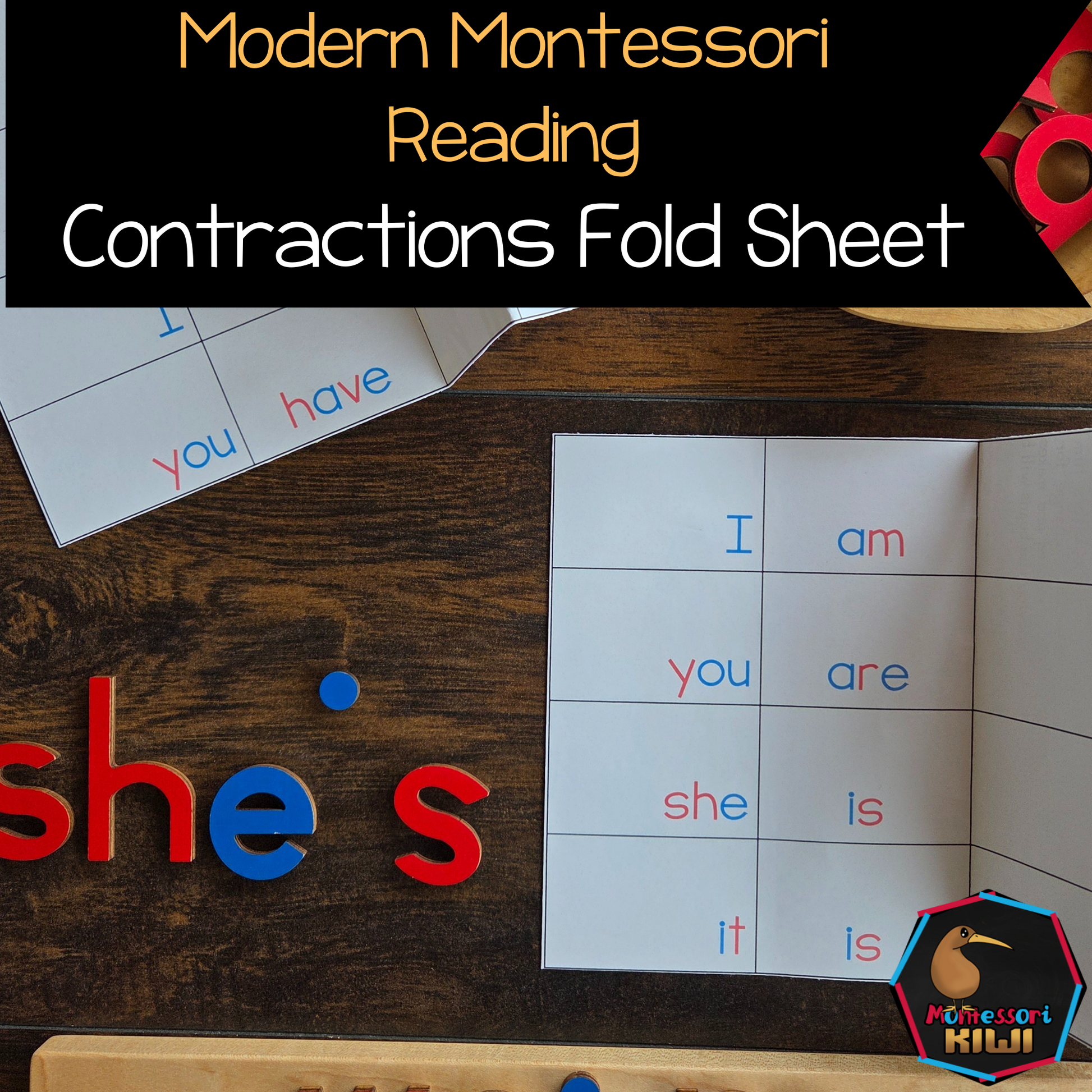
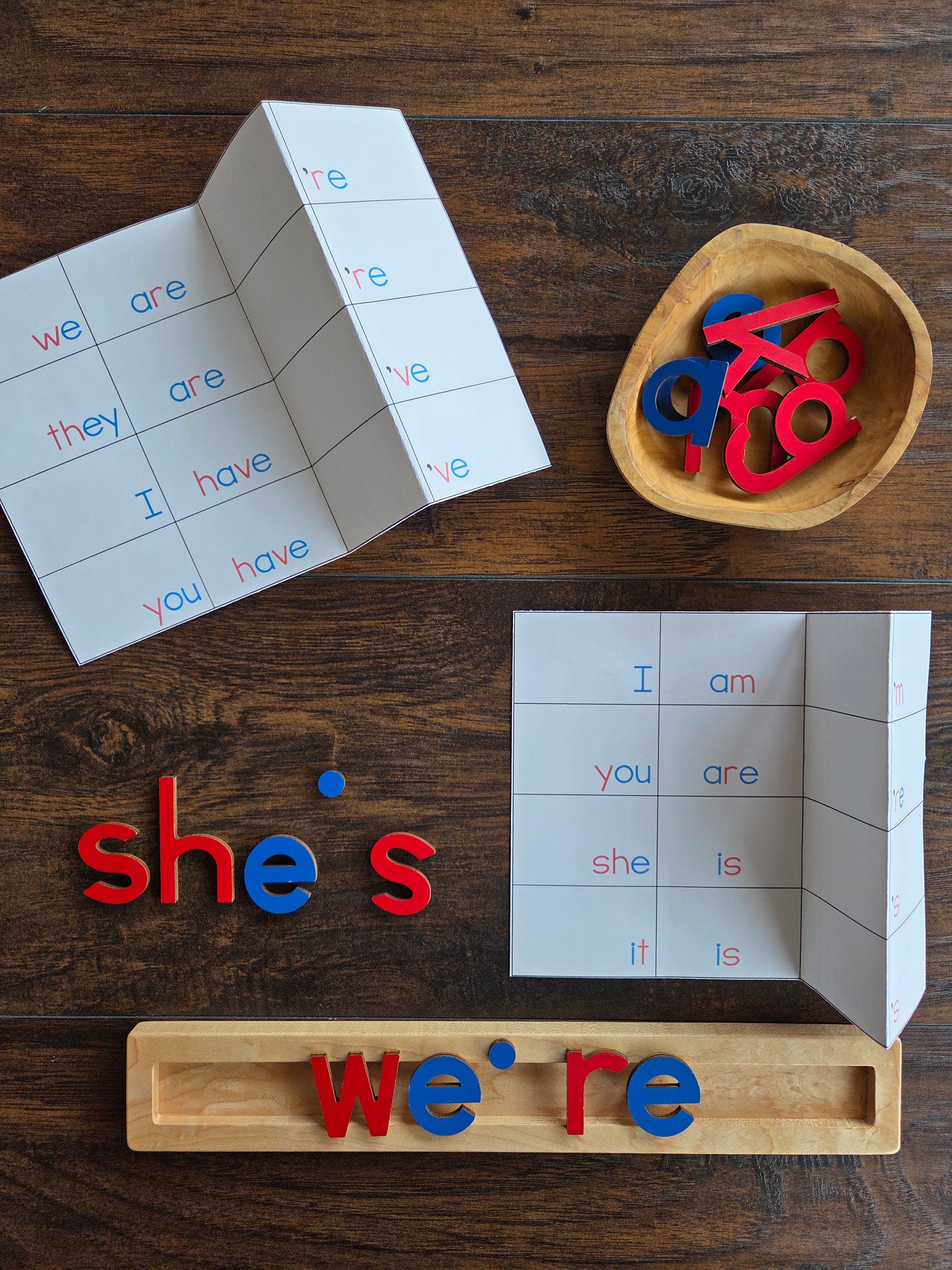
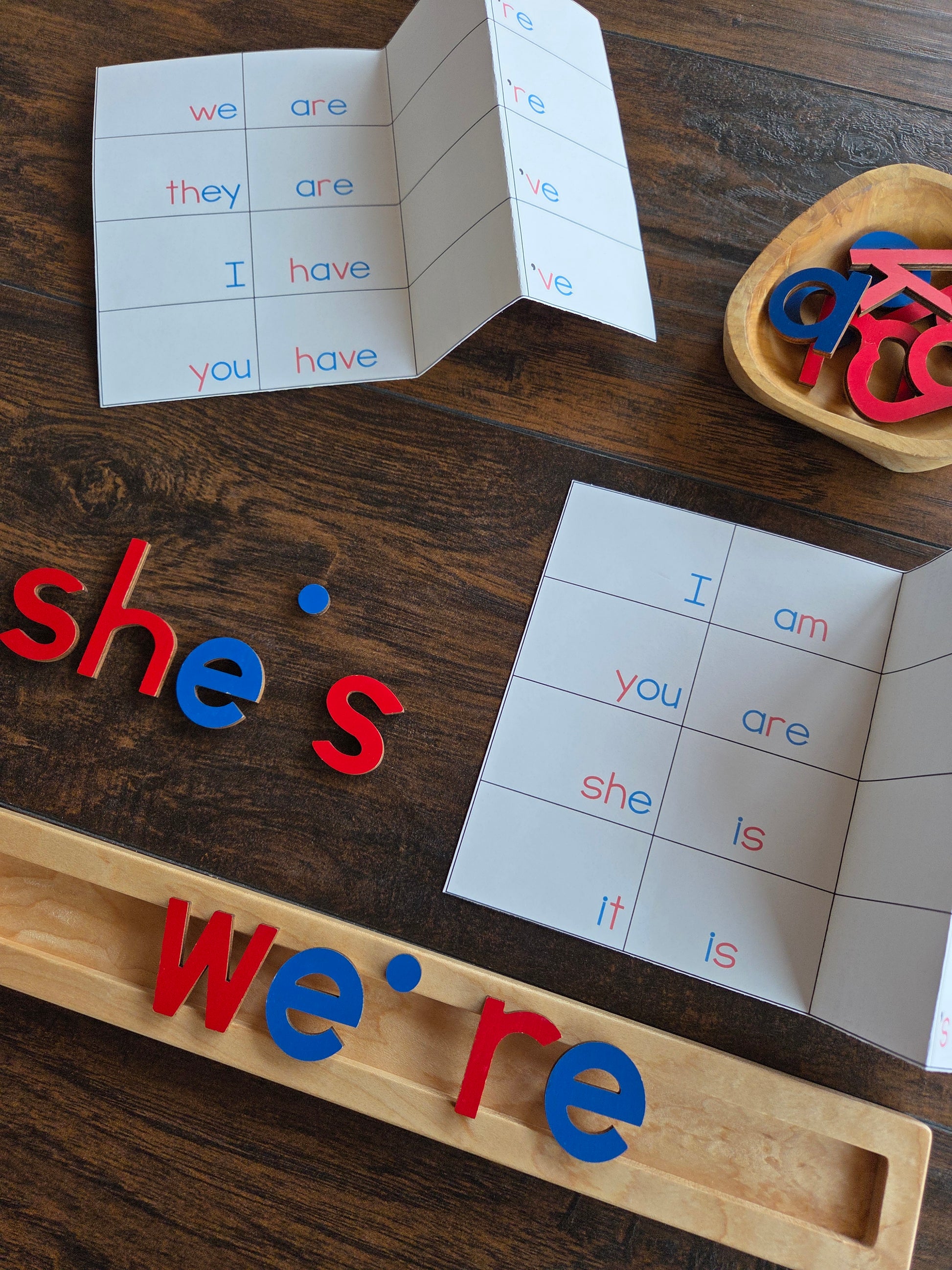
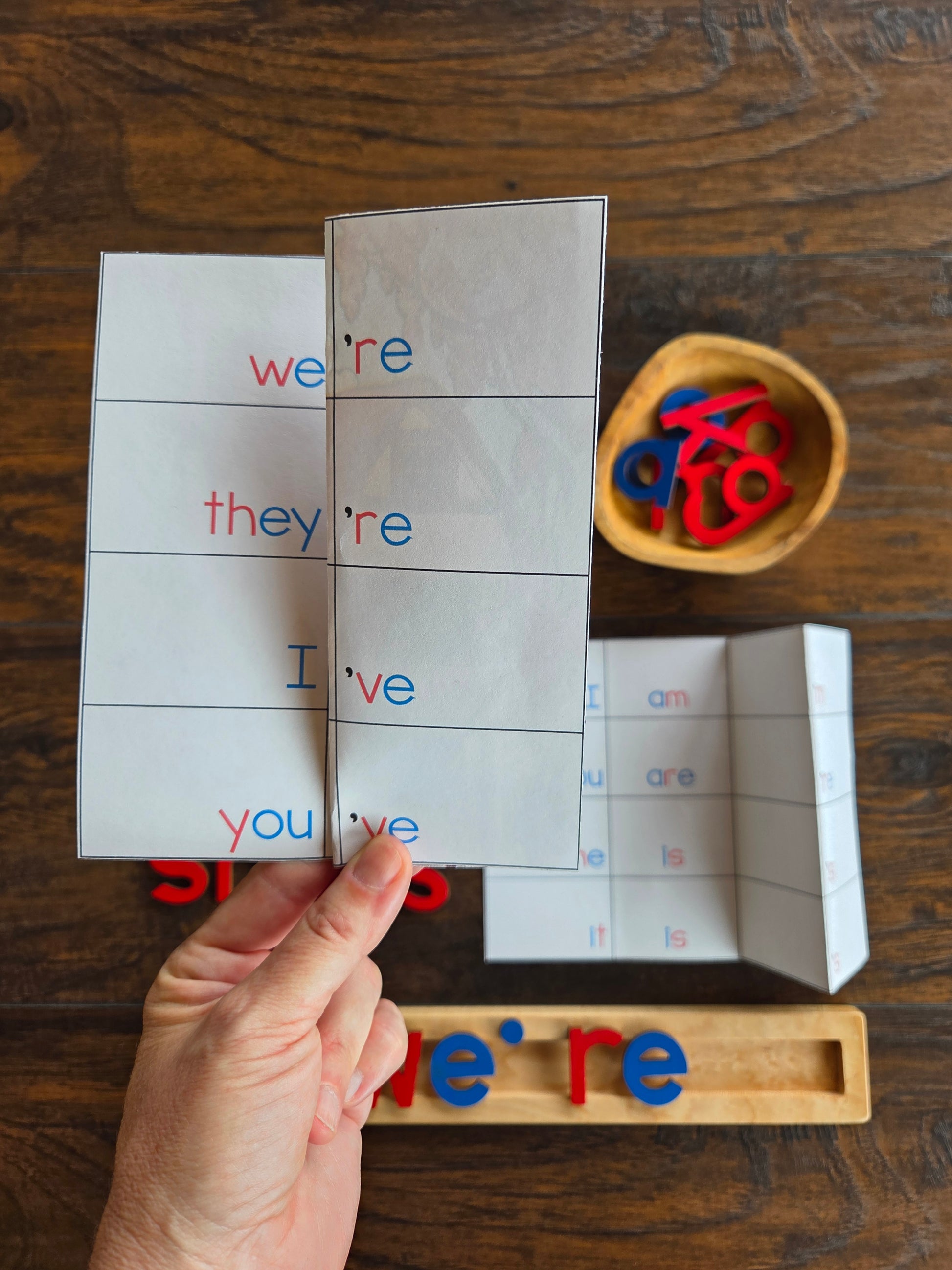
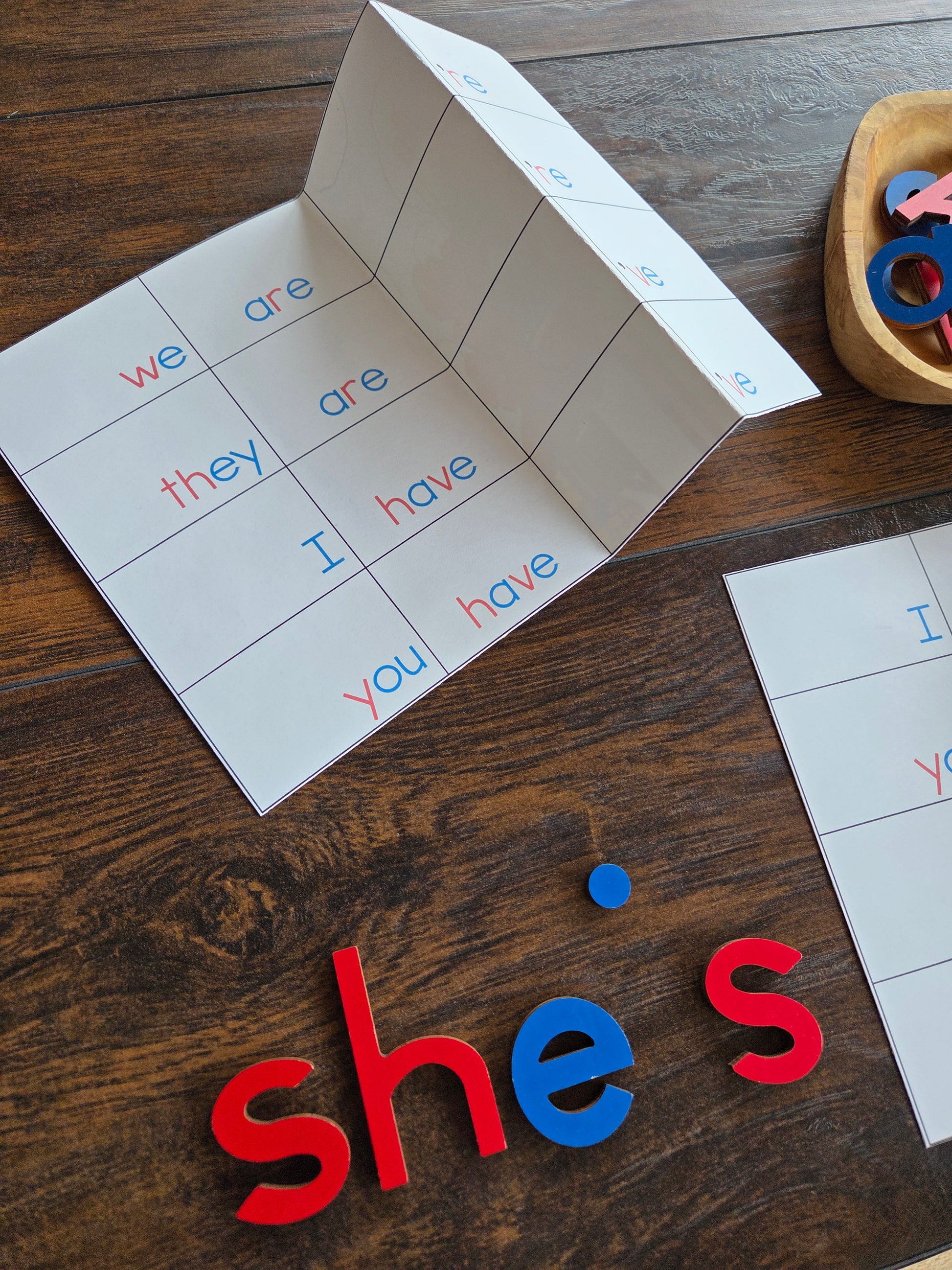
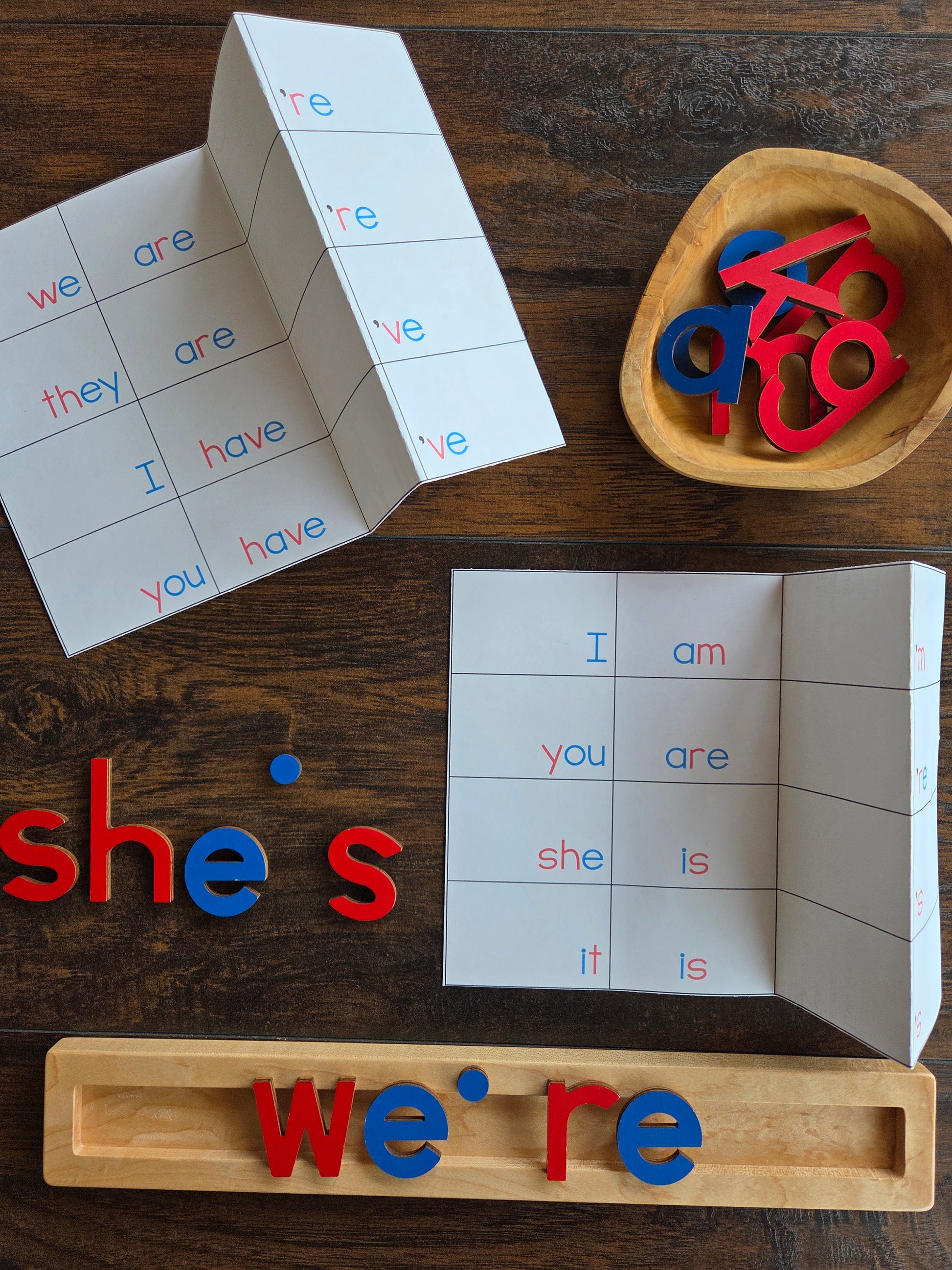
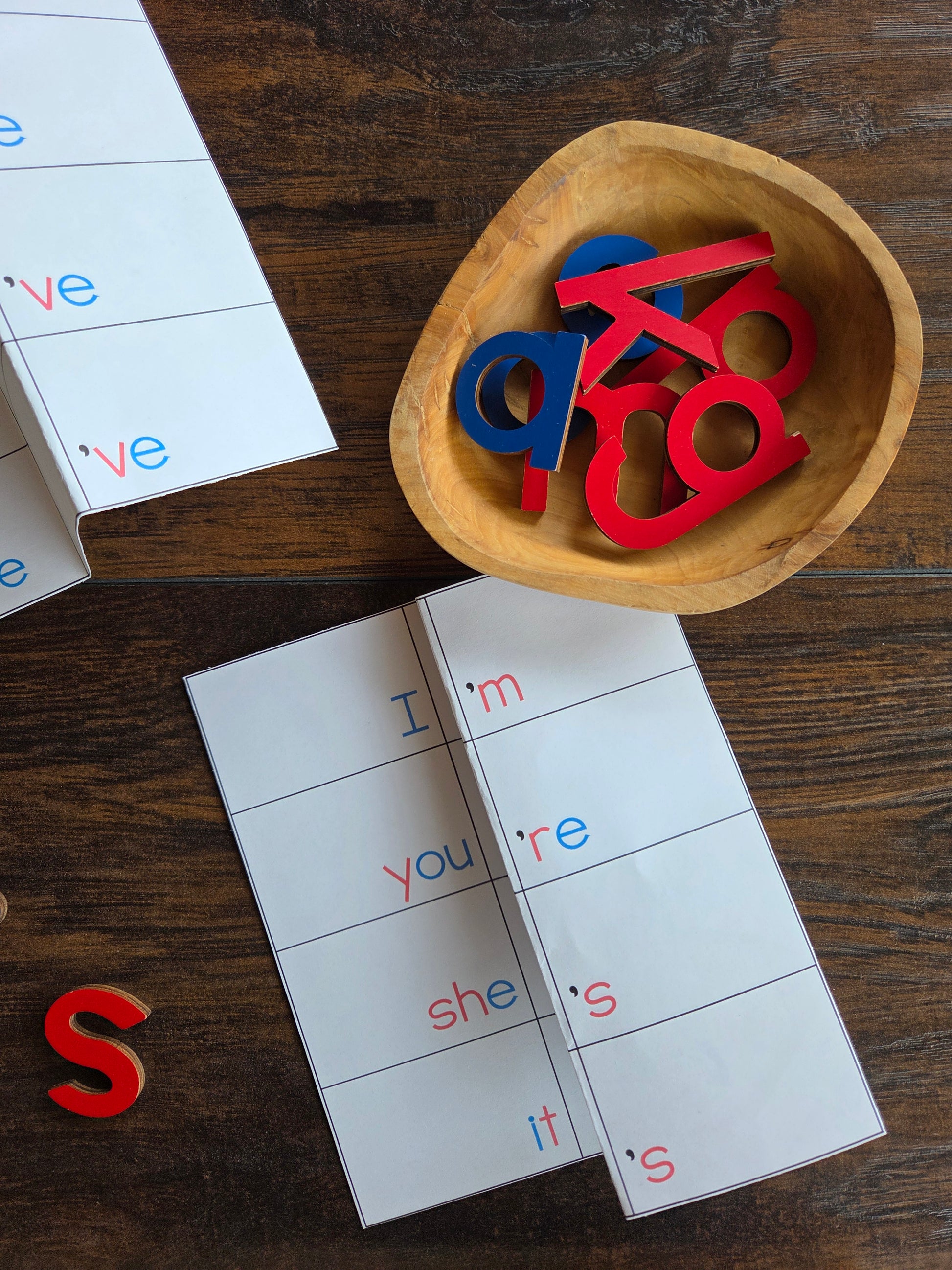
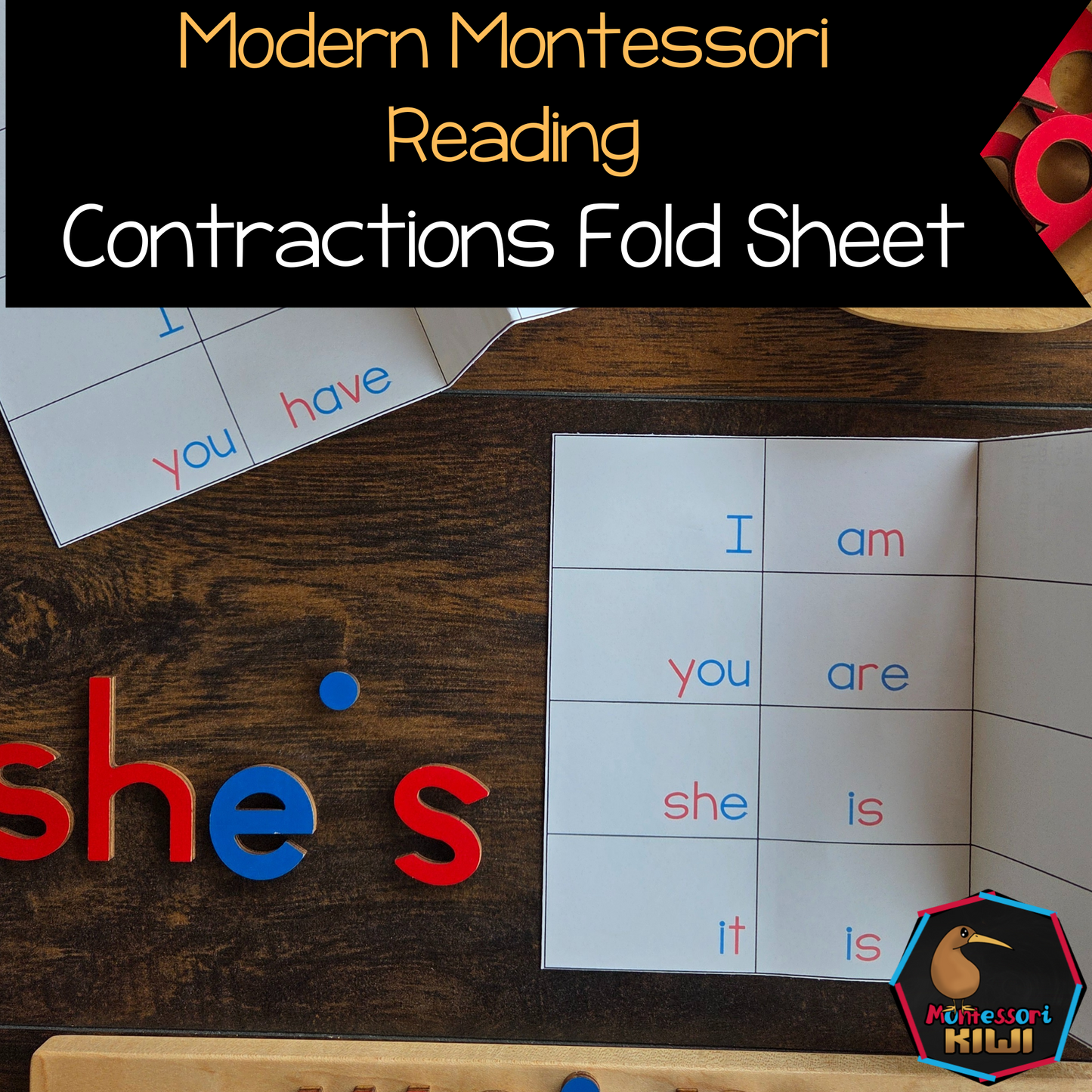
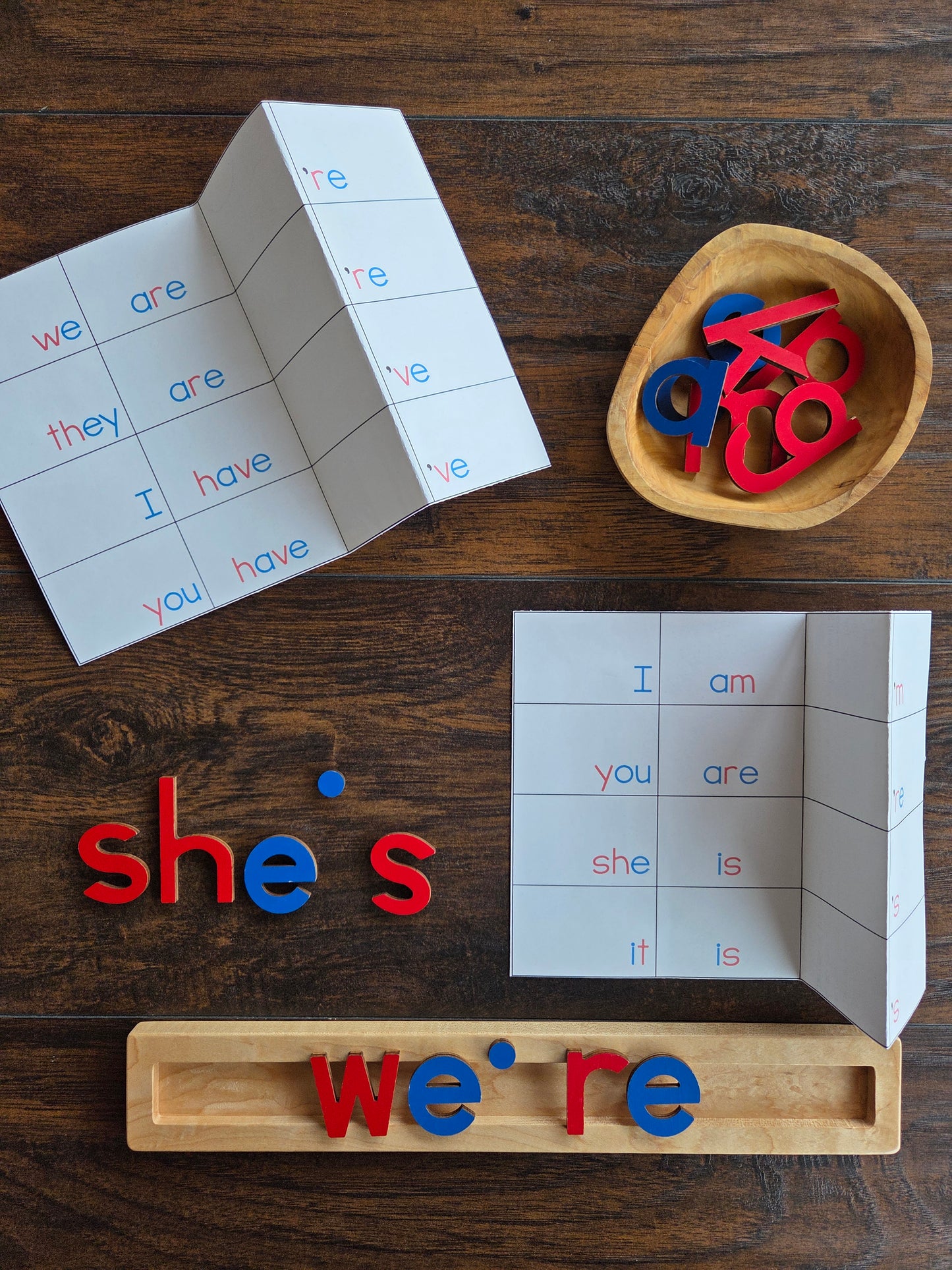
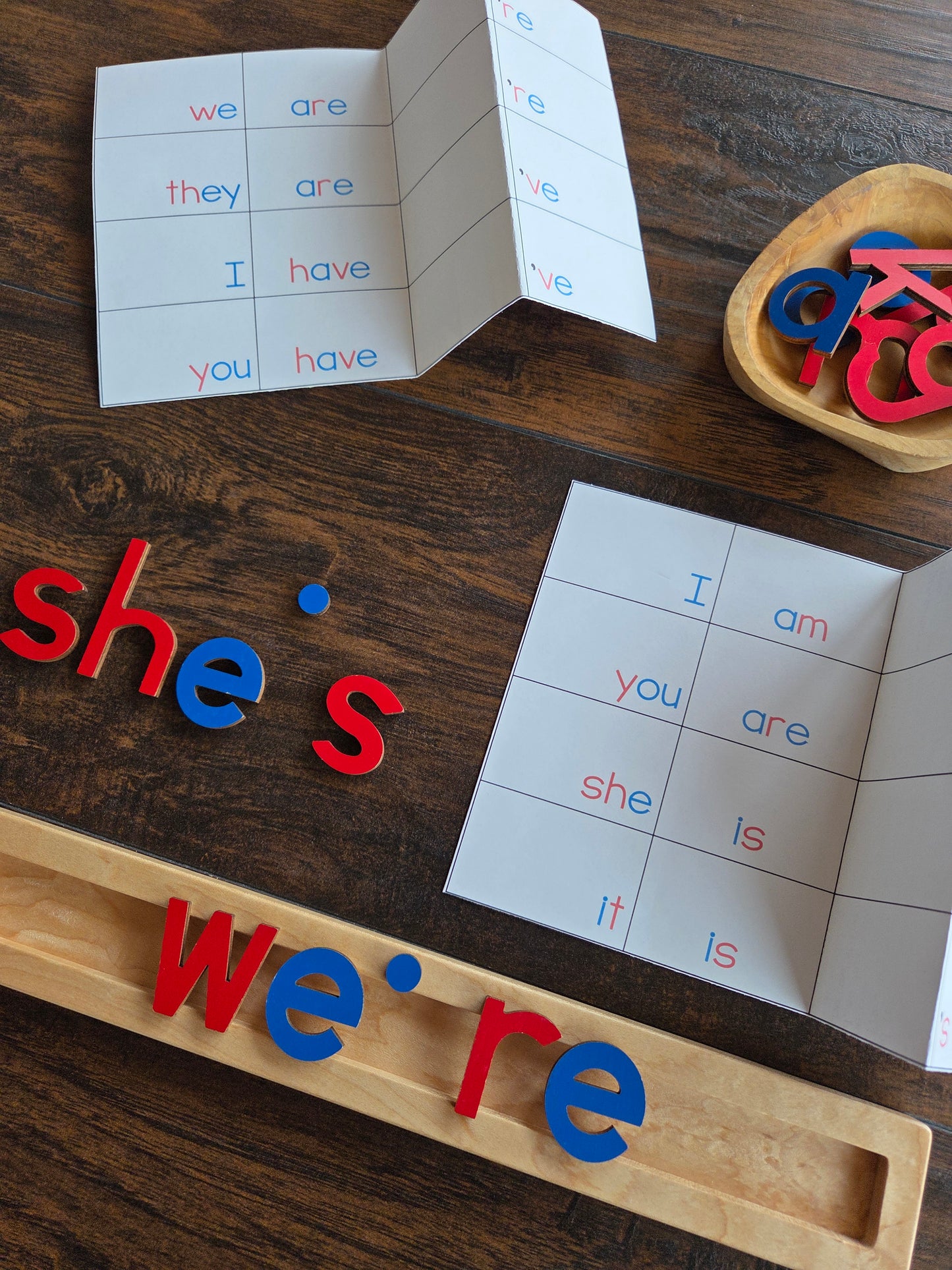
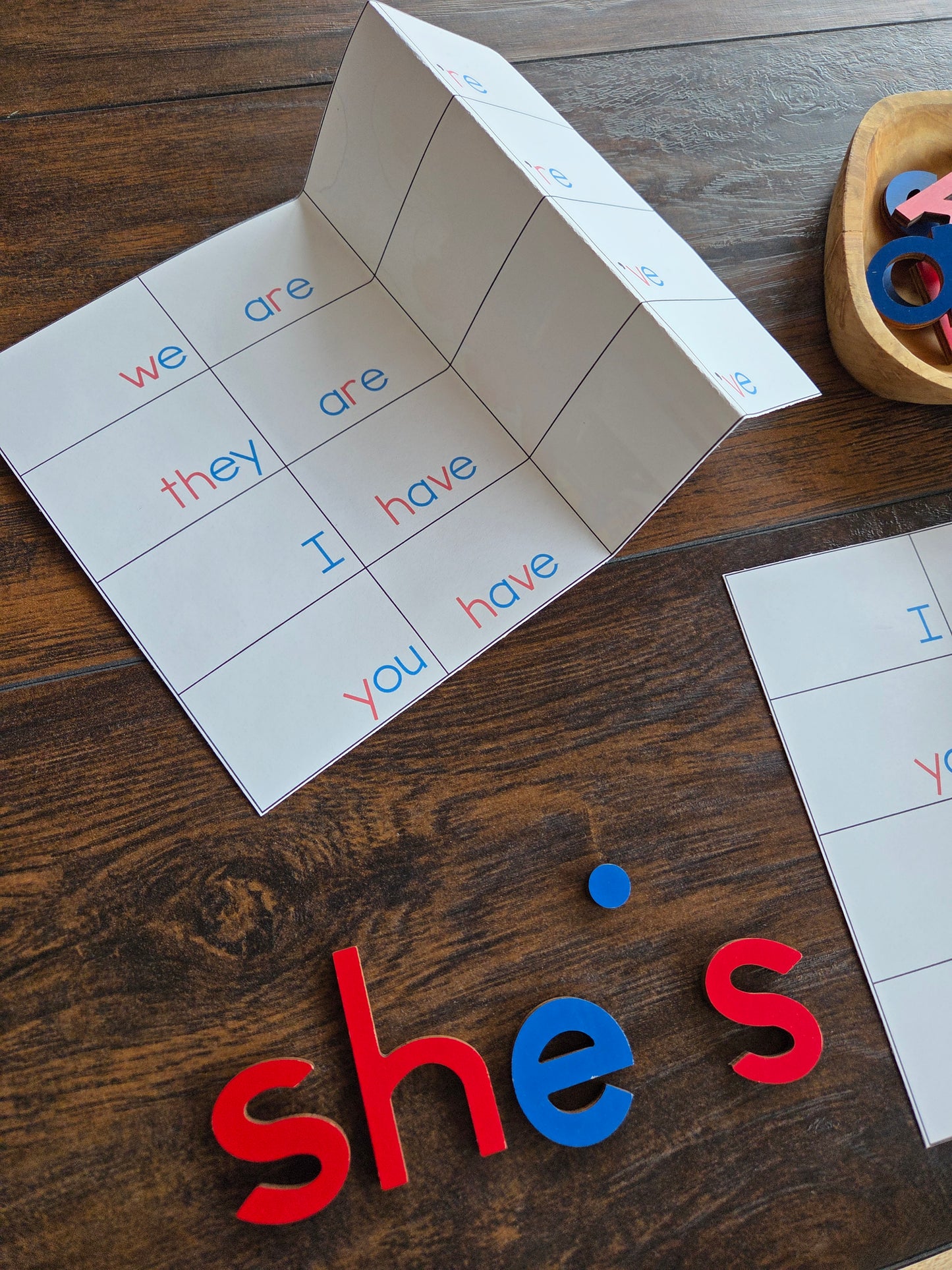
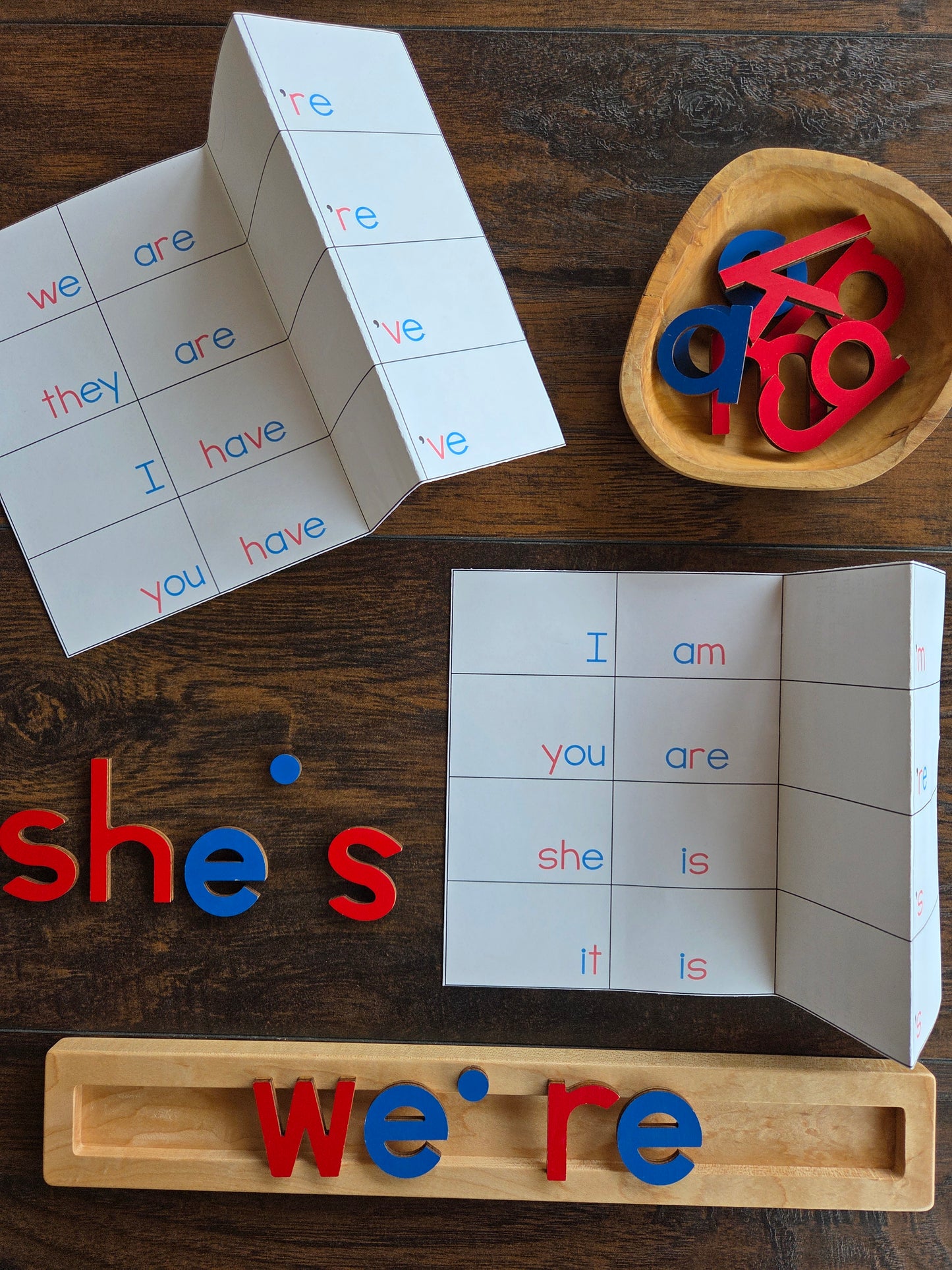
Contractions can easily become another grammar rule children are expected to memorise. This hands-on Contractions Folding Activity makes the process much more concrete by allowing children to physically combine two words and see how they change to form a contraction.
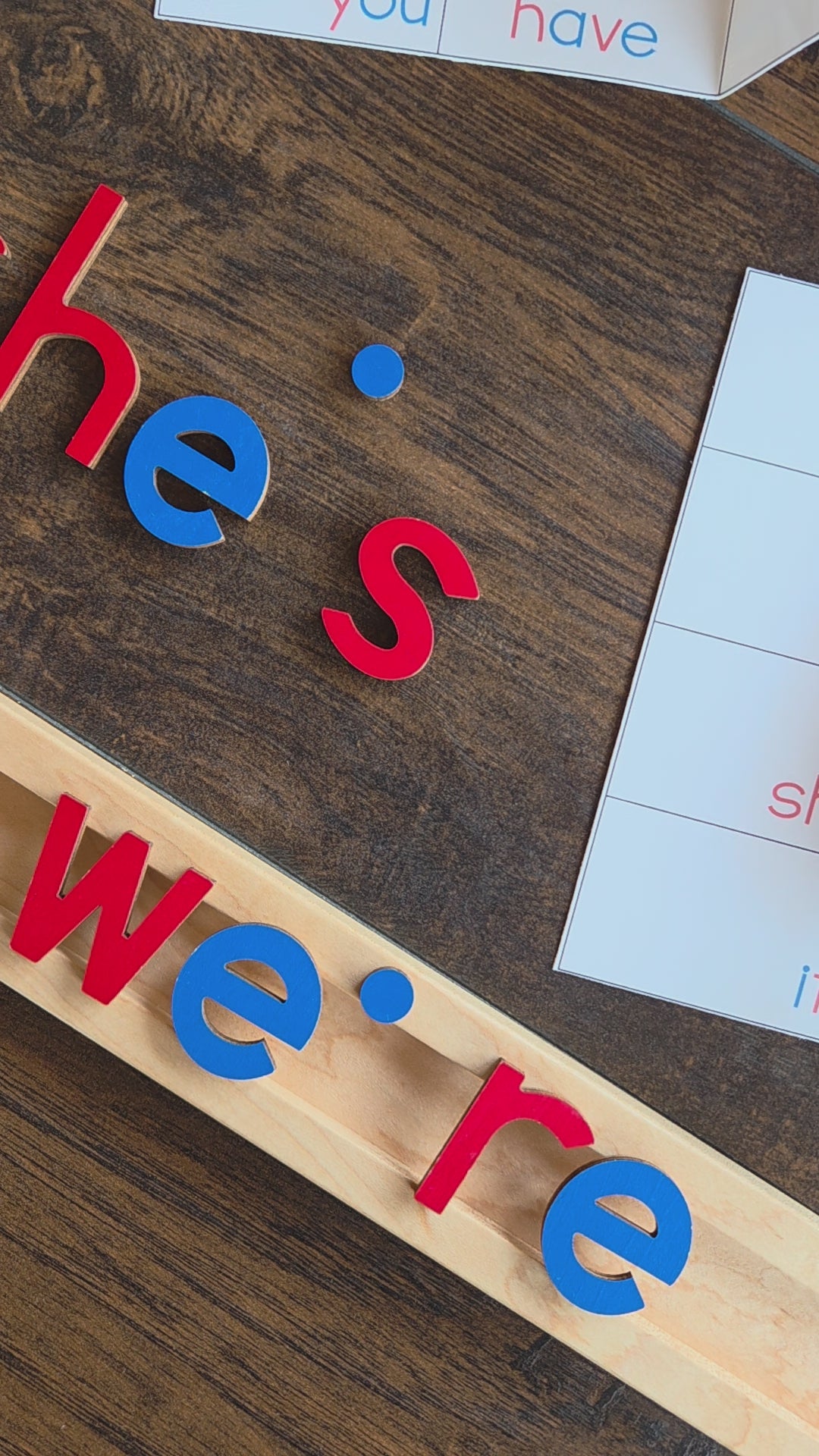
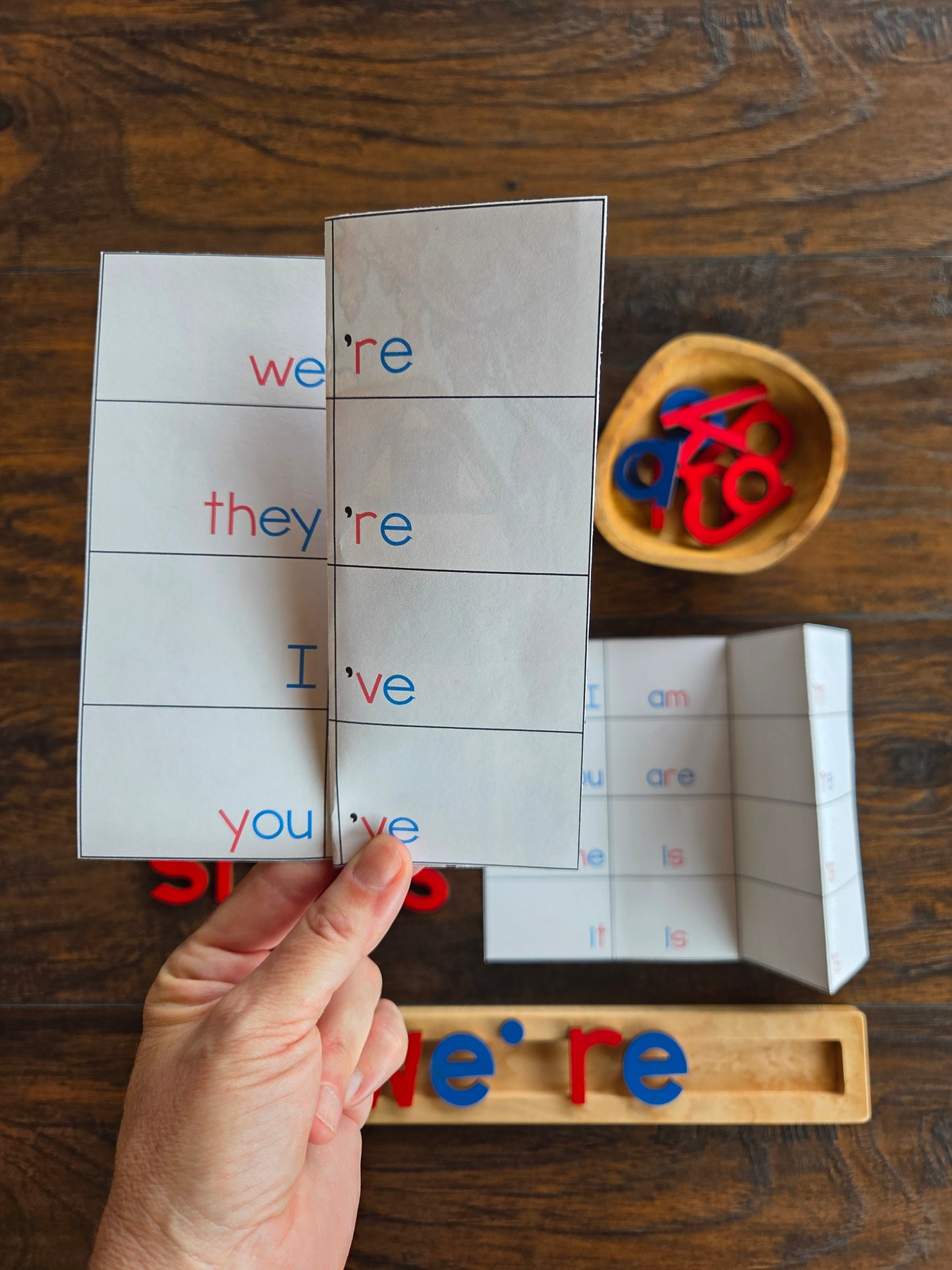
Instead of simply being told that do not becomes don't or I am becomes I'm, children actively fold the words together, notice which letters disappear and see where the apostrophe belongs.
Designed for Montessori classrooms, Science of Reading-aligned literacy instruction, grammar lessons, intervention and homeschool learning, this resource gives children a tactile and visual way to understand how contractions actually work.
🌿 At a Glance
✔ Hands-on contractions folding activities
✔ Includes 20 common English contractions
✔ Helps children see which letters disappear
✔ Reinforces correct apostrophe placement
✔ Montessori colour coding
✔ Self-correcting materials support independent learning
✔ Includes teaching notes
✔ Ideal for Montessori shelves, literacy centres, grammar lessons and homeschool learning
📚 What's Included?
This printable contractions resource includes:
- Contractions folding activities
- 20 common English contractions
- Montessori colour coding
- Self-correcting materials
- Teaching notes
- Print-and-go literacy materials
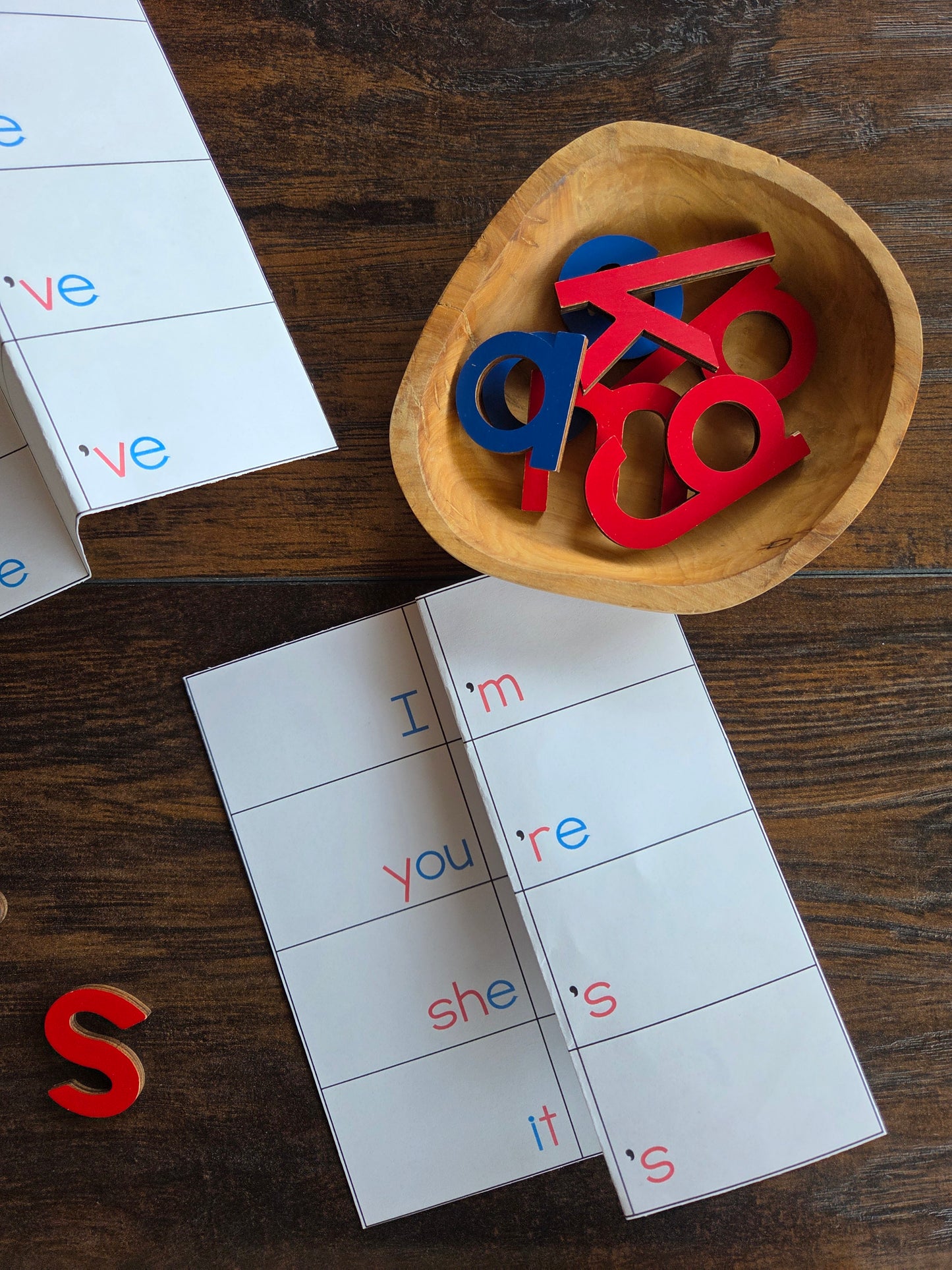
The folding format allows children to physically bring two words together and observe how they change to form a contraction.
As the words are folded, children can see:
- Which letters are removed
- Where the apostrophe is placed
- How two separate words become one shorter word
Make an Abstract Grammar Rule Concrete
For some children, being told that an apostrophe replaces missing letters is not enough.
They may remember the contraction itself but still be unsure:
- Which letters disappear?
- Why is the apostrophe there?
- Where exactly should it go?
This folding activity makes the process visible and physical.
Children are not just memorising that cannot becomes can't. They are actively seeing how the original words change and how the apostrophe marks the missing letters.
Why Use Hands-On Materials for Teaching Contractions?
Contractions involve several skills at once. Children need to:
- Recognise two separate words
- Understand that they can be combined
- Identify the letters that are removed
- Use an apostrophe correctly
- Read and spell the new contracted form
A hands-on activity slows this process down and makes each part easier to notice.
This can be especially helpful for children who benefit from visual, tactile or highly structured learning.
What Skills Does This Resource Support?
Children will practise:
- Understanding contractions
- Correct apostrophe placement
- Recognising missing letters
- Decoding contractions while reading
- Spelling common contractions
- Grammar and sentence-level understanding
- Reading fluency
- Independent self-correction
From Two Words to One
The most powerful part of this resource is its simplicity.
Children begin with two complete words. They physically fold them together. They see letters disappear. They notice the apostrophe. Then they read the new contraction.
That sequence helps make the concept logical rather than arbitrary.
It also provides a useful bridge between phonics, spelling, grammar and fluent reading.
🌿 Perfect For
- Montessori language shelves
- Science of Reading-aligned literacy practice
- Structured literacy instruction
- Grammar lessons
- Contractions revision
- Literacy centres
- Independent shelf work
- Small-group instruction
- Reading intervention
- Homeschool language arts
Support Children to Understand the Pattern, Not Just Memorise the Word
Contractions are much easier to remember when children understand what has changed and why.
These folding activities give children a concrete way to explore the relationship between the original words and the contraction, helping them build stronger understanding of apostrophes, spelling and written language.
The self-correcting format also makes the resource well suited to independent Montessori shelf work and literacy centres where children can practise at their own pace.
🔗 Related Resources
Continue building a hands-on Montessori literacy sequence with these related resources:
🌿 Modern Montessori Reading Collection
Explore printable resources for phonics, spelling patterns, decoding, word study, grammar and reading comprehension.
Explore the Modern Montessori Reading Collection →
🌿 Modern Montessori Science of Reading Bundle
Looking for a more complete literacy sequence? This extensive bundle includes resources for CVC words, digraphs, silent e, vowel teams, suffixes, spelling rules, decoding and comprehension.
Explore the Complete Science of Reading Bundle →
🌿 Montessori Grammar and Language Resources
Build children's understanding of how words and sentences work through hands-on grammar, sentence building and language activities.
Created by Lisa, a Montessori-trained teacher, NZ registered teacher, school principal and former homeschooler. My resources are designed with real learners in mind—including neurodivergent children—and focus on practical, affordable, low-prep materials that support independence.
Share
-
Items are secured / Terms of Use
Our items are secured. They are not able to be altered. We secure our items because they are our intellectual property and because we use art from artists who require that we secure our files.
You may not:
-resell our items or use them for commercial gain
-claim these items as your own
-modify this resource
-share them with others by any means e.g. electronic or hard copy
-
All Items are instant downloads
You will not get a printed product in the mail.
-
All prices are in USD
Due to the international nature of our customers our prices are all in USD. If you wish to work out the conversion before you buy we recommend www.xe.com