montessorikiwi
Te Reo Māori Verbs Activities | Kupu Mahi Cards, Sentences & Worksheets
Te Reo Māori Verbs Activities | Kupu Mahi Cards, Sentences & Worksheets
Couldn't load pickup availability

You want children to do more than memorise isolated Māori words—you want them to recognise, say and use te reo Māori in meaningful sentences.
Verbs are an ideal place to begin because children can see and perform them. They can dance, walk, listen, talk, jump and play while connecting each physical action with its te reo Māori word.
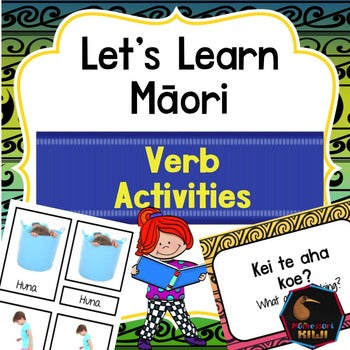
This Te Reo Māori Kupu Mahi Activity Pack introduces 20 useful action words through clear photographs, matching cards, oral-language activities, sentence frames, games and printable worksheets.
Children begin by connecting each word with a visible action. They then progress towards answering questions and constructing simple sentences such as Kei te aha ia? and Kei te hikoi ahau.
At a Glance
- Learning focus: Te reo Māori verbs and introductory sentence construction
- Vocabulary: 20 everyday kupu mahi
- Best for: Primary classrooms, Montessori environments and homeschool
- Suggested levels: Approximately Years 1–5
- Includes: Picture cards, word cards, sentence prompts, games and worksheets
- Teacher support: Presentation notes and follow-up ideas
- Length: 35 printable pages
- Format: Instant digital PDF download
Move From Naming Words to Speaking in Sentences
A vocabulary list can introduce new words, but children need repeated opportunities to hear, see, perform and use those words before they become part of their active language.
This resource gives students several ways to encounter the same vocabulary. They can:
- connect photographs with the correct kupu mahi;
- match separate picture and word cards;
- act out each verb;
- identify the action performed by another student;
- answer simple oral questions;
- complete introductory sentence frames;
- draw representations of the words; and
- apply their knowledge through games and worksheets.
This progression helps children move beyond recognition towards confident oral and written use.
Bring More Te Reo Māori Into Your Classroom—Even While You Are Learning
You do not need to create your own vocabulary cards, photographs, sentence prompts and follow-up work. The structured activities give you a clear starting point, making it easier to teach with confidence while continuing to develop your own reo alongside your students.
Twenty Everyday Action Words
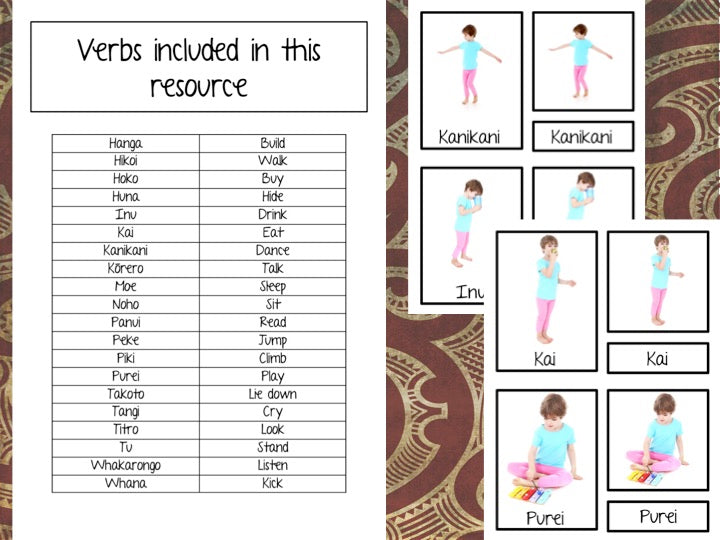
The pack introduces useful actions that children can easily see, demonstrate and discuss, including:
- kanikani – dance
- inu – drink
- kai – eat
- kōrero – talk
- whakarongo – listen
- noho – sit
- takoto – lie down
- peke – jump
- hikoi – walk
- piki – climb
- hanga – build
- purei – play
- hoko – buy
- huna – hide
- whana – kick
The full resource contains 20 illustrated kupu mahi, allowing children to build a useful bank of high-interest action vocabulary.
What Is Included?
This 35-page digital resource includes:
- Teacher presentation notes for introducing kupu mahi
- A complete verb and English-meaning reference list
- A visual kupu mahi reference poster
- Large answer or category cards
- Photographic picture-and-word matching cards
- Separate word labels for matching and reading practice
- Simple sentence teaching notes
- Sentence-frame cards for oral practice
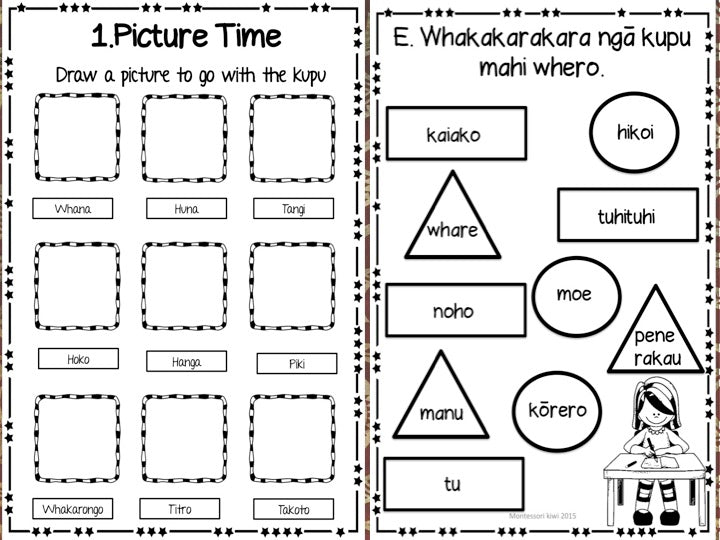
- Picture identification worksheets
- Draw-the-verb worksheets
- Verb-recognition activities
- Three roll, say and write game boards
- A vocabulary investigation page for drawing and sentence writing
The range of activities allows you to introduce the vocabulary to the whole class and then place selected materials on a language shelf or in a literacy centre for independent practice.
Introduce the Vocabulary Through Movement
Because these words describe actions, children do not need to learn them through translation alone.
You might begin by laying out the large word cards, saying each kupu aloud and inviting students to match the photographs and labels underneath. Once the activity has been demonstrated, it can become independent shelf work.
Follow-up ideas include:
- playing Simon Says with the verbs;
- asking children to act out a selected action;
- having classmates identify the kupu mahi;
- placing a verb card beside a matching classroom photograph;
- creating a class action-word wall;
- making individual kupu mahi dictionaries; and
- using the words during daily classroom instructions.
Introduce Simple Te Reo Māori Sentences
Once children recognise the individual verbs, use the included prompts to move into short oral sentences.
Sentence Patterns Included
- Kei te aha ia? – What is he or she doing?
- Kei te aha koe? – What are you doing?
- Kei te ___ ia. – He or she is ___.
- Kei te ___ ahau. – I am ___.
Show a photograph and ask students to describe the action, or invite one child to perform a verb while the group constructs a sentence about what they are doing.
This gives students a practical bridge between knowing a word and using it communicatively.
Designed for Repeated, Multi-Sensory Practice
The resource supports several pathways into learning:
- Visual: Clear photographs show each action.
- Auditory: Children hear and repeat the kupu.
- Physical: Students perform and identify actions.
- Social: Partner and group games encourage speaking.
- Written: Worksheets support recall and sentence construction.
- Independent: Matching cards can be placed on a Montessori shelf or in a literacy centre.
This makes the pack especially useful in mixed-ability classrooms where children may need different amounts of repetition and support.
Ways to Use This Resource
Use the pack for:
- whole-class te reo Māori lessons;
- small-group oral-language work;
- Montessori three-period lessons;
- independent language-shelf activities;
- literacy centres and rotations;
- partner matching games;
- movement breaks with a language focus;
- grammar lessons about verbs;
- Māori Language Week;
- morning meetings and daily routines;
- homeschool language learning; and
- vocabulary revision throughout the year.
Supports Language and Grammar Learning
Alongside te reo Māori vocabulary, children practise:
- understanding that verbs are action words;
- matching visual and written information;
- oral sentence construction;
- question-and-answer language;
- reading familiar words;
- recalling vocabulary independently;
- using words in context; and
- recognising a part of speech across two languages.
Who Is This Resource For?
This pack is suitable for:
- mainstream New Zealand classrooms;
- Montessori primary and lower-elementary environments;
- bilingual and Māori-medium settings;
- Years 1–5 students;
- mixed-age classrooms;
- homeschool and home-education families;
- teachers developing their own confidence with te reo Māori; and
- children who benefit from visual, physical and repeated learning.
Younger children can focus on matching, repeating and acting out the vocabulary. More confident readers and writers can use the sentence frames, worksheets and independent follow-up activities.
Created for Real Aotearoa Classrooms
I’m Lisa—an NZ registered teacher, Montessori-trained educator, school principal and former homeschooler.
I create practical, culturally inclusive resources that are easy for busy teachers to introduce and flexible enough for mixed-age and diverse learning environments.
This pack was designed to help children experience te reo Māori as a language they can see, hear, move with and use—not simply a collection of words copied from the board.
Build a Stronger Te Reo Māori Language Shelf
-
Te Reo Māori Location Words Activities
Extend oral language with posters, matching activities, games and worksheets for positional vocabulary. -
Te Reo Māori Adjectives – Ngā Tūāhua
Add 19 descriptive words with three-part cards, teacher notes, worksheets and colour-by-code activities. -
Māori I Spy Vocabulary Activities
Reinforce frequently used Māori nouns and verbs through 68 pages of visual sound-search activities. -
Ko Au – Te Reo Māori All About Me Activities
Help children communicate personal information using differentiated classroom printables. -
Ngā Kurī Te Reo Māori Emergent Reader
Move from vocabulary activities into repeated, connected te reo Māori text for beginning readers.
Need a Wider Collection of Aotearoa Classroom Resources?
The New Zealand Back to School Bundle brings together more classroom materials for building relationships, organising your learning environment and incorporating meaningful local content.
Choose the larger bundle when you need a broader collection of ready-to-print New Zealand resources rather than one focused language activity.
Explore More New Zealand Teaching Resources
-
Browse All Te Reo Māori Resources
Find vocabulary activities, readers, posters, games and printable language materials. -
Explore the New Zealand Resources Collection
Discover local history, geography, culture, science and classroom materials created for Aotearoa learners.
Digital Resource Information
This is a downloadable PDF resource. No physical product will be posted.
Your purchase is licensed for use by one teacher or homeschool family. Please purchase additional licences rather than sharing digital or printed copies with other teachers.
Help Children Move, Speak and Learn in Te Reo Māori
Turn action vocabulary into active language through photographs, movement, matching, games and simple sentence construction.
Download the Kupu Mahi Activity Pack and give children a practical pathway from recognising Māori verbs to using them with confidence.