montessorikiwi
Te Reo Māori Adjectives Activities | Ngā Tūāhua Cards & Worksheets
Te Reo Māori Adjectives Activities | Ngā Tūāhua Cards & Worksheets
Couldn't load pickup availability

Your students may know Māori words for familiar animals and objects—but can they describe what those things are like?
Vocabulary learning can easily become a list of words that children repeat for one lesson and then forget. Learners need to see, say, match and use new kupu in meaningful contexts before the language becomes familiar.
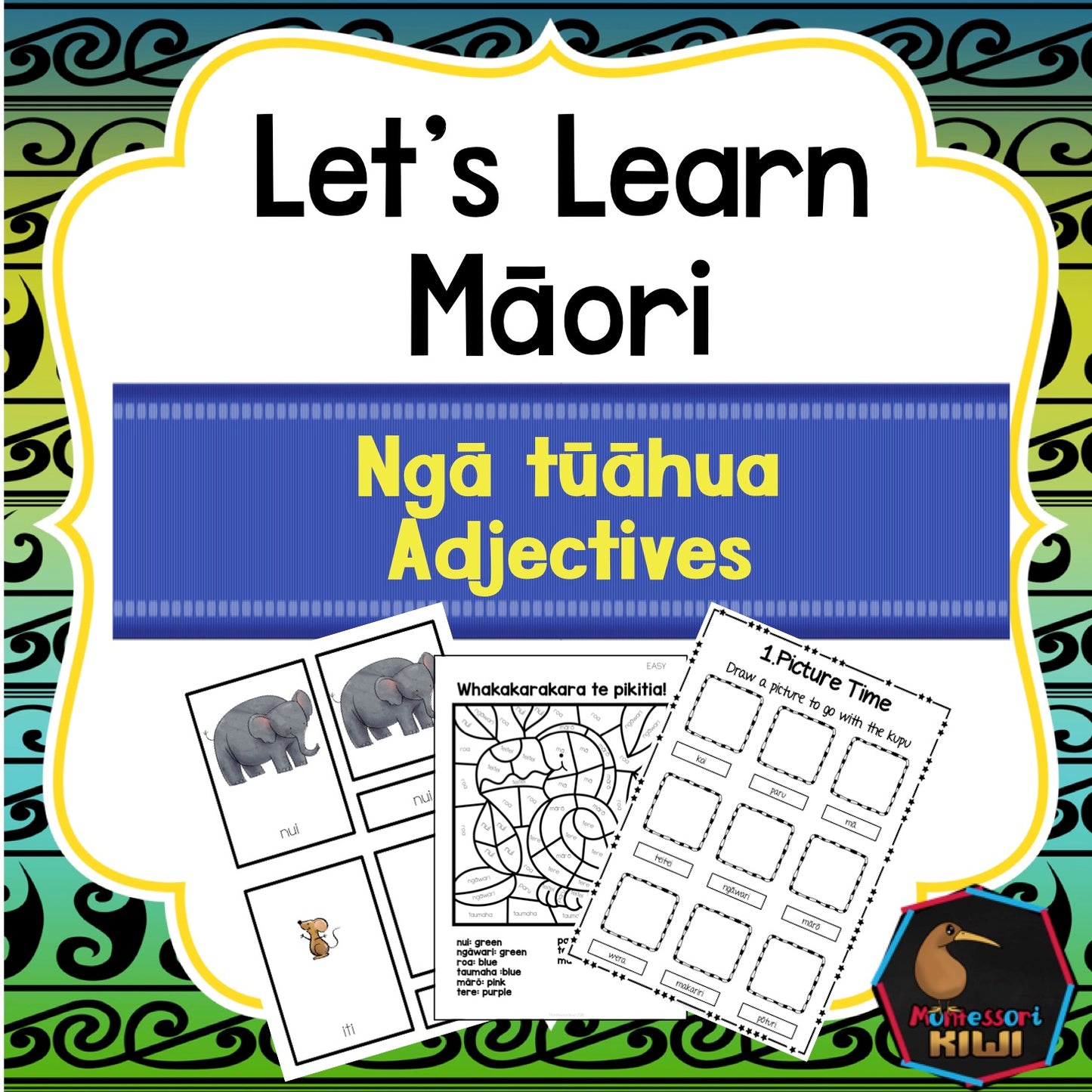
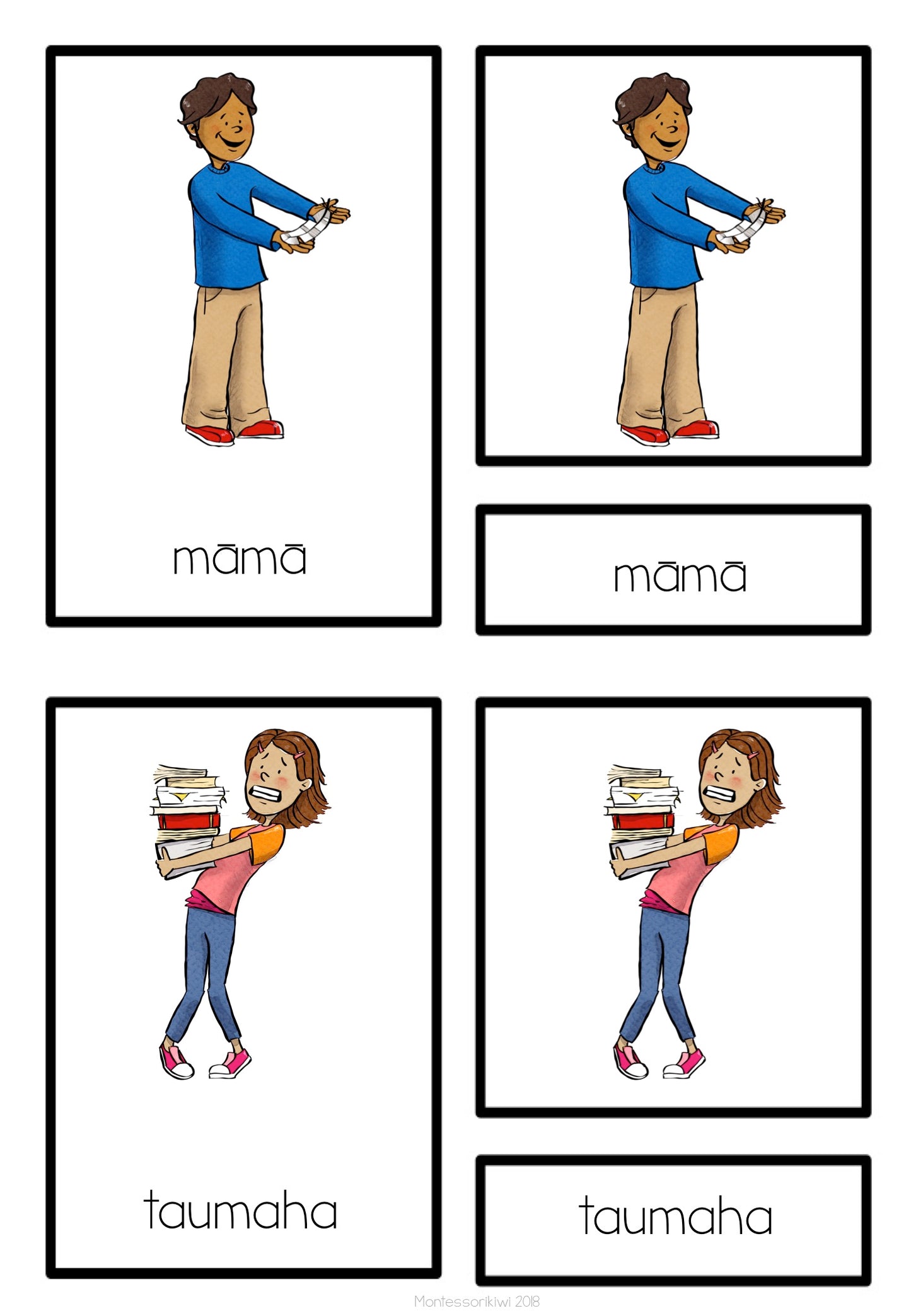
This Te Reo Māori Adjectives Activity Pack introduces 19 useful ngā tūāhua, or describing words, through Montessori-style three-part cards, sentence-building activities, grammar symbols, drawing and differentiated colour-by-code work.
Children move from recognising individual Māori adjectives to using them in short descriptive sentences.
At a Glance
- Learning focus: Te reo Māori adjectives and descriptive sentences
- Vocabulary: 19 ngā tūāhua
- Includes: Three-part cards, grammar work, worksheets and colour-by-code activities
- Best for: New Zealand classrooms, Montessori, homeschool and mixed-age groups
- Use for: Vocabulary lessons, language shelves, sentence writing and independent practice
- Differentiation: Visual matching, supported writing and three colour-code levels
- Length: 31 printable PDF pages
- Format: Instant digital download
Move Beyond Memorising a Vocabulary List
Children encounter the same adjectives in several connected formats. They can:
- match Māori words with clear pictures;
- check their work against complete control cards;
- connect each kupu with its English meaning;
- use adjectives in short Māori sentences;
- analyse sentence structure with Montessori grammar symbols;
- draw their own visual examples; and
- consolidate vocabulary through differentiated colouring activities.
Give Children Enough Structure to Begin
“Write a sentence in Māori” can be an overwhelming instruction when children are still learning the vocabulary. The picture cards, model sentences, glossary and grammar-symbol strips reduce the number of decisions the learner must make at once while still leading towards independent language use.
Ngā Tūāhua Included
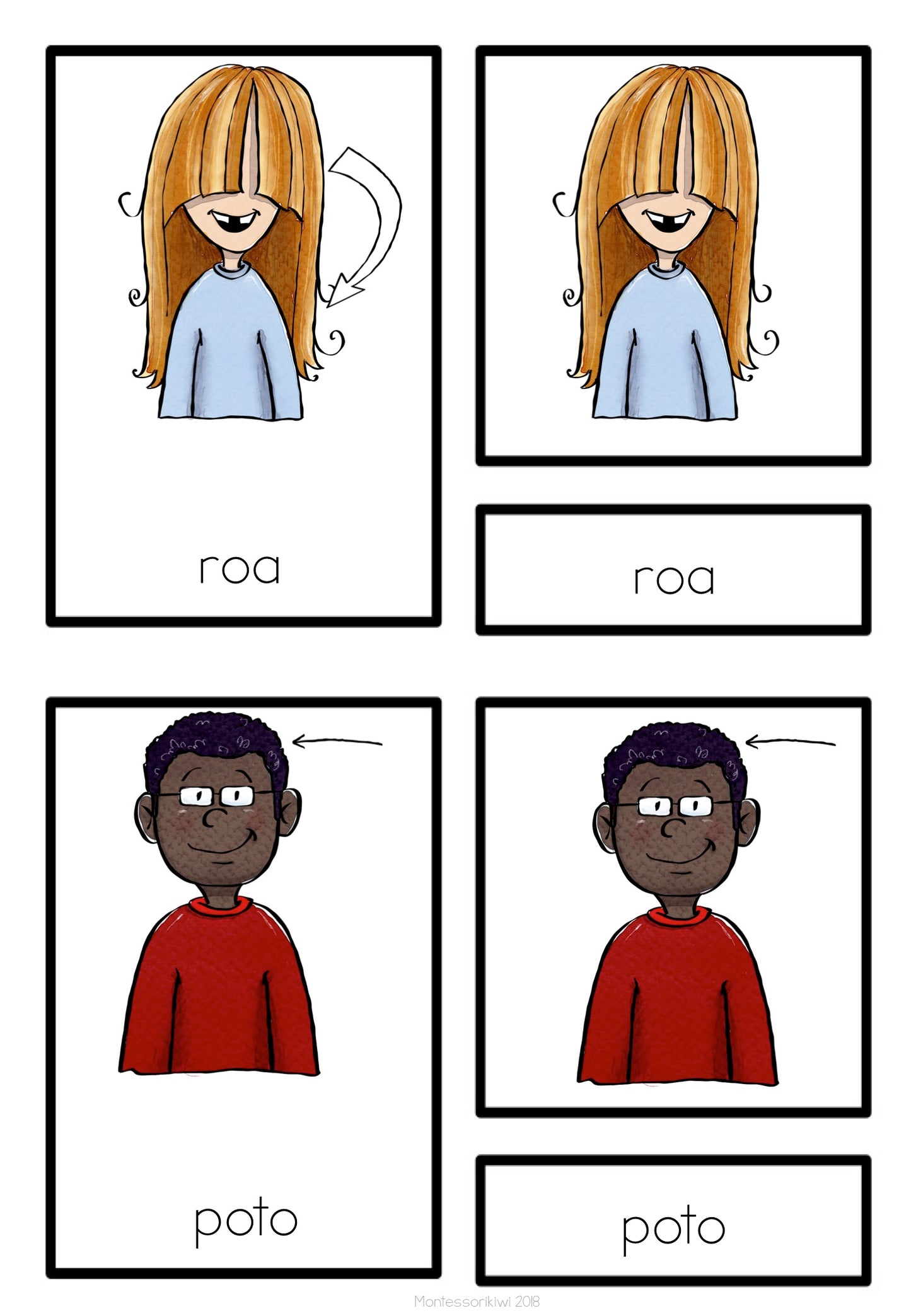
- roa – long
- poto – short
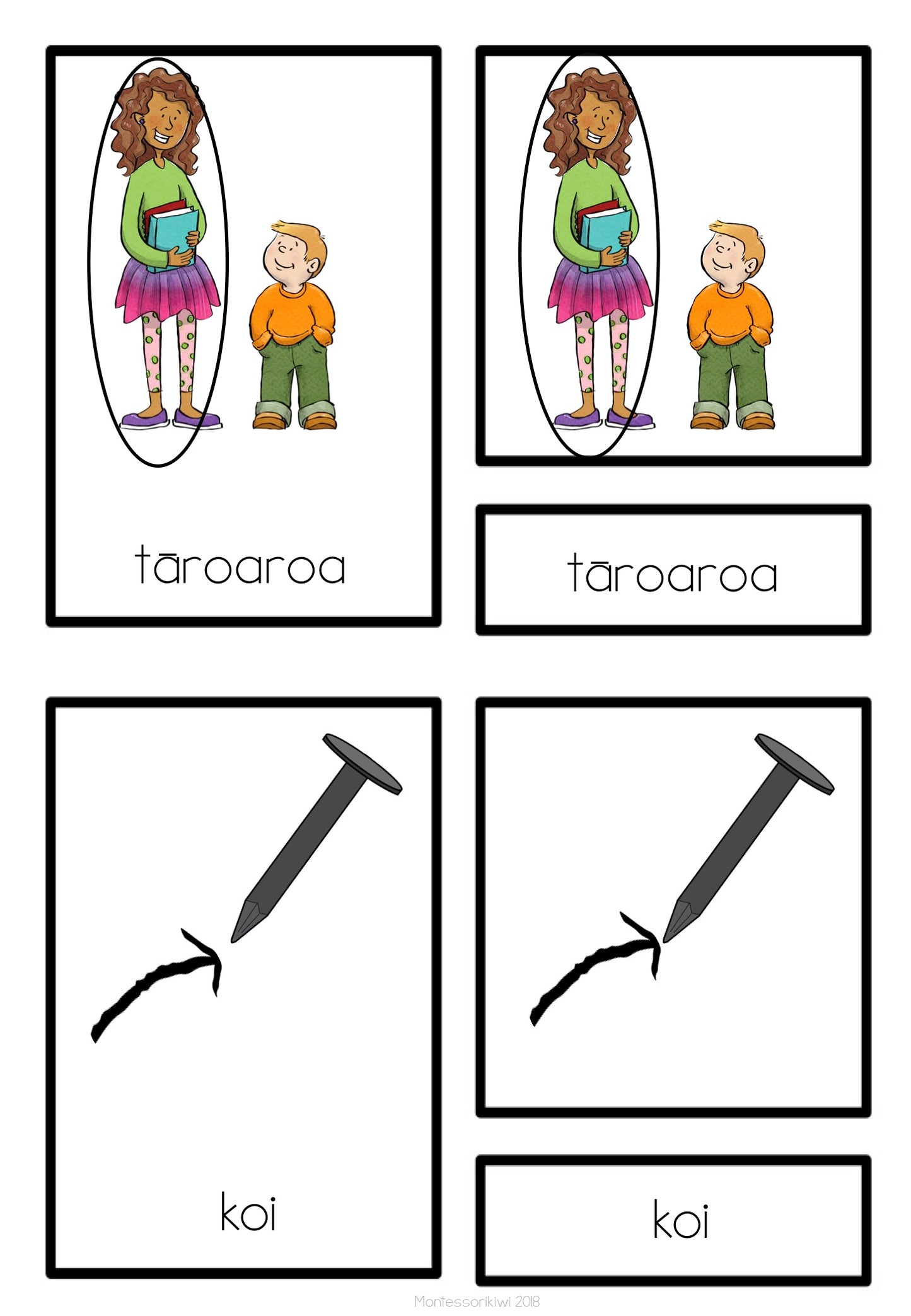
- tāroaroa – tall person
- teitei – tall, not for a person
- koi – sharp
- māmā – light
- taumaha – heavy
- mākū – wet
- maroke – dry
- nui – big
- iti – little
- paru – dirty
- mā – clean
- tere – fast
- pōturi – slow
- wera – hot
- makariri – cold
- mārō – hard
- ngāwari – soft
The resource distinguishes between tāroaroa, used for a tall person, and teitei, used for something tall that is not a person.
What Is Included?
Montessori-Style Three-Part Cards
Children match separate pictures and Māori labels with the complete control cards.
The visual contrasts make the vocabulary easier to discuss. Examples include long and short, wet and dry, clean and dirty, fast and slow, and hard and soft.
Teacher Presentation Notes
The included guidance explains how to introduce the cards as a group activity before placing them on the shelf for independent matching.
Follow-up suggestions include an active “find something that is…” game and making individual adjective dictionaries.
Māori–English Glossary
A compact vocabulary reference lists all 19 adjectives and their English meanings.
Sentence Translation and Writing
Children work with short descriptive sentence patterns such as:
He kiore iti.
The worksheets ask learners to:
- translate Māori sentences into English;
- write a Māori sentence for a picture;
- select an appropriate adjective; and
- apply the repeated sentence structure independently.
Montessori Grammar-Symbol Strips
Two completed sentence pages show the article, noun and adjective with Montessori grammar symbols.
This connects te reo Māori vocabulary with familiar parts-of-speech work and helps learners notice the adjective’s function within the sentence.
Separate Word Cards
Nineteen individual adjective cards can be used for oral games, matching, sorting, sentence construction, vocabulary displays or movable-alphabet work.
Drawing and Vocabulary Reflection
Children record adjectives they know in English and Māori, then draw their own pictures for selected kupu.
Six Differentiated Colour-by-Code Pages
Two mystery pictures are each provided at three levels:
- Easy: Māori adjective clues with English colour names
- Medium: English adjective clues with English colour names
- Hard: English adjective clues with te reo Māori colour names
You can therefore use the same motivating activity with learners who have different levels of confidence.
Particularly Helpful for Neurodivergent Learners
The resource provides several entry points without changing the core vocabulary. Children can begin with a small number of picture matches, use the glossary as a stable reference, follow repeated sentence frames or complete a visual colouring task. This reduces working-memory and open-ended language demands while allowing meaningful repetition.
A Flexible Teaching Sequence
- Introduce contrasting words orally. Begin with a small group such as nui and iti.
- Match pictures and labels. Use the three-part cards and control cards.
- Add movement. Ask children to find something that matches a named adjective.
- Build simple sentences. Use pictures, nouns and adjective labels.
- Analyse the sentence. Add the Montessori grammar symbols.
- Record the language. Complete translation or picture-writing work.
- Consolidate independently. Use drawing and differentiated colour-by-code pages.
Perfect For
- Te reo Māori vocabulary lessons
- Ngā tūāhua and describing words
- Montessori language shelves
- New Zealand primary classrooms
- Mainstream and immersion environments
- Mixed-age classes
- Homeschool te reo Māori
- Sentence-building lessons
- Grammar and parts-of-speech work
- Independent literacy centres
Please Note
This is a printable digital resource. Physical Montessori grammar symbols, storage containers and classroom objects are not included.
The pack introduces a selected set of useful adjectives. It is not a complete te reo Māori language or grammar programme.
Created for Aotearoa Learners
I’m Lisa—an NZ registered teacher, Montessori-trained educator, school principal and former homeschooler.
I create practical resources for mixed-age classrooms and diverse learners. This pack gives children repeated opportunities to see, say, match, read and use te reo Māori rather than encountering each word only once.
Continue Building Te Reo Māori
-
Nui and Iti Te Reo Māori Emergent Reader
Revisit two key describing words through short, supported reading practice. -
Māori I Spy
Extend vocabulary and sound recognition through picture-search activities built around common Māori words. -
Māori Location Words
Build positional language through visual matching, oral practice and sentence work. -
Browse All Te Reo Māori Resources
Explore vocabulary, early reading, numbers, colours, classroom language and cultural resources.
Teaching the Montessori Adjective?
Read Key Experience: The Adjective for a practical Montessori presentation showing how describing words add precise information to a noun.
Explore More Montessori Language
Browse the Montessori Language Collection for grammar, vocabulary, sentence work, reading and independent literacy activities.
Help Children Describe Their World in Te Reo Māori
Move from isolated vocabulary into picture matching, sentence building, grammar and meaningful independent practice.
Download the Te Reo Māori Adjectives Activity Pack and give learners varied, visual ways to understand and use ngā tūāhua.