


montessorikiwi
Animal Tracks & Footprints | Montessori Zoology Activities
Animal Tracks & Footprints | Montessori Zoology Activities
Couldn't load pickup availability
The children are into animals right now, so anything different is great. I love that they can learn about different animal footprints. They may not see them otherwise.
I love seeing children's interest in animals!
This is perfect for my zoology unit! The students loved it and enjoyed learning about different animal tracks. Thank you so much for creating this awesome material!
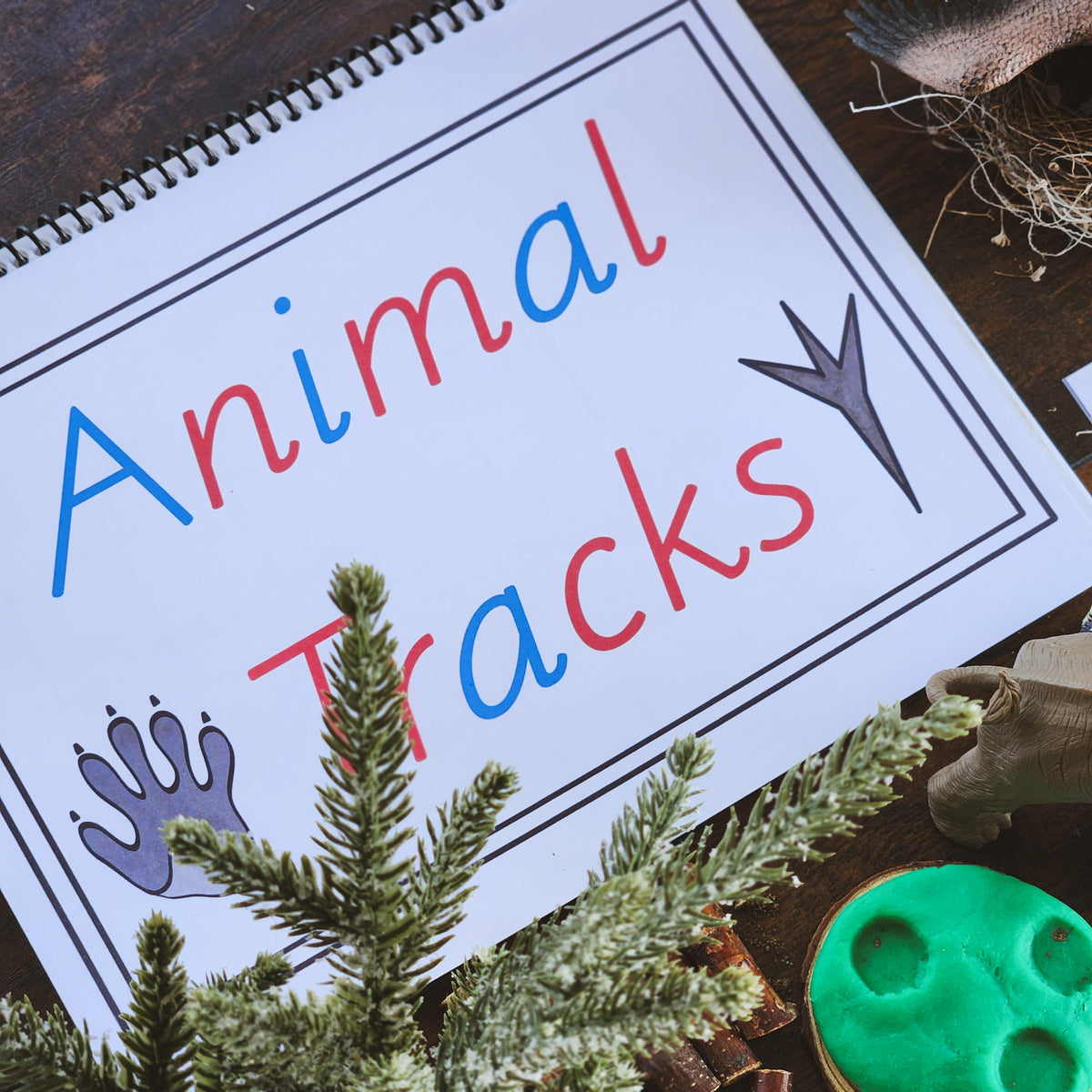
Animal Tracks
Animal Tracks and Footprints – Montessori Zoology Activities
Can you tell which animal has walked past just by looking at its footprints?
Animal tracks can tell us a surprising amount about an animal. They give us clues about how it moves, where it lives and how its feet help it survive.
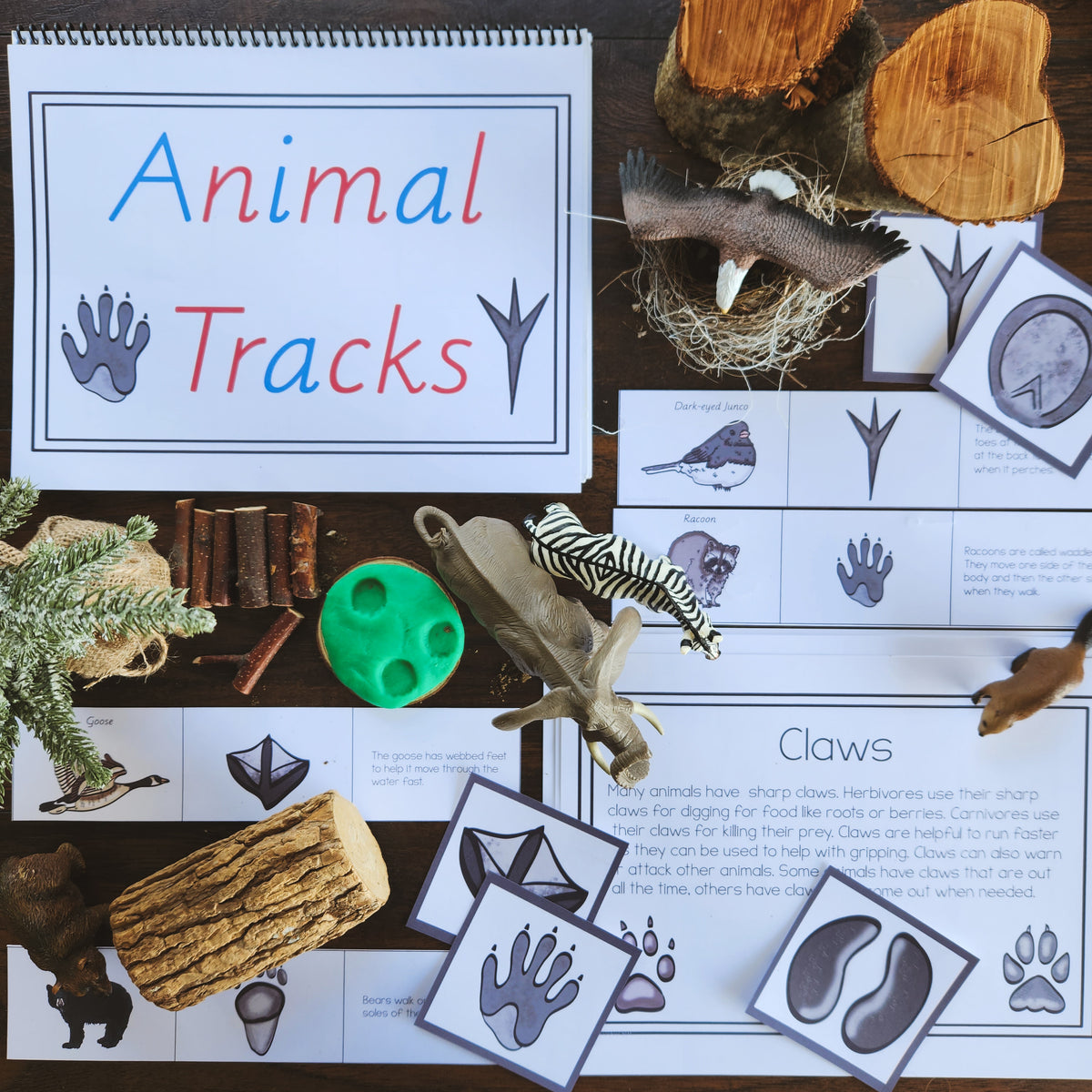
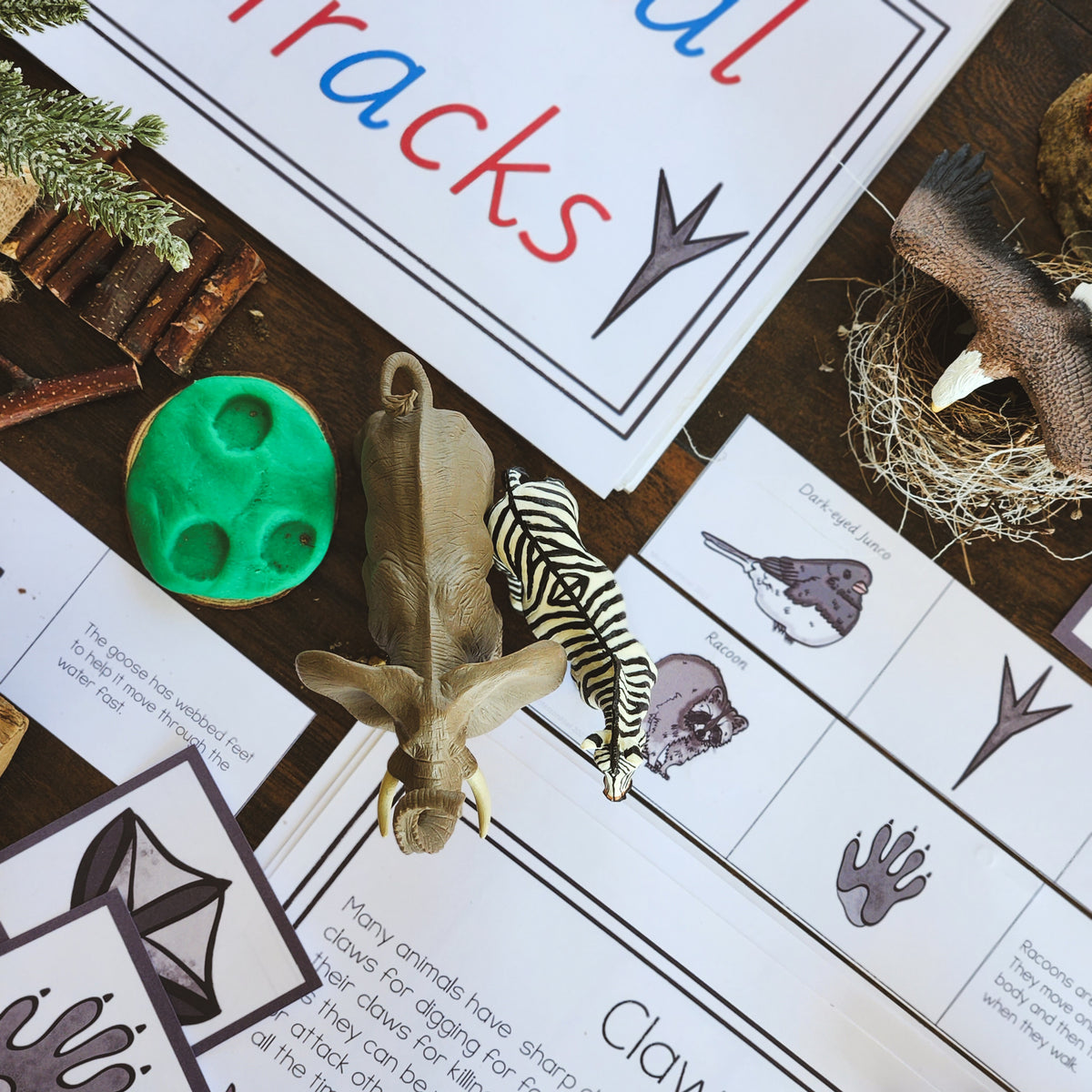
This printable Animal Tracks and Footprints Montessori activity introduces children to animal footprints, foot adaptations and the connections between an animal's body and its environment.
Children match animals to their tracks, read short information cards, investigate different kinds of feet and complete follow-up activities that encourage them to look more closely at the natural world.
It's a useful addition to Montessori elementary zoology studies, animal classification lessons and nature investigations.
What's Included?
This 15-page PDF contains:
- Animal footprint illustrations for matching activities
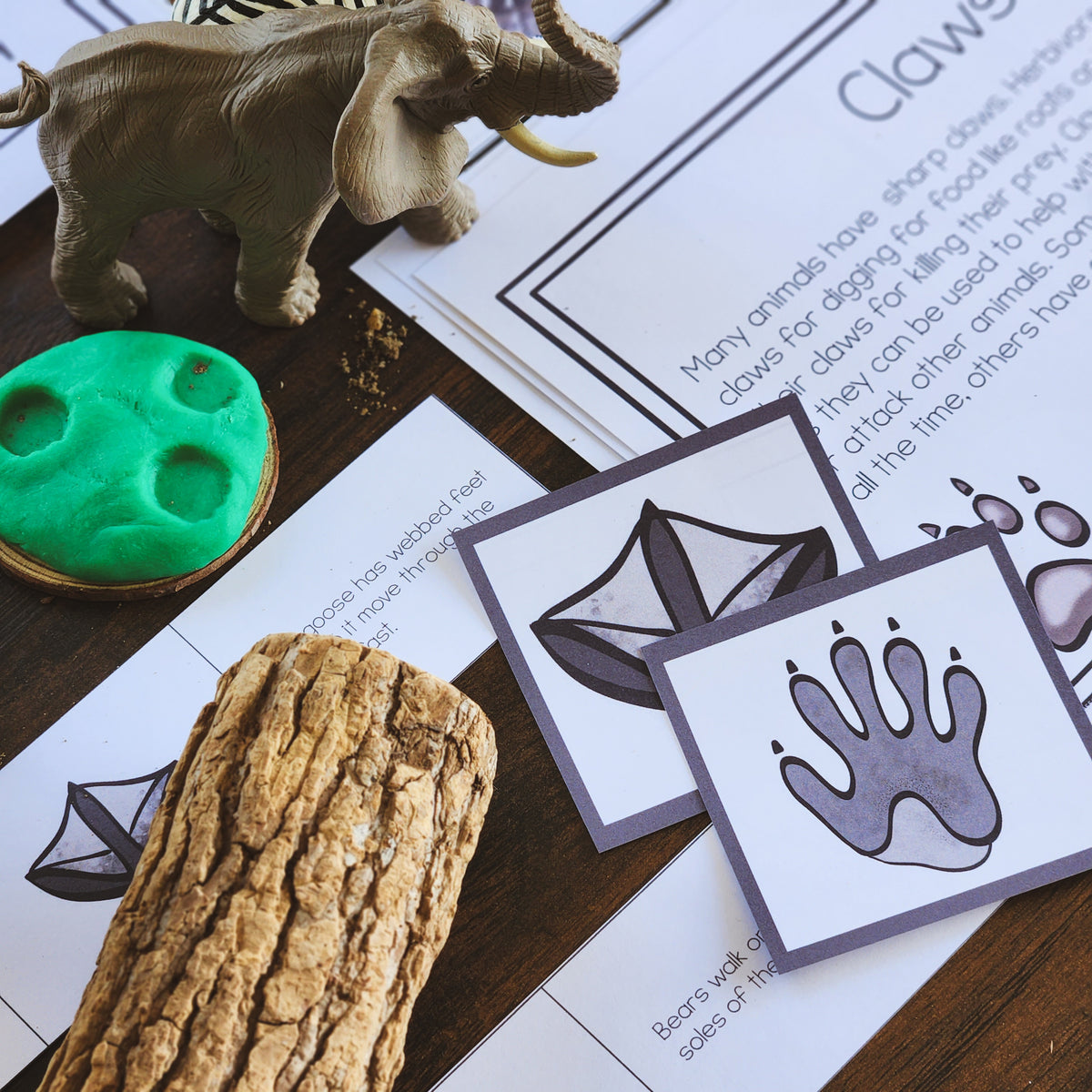
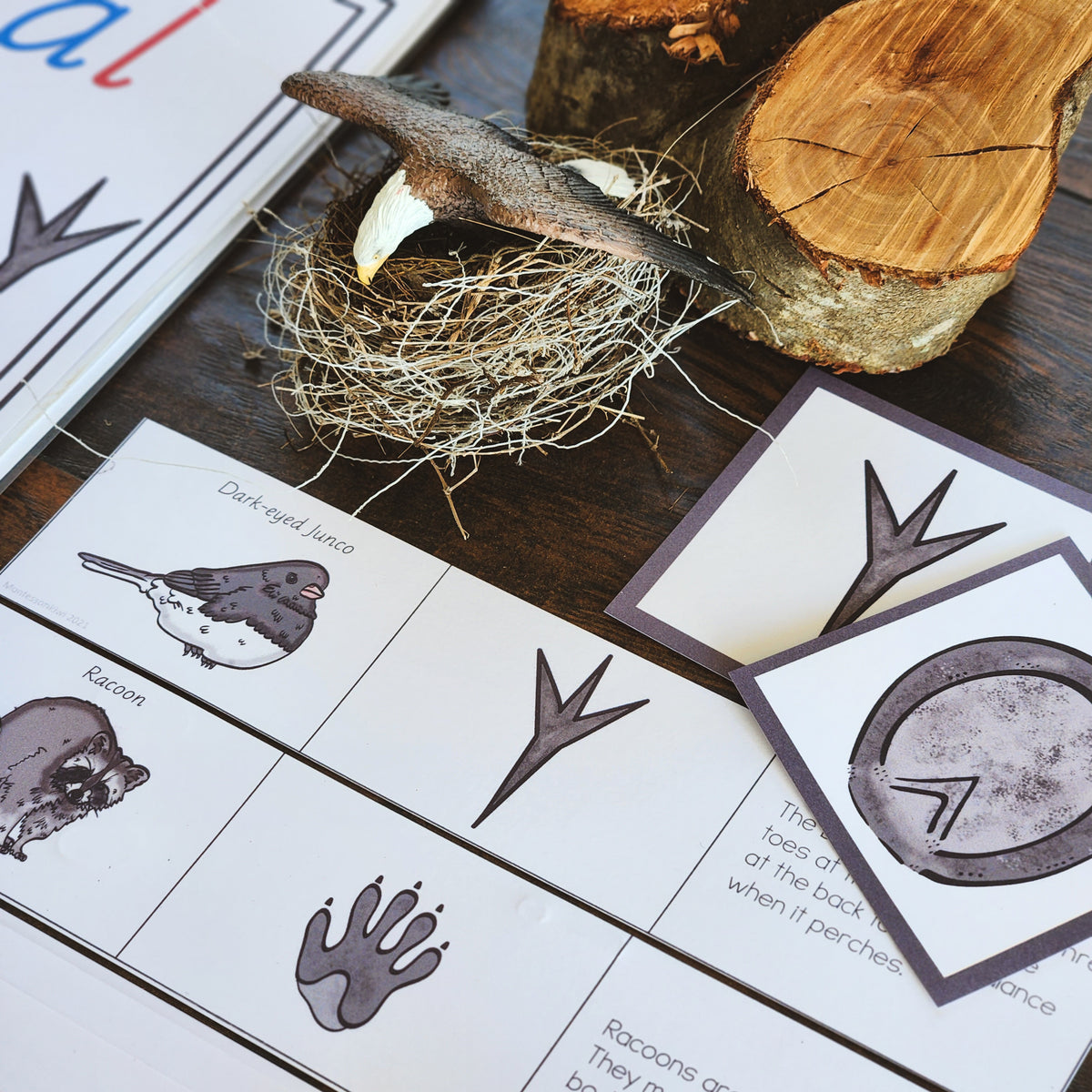
- Animal, track and fact matching cards
- Information for 8 different animals
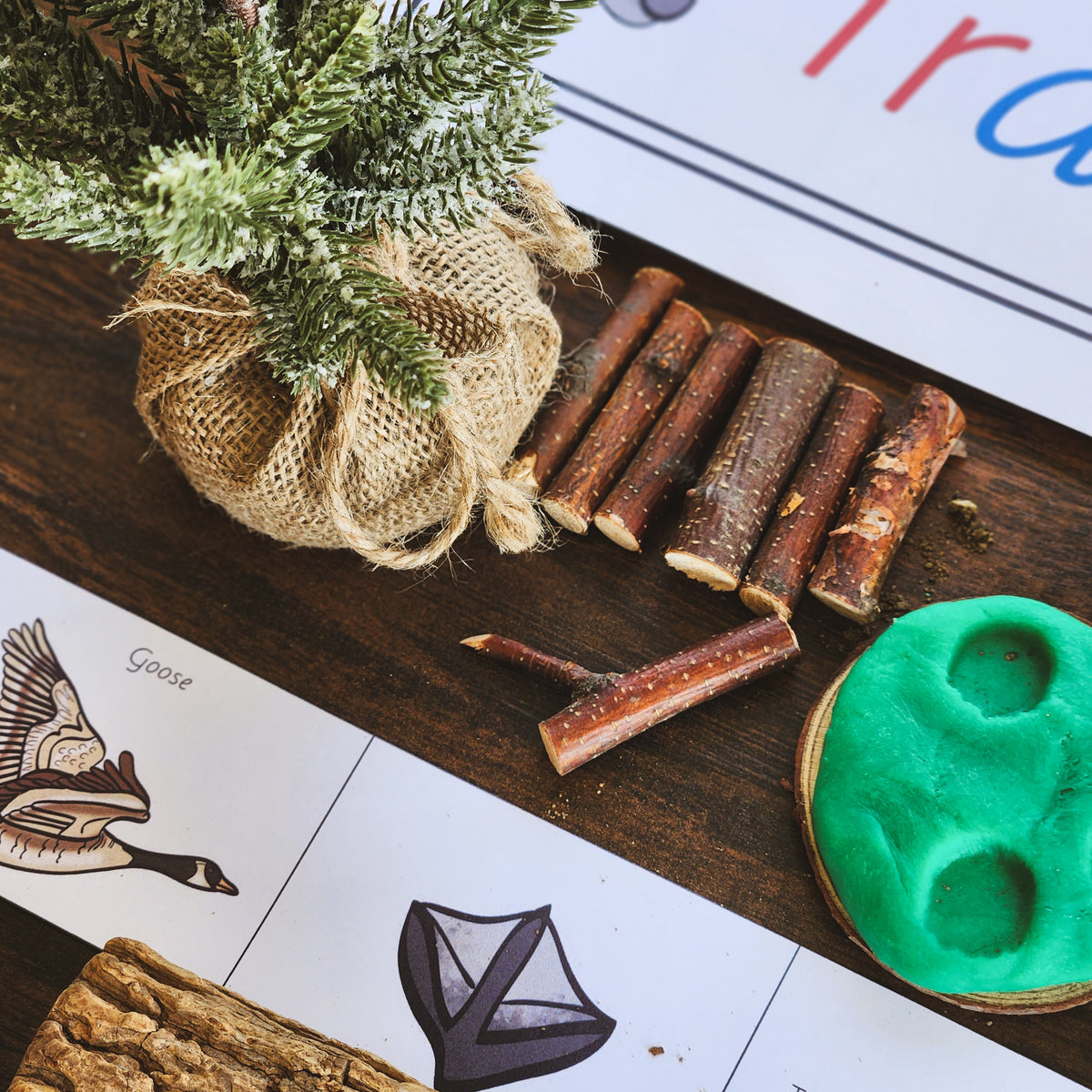
- Reading page about webbed feet
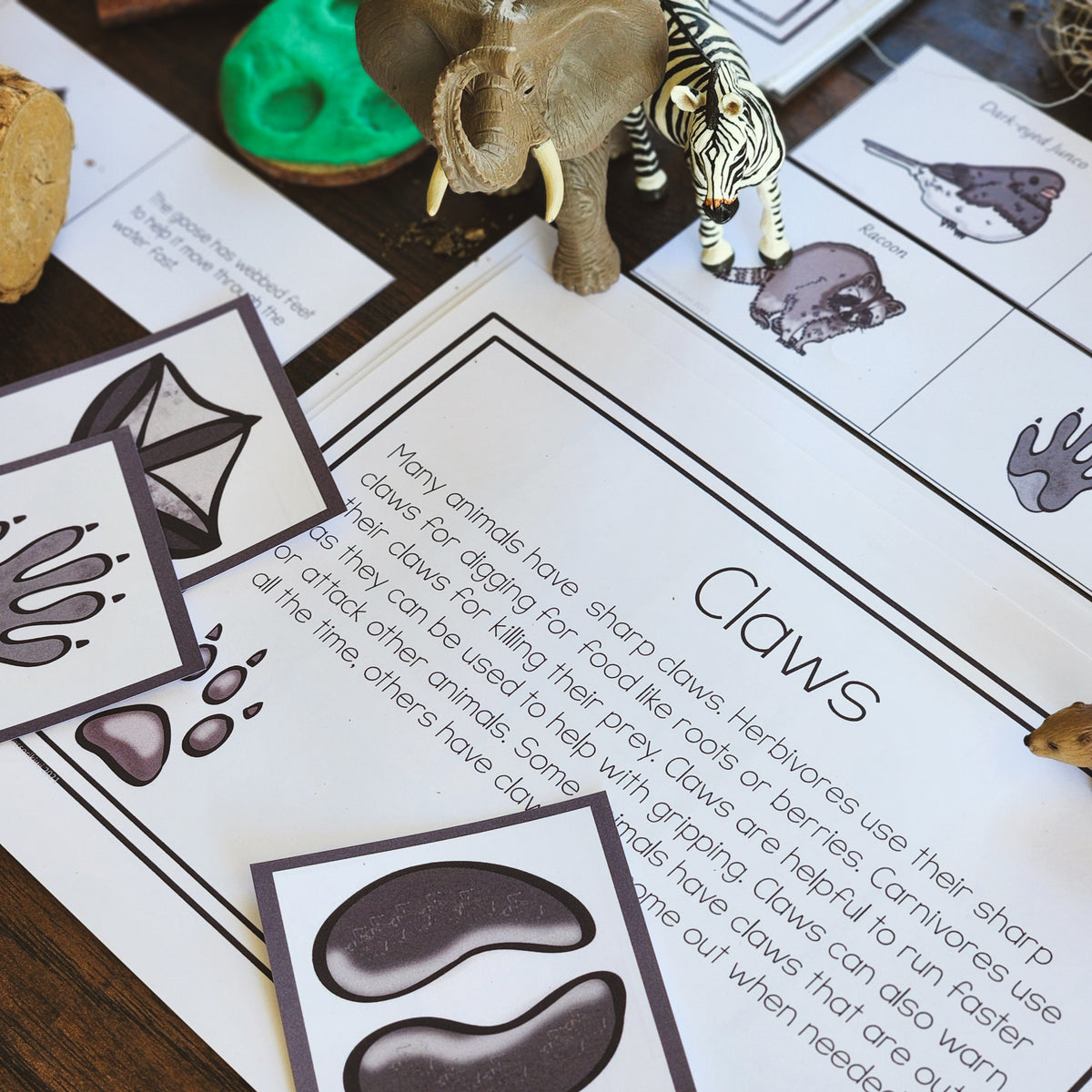
- Reading page about claws
- Reading page about hooves
- Foot Detective observation activity
- Extinct Feet dinosaur investigation
- Symmetrical Prints drawing activity
- Our Feet local animal research activity
- Discussion questions to extend learning
Which Animals Are Included?
Children explore the footprints and feet of:
- Goose
- Dark-eyed junco
- Bear
- Horse
- Raccoon
- Cow
- Tree frog
- Red fox
Each animal includes a short fact connecting its feet or movement with its way of life.
Explore How Animal Feet Are Adapted
Why does a goose have webbed feet? How do claws help animals move and hunt? What makes hooves useful?
The information pages introduce children to three different types of animal feet:
- Webbed feet: How webbing helps animals move through water.
- Claws: How animals use claws for gripping, digging, movement and catching prey.
- Hooves: How hooves protect animals' feet and help them move across different surfaces.
These short readings provide a starting point for discussing animal adaptations and comparing animals that live in different environments.
Hands-On Follow-Up Activities
The resource includes several ways for children to investigate animal tracks beyond the matching cards.
- Foot Detective: Examine footprints and make predictions about the animals that left them.
- Extinct Feet: Research and draw dinosaur feet using reference pictures.
- Symmetrical Prints: Complete the missing halves of animal footprints to explore symmetry.
- Our Feet: Research and draw tracks belonging to animals found in your own country.
The discussion questions encourage children to think about how scientists use footprints, why animals have different kinds of feet and what tracks can reveal about the lives of animals.
Skills Children Practise
- Animal identification and classification
- Understanding physical adaptations
- Comparing different animal footprints
- Scientific observation and deduction
- Reading and understanding factual information
- Developing zoology vocabulary
- Researching local wildlife
- Recognising symmetry
- Drawing, recording and communicating observations
How to Use in a Montessori Classroom
- Introduce a selection of animal tracks and invite children to describe what they notice.
- Present the animal, track and fact cards for matching.
- Discuss similarities and differences between the footprints.
- Read the information pages about webbed feet, claws and hooves.
- Invite children to choose a follow-up worksheet or research activity.
- Extend the work with a nature walk, looking for animal footprints in mud, sand or soft ground.
Teacher tip: Start with just a few animal tracks rather than introducing the whole set at once. Once children can explain their matches, add more cards and encourage comparisons.
Perfect For
- Montessori elementary classrooms
- Montessori zoology shelves
- Animal adaptations lessons
- Animal classification studies
- Nature and wildlife investigations
- Elementary science and biology
- Homeschool science projects
- Independent research and follow-up work
Format: Printable digital PDF. No physical item will be shipped.
RECOMMENDED COMPANION RESOURCES
Continue Exploring Montessori Zoology
Once children have examined animal footprints and adaptations, these resources offer opportunities to extend the learning into animal classification and biology.
Montessori Vertebrates Interactive Notebook
Help children move from observing animals to understanding how they are classified.
This printable interactive notebook explores the five vertebrate groups: mammals, birds, fish, reptiles and amphibians.
Children record the characteristics of each group and add examples, making it a useful follow-up to comparing animal feet and movement.
Explore Vertebrates Notebook →MRS GREN Living Things Cards
Explore what all living organisms have in common with these Montessori-inspired biology cards.
Children investigate seven life processes, including movement, nutrition and sensitivity, through posters and matching cards.
Pair this work with animal footprints to discuss how different animals move and respond to their environments.
View MRS GREN Living Things Cards →PLANNING MORE SCIENCE AND NATURE LESSONS?
Montessori Cosmic Education Bundle
If you're planning a wider programme of zoology, biology, geography and nature studies, explore the Montessori Cosmic Education Bundle.
This larger resource collection includes hands-on science and history activities, research materials, classification work and Montessori follow-up tasks.
It's a useful option for teachers and homeschoolers who want a broader selection of prepared Cosmic Education materials available for independent shelf work.
Explore Cosmic Education Bundle →Take Zoology Learning Outdoors
Animal tracks are a good starting point for getting children to look more closely at the natural environment around them.
In my article Introduction to Ecology in the Aotearoa Bush, I share how observations made outdoors led to lessons about local wildlife, food chains and relationships between animals.
It's a useful read if you're looking for ways to connect Montessori zoology materials with the plants and animals children encounter in their own communities.
Read: Introduction to Ecology in the Aotearoa Bush →Montessori Kiwi creates practical printable resources for Montessori classrooms, homeschoolers and elementary learners. Our activities encourage children to observe, question, investigate and make connections with the world around them.
Share
-
Items are secured / Terms of Use
Our items are secured. They are not able to be altered. We secure our items because they are our intellectual property and because we use art from artists who require that we secure our files.
You may not:
-resell our items or use them for commercial gain
-claim these items as your own
-modify this resource
-share them with others by any means e.g. electronic or hard copy
-
All Items are instant downloads
You will not get a printed product in the mail.
-
All prices are in USD
Due to the international nature of our customers our prices are all in USD. If you wish to work out the conversion before you buy we recommend www.xe.com
The children are into animals right now, so anything different is great. I love that they can learn about different animal footprints. They may not see them otherwise.
I love seeing children's interest in animals!
This is perfect for my zoology unit! The students loved it and enjoyed learning about different animal tracks. Thank you so much for creating this awesome material!
Animal Tracks