


montessorikiwi
Acids, Bases and the pH Scale | Montessori Chemistry Experiments and Activities
Acids, Bases and the pH Scale | Montessori Chemistry Experiments and Activities
Couldn't load pickup availability
Make Acids, Bases and pH Understandable—Not Just Memorable
Acids and bases are all around us, but the language of pH, acidity, alkalinity and neutralisation can quickly become abstract for elementary learners.
Children may remember that lemons are acidic or that the pH scale runs from 0 to 14, yet still struggle to explain what those facts mean, how scientists test a substance or why pH matters in everyday life.
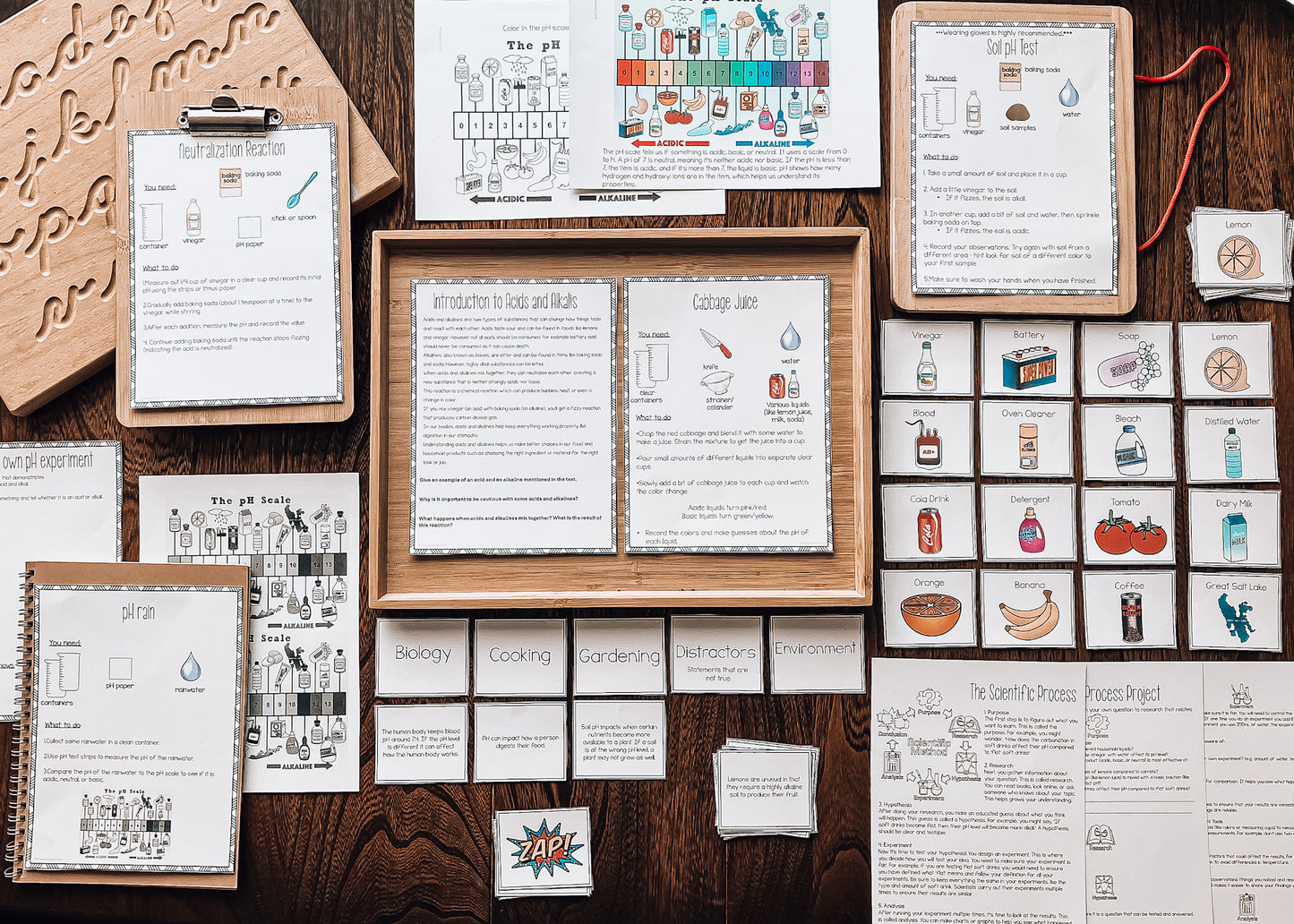
This 28-page acids, bases and pH introduction gives you a practical, sequenced way to teach the topic.
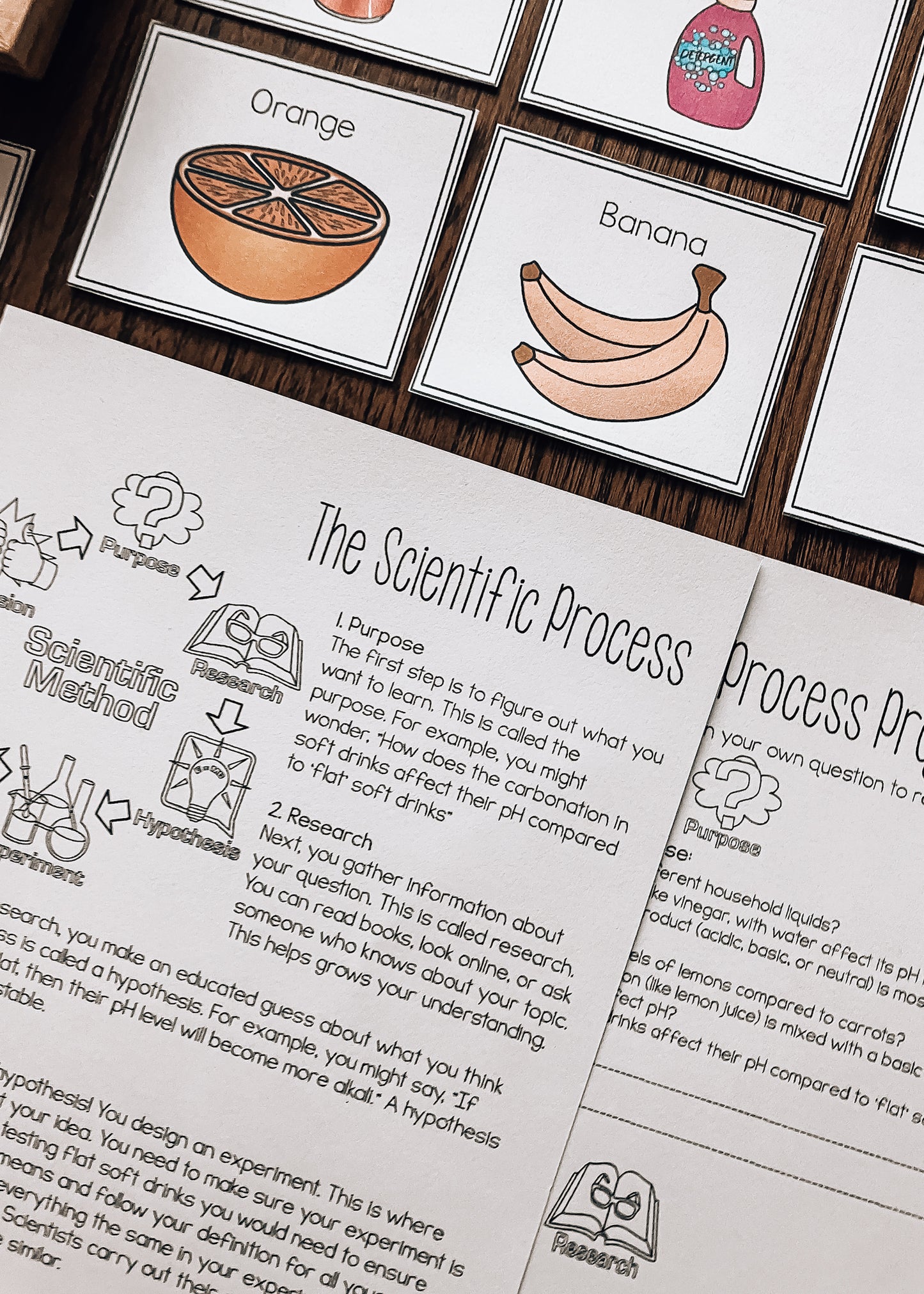
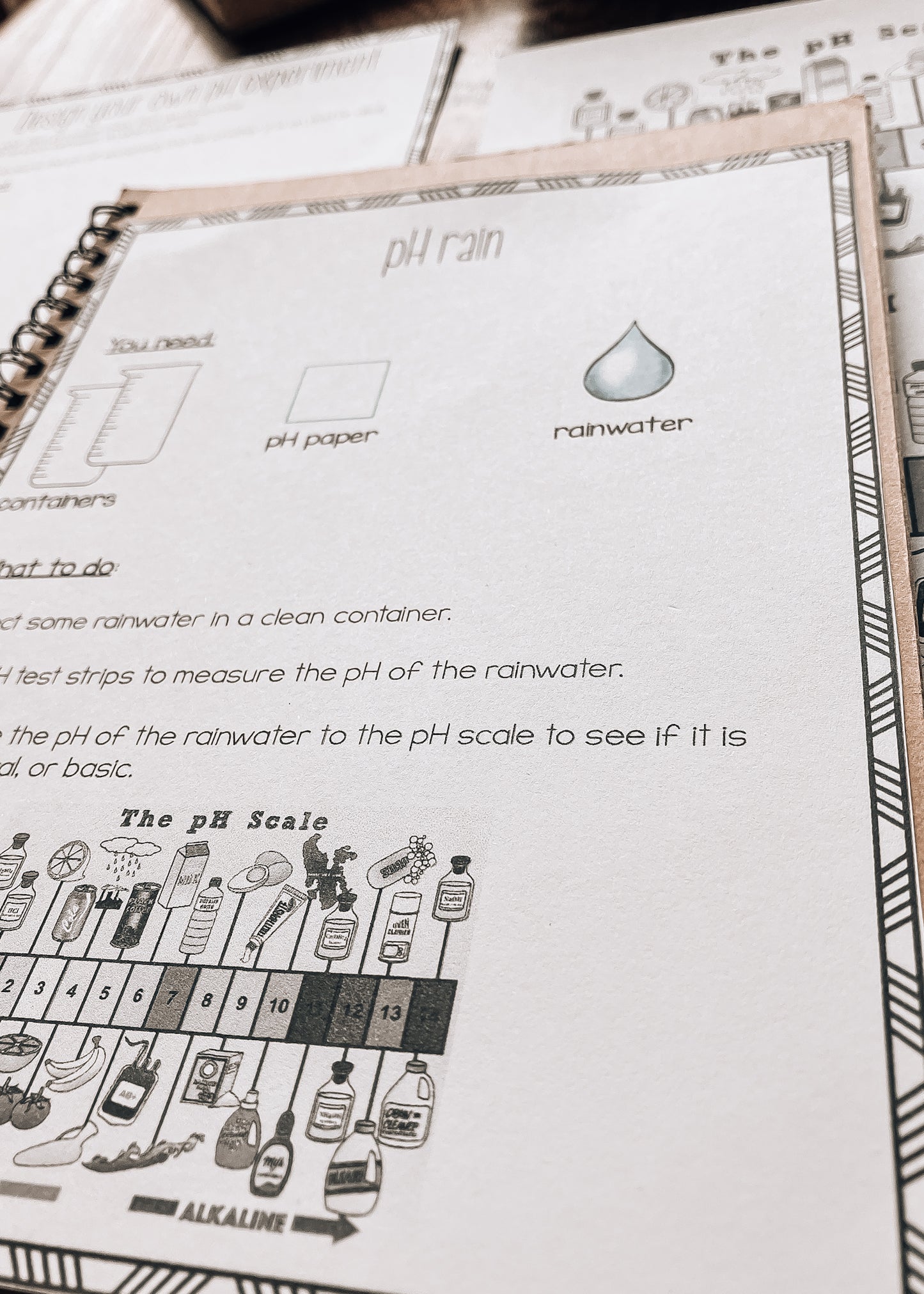
Children begin with accessible background information and a visual pH scale. They then investigate the concepts through guided experiments, scientific-process work, classification games and a challenge to design their own experiment.
Instead of completing isolated chemistry worksheets, learners build knowledge step by step and apply it through observation, prediction, testing and discussion.
At a Glance
Best for: Montessori elementary classrooms, homeschool science, small groups and mixed-age learning environments
Age range: Approximately 8–12 years
Topic: Acids, bases, alkalines, pH, indicators and the scientific process
Includes: Introductory reading, pH charts, four guided experiments, an experiment-design challenge, scientific-process activities, a Zap game and a real-life sorting activity
Use for: Chemistry introductions, Montessori shelf work, science investigations, independent follow-up and upper-elementary science
Format: 28-page printable PDF
Preparation: Print the selected pages and gather simple household materials for the experiments
A Complete Introductory Chemistry Sequence
Finding an experiment that produces an exciting colour change is easy.
The harder part is helping children understand why the change occurred, how it relates to the pH scale and how to record an investigation scientifically.
This resource brings those parts together in one connected sequence:
- Introduce acids, bases and pH through clear reading and discussion.
- Use a visual pH scale to connect unfamiliar numbers with everyday substances.
- Carry out guided experiments that develop observation and comparison skills.
- Explicitly introduce the scientific process within a meaningful context.
- Apply the learning through games, classification and real-world examples.
- Invite children to design an investigation of their own.
This structure makes the resource suitable for teaching across several lessons rather than trying to introduce the entire topic in one sitting.
What Is Included?
Introductory Reading and Vocabulary
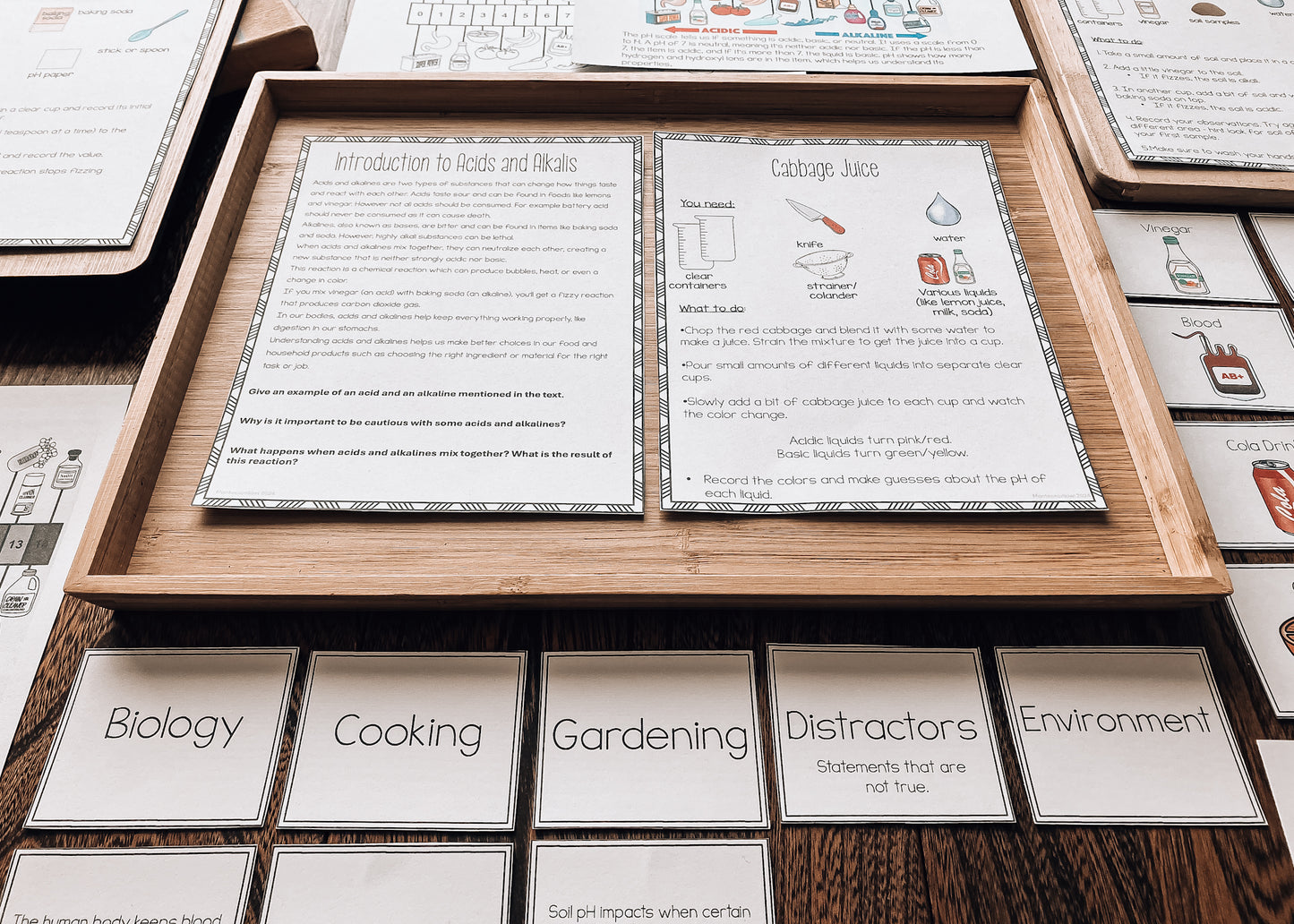
- A one-page reading comprehension introducing acids, alkalines or bases, and pH
- Clear explanations written for elementary-aged learners
- Connections to familiar substances and everyday experiences
Visual pH Scale
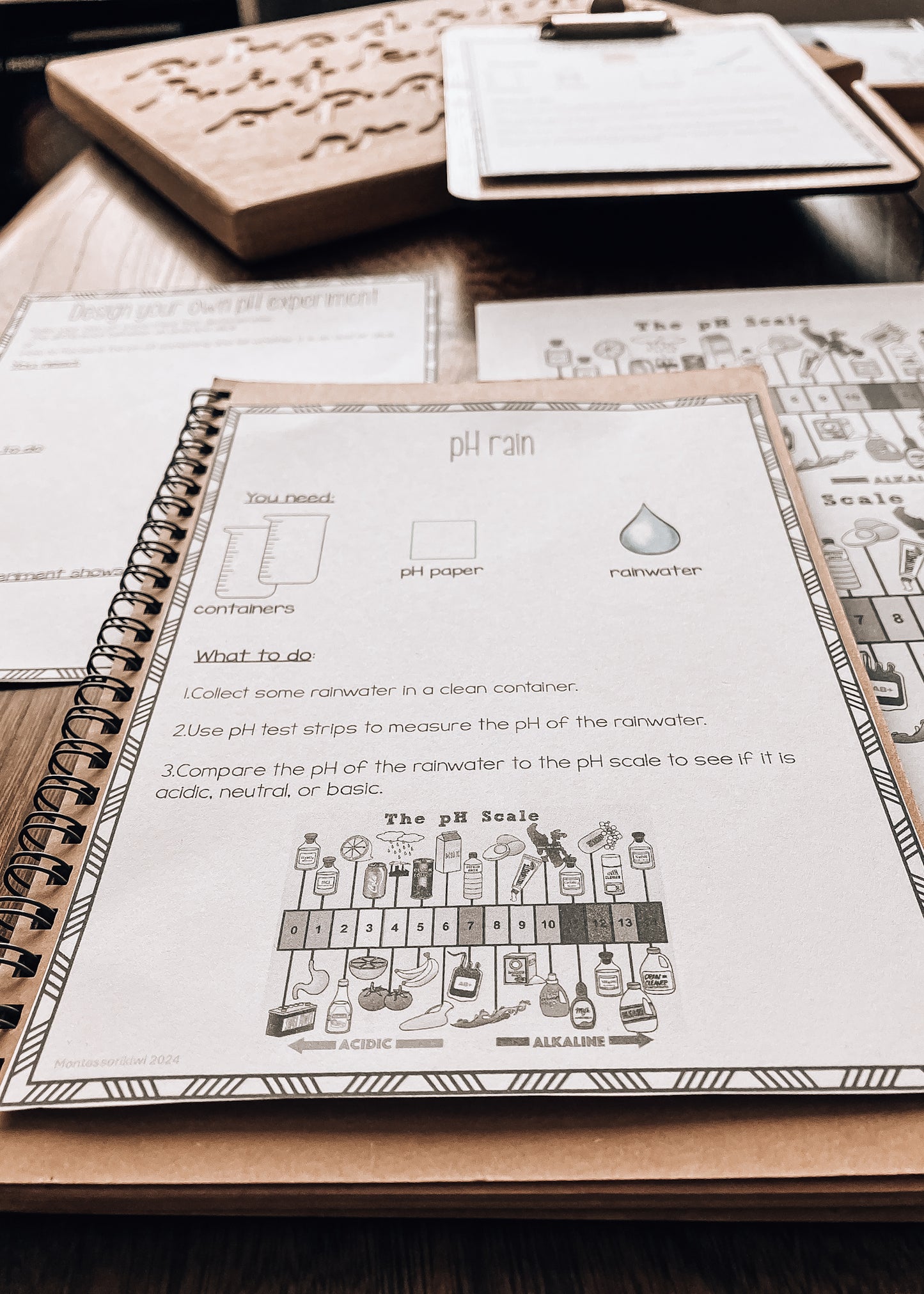
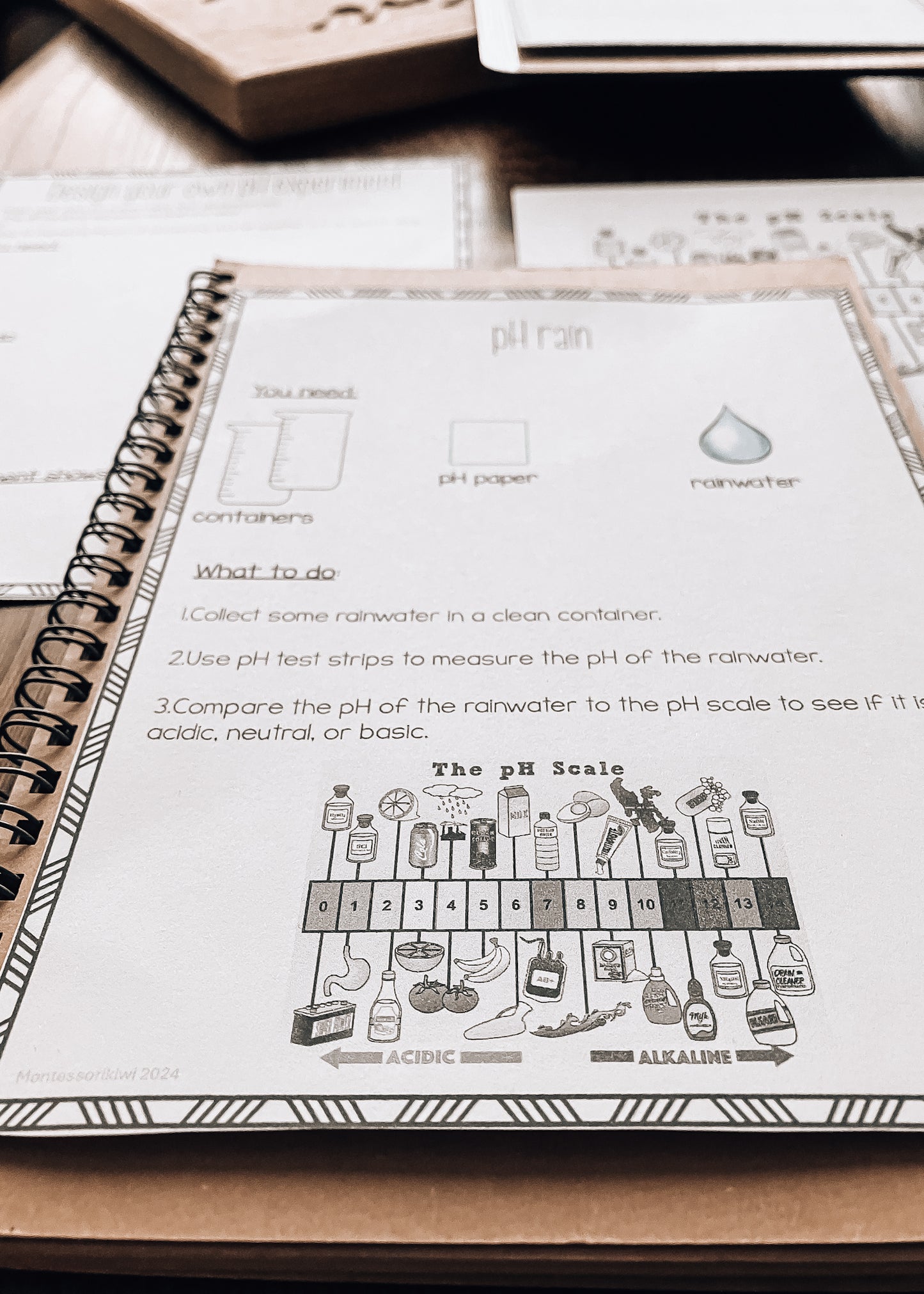
- A full-colour pH scale featuring real-world examples
- A black-and-white version for note-taking, labelling or student activities
- A visual reference that can be displayed or placed on the science shelf
Hands-On pH Investigations
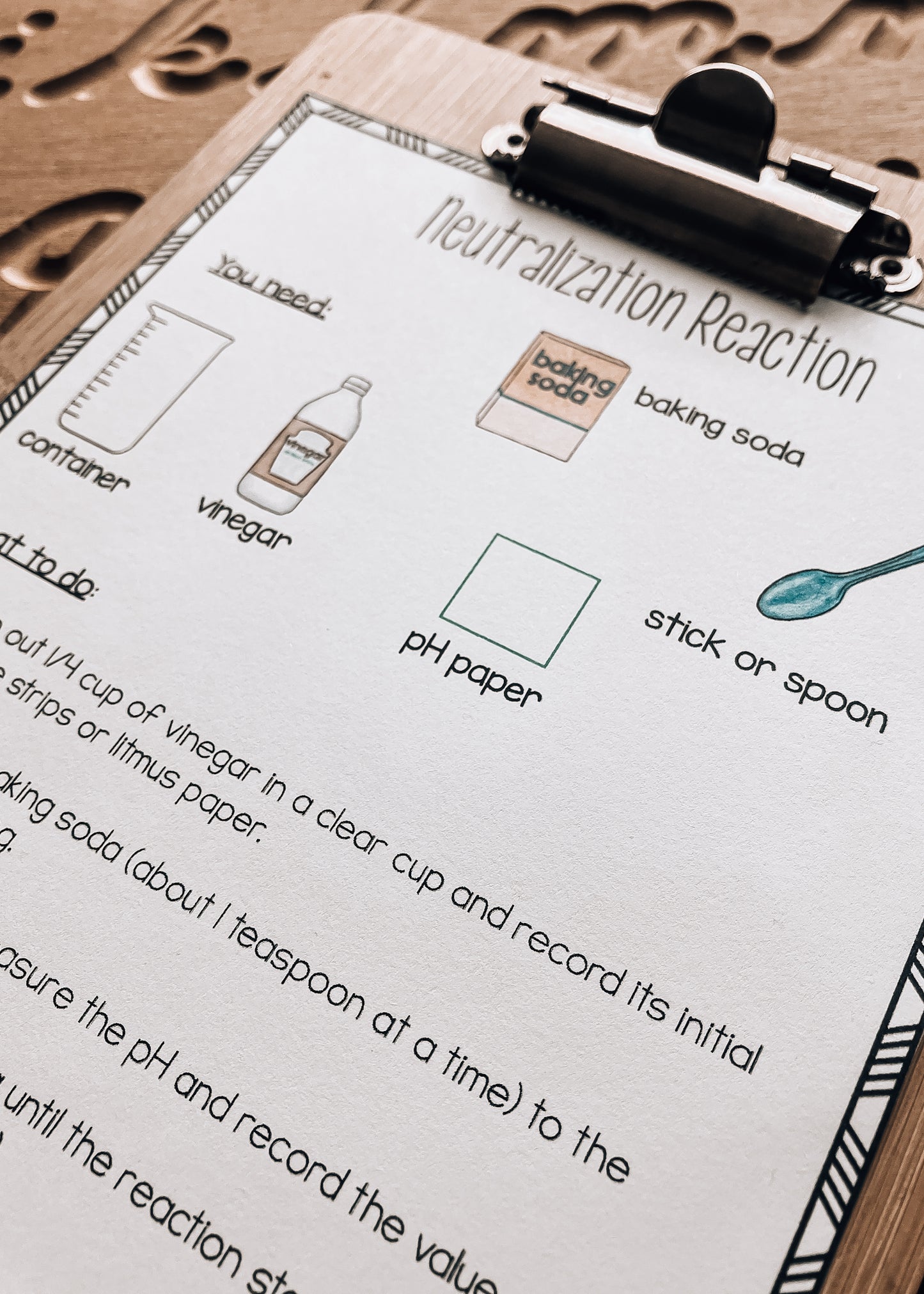
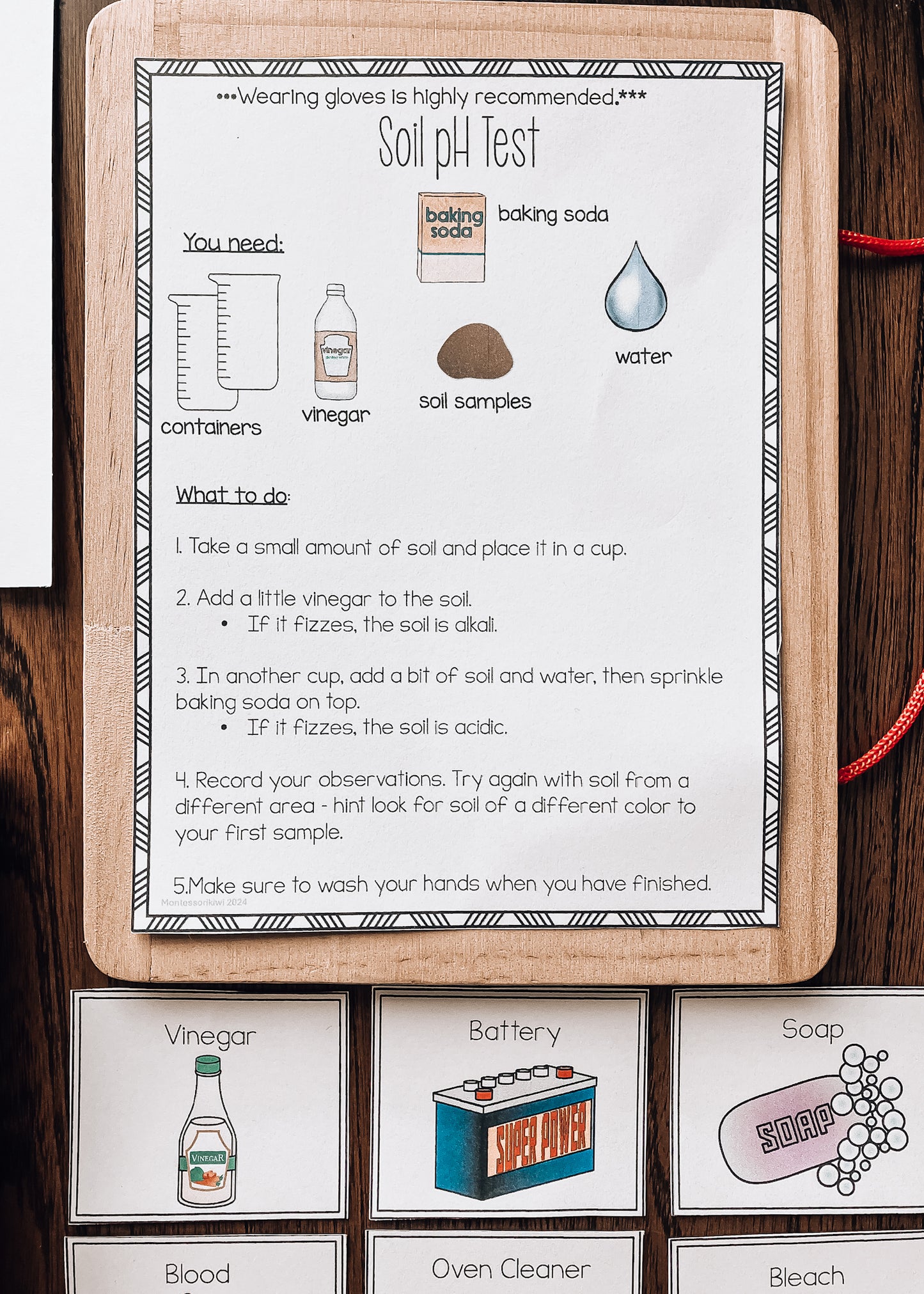
- Four guided pH experiments
- Opportunities to predict, observe, compare and record results
- A Design Your Own Experiment challenge for children ready to apply their learning more independently
The Scientific Process
- A one-page introduction to the scientific process
- A two-page linked assignment that guides children through the stages of an investigation
- Support for developing questions, making predictions, recording observations and drawing conclusions
Games and Real-Life Application
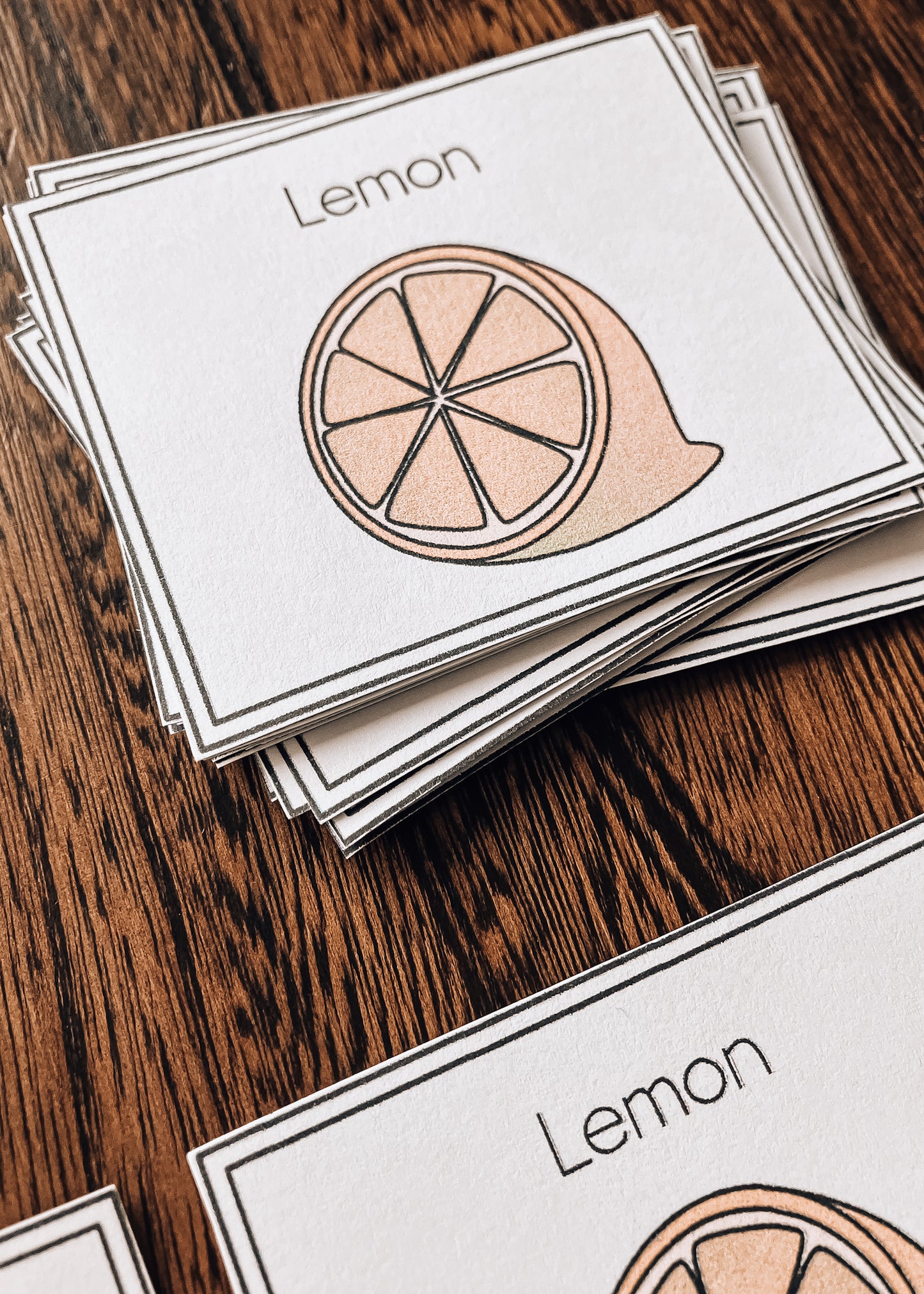
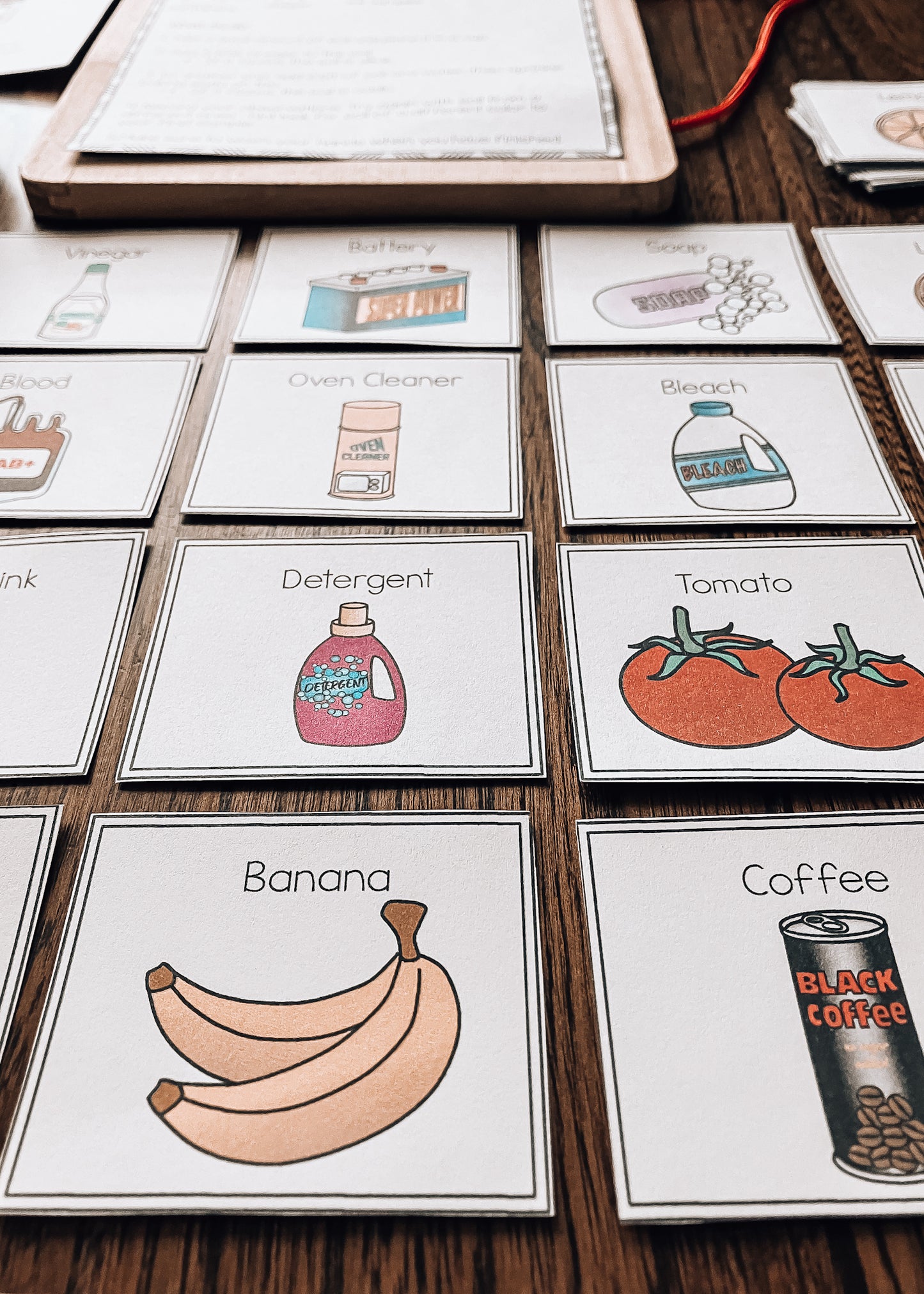
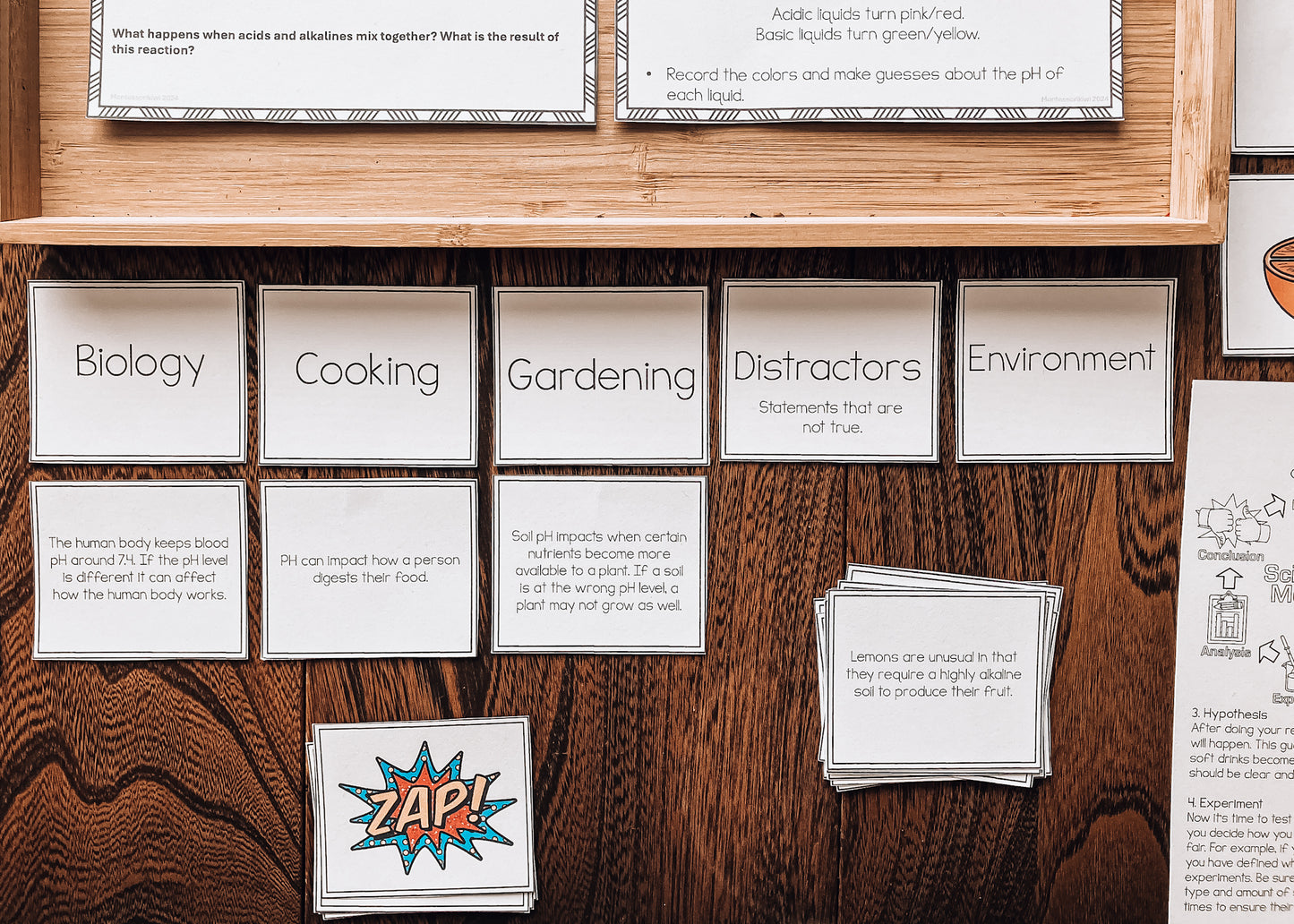
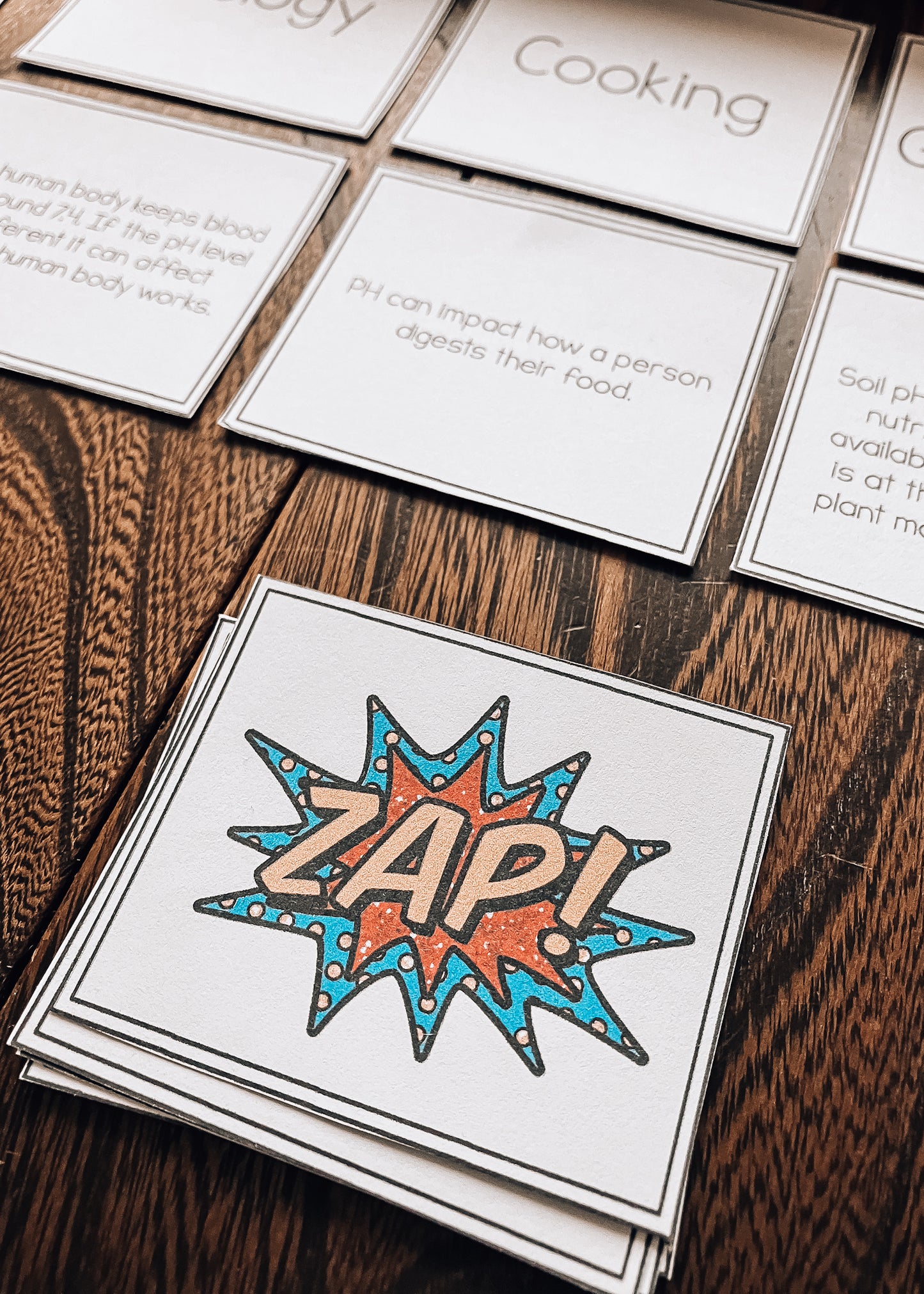
- A Zap Game for identifying common household acids and alkalis
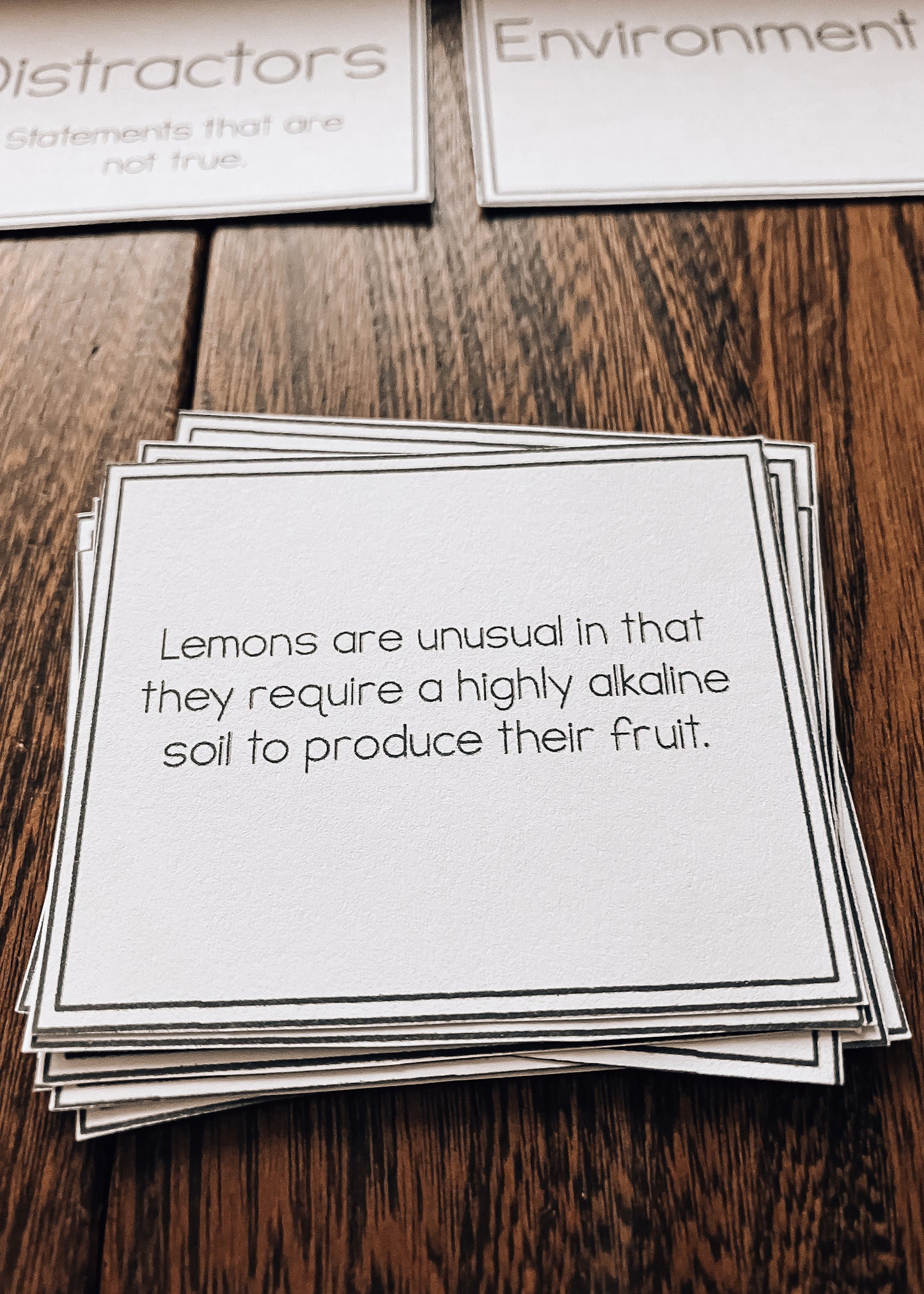
- A sorting activity connecting pH knowledge with everyday situations
- Interactive follow-up work suitable for repetition or partner learning
Teacher Guidance
- Clear instructions for preparing and presenting the activities
- A flexible format that can be adapted for classroom or homeschool use
Begin With Things Children Already Know
Children may have heard that lemons and vinegar are acidic or seen baking soda react with another substance. This resource uses those familiar experiences as an entry point into more precise scientific understanding.
As they work through the material, children explore questions such as:
- What makes a substance acidic or alkaline?
- What does a pH number tell us?
- What does it mean for a substance to be neutral?
- How can an indicator help us test an unknown substance?
- What happens when some acids and bases are combined?
- Why does pH matter in soil, food, water, health and household products?
The aim is not simply to memorise the scale. It is to help children interpret information, make connections and think scientifically.
Hands-On Science With Academic Purpose
Experiments often generate enthusiasm, but children need support to move beyond watching something happen.
The guided investigations encourage learners to:
- ask questions before beginning
- make a reasoned prediction
- follow a procedure carefully
- observe changes closely
- record results clearly
- compare substances
- consider whether the evidence supports their prediction
- suggest further questions or investigations
Because the scientific process is introduced alongside actual investigations, it becomes a useful working method rather than a separate list of vocabulary to memorise.
Designed for Montessori and Mixed-Age Learning
This resource can begin with a teacher-led presentation and then be separated into smaller activities for the shelf.
For example, you could offer:
- the introductory reading and pH chart as one activity
- one guided experiment at a time
- the Zap Game as partner work
- the real-life sorting cards as independent classification work
- the scientific-process assignment for older or more confident writers
- the experiment-design challenge as an extension
This gives children different ways to enter the same topic without expecting every learner to complete identical work.
The visual references, clear stages and interactive elements may be particularly helpful for neurodivergent learners and children who benefit from explicit structure, repetition and concrete examples.
Suggested Teaching Sequence
- Activate prior knowledge. Show children familiar household substances and discuss what they already know about acids and bases.
- Introduce the vocabulary. Use the reading page to establish the meanings of acid, base or alkaline, neutral and pH.
- Explore the pH scale. Compare the examples and discuss what lower, neutral and higher pH values represent.
- Complete a guided experiment. Model how to predict, observe and record.
- Introduce the scientific process. Connect each stage directly to the experiment the children have completed.
- Repeat and compare. Complete further investigations and encourage children to identify patterns.
- Consolidate. Use the Zap Game and sorting activity to review terminology and everyday applications.
- Extend. Invite children to plan their own pH investigation.
Extend the Learning
Children could use this pack as the starting point for further investigations into:
- testing safe household substances with pH paper
- creating a classroom pH scale using tested examples
- natural indicators such as red cabbage
- how soil pH affects plant growth
- the importance of pH in pools, aquariums or drinking water
- acidic and alkaline foods
- tooth enamel and acids
- ocean acidification
- neutralisation reactions
- how scientists control variables and improve an experiment
Older learners could also compare their results, graph pH measurements or evaluate which parts of an investigation need to remain controlled.
Need Help Planning the Lessons?
Read Acids and Bases: Introduction Activities and Teaching Sequence for Montessori Classrooms.
The article outlines how to move from real objects and introductory vocabulary into pH testing, experiments, the scientific process and independent investigation.
Explore More Montessori Science
- Montessori Science Resources – find hands-on materials for chemistry, physics, botany, zoology and Earth science
- ```
- Montessori Elementary Resources for Ages 6–12 – explore science, maths, literacy, geography, history and Cosmic Education follow-up work
- Montessori Upper Elementary Resources – find further activities for older elementary learners ready for deeper research and independent work
- Montessori Printable Curriculum Bundle – access a growing library of MontessoriKiwi resources across science and the wider curriculum
- ```
Created for Real Montessori Learners
I am a Montessori-trained teacher, New Zealand registered teacher, school principal and former homeschooler.
I create resources from real experience teaching mixed-age learners, including neurodivergent children and children working at different reading, writing and independence levels.
My resources are designed to make substantial concepts accessible without reducing science to disconnected worksheets or entertainment-only experiments. They provide clear teaching support while still encouraging curiosity, repetition and independent inquiry.
Important Safety Information
- All experiments should be completed with appropriate adult supervision.
- Only use substances that are suitable and safe for children in your setting.
- Children should never taste experimental substances.
- Do not assume that a substance is safe because it is described as an acid, alkaline or household product.
- Use eye protection, gloves and protective surfaces where appropriate.
- Review the ingredients and possible reactions before combining any substances.
- Adapt the activities to meet your school, homeschool or local laboratory-safety requirements.
Digital Download Information
- This resource is supplied as a 28-page printable PDF.
- No physical product or experiment materials will be mailed.
- You will need to gather the relevant household materials and testing equipment.
- Purchase permits use by one classroom or one homeschool family.
Share
-
Items are secured / Terms of Use
Our items are secured. They are not able to be altered. We secure our items because they are our intellectual property and because we use art from artists who require that we secure our files.
You may not:
-resell our items or use them for commercial gain
-claim these items as your own
-modify this resource
-share them with others by any means e.g. electronic or hard copy
-
All Items are instant downloads
You will not get a printed product in the mail.
-
All prices are in USD
Due to the international nature of our customers our prices are all in USD. If you wish to work out the conversion before you buy we recommend www.xe.com