
4 Hands-On Montessori Noun Activities for Teaching Grammar
Teaching nouns in Montessori is a wonderful way to help children discover how language works through hands-on activities rather than memorising grammar rules. These four Montessori noun activities introduce children to naming words through games, classroom labelling, noun sorting and creative booklet-making. They are simple, practical ideas for Montessori teachers and homeschool families looking for engaging ways to teach nouns as part of the Montessori grammar curriculum.
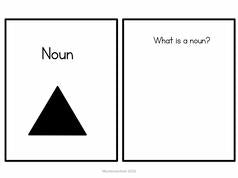
In Montessori, children explore the parts of speech through concrete experiences before moving towards more abstract grammar work. The familiar black triangle of the Montessori noun symbol helps children recognise the role of nouns in language. Whether you are introducing nouns to younger children or providing follow-up work in a Montessori elementary classroom, these activities offer opportunities to build vocabulary, reinforce grammar concepts and encourage independent learning.
Below are some of my favourite hands-on Montessori grammar activities for teaching nouns, along with printable resources to extend the learning.
A simple but entertaining game especially loved by 4-6 year olds. The teacher says 'Give me a .... (and then trails off) and asks a child to give me a ...... The child dutifully goes and gets something and brings it to the mat to which the teacher says 'No, that's not what I want' Repeat. At the end ask why it didn't work. A child will say something like 'it's because you didn't say what you wanted.' Teacher replies 'Yes, I didn't say it's name or noun, a noun is a person, place or thing. I need to use a noun so we know what something is.
2)The labelling game.
-Teacher has a small collection of nouns written on individual cards - get the freebie here
- Child goes and gets something from the room that matches the cards and places it beside the card. E.g. if the card says 'bead' the child goes and gets a bead and places it beside the label that says 'bead'
- If the label is something that is not in the classroom , for example for giraffe the child draws a picture of the object (but if you have a real life giraffe in your class - cool!) .


In these traditional activities the child sorts different types of noun.
The teacher gives an individual presentation on each explaining what defines each. For a free download of Montessoriforeveryone's noun sets click these links:
When children have a good knowledge of nouns they can make a booklet of what they know. My simple booklet that children can make to look at what they know about nouns is in my subscriber freebie library, check your email for the current password.
Not sure which Montessori literacy resource is right for you?
I’ve created a simple guide to help you choose between phonics and Science of Reading resources, early reading support, grammar, writing and wider Montessori language work.
Find the right literacy resource →Keep Exploring Montessori Grammar
Enjoyed these noun activities? Here are some more practical ideas and printable materials to help children explore parts of speech.
📚 More Montessori Teaching Ideas
- How Montessori Miniature Environments Develop Language
- The Montessori Language Curriculum for Ages 6–12
🎁 Free Montessori Printables
Looking for more hands-on activities? Explore my collection of free Montessori resources, including literacy materials.
Browse Free Montessori Downloads →
✏️ Ready for More Montessori Grammar Work?
If your children are ready to move beyond introductory noun lessons, these printable Montessori grammar resources provide further hands-on practice.
- Montessori Grammar Interactive Notebook – explore the parts of speech and grammar symbols.
- Montessori Grammar Symbolising – build confidence with sentence analysis.
- Montessori Grammar & Language Bundle – build your language shelves with a wider collection of printable activities.
Not Sure Which Montessori Literacy Resource Is Right for You?
I've created a simple guide to help you choose between phonics, grammar, writing and wider Montessori language materials.
Find the Right Literacy Resource →